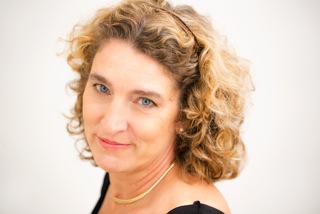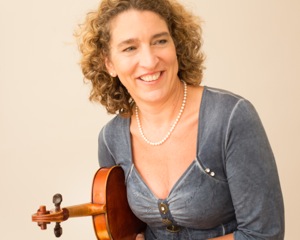
Interview Geneviève Strosser

Geneviève Strosser studied with Claude Ducrocq in Strasbourg, Serge Collot and Jean Sulem in Paris, and had lessons with Yuri Bashmet, Franco Donatoni and György Kurtág. She gave solo performances with e.g.  Gewandhausorchester Leipzig and the BBC National Orchestra of Wales. She can be regularly heard at the Festwochen in Salzburg and Berlin, Ars Musica and Wien Modern.

Strosser has a strong affinity with contemporary music. She was a member of the Ensemble Intercontemporain, Klangforum Wien and Contrechamps. Composers such as Stefano Gervasoni and Hugues Dufourt dedicated solo concerti to her. In 2011 she released a CD with solo works by Holliger, Ligeti, Donatoni, Lachenmann and Scelsi. She furthermore teaches string quartets at the Trinity College of Music in London and viola at the Musikhochschule Basel.

This week, Strosser comes to The Genevieve_Strosser_DSC09425Netherlands to world-premiere a viola concerto by Hanna Kulenty with the Residentie Orkest.

by Kristofer G. Skaug, DVS

DVS: Tell us about the Hanna Kulenty concerto, what is its origin, how do you experience it? How did you get involved, and what is your working relationship with the composer?

The person I’m happy to thank for this project is Neil Wallace, head of De Doelen, Rotterdam. Thanks to him, I got to know Hanna Kulenty. He commissioned a piece for viola and ensemble which ASKO and I performed 3 times, 2 years ago. Neil Wallace was so enthusiastic about this 1st version – and so was I – that he asked Mrs Kulenty to do a version for viola and orchestra.

I have to say that the Hanna Kulenty concerto has a very specific aspect, which does not exists in a lot of modern pieces, which is to come back to the real “playful” feeling, exactly like the little child, in the best way. It’s something so important for the interpreter. I communicate with Hanna Kulenty via mails, she’s very inspiring in her answers!

DVS: You seem to be surrounded by a cloud of composers who like to write for you. Is there any particular contribution from your side in the creative process of these composers?

I’m not exactly the type of instrumentalist who goes to composers and show them all kind of possibilities our instrument offers (but I’m thankful to the people who do!!). I think it’s a very personal aspect of each interpreter. The composers who wrote for me had either heard me playing, or coincidence made us meet! I’m very lucky to have a long working relationship with great composers like Heinz Holliger, Helmut Lachenmann, Georges Aperghis, George Benjamin, Stefano Gervasoni….

DVS: Does the viola have particular intrinsic strengths as a catalyst for innovation in music? If so, what would these advantages be, compared to for example the violin or cello?

Probably the strength you mention is that in the past centuries, the repertoire of solo violin or cello has developed much more, so it’s very likely that the composers feel the viola being a “free land” where they can explore, like a “tabula rasa”. And great composers of the 20th century like Luciano Berio, Bernd Aloïs Zimmermann, opened the way for the next generations.

DVS: You do seem to have a strong affinity towards contemporary music. Do you experience a fundamental difference between the “classical” viola repertoire (let’s say, anything written before roughly 1950) and the contemporary pieces – if nothing else, in terms of “work satisfaction” as a performing artist?

Maybe one fundamental difference is that with modern repertoire, there is not the weight of tradition. Probably we should learn from each, build tradition in the 20th century, and free ourselves from the tradition in the past centuries….

It’s the same for the public who is without any reference in modern music.

DVS: Which statement is more true, in your experience:
a) The viola and violin have more similarities than differences, and students should practice both instruments as much as possible, learning the best of both worlds.
b) The viola and violin are related yet significantly different worlds, and a student hoping to master either one should focus on one instrument (at a time).

I would answer the 2nd one

DVS: Tell us about your own process of learning to master the viola, from your very first lessons until the last lesson. Who do you recall as most influential?

I started with the violin when I was 8, and after a few years, I suppose it has as well something to do with early teenager, I was not anymore so much attracted to the instrument. I was playing the piano as well. I decided I should maybe change violin teacher, and someone advised me to see the viola teacher in my home-town (Strasbourg). This person, Claude Ducrocq, from the very first lesson, gave me the desire to play the viola and not to do anything else….. I often think that if he had been a bassoon teacher, maybe I’d now be a bassoonist!

I entered the Conservatoire National Supérieur de Paris, in Serge Collot’s class, great teacher, then Jean Sulem. After the Conservatoire, I had a lot of advice from…. violinists as well!

The process of learning never stops, to my point of view, and each concert is part of it.

DVS: Through the internet, Viola students today have some opportunities that previous generations could only dream of. For example freely available recordings of great violists on YouTube, and vast stores of downloadable sheet music. Could this trigger changes in professional music education (e.g. repertoire training), and should teachers more aggressively explore the associated potential opportunities?

Internet is fantastic, and all the documents we can find is truly unbelievable! Not only for the students. I think that there is still a lot to explore in the opportunities that existed before internet. I don’t today see something that revolutions the way of teaching, as a teacher. But sure, for the students, it’s very different.

DVS: On the other hand, might there also be risks connected to the aforementioned opportunities?

The risk of course, is to believe in everything on internet, and to stop thinking individually, to stop searching alone, in your room, with your instrument.

DVS: Are there specific projects or events in the near future that you are looking particularly forward to? 

In the very near future, I’ll be playing Janacek string quartet, for the opening of the exhibition of Josef Sudek photographs, in the Musee du jeu de Paume in Paris. Josef Sudek loved music, often went to see Janacek, and organized himself a lot of concerts.

Our performance will take place in the rooms with the photos, probably very moving for us and the public.

Come to Strosser’s performances of the Kulenty Concerto in Rotterdam (13/5) and/or The Hague (14/5). Additionally, on Wednesday 11/5 she gives a solo recital and masterclass in The Hague, co-sponsored by the DVS and Codarts Rotterdam.
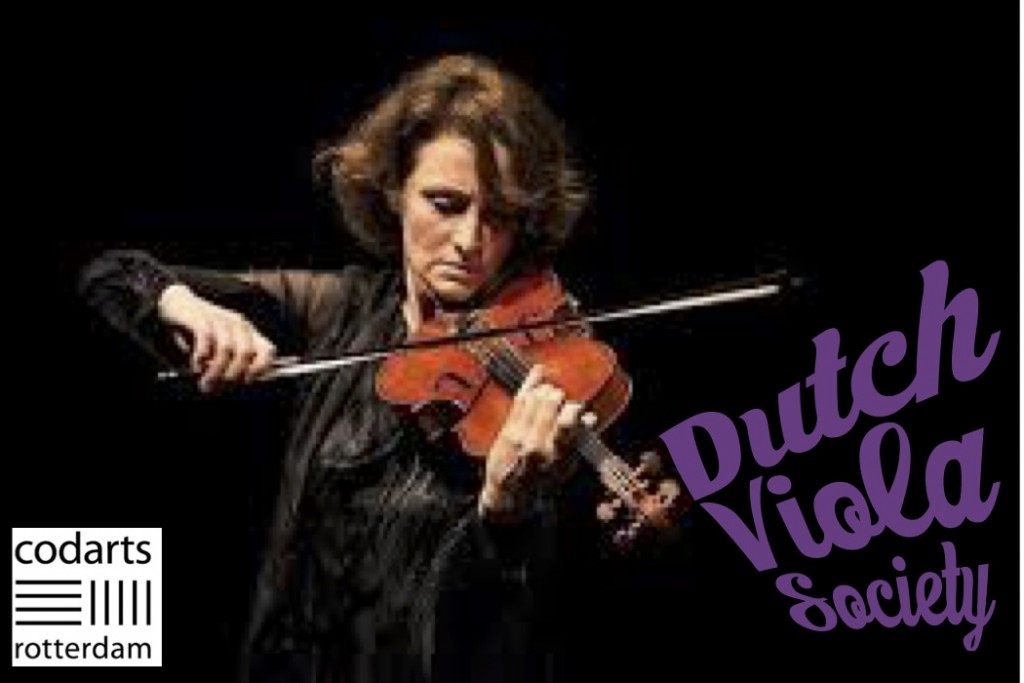
Masterclass Geneviève Strosser

Strosser_Foto_DVSOn Wednesday May 11th 2016, the renowned violist Geneviève Strosser will give a unique solo recital and masterclass in The Hague, organised by the DVS in co-operation with Codarts Rotterdam. The Masterclass is intended for viola students enrolled at a Dutch Conservatory (Bachelor or Master level). The five participants will be selected on the basis of meritable applications.

Your application must consist of:

  • a letter of motivation,
  • a Curriculum Vitae,
  • your photo, and
  • a (link to a) representative recent video recording of a solo performance, between 5 and 8 minutes duration.

Furthermore, in order to be considered for this masterclass, you must have paid the DVS student friendship fee for 2016 (€20,-); If you are not already a Friend of the DVS, please register via the form on this page..

Send your application to:  mail@dutchviolasociety.nl by March 18th latest.

Audience is welcome: Tickets for recital + masterclass are  €7,- (DVS friends: free).
The seating capacity is limited, so you may want to make a reservation (address above).

Schedule:
14.00 – 14.45 Solo recital Geneviève Strosser
15.00 – 18.30 Masterclass

Location:
“Gunst, wat ’n kunst”, Raamweg 45, Den Haag
(Tram 9, stop “Laan Copes van Cattenburgh”).

Dankwoord aan onze vrienden…

20160217_DVS_Bedankt_clickBeste vrienden / Dear friends,

// English version below

Bedankt! Bedankt voor alle steun die wij van jullie hebben gekregen. De Dutch Viola Society gaat alweer haar vierde levensjaar in en dit was niet mogelijk geweest zonder alle bijdragen en inspanningen van onze vrienden. Want de DVS, dat zijn jullie!
Dankzij jullie heeft de DVS een grote hoeveelheid workshops en masterclasses met docenten van internationale faam kunnen organiseren, en altvioolspelend Nederland samen kunnen brengen. Daarnaast werken we hard om het Internationaal Altviool Congres 2018 (IVC 2018) naar Nederland te kunnen halen, een grote impuls voor de DVS, en het muziekleven in Nederland en de stad Rotterdam!
Het bestuur en de IVC2018-commissie zijn nu al druk bezig met het plannen en financiëren van deze vijfdaagse altvioolweek. Mocht u mee willen helpen aan dit fantastische evenement, mail dan de IVC2018-comissie en neem plaats!
Rest ons nog u nogmaals te bedanken voor al het vrijwilligerswerk, de (financiële) steun en de vele aanwijzingen.

Met vriendelijke groeten,
Het DVS-bestuur & de IVC2018-commissie

———————————————————————-

English:

Dear friends,

Thank-you for your support! The Dutch Viola Society has been active for 4 years, and this would not have been possible without the contributions and efforts from our friends. Because you ARE the DVS!
Thanks to you, the DVS organised a large number of workshops and masterclasses led by internationally renowned coaches, and we have brought violists in The Netherlands together. Furthermore we are working hard to organise the International Viola Congress (IVC) 2018 in The Netherlands, a big stimulus for the DVS and the musical life in the City of Rotterdam and The Netherlands!
The DVS Board and the IVC2018 Committee are already busy with the planning and financing for this five-day viola week. Should you be interested in helping to create this fantastic event, please send a mail to the IVC2018 Committee and join us!
We thank you once again for your support, volunteer work, financial support and the many suggestions and ideas.

Best regards,
the DVS Board and IVC2018 Committee

Verslag “Uit de keuken van” Prunella Pacey

door Vincie Faas

Op zaterdag 6 februari nam ik deel aan de workshop door Prunella Pacey “in de keuken van..”. ’s Ochtends vroeg om 10u begonnen we gezamenlijk met een kopje thee en een voorstelronde. We waren met een select gezelschap waardoor dit ook goed mogelijk was.

IMG_0422Alvorens we gingen spelen namen we de tijd voor een warming-up. Beide voeten stevig op de grond staan en je spieren ontspannen is de basis voor het altviool spelen. Nadat iedereen ontspannen en los was mocht iedere deelnemer een stuk spelen. Omdat we met een klein groepje waren was er voor iedereen voldoende aandacht. Individuele oefeningen werden afgewisseld met groepsoefeningen. Van streektechniek tot klank maken. Zowel de linker- als de rechterhand kwam aan bod.

Rond 13u stond er een heerlijke lunch voor ons klaar in de keuken. Op ons gemak hebben we hiervan kunnen genieten.

Na de lunch zijn we nog verder gegaan met altviool spelen. Ikzelf mocht een aantal stokken van Prunella proberen en ervaren hoe groot het verschil kan zijn in je spel. Erg leuk om mee bezig te zijn en leuk om de reactie van anderen te horen hierover. Nadat iedereen had gespeeld en tips had meegekregen om mee aan de slag te gaan, sloten we de dag af met een yogasessie. Nog even totaal ontspannen na een intensieve dag. Alle informatie laten bezinken om vervolgens tevreden met veel nieuwe ideeën naar huis te gaan.

DVS Jaarverslag 2015

Stichting Dutch Viola Society (DVS)

Hieronder lichten we in detail toe wat er allemaal door en met DVS in 2015 tot stand gekomen is.

Georganiseerde Workshops 2015

zaterdag 21 februari 2015 Workshops voor jongeren en amateurs tijdens het Altvioolfestival Amsterdam

zaterdag 27 juni 2015 div. Workshops tijdens het 2e Nationaal Altvioolcongres

zaterdag 29 augustus 2015 Workshop jaarplanning studie (afgelast)

zondag 18 oktober 2015 Workshop & Recital Jutta Puchhammer, Dordrecht

Georganiseerde Masterclasses 2015

zaterdag 21 februari 2015 Masterclass Mikhail Zemtsov, Delft

zaterdag 21 maart 2015 Masterclass Tabea Zimmermann, Utrecht

zaterdag 21 maart 2015 Masterclass Karin Dolman, Delft

zaterdag 25 april 2015 Masterclass Emlyn Stam, Delft

vrijdag 16 oktober 2015 Masterclass Jutta Puchhammer, Rotterdam (Codarts)

Nationaal Altvioolcongres 2015
Locatie: Akoesticum in Ede

Workshops: Try Before you Die – Mind Over Matter – How to Write a Resumé (C.V.) Workshop voor Jongeren – Workshop voor Amateurs. De workshops werden gegeven door Julia Dinerstein, Richard Wolfe, Leo Samama, Esra Pehlivanli en Karin Dolman. Lezing door musicoloog en componist Leo Samama
Workshop “Questions and Answers (Q&A)” door Michaël Kugel
Presentatie DVS – Verleden, Heden en Toekomst, door DVS-bestuur
Recital door jong altviooltalent Anuschka Pedano,
Samenspeelmoment: The Battle of the Bees, Violapitch – U bent aan het woord!
Concert door Internationaal altviooltalent Barbara Buntrock m.m.v. Seul Ki Cheon, piano

Website
Aankondigingen, nieuwsberichten en verslaggeving op de website in verband met DVS workshops, masterclasses, evenementen en concerten, belangrijke vacatures en benoemingen bij orkesten en conservatoria. Dit wordt tevens doorgegeven via social media (Twitter en Facebook).

Daarnaast worden met enige regelmaat interviews met toonaangevende altviolisten gepubliceerd, vaak in verband met onze eigen masterclasses en congressen. In 2015 waren de volgende grote namen aan de beurt: Barbara Buntrock, Mikhail Zemtsov, Tabea Zimmermann, Michaël Kugel, Jennifer Stumm, Nils Mönkemeyer en Jutta Pucchhammer.

Achtergrondinformatie wordt ook aangeboden via de website, zoals:
– Carrièretips voor jongeren die een beroepsopleiding altviool overwegen
– Informatie over concoursen voor altviolisten
– Overzicht van zomercursussen altviool in binnen- en buitenland
– Een unieke repertoirelijst altvioolensembles gepubliceerd en regelmatig bijgewerkt
– Een unieke concertagenda voor concerten met altviool in de hoofdrol

Social Media
Actieve aanwezigheid op Facebook (357 pagina-likes, een toename van 84 in 2015) en Twitter (270 volgers, een toename van 102 in 2015). Naast het doorgeven/signaleren van nieuwe berichten op onze website (aankondigingen DVS events/workshops) wordt hier ook altvioolnieuws uit social media opgepakt en doorgegeven (share/retweet). De social media kanalen zijn tevens in zekere mate interactief, contact wordt gelegd en onderhouden met vrienden/volgers en verwante organisaties (binnenlands en internationaal).

Bestuursleden 2015
Karin Dolman – voorzitter
Stijn van der Schoor – secretaris
Roald van Os – penningmeester
Kristofer G. Skaug – algemeen bestuurslid / webredacteur
Emlyn Stam – algemeen bestuurslid
Iris Frederiks – student-bestuurslid

Bestuur december 2015

Bestuur DVS 2015: vlnr Roald, Iris, Stijn, Karin, Emlyn, Kristofer

Beschermvrouwe
In 2015 is oud-minister van justitie en amateur-altvioliste Winnie Sorgdrager toegetreden tot de stichting Dutch Viola Society als beschermvrouwe.

Vrienden
Per 31 december 2015 telden we 155 geregistreerde Vrienden. Een toename van 25 Vrienden in 2015.

Vriendenvoordelen
Bij betaling van de jaarlijkse vriendenbijdrage komt een DVS-Vriend in aanmerking voor flinke korting op onze educatieve workshops en overige verwante evenementen (congres, concerten, cursussen). Hiernaast werden in 2015 de volgende specifieke DVS vriendenacties aangeboden:

– Korting (42%) op abonnement muziektijdschrift The Strad

– Korting op Yoga Workshops voor musici, door Prunella Pacey

– Voor de derde maal korting op zomercursus altviool van Gisella Bergman

Financiële Verantwoording                                                                                             DVS kan in 2015 (naar schatting) rekenen op totaal € 4.110 gedoneerd door 85 Vrienden. 7% van deze donaties draagt DVS jaarlijks af aan de International Viola Society (IVS). Voornoemd percentage is afgesproken tussen de aangesloten Viola Societies wereldwijd. Over 2015 betalen wij € 287,70 aan de IVS. DVS kan ook rekenen op een zeer ‘gulle gever’. Via een notariële schenkingsakte is geregeld dat de DVS vanaf oprichtingsjaar 2012 over 5 jaar in totaal € 5.000 tegemoet kan zien. In 2015 heeft altvioliste Jutta Puchhammer haar gage ad € 500 geschonken aan DVS t.b.v. reiskosten van Nederlandse altvioolstudenten om naar het IVC 2016 in Cremona te kunnen reizen.

Subsidiënten                                                                                                                          In 2015 heeft de DVS van het VSBFonds een bijdrage van € 2.500 ontvangen voor de organisatie van het nationaal altvioolcongres in Ede.

Kostenposten

  1.    In 2015 is € 4.066 uitgegeven aan de inhuur van professionals voor het geven van de (bijna) maandelijkse masterclasses, workshops, recitals, cursussen of lezingen. De totale kosten aan inhuur zijn hoger uitgevallen dan aanvankelijk begroot was en dat had vooral te maken met een extra investering door DVS i.v.m. de organisatie van de masterclass door Tabea Zimmerman. Per activiteit is normaal gesproken een standaard budget van € 200 p.p. exclusief BTW beschikbaar.
  2.    Zaalhuur en overige uitgaven verband houdende met de organisatie van DVS-activiteiten bedroegen over 2015 in totaal € 3.050
  3.    Afdracht aan de International Viola Society, bankzaken, drukwerk/ porti en onkostenvergoedingen voor onze vrijwilligers.

Toekomstmuziek
Voor 2016 is de inhuur van professionals op € 3.000 inclusief BTW begroot. DVS verwacht het International Viola Congress 2018 in Rotterdam te organiseren en te hosten. Hiervoor zullen de nodige projectsubsidies worden aangevraagd en samenwerkingen met grote professionele partijen zoals het Rotterdams Philharmonisch Orkest, Concertgebouw De Doelen en Rotterdams conservatorium Codarts worden aangegaan. Voor dit ambitieuze plan zal een apart financieel plan worden opgesteld en mogelijk zelfs een aparte stichting worden opgericht.

Non-profitorganisatie DVS heeft geen structurele subsidiënt of sponsor.

Verslag Roald van Os, 31 december 2015

Jonge Nederlandse Talenten in de prijzen in Luxemburg

Bij de European Competition for Young Soloists in Luxemburg zijn gisteren vijf jonge nederlandse altviooltalenten in de prijzen gevallen;

20151115_Prijswinnaars_AGDU

De prijswinnaars, vlnr: Louise, Steffie, Kaat, Julian en Anuschka


  • Anuschka Pedano, gouden medaille en de “Prix Marie-Christine Cid-Diaz”
  • Kaat Schraepen, gouden medaille
  • Julian Enciso, zilveren medaille
  • Steffie de Konink, zilveren medaille
  • Louise van Tuijl, bronzen medaille

De vier eerstgenoemden zijn leerlingen/studenten van Julia Dinerstein in Maastricht en Rotterdam, terwijl Louise van Tuijl studeert bij Mikhail Zemtsov in Utrecht.

Van harte gefeliciteerd!

Verslag Workshop en Concert Jutta Puchhammer

door Laura Keuzenkamp

Afgelopen zondag, 18 oktober, was er in de Trinitatiskapel in Dordrecht een lezing/workshop over natuurlijke beweging met aansluitend een recital door Jutta Puchhammer.

010 - detail

Tijdens de lezing, die hier en daar ook het karakter had van een workshop, vertelde Jutta uitgebreid over welke bewegingen een heel natuurlijk karakter hebben tijdens het bespelen van de altviool. Zo werd bijvoorbeeld de vergelijking gemaakt tussen het krabben op je schouder en het spelen in hoge posities. Op het eerste gezicht lijkt het spelen in hoge posities heel oncomfortabel en onnatuurlijk, maar toen iedereen eerst aan zijn of haar schouder had gekrabd, zag iedereen de gelijkenis en voelde het positiespel gelijk een stuk natuurlijker aan.

366 - detail

Ook hebben we veel geleerd over het vasthouden van de stok. We moesten een apparaatje (stemapparaat, metronoom, telefoon, oid.) vasthouden met de vingers aan de ene kant en de duim aan de andere, waarna Jutta ons bewust liet worden van de functies van de verschillende vingers als we iets vasthouden. Daarna werden de stokken erbij gepakt en voelde iedereen gelijkenissen met de voorafgaande oefening. Wat vooral bleek, was dat de duim voornamelijk een ondersteunende rol heeft.

Daarnaast liet Jutta ons ook zien hoe een positiewisseling eigenlijk werkt: door een vinger van de linker hand op het bovenbeen te plaatsen en daarna te beseffen dat je wel móet loslaten voor je van A naar B kunt verplaatsen.

Door deze inzichten in hoe natuurlijke bewegingen toegepast kunnen worden bij het altvioolspel, zijn er meer oefeningen die je kunt doen om je techniek te verbeteren, zonder in eerste instantie naar je instrument te grijpen.

Na een gezellige pauze met zelfgebakken appeltaart én warme chocolademelk met slagroom, was er een recital door Jutta Puchhammer en Caecilia Boschman (piano). Op het programma stond geen standaard altviool-repertoire, maar onbekende werken van Canadese en Franse componisten.

015 - detail
Het concert begon met delen uit een bekend werk van Prokofjev: Romeo et Juliette. Dit stuk alleen was al genieten en beloofde veel goeds voor de rest van het concert. Hierna volgden twee stukken van de Canadese componisten Isabelle Panneton en Nikolas Gilbert.

Het stuk van Gilbert bestond uit 25 fragmenten die eerst allemaal gespeeld moesten worden en vervolgend naar keuze herhaald, waarbij de fragmenten nooit in dezelfde volgorde mochten passeren. Dit was voor Jutta de eerste keer dat zij dit stuk speelde, maar zij slaagde er in een spannende en gewaagde ‘compositie’ neer te zetten, welke zeker werd gewaardeerd door het aanwezige publiek.

Tot slot speelden de musici drie stukken welke geschreven werden als verplicht te spelen eindexamenrepertoire voor altvioolstudenten van het Conservatoire de Paris.

Interview Jutta Puchhammer

The Viennese-born Jutta Puchhammer-Sédillot is described as a violist of  exceptional quality. She is professor of viola and chamber music at the University of Montréal (Canada), and holding part time tenures at a number of other institutions.

She is renown for her performances of rare post-romantic viola repertoire, and has released acclaimed solo CDs with works in this genre. Jutta has a vast experience in chamber music, having been part of the Quatuor Claudel String quartet, The Kegelstatt Clarinet/vla/pno Trio, The Montreal String Trio, and several other ensembles. At various festivals she has performed with artists of international reputation. Jutta is the principal viola of the Canadian Laval Symphony orchestra, and the Vice president of the International Viola Society. She has been awarded the Maurice Riley prize for international achievement. This weekend (16-18 October) Jutta is in The Netherlands, invited by the Dutch Viola Society. On Friday she gives a masterclass for conservatory students in Rotterdam, while her workshop and recital in Dordrecht on Sunday are aimed at a general public.

by Kristofer G. Skaug, DVS_N6A4690-Modifier

DVS: At what point in your life did you decide to become a violist, and did your family (background) support you in this respect?

I started out on the violin, but at age 15 my violin teacher at the music school in Vienna proposed that I play the viola in my youth orchestra. So I did, and I really liked it, I liked the character of my fellow violists, there was no competition, and more enjoyment of playing together. I continued this way for 2-3 years, until I met a viola teacher from the University of Vienna, Siegfried Führlinger. He knew my parents, and after we played some duets together, he asked me to study with him at the university.

DVS: Did you continue studying the violin also?

Only for one year. The last violin piece I studied was the Mendelssohn concerto, and I realised I couldn’t stand the squeaky high sounds anymore. So that’s when I stopped.

DVS: What or who moved you to travel out, away from Vienna?

In European schools you learn a lot of languages, and we were encouraged to have pen-pals in other countries. My pen-pal was a French-Canadian, with whom a romance began. When I was 25, after having completed my studies in Vienna, I decided that it would be easier for me to move to Canada than for him to come to Austria. So I came to Montreal, which was a challenge, because I had not studied here, and had no connections. Montreal is unusual in that it has two communities divided by language, and also the musical job market is divided, and each circle is difficult to get access to. I was fortunate to get some help in this respect from the conductor Agnes Grossmann, whom I knew from Vienna.

DVS: How is musical life there, compared to Europe?

Well, there are differences in taste, which become apparent after some time. I decided to study for a Master’s degree with Heidi Castleman (at Juilliard), in order to have a recognised paper here. And then I came to appreciate some differences in taste and approach to viola technique.

DVS: Can you elaborate on this distinct taste?

It is for a large part the school of technique, which I learnt from Heidi Castleman. It’s clean and crisp playing. The sound is very clear, designed to carry well. I notice also stylistic accents in chamber music, a tendency to make statement entrances rather than merging in softly. The priority is technique first, then music making.

DVS: Are there specific traits of the Montreal music scene, that you would like to mention?

I tend to think of Montreal as somewhat “up North”, far away from the centre of events. We do get frequent visits from international artists fortunately, and in some respects the classical music scene is doing quite well, for example there is are many good contemporary composers. But chamber music is in decline. And a couple of years ago we lost our only serious classical music radio station. This is very sad.

And then there are the schools – they used to offer instrumental music lessons. Thanks to public spending cuts, this has now been reduced to group lessons, in the best case. So a decline in musical education.

The OSM (Montreal Symphony Orchestra) still gets money. But just about everything else is being cut. And musicians have to work longer hours for less pay. The students even play for free, hoping to gain a toe-hold somewhere. But this goes at the expense of established musicians. Not a good situation!

Meanwhile, students stay in school and obtain doctorates, but that doesn’t help them getting an orchestra job. The orchestras audition internationally, and even then they often don’t hire.

DVS: What is the make of your viola, and how did you come to choose this one?

I have a viola by Geoffrey Ovington (Vermont, USA) – in fact I have had two of them. The first one I bought after a summer music camp in 1982, where I came across one of his instruments. I decided to just order a new viola from this maker. The second one, a 43cm Mantegazza model, he actually gave me as a wedding gift in 1989, after I had helped him access the European market. It’s actually made from Austrian wood. I actually never tried anything else. I prefer modern violas, they often respond better to changing conditions (traveling). I say, rather 10 new violas than one old instrument.

I also prefer to use a light bow, it’s easier to put on weight (by ‘leaning in’) than to take it away. And it allows you to add more tone colours, because you are less likely to ‘strangle’ the sound. In some situations a heavier bow can be easier to use, particularly in orchestra playing. But I like to work hard with my instrument, to feel it respond to what I want.

DVS: Do you have any main creeds in your viola teaching?

My teaching revolves around _N6A4447-Modifierdeveloping the artistic personality of every student, to hear his inner voice and producing the confidence to make that sound happen. I always hope to expose what makes each student special.

Another important theme is movement: To avoid forcing yourself, but letting your body work in the most natural way. Everything should be easy. So I visualise movements that are somewhat similar to the actual movement you need for the viola, and we practice that, without the actual instrument: Getting away from the instrument in order to come back to it. My workshops in The Netherlands will also be focussing on this.

DVS: You are also active in the Canadian Viola Society, what are the main activities and future goals of the CVS?

The CVS tries to hold a national event every 2 years, but geography is a real challenge in Canada. Core CVS members travel around a bit to encourage activities in various parts of the country. The distances are hard to cover, it’s a 6-hour drive from here to Toronto, and that’s only the beginning. Differing holiday periods and even time zone difference get in the way sometimes. We hosted the International Congress in 2006…

But nowadays I am mostly involved as board member of the International Viola Society (IVS). And as such, I think that participation by national delegations at the International congresses is a very important activity. Unfortunately the financing of International congresses is also becoming more difficult, so regular Society members often cannot afford to go, even if they would like to.

DVS: Jennifer Stumm recently gave us this quote: “I dream of the day when we don’t need Viola Societies”. Do you sympathize?

No, not at all. The Viola Societies encourage international exchange and learning among violists. The CVS and IVS have given me many valuable experiences, to learn about how the viola is used in different parts of the world. For example hearing the viola played together with African instruments, or in Iceland with stone drums. I’m a big believer!

DVS: What about your personal future goals?

I “rediscovered” a collection of French pièces de concours, very virtuosic repertoire written for the (yearly) final examination of all viola students at the conservatory in Paris. The first piece is from 1896, and from there we follow the series up to 1940. Some of the pieces became quite popular in their own time, but both the pieces and their composers are mostly forgotten now. One exception is Enescu’s Konzertstück, which was also a part of this series. After World War II, the tradition changed, and they started using more standard repertoire pieces for the examinations instead of writing new stuff.

We are in the finishing phases of editing a Schott edition of this music, in three volumes (13 pieces), to be released next year. The edition is complete with fingerings, allowing students to catch on quickly. It is difficult enough as it is, this music is very challenging. I also hope to be able to record some of these pieces, and I intend to present this work at the IVC in Cremona next fall. Some of these pieces will also be on the recital programme in Dordrecht this Sunday!

Verslag Tweede Nationaal Altvioolcongres

nationaal altviool congres_def5_smallestZijn er echt alweer 2 jaar verstreken sinds het Eerste Nationaal Altvioolcongres in Deventer? Kennelijk klopt het dat “Time flies when you’re having fun“, want opeens was het weer tijd om nummer Twee te draaien! Volgens wiskundige denkwijze kunnen wij nu pas terecht spreken over een ‘reeks’, want één is maar eenmalig; maar met twee punten kun je echter een koers uitsteken.

En dus: Op 27 juni komen enkele tientallen altvioolliefhebbers, zowel professionals, studenten en amateurs, van alle leeftijden, bij elkaar in het gloednieuwe Akoesticum in Ede. Prachtige ruimtes, gerenoveerd met oog op muziekmaken. Het voelt gelijk vertrouwd.

We beginnen ‘s ochtends met workshops, waarbij de altviool gelijk onder de kin mag. De professionele docenten Julia Dinerstein, Esra Pehlivanli, RIchard Wolfe en Karin Dolman leiden groepslessen in techniek en ensemblespel. Geen altviolist? Dan is hier en nu je kans om te proberen! Dankzij aanwezige leeninstrumenten (ter beschikking gesteld door vioolbouwer Jan van der Elst) hoeft niemand als muurbloempje de lessen gade te slaan.

20150627_NAC_105

Na de (zeer smakelijke) lunch begint het officiële congresprogramma. Voorzitter Karin Dolman wenst iedereen welkom, en dit wordt onderstreept door enkele optredens van ad-hoc altvioolensembles bestaande uit docenten en deelnemers.

20150627_NAC_long

Eerst een première-uitvoering van het Divertimento voor 8 altviolen, gecomponeerd door Arie van Hoek.  Na een kwartetstukje uitgevoerd door Richard Wolfe en drie (conservatorium)studenten, mogen de drie jongste deelnemers een stuntje proberen: Zeshandig spelen op één altviool! Ziet er leuk uit, is ook leuk 🙂

20150627_NAC_120Hierna is musicoloog-componist Leo Samama aan de beurt, met een biografisch verhaal over de rol van de altviool in zijn leven en in zijn composities. Hij laat veel geluidsfragmenten horen van zijn diverse compositiestijlen. Het is een reis door de tijd, en vooral ook een dwarsdoorsnede van het Nederlandse muziekleven waar veel namen van belang in voorkomen.

20150627_NAC_122De beroemde russische altvioolvirtuoos en -pedagoog Michaël Kugel neemt het stokje van Samama over. Hij vertelt over zijn (altviool)onderwijs en de vele verschillende aspecten die bijdragen om een musicus te vormen. Hji betrekt een aantal favoriete composities bij zijn verhaal, met name de altvioolsonate van Shostakovich, waar hij ook een heel boek aan heeft gewijd. Vervolgens demonstreert hij op spectaculaire wijze een aantal virtuose technieken op de altviool. Het is een fascinerend betoog. Zijn (oud-) leerlingen (en dan met name de bekende altvioolfamilie Zemtsov) is in grote getale gekomen voor dit relatief zeldzame optreden van Kugel “boven de rivieren”.

20150627_NAC_137


Het jonge altviooltalent Anuschka Pedano mag vervolgens een kort recital ten gehore brengen. Anuschka won dit jaar zowel de Maassluise Muziekweek en het Tweede Britten Altvioolconcours. Daarnaast was ze finaliste van het Concertgebouwconcours en regionale finaliste bij het PCC. Met het folkloristische “Kharumi” van Tsintsadze maakt ze opzwepende rytmes en tussendoor ook mooie klanknuances.

Klaar voor volgende onderdeel, ‘The Battle of the Bees’ … tijd voor iedereen om weer de altviool uit te pakken. Met voor de aanleiding genaaid hoofdtooi (inclusief voelsprietjes! mogelijk doelde Niels Mönkemeyer hierop, met zijn bewering dat altviolisten vaak een tikkeltje nerdy zijn). We spelen we met z’n allen een DVS-bewerking van “de Bij” van Schubert, maar nu voor vierdelig altvioolzwerm. Heerlijke muziek, smaakt naar meer!

20150627_NAC_140

Na het diner (aan lange tafels op zonnig terras, een genot!) houdt de DVS een presentatie over “Verleden, Heden en Toekomst” van onze Society (het presentatiemateriaal kunt u hier downloaden: 20150627_DVS_Presentatie). Hierin onthult de DVS grote toekomstambities, we willen in 2018 het Internationale Viola Congress (IVC) in Rotterdam organiseren!

En dan, en dan: Tot besluit, het optreden van het duitse megatalent Barbara Buntrock. We voelen ons priviligeerd om haar in zo’n intieme kring te mogen beluisteren. hoewel wij natuurlijk hadden gehoopt op veel meer publiek voor dit onderdeel. Maar zulke gedachten moeten wijken voor de ontvangst van haar spel, met grote muzikaliteit gebracht.

CIqN1zVWEAA_5UpBij het naborrelen pinken we gezamenlijk een traantje weg over de tegenvallende opkomst. Maar tegelijk komt het besef dat het inhoudelijk een zeer geslaagde dag geweest is! Voor je het weet, is het 2017! En dan kunnen we hopelijk weer zo’n mooie dag organiseren.

Kristofer G. Skaug


Interview Jennifer Stumm & Nils Mönkemeyer

It’s that time of year again, when the Delft Chamber Music Festival (DCMF) descends upon us as a small musical paradise. And where there’s chamber music, viola players are sure to be part of the action. In this 2015 edition, artistic leader Liza Ferschtman has invited two very special violists, Jennifer Stumm and Nils Mönkemeyer. The DVS reporter was fortunate to meet up with both of them for a chat about chamber music, viola, and viola advocacy.

by Kristofer G. Skaug

Nils

Nils Mönkemeyer  (photo by Ronald Knapp for DCMF).

DVS: Nils Mönkemeyer, welcome in Delft – your first time, I believe?

Mönkemeyer: I was very excited to come here, because I met Liza (Ferschtman, ed.) at the Lockenhaus festival (Austria); I liked her instantly, I think she’s a phenomenal musician. Besides, many of my friends came here regularly in the past.

DVS: And Jennifer Stumm, you are a regular at this festival. What keeps you coming back?

Stumm: Liza and I are really old friends, we’ve known each other for 17 years. Apart from the really charming and beautiful old city, this festival has a reputation of having a certain kind of very intelligent and sensitive musicians; so the concerts here are such a pleasure to play. We really work, it’s a process, and I walk away from a concert thinking something quite special happened. It’s really an extraordinary festival!

Mönkemeyer: Judging from the short time that I’ve been here, it really feels like everyone could play with everyone, and it would work. That’s very special.

DVS: You still have relatively limited rehearsal time, does that bring out extra tension in the performance, as if there’s something that still needs to be negotiated on stage?

Jennifer Stumm

Stumm: Well, that’s true of any festival. But Delft actually has more rehearsal time than most places. We really do work hard to prepare, which I think brings the most satisfying results.

DVS: Are there any pieces that you are particularly looking forward to perform here?

Mönkemeyer: Well yes, the Brahms (string) quintet on Monday (August 3rd), because that’s the only piece, apart from the Duo recital earlier that same day, where I get to play together with Jennifer.

Stumm: Yes, Monday is really “Viola day”.

Mönkemeyer: Definitely, Monday is going to be really cool. I have to say that I never played a duo concert (with 2 violas) before. I don’t know why. Even in my student days.

DVS: There was a viola quartet here at DCMF, some time back; the Bowen Fantasia, with Isabelle van Keulen and her friends.

Mönkemeyer: Well she is one of the few violinists who can really play the viola.

DVS: Some viola players personify their instrument by e.g. giving it a name. How do you think about your instruments, do you see it as a utility, a household pet or a soulmate?

Stumm: Naming my instrument? No.

Mönkemeyer: Or as in, is the viola male or female?

Stumm: The instrument has such a character of its own, it doesn’t need to be assigned a label. Violas are a character actor in the music, and I want my instrument to be able to do anything, so I wouldn’t want to say “it’s a man, and his name is Herbert!”, because then I would have a hard time asking it to play the part of a really sexy woman, for example.

DVS: In the interest of acoustics and ergonomics, luthiers have experimented with innovative viola designs, leading to some pretty strange shapes. Have you tried one of these instruments?

Stumm: Occasionally I’ve had the opportunity to try such instruments, although not in all seriousness. I don’t really look at the viola as if it’s lacking something. Of course every instrument has its pluses and minuses, but I don’t feel that the viola has anything to be ashamed of. In fact to me this is what gives the viola its character, what I love about it: The fact that it is so changeable, and that it could be either male or female, because the instrument itself is not acoustically perfect.

Also because violas are physically so diverse means that with your personal physical characteristics you have to find the instrument that’s right for you.

Mönkemeyer: I think that is very particular for viola players. The size, the set-up of the instrument can be so different. An instrument that my student is playing sounds good, until I try, and then it sounds terrible. My own viola is reasonably big, but it’s quite difficult to make it sound well. I have to work hard for the right sound, but I like that. Others prefer their instrument to sound smooth and soft right away. Violas can be so different!

DVS: What are your favourite “unknown viola pieces”,   deserving of more public recognition?

Mönkemeyer: I have recently recorded a CD with Spanish baroque repertoire, for example a viola sonata by Gaetano Brunetti, he was a Spanish viola and violin player from the Boccherini era. There were 12 sonatas which were written as mandatory audition pieces for the orchestra. I hadn’t thought that I would take to this music, but it’s gorgeous.

Stumm: I’d like to mention the music of Alessandro Rolla, which I recorded. For example some of his sonatas, and the duet for viola with violin accompaniment :-). There’s so much undiscovered early repertoire, but people just don’t dig very hard.

DVS: But then again, violists are probably the only musicians who think of Hindemith as ‘mainstream’…

DVS: Have you had any exposure to the Viola Societies in your home countries?

Stumm: Sure, the American Viola Society is very big, and also sponsors the Primrose competition, which I won; so I actually owe them a lot. They’re really dedicated people, working hard to give young violists opportunities, they have a big national convention where I played a few times. And also in the UK where I live now, there’s a thriving Viola Society.

Mönkemeyer: Well, the German Viola Society is not as big as the American one, but for me it was very important. I grew up in the countryside, and I didn’t know any other viola players at all. So I always looked forward to the monthly newsletter from the Viola Society, which arrived by ‘snail mail’, and I could read about concerts with Yuri Bashmet, Kim Kashkashian and so on; It also provided a way to order viola sheet music which was difficult to get by. So for me it was the only link I had to other viola players, when I was younger. Only after I joined the German Youth Orchestra did I realize how many other violists there were around!

DVS: Do you see any missed opportunities that Viola Societies have failed to pick up on, where more priority should be given, in order to have a bigger impact?

Stumm: I’m going to say something very controversial now: I dream of the day when we don’t need Viola Societies! They are important now, for the advocacy of the instrument. But in the future – well, we’re on our way. I mean, how many violin societies do you know? And why is that? Well, maybe they’d only be having fights… 🙂

Mönkemeyer: But maybe the “nerd factor” of such a club is also holding violinists back. Violists are less worried about that, they’re more like Star Trek fans…

Stumm: But really I do hope so much that the viola will keep climbing until it’s no longer a niche instrument; and that major composers are writing repertoire for us, which is to me a key indicator of where the profession is going. There is a growing number of violists who never played the violin.

Mönkemeyer: That’s a very important thing; many music schools don’t offer a good viola teacher. If you want to start playing the viola you pretty much have got to go to a violin teacher initially, who may not know exactly how to approach viola training. That’s one area where the Viola Societies can make a big difference, by providing teaching materials, courses for would-be viola instructors, and so on. This could be key to get more young viola players. Again this is my countryside upbringing speaking.

Stumm: Anyway, advocacy seems to be a natural part of a viola player’s life.

DVS: What are your most exciting plans for the coming year?

Stumm: A few years back I did a (TEDx) talk about the viola, concerning its physics and the way it is in a way acoustically imperfect, and how that creates the character of the instrument. So I’ve developed a concert program around that, which I’ll be on tour with toward the end of next season, starting in May in Berlin.

Mönkemeyer: So what are you going to play there?

Stumm: It’s a mix of viola solo works and chamber music; as the basis I have two viola quintets, the Mozart g minor and the Brahms G major. And then I’ll be playing some of the Ligety sonata, the Brahms songs, and then George Benjamin’s “Viola, Viola”.

DVS: Are you coming anywhere near here (Netherlands)?

Stumm: No, not next season. But maybe the season after.

Mönkemeyer: This summer I have my own 3-day viola festival within the Festspiele Mecklenburg-Vorpommern, with four concerts every day! Chamber music, concertos, and more. My students are performing there as well. And in The Netherlands, I go on tour with Liza (Ferschtman) next season, we play in Amsterdam (Concertgebouw), Eindhoven and many other places.

DVS: Thank-you so much for your time, looking forward to see (and hear) you in the concert hall!

——-

The Delft Chamber Music Festival has a packed programme, starting this weekend and lasting until August 9th. Among the highlights (for viola fans) worth noting:

  • Monday Aug 3rd: Stoelendansconcert Midden-Delfland, 13:00h
    with Viola duos by
    Stumm/Mönkemeyer
  • Monday Aug 3rd: Concert in Maasland, 18:00h
    with Brahms string quintet, op.111 (with 2 violas:
    Stumm/Mönkemeyer)
  • Wednesday Aug 5th : Jong Talent Dag, 15:00h
    with young violist
    Dana Zemtsov and pianist Mariam Batsashvili
  • Sunday Aug 9th: Behagen en/of Prikkelen, 14:15h
    featuring
    Marc Desmons (viola) in the Dvorak Piano quintet.
  • Sunday Aug 9th: Denken en Gevoelen, 20:15h (festival closing concert)
    with
    Marc Desmons in the rarely heard cello quintet by Gyorgy Catoire (!)