Verslag Britten Altvioolconcours 2023

door Kristofer G. Skaug, DVS redactie

Redactionele opmerking: Uitspraken van subjectieve aard worden op persoonlijke titel gepubliceerd, en vertegenwoordigen derhalve geen officiëel standpunt van de DVS.

Het Britten Altvioolconcours viert dit jaar zijn tienjarig bestaan, met alweer de zesde editie. Het is weer zo’n mooie vroege en zachte lentezondag in Zwolle, waar we na een tussenjaar (2019, door Coronamaatregelen) terug zijn op de vertrouwde locatie in het ArtEZ Conservatorium.

In totaal 13 deelnemers hebben zich dit jaar aangemeld. Met aanhang komen ze één voor één binnen, vaak begeleid door zenuwachtige ouders. Sommigen hebben al vaker meegedaan, anderen komen voor het eerst. De organisatie van het Brittenconcours is er zoals gewoonlijk met een vriendelijk onthaal, een ontspannend praatje, koffie, thee en snoepjes. En uiteraard heeft de DVS daar ook een stand met flyers en verkoop van altviool-merchandise en CD’s.

We zullen dit keer niet in detail ingaan op alles wat er gespeeld werd, maar enkele indrukken moeten toch vermeld worden.

De 1e Prijswinnaressen

In de (zoals helaas gebruikelijk) spaarzaam bezette Categorie I (10-14 jaar) – dit jaar slechts 3 kandidaten – werd uiteindelijk geen 1e prijs uitgereikt. Floortje Zandvliet (leerling van Julia Dinerstein) kreeg de 2e prijs. Bij het (verplichte) langzame deel van het altvioolconcert van Casadesus kwam er een mooie cadenza uit, en haar vertolking van de sonatine van Bertold Hummel was ook keurig. De aanmoedigingsprijs in de jongste categorie ging naar Sibylla Harbach, die als keuzestuk ook het pittige 3e deel uit het Casadesus-concert speelde, het geheel uit het hoofd en met groot doorzettingsvermogen.

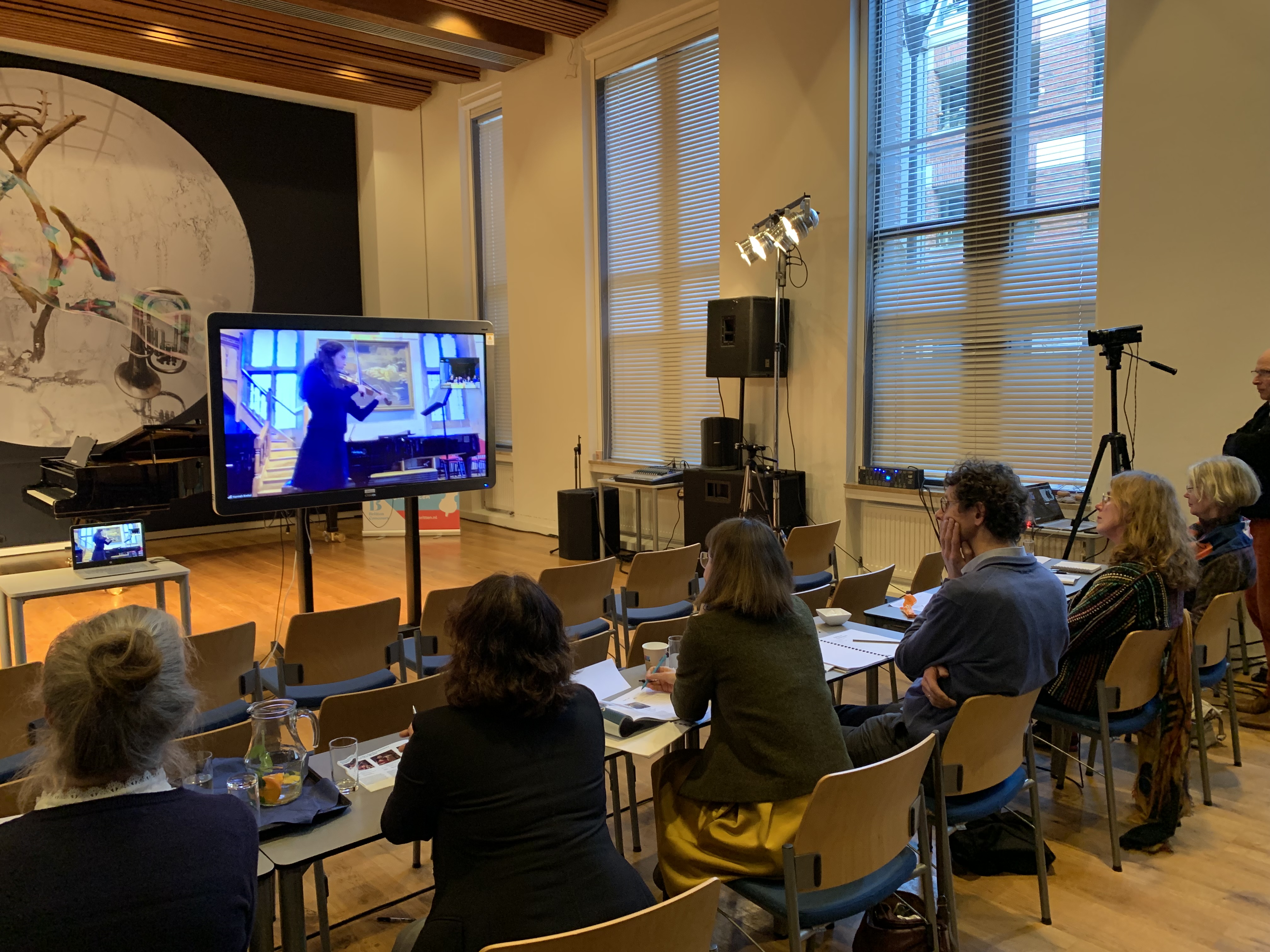
Verder was er een primeur in het geval van Hannah Krekel, die mocht voorspelen door een live Zoom-verbinding vanuit Wales. De matige geluidskwaliteit van dit medium was echter vermoedelijk geen aanwinst voor haar uitvoering van het langzame deel uit Brahms’ sonate in f kl.t. (op. 120 no.1).

Het verplichte stuk in Categorie II (15-18 jaar) was dit keer het 2e deel uit het altvioolconcert van Leo Smit. Het stuk heeft met zijn dikke harmonieën ondertonen van free jazz, en biedt grote mogelijkheden om zich te onderscheiden. Je kon soms al binnen enkele maten van dit stuk horen of de kandidaat iets extra’s te bieden had. Het stuk is zowel technisch (met name lastige intervallen) en muzikaal een hartige uitdaging, je moet flink aan de slag met je fantasie om streken, timing, toonkleuren, en dynamiek in te zetten om de interessante muziek eruit te lokken.

Jutta Demuynck

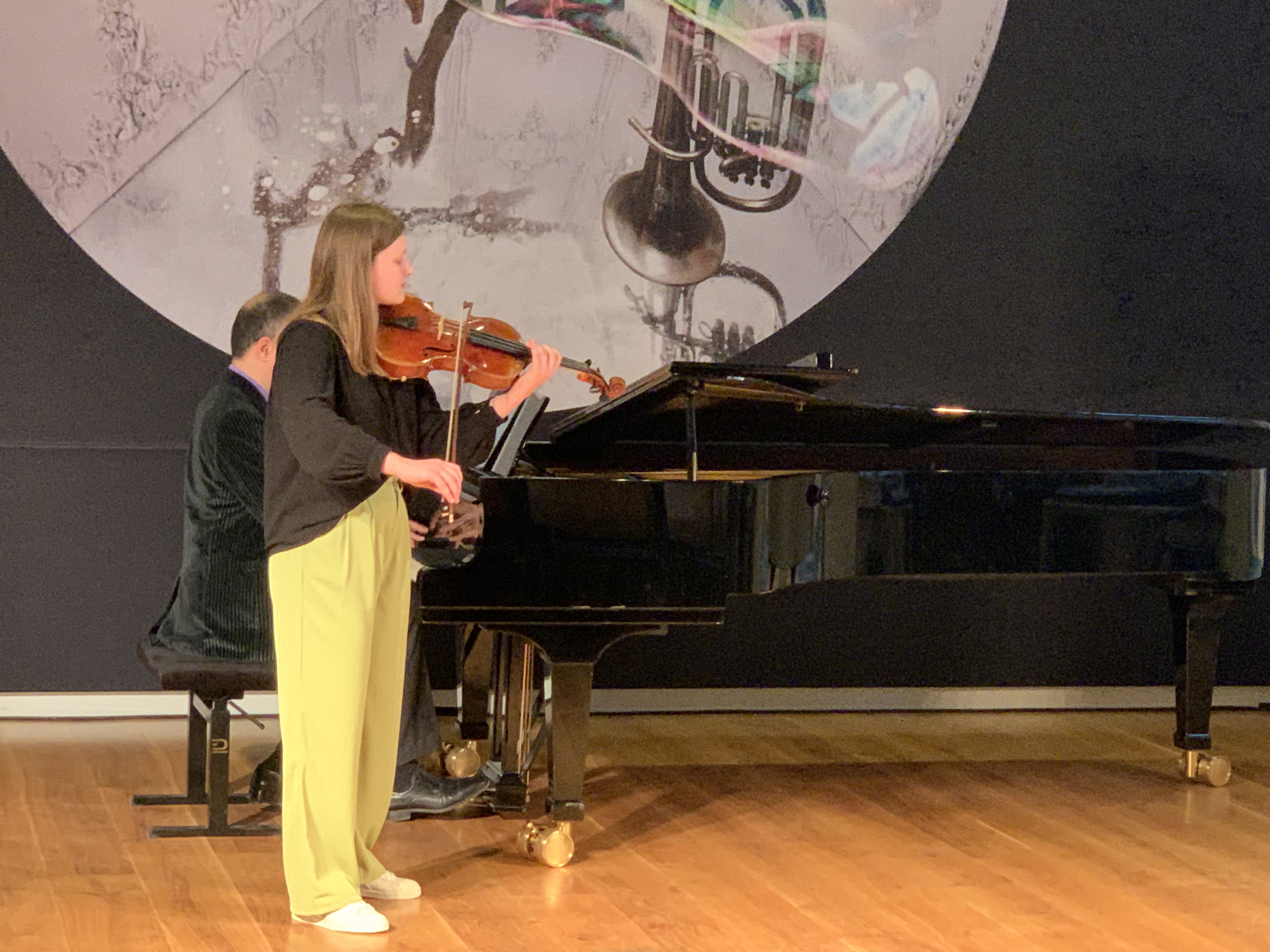
De uiteindelijk terechte winnares in deze categorie was Jutta Demuynck (studente van Julia Dinerstein). Haar Leo Smit vertolking was innig, met souplesse gespeeld, en het durf om haar muzikaliteit in te zetten om de jazzy timing zowel ultra soepel en laid-back te laten zweven, en dan weer heftig aandringend. Daarnaast speelde ze de “Scène de Ballet” van Charles de Bériot, eigenlijk zo’n irritant vioolstuk dat nogal lang duurt teneinde zoveel mogelijk technische hoogstandjes te laten horen. Jutta slaagde er desondanks in om ons hiermee te boeien, en dat vond ik razend knap!

De jury van het Britten Altvioolconcours 2023

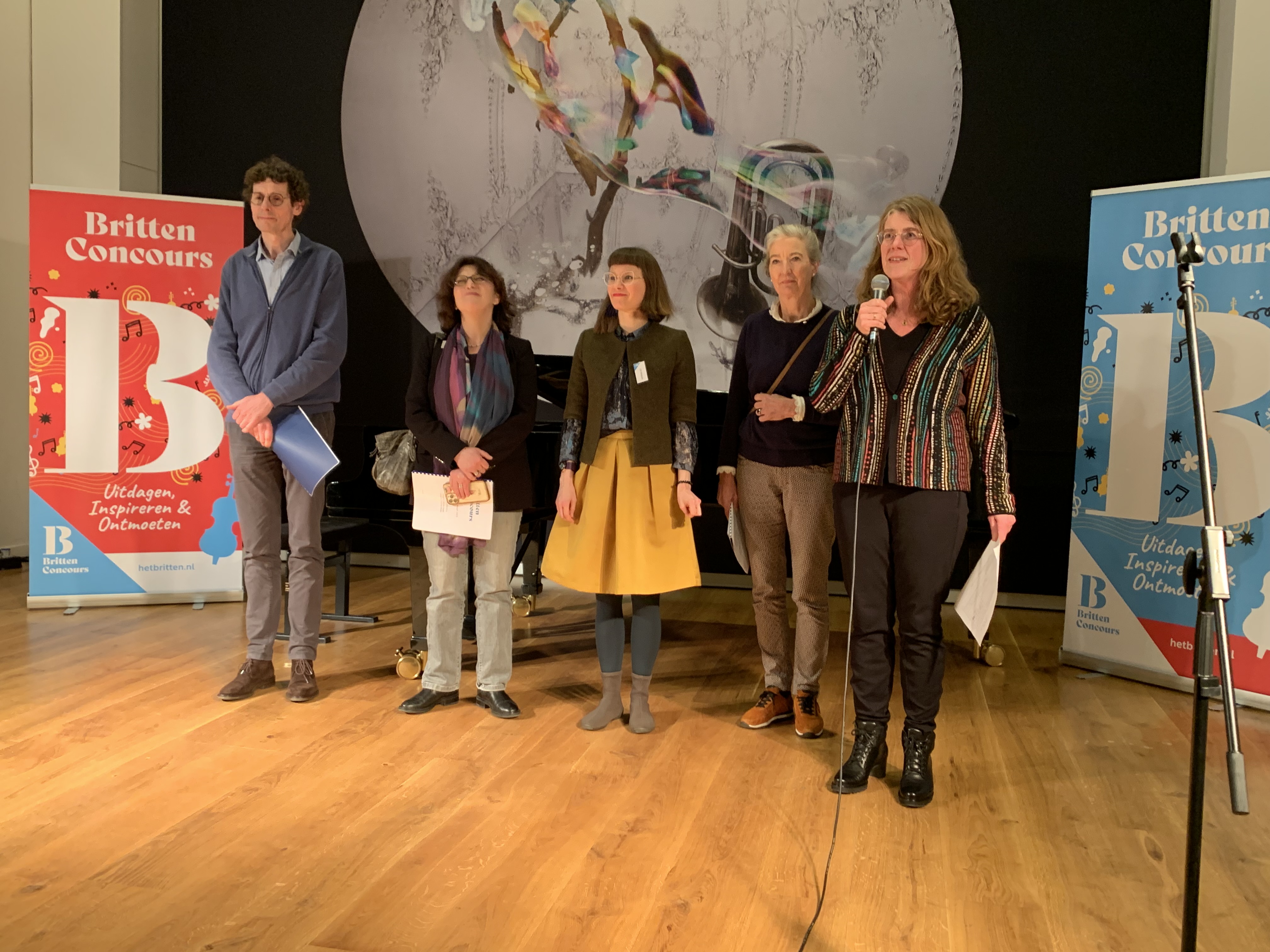
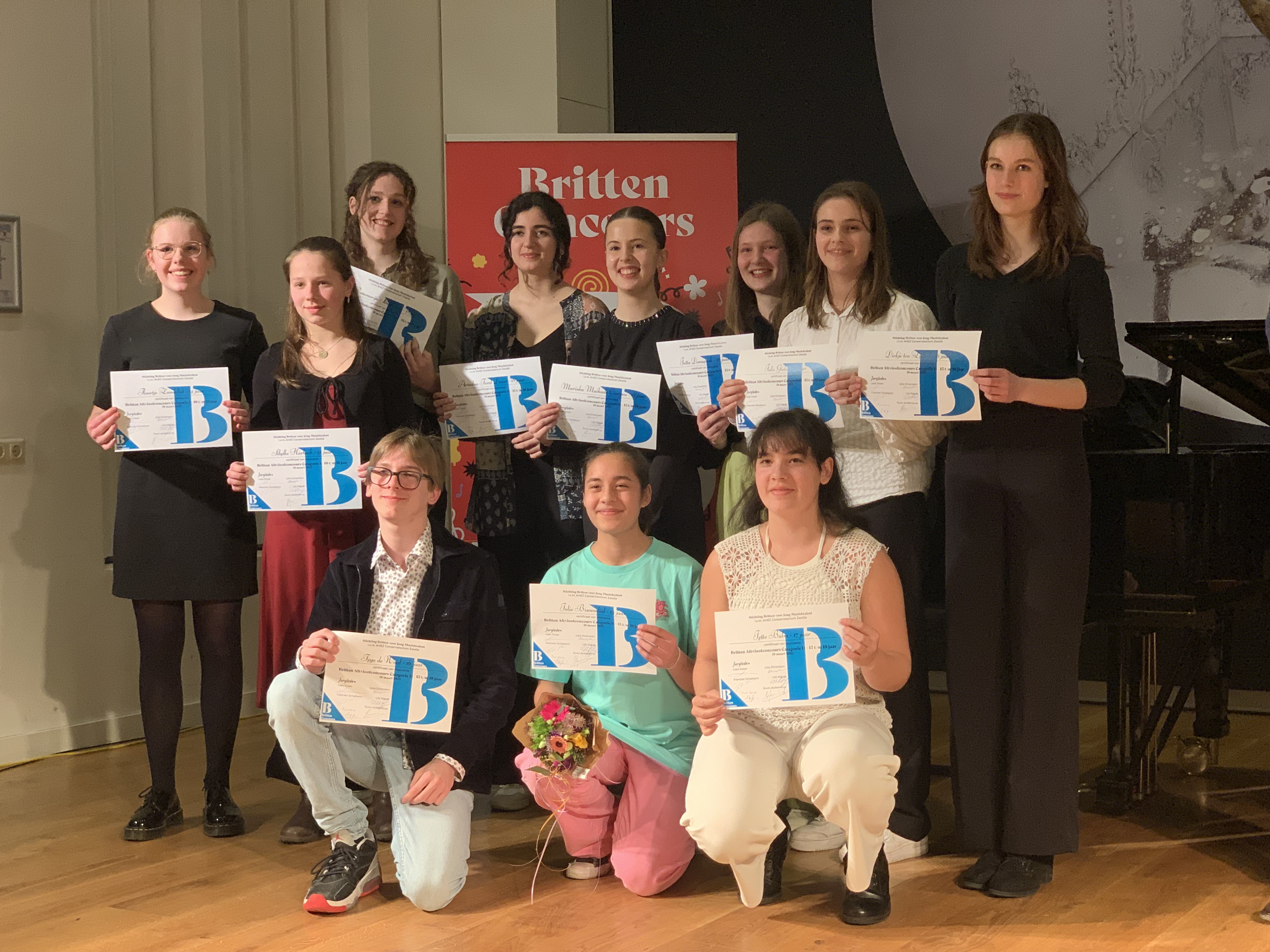
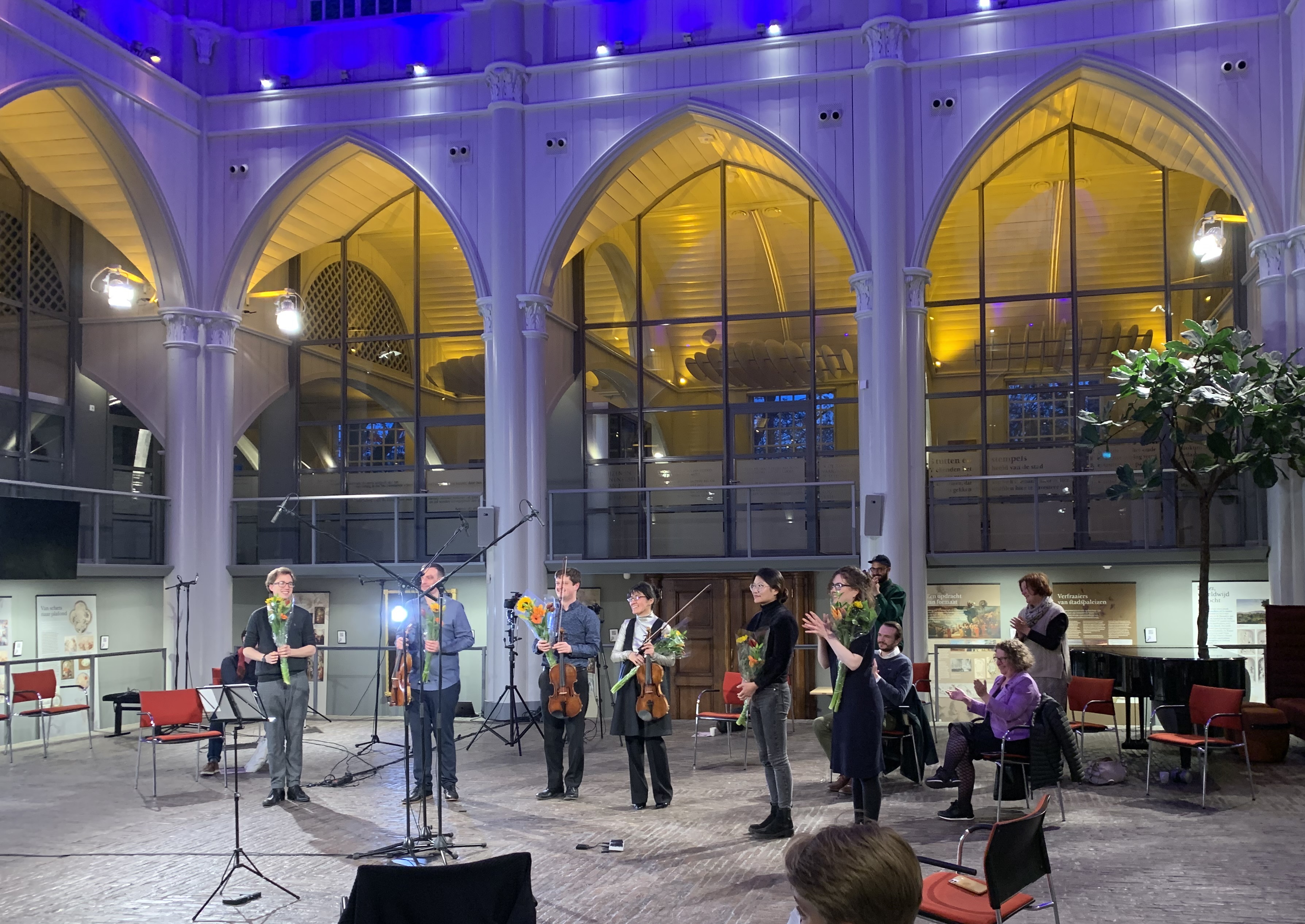
De jury (vlnr boven: Guus Jeukendrup, Julia Dinerstein, Lilli Maijala, Sylvia van der Grinten en voorzitter Francien Schatborn) had echter geen gemakkelijke klus in deze categorie, en zag zich uiteindelijk genoodzaakt om zes (van de 10) kandidaten te belonen. Naast de 1e prijs (hierboven genoemd) werden er twee 2e prijzen uitgereikt aan Marinha Campos Machado en Jolie Bisoendial, nogmaals twee 3e prijzen waren voor Ariadna Terol Donat en Jytta Balm, en de Aanmoedigingsprijs ging dik verdiend naar Julie Gielen.

De speciale DVS Bladmuziekprijzen gingen dit jaar naar Floortje Zandvliet en Julie Gielen.

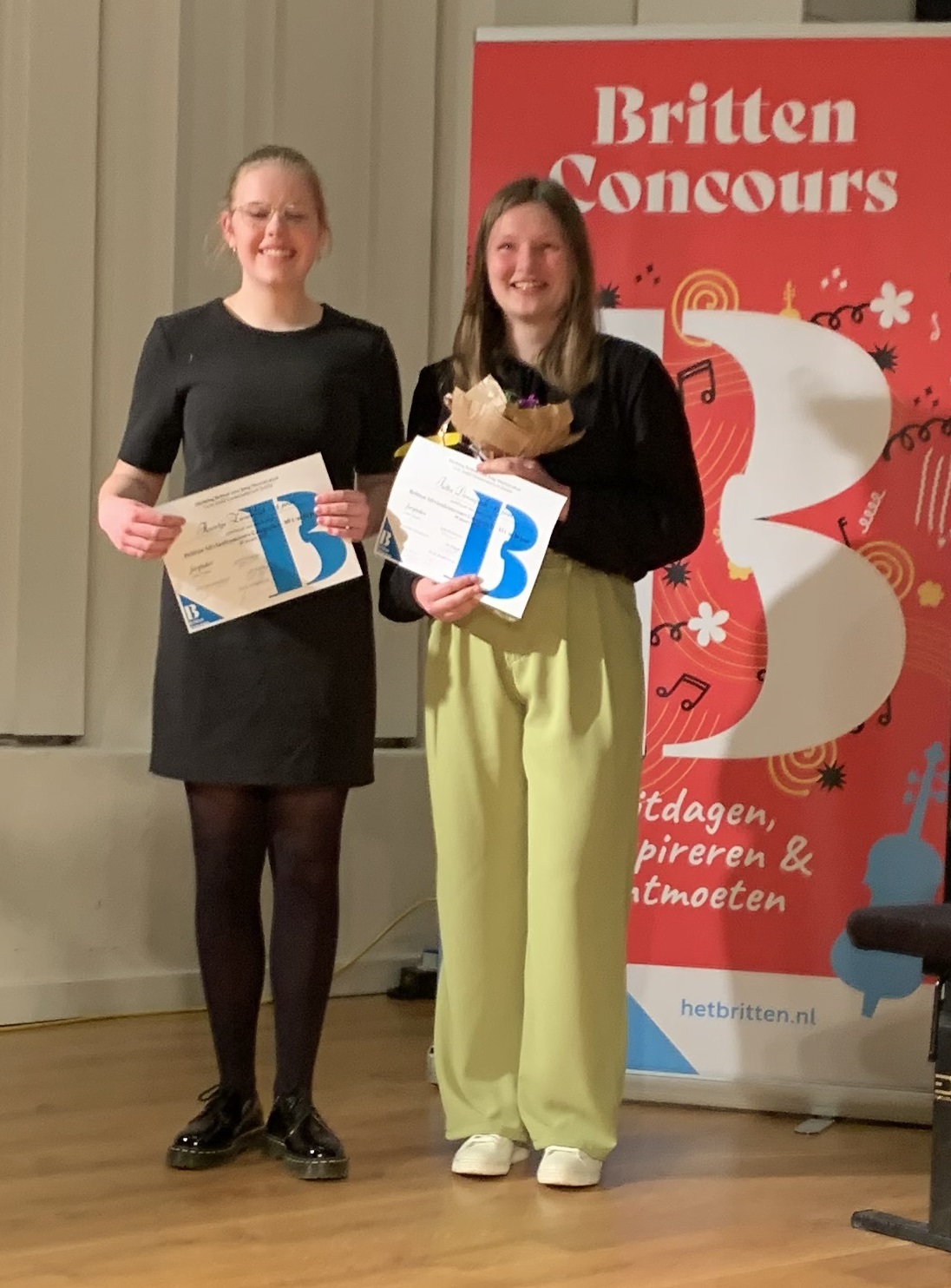
De volledige uitslag (met alle toegekende speciale prijzen) wordt tzt. op de website van het concours gepubliceerd. Hieronder is een groepsfoto van alle deelnemers, met hun certificaten van deelname met daarop het nieuwe “B”-logo van het concours. En nee, er zijn hiermee absoluut géén politieke bijbedoelingen! 🙂

Verder is het natuurlijk zeer aan te bevelen om de 1e prijswinnaars (Floortje en Jutta) straks te horen en zien soleren met het Britten Jeugd Strijkorkest bij het galaconcert op 16 april in Theater de Spiegel (Zwolle). Daar zullen bovendien Maria Milstein en Dana Zemtsov de Sinfonia Concertante van Mozart spelen.

Hartelijk dank aan de Concoursorganisatie van Het Britten Jeugd Strijkorkest, en op naar de volgende editie van het Britten Altvioolconcours in 2025!

De live stream van het hele altvioolconcours kunt u hier terugkijken en luisteren:

Report from Vinciane Béranger Masterclass

by Sofie Booy, DVS

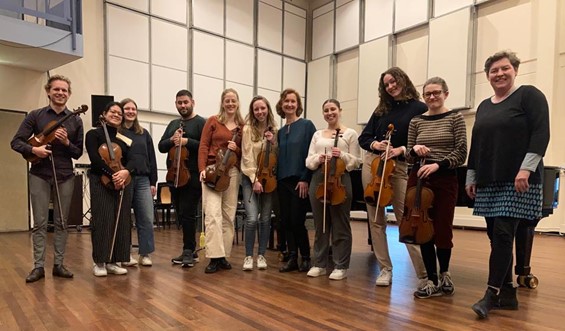
On Monday the 13th of February, the French violist Vinciane Béranger came to give a Masterclass at Codarts in Rotterdam. This was organised as an Erasmus exchange between her and our teacher Karin Dolman. Vinciane gave a masterclasses in Rotterdam and Tilburg (the next day). Next month, Karin is will in return teach masterclasses in Paris and Lausanne, the conservatories where Vinciane teaches.

Vinciane also gave a concert Sunday the 12th of February together with Roderigo Robles de Medina in the Trinitatiskapel in Dordrecht. They played, among other pieces, a new composed piece by the American composer Sacco, who also gave a masterclass in Rotterdam that week.

The masterclass took place during the whole afternoon. There were 7 students who each got 45 minutes to play. We started with Anabel and Wilker, who both played the Schwanendreher by Hindemith. This was a combined lesson. She worked together with them by letting them play after each other when there was a question answer phrase in the music. This was really interesting to see and listen to. She said that she has never done a duo masterclass lesson so this was her first time but it went really well.

Vinciane also gave a little lecture about Rebecca Clarke. She talked about the manuscript and the different versions and editions that exist. There are multiple versions each with little differences, like an added accelerando or a missing note, which is very interesting to dive into.

Vinciane kept  the masterclass very interesting for the listening students by asking questions if we could hear differences, or to give feedback or ideas on how to play something, or different character ideas. Because of this, it did not feel like having to listen a long time to see people play, but to really be interactive during the whole masterclass.

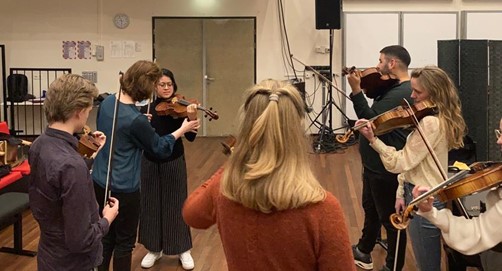
In the end, there was time to ask questions. Someone had a question about continuous vibrato from note to note. So she invited all of us on the stage with our violas. She gave everyone a mini lesson and individual tips. We first all looked if the student used arm or wrist vibrato, and from there on she gave some tips.

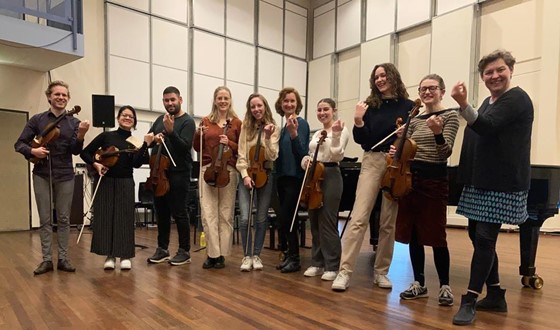
It was a very interesting masterclass where everybody learned a lot. It was very inspiring for us all, and every student left the masterclass with a lot of good energy to practice! Thank you Vinciane Béranger!


Report from Timothy Ridout Masterclass

by Sofie Booy
Wednesday 15th of February, 2023

Timothy Ridout gave a masterclass last week in the conservatory of Amsterdam. Four students were selected to play for him. The afternoon was filled with beautiful viola music. The hall was filled with people listening to the masterclass.

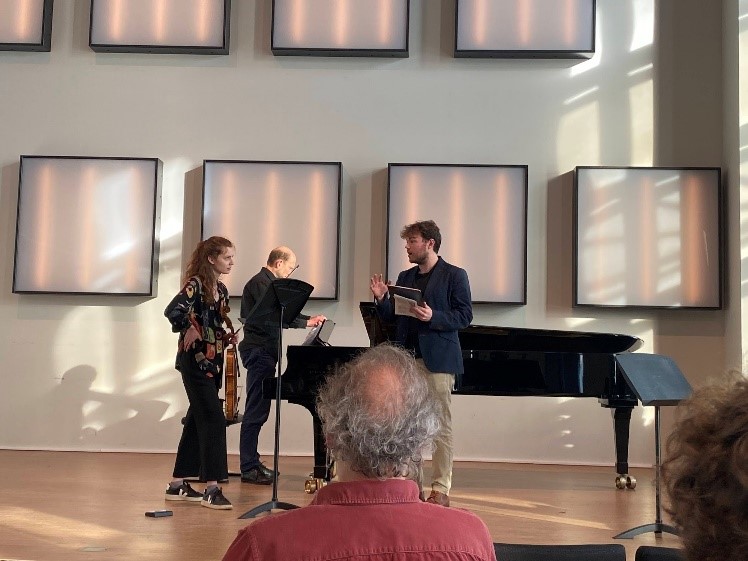
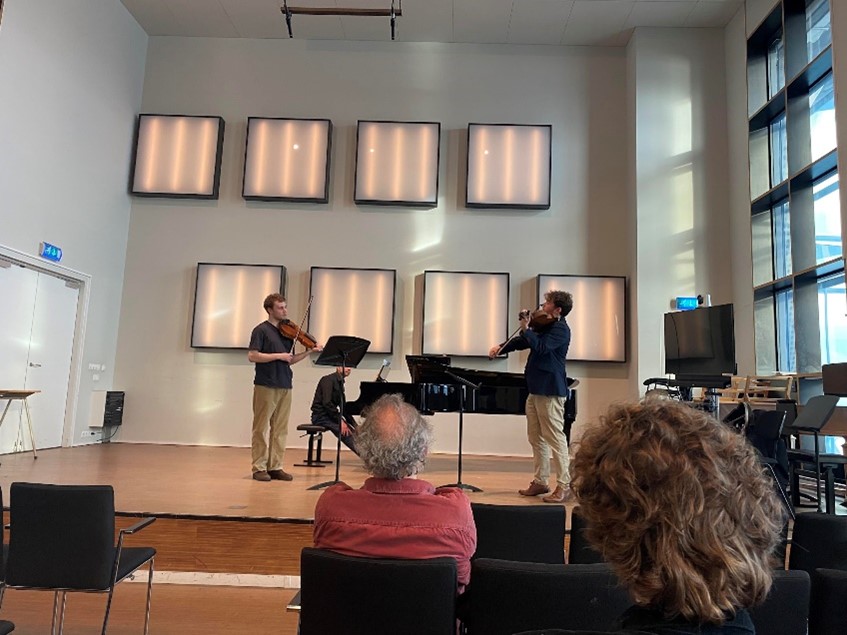
The afternoon started with the Hindemith op. 11 No. 4 played by Connie Pharoah accompanied by Daniël Kramer. They played very beautifully. Timothy started working with her on the phrasing in the music. He gave some tips on how to keep the tension in the music while not giving it away too much. He played how he wanted it to be played and the student could try it out after that.

After the Hindemith we had the next student, Fiachra de hOra, playing Schumann’s Märchenbilder with Daniël Kramer. Timothy gave him tips to play more freely, and took the time for the student to understand and to be able to play how he explained something. Sometimes the student needed to play a passage slowly a few times before continuing with the pianist.

After  a short coffee break we continued with Anuschka Pedano, who played the César Franck sonata with Martijn Willers. Timothy worked with her on a difficult position shift in the climax of a build-up phrase. He had a lot of musical ideas for this piece, and he stayed very calm and nice.

The last masterclass student was Simon Rosier, who played Vieuxtemps with Martijn Willers. They started with the slow part of the sonata, focusing on making more sound. In the fast part they focused on intonation in combination with sound production.

Timothy was very excited to work with all the students. When each student’s time was up, he always wanted to finish the piece and give as much overall tips that he still had in his mind.

The afternoon ended with a Q&A. There was a question about what do you do to warm up? He said he started always with some exercises to get his shoulders and neck relaxed. Then he said it depends on how much time he has, differing from 5 minutes to warm up until an hour. He likes to play scales (also chromatic scales) and arpeggios. And he uses the Kreutzer etudes to get his hands and fingers working. He also plays slow scales with vibrato to make sure everything is fluent, and funny exercises like standing on one leg. He also mentioned the Dounis’ Daily Dozen, which is originally for violin. He mentioned that its good to do proper warmups when you have the time, but avoid the feeling that you have to do the same thing every day. He also talked about slow practicing and about how to maintain a piece.

He was very kind to everybody and very approachable. He gave a lot of good tips to the students that also any other musician in the public could use.

IVC Columbus Blog – Day 4

The 47th International Viola Congress takes place in Columbus, Georgia (USA) from June 1st – 5th, 2022. This daily blog / report is delivered to you by DVS board member Emlyn Stam.

Day 4: Satuday, June 4th, 2022
<previous day> <next day>

The final full day of the viola congress included an enormous array of activities. The morning session featured our own DVS board member Karin Dolman’s performance of her own composition Pierrot Suite in full costume. Dolman’s performance was very well received in a packed theatre. Her piece tells the story of Pierrot, Harlequin and Colombine with a few references to Schönberg, Richard Strauss and others. Her performance was preceded by a warm rendition of Bach’s Violin Sonata number 2 by David Rose from the Cleveland Institute.

Karin Dolman’s performance “Pierrot”, in full costume (source: Karin Dolman’s vlog)

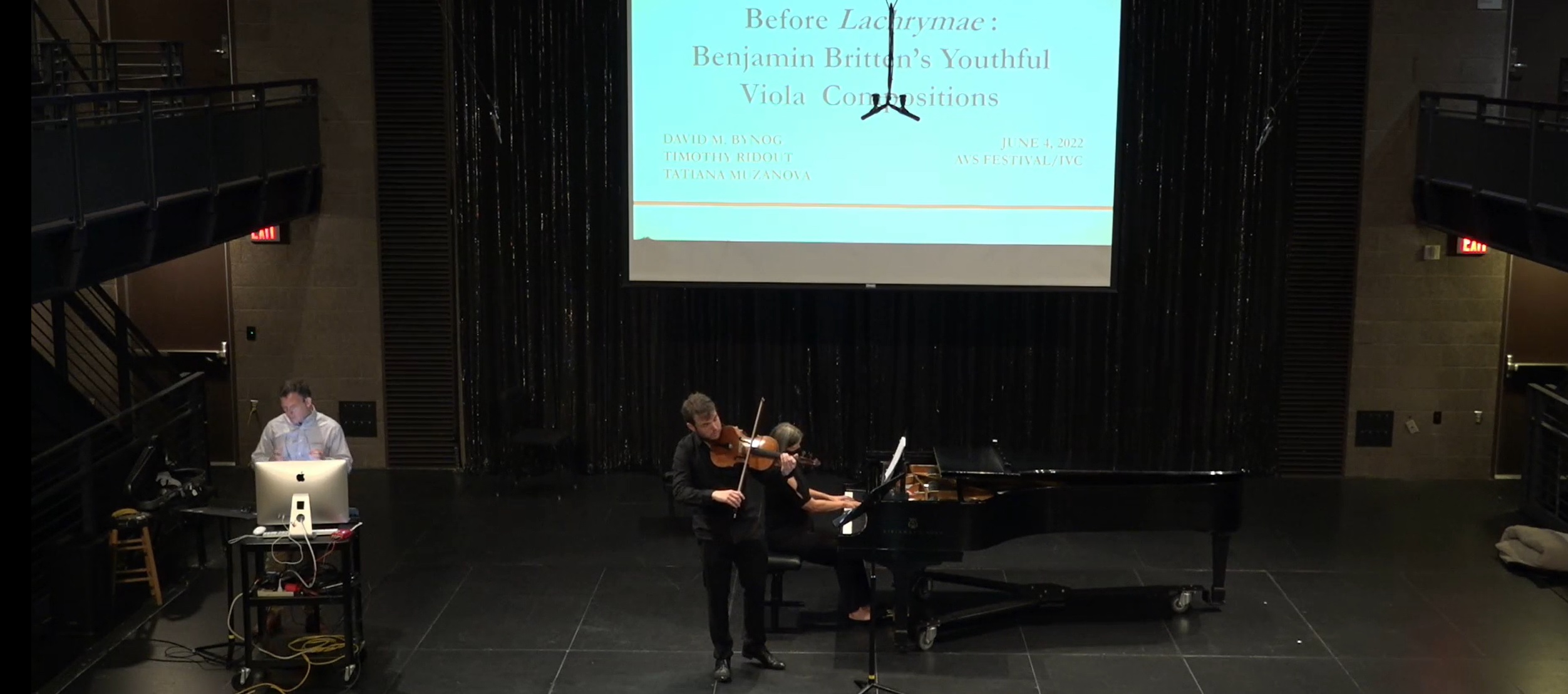
Scholar David Bynog from Rice University gave a lecture on Britten’s unpublished youth works and sketches for viola, complemented by marvelous performances by Timothy Ridout. Britten’s youthful Sonatina is a wonderful work that reveals the extent of the young composer’s talent at the young age of 14. We can only hope that the Britten-Pears Foundation will agree to publish these works so they can be disseminated amongst violists and music lovers alike. Bynog’s lectures touched on Britten’s relationship with the viola as a youngster as well as his relationship with violists over the course of his career, including William Primrose and Cecil Aronowitz.

David Bynog and Tim Ridout present unpublished Britten works for the viola (source: IVC livestream frame capture)

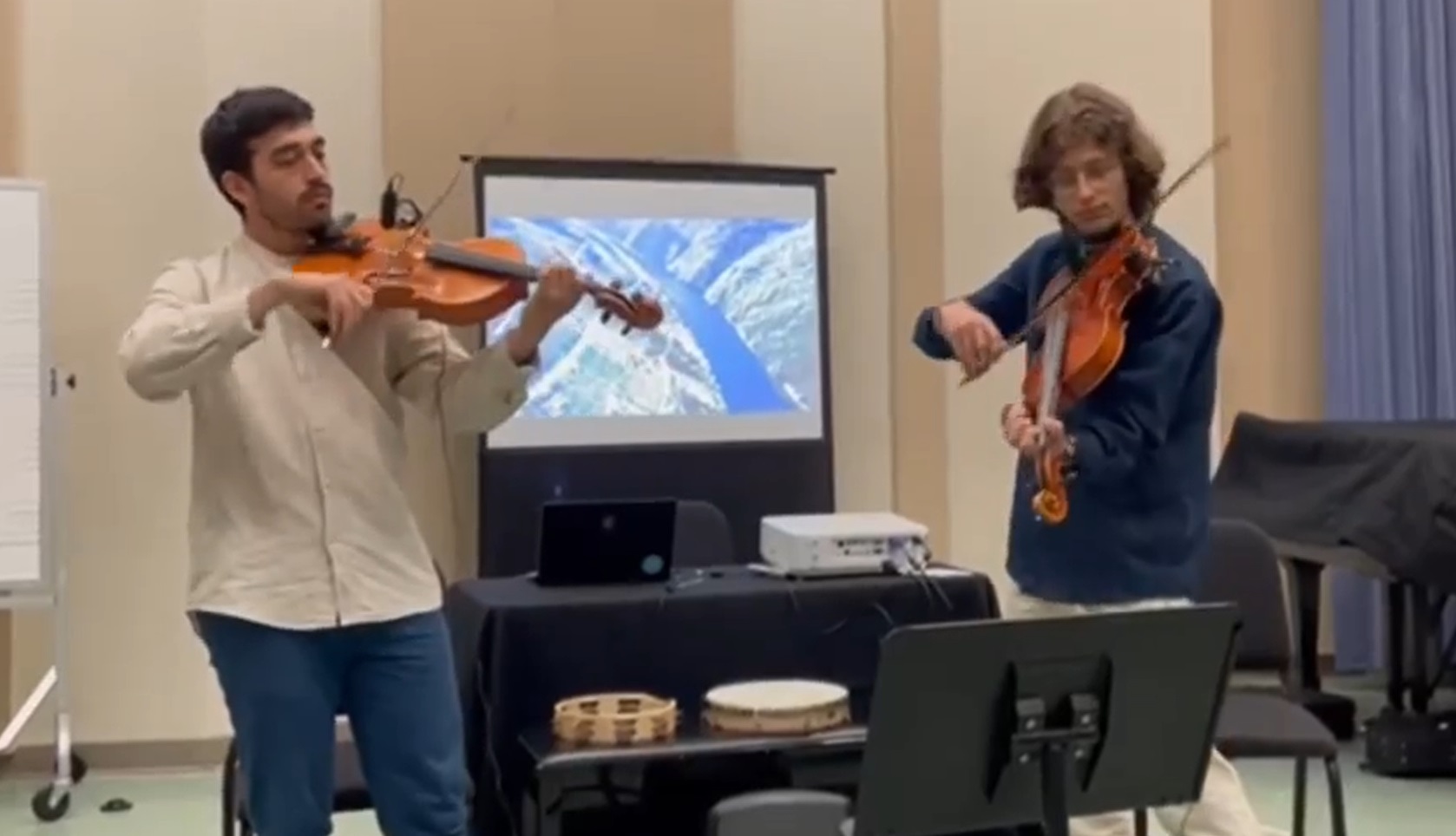
In the afternoon Santiago Velo Quintairos and Fernando Fresno Zarza (members of our DVS delegation and students at Codarts Rotterdam) presented a lecture on performing traditional Muiñeira’s from the Galicia in Spain on two violas. Their work used looping and pickup microphones to create a sound texture including percussion sounds, voice and viola. Their presentation was warmly received and their performances were both lively and convincing.

Recital by DVS/Codarts delegates Fernando (l) and Santiago (r) (source: Karin Dolman’s vlog)

This was followed by a presentation by veteran violist Thomas Tatton on the Joy of Practice. He gave a number of important guidelines on practicing to the assembled crowd and went through real live examples with the group having them practice these under his guidance. Polish violist Marcin Murawski gave a lecture on Georgian composer Giya Kancheli’s 18 miniatures, a set of pieces of which he made the world premiere recording with pianist Nino Jvania. This turned out to be Kancheli’s last work and is full of warm melodic materials and jazz elements.

The evening concert featured a recital by Kim Kashkashian with pianist Renana Gutman. The program included Lera Auerbach’s dark, brooding viola sonata Arcanum and Kashkashian’s own transcriptions of songs from South America, Schumann’s Fünf Stücke im Volkston (originally for cello) and Stravinsky’s Suite Italienne (originally for violin). These transcriptions, especially the Stravinsky, proved to be less than successful as viola-piano works.

Kim Kashkashian’s evening recital (source: IVC livestream frame capture)

The traditional congress banquet featured an array of awards and in memoria, given that the congresses have not been held in the past (3) years due to the pandemic. The International Viola Society’s silver cleft for contributions to the viola was awarded to violist Robert Diaz and received by his parents and sister. The honorary membership was awarded to New Zealand violist Donald Maurice, whose achievements are too numerous and important to summarize here.

<previous day> <next day>

Editor’s notes:
1) You can also follow Karin Dolman’s Columbus IVC VLOG (yes, video!) on facebook, starting here, and continuing here, here, here, here, and here.
2) Even if you missed the live event, you can still register (as a “Virtual attendee”) to explore all the recorded contents (lectures, recitals, masterclasses) of this congress for another 3 months! See the Congress Website for full information.


IVC Columbus Blog – Day 3

The 47th International Viola Congress takes place in Columbus, Georgia (USA) from June 1st – 5th, 2022. This daily blog / report is delivered to you by DVS board member Emlyn Stam.

Day 3: Friday, June 3rd, 2022
<previous day> <next day>

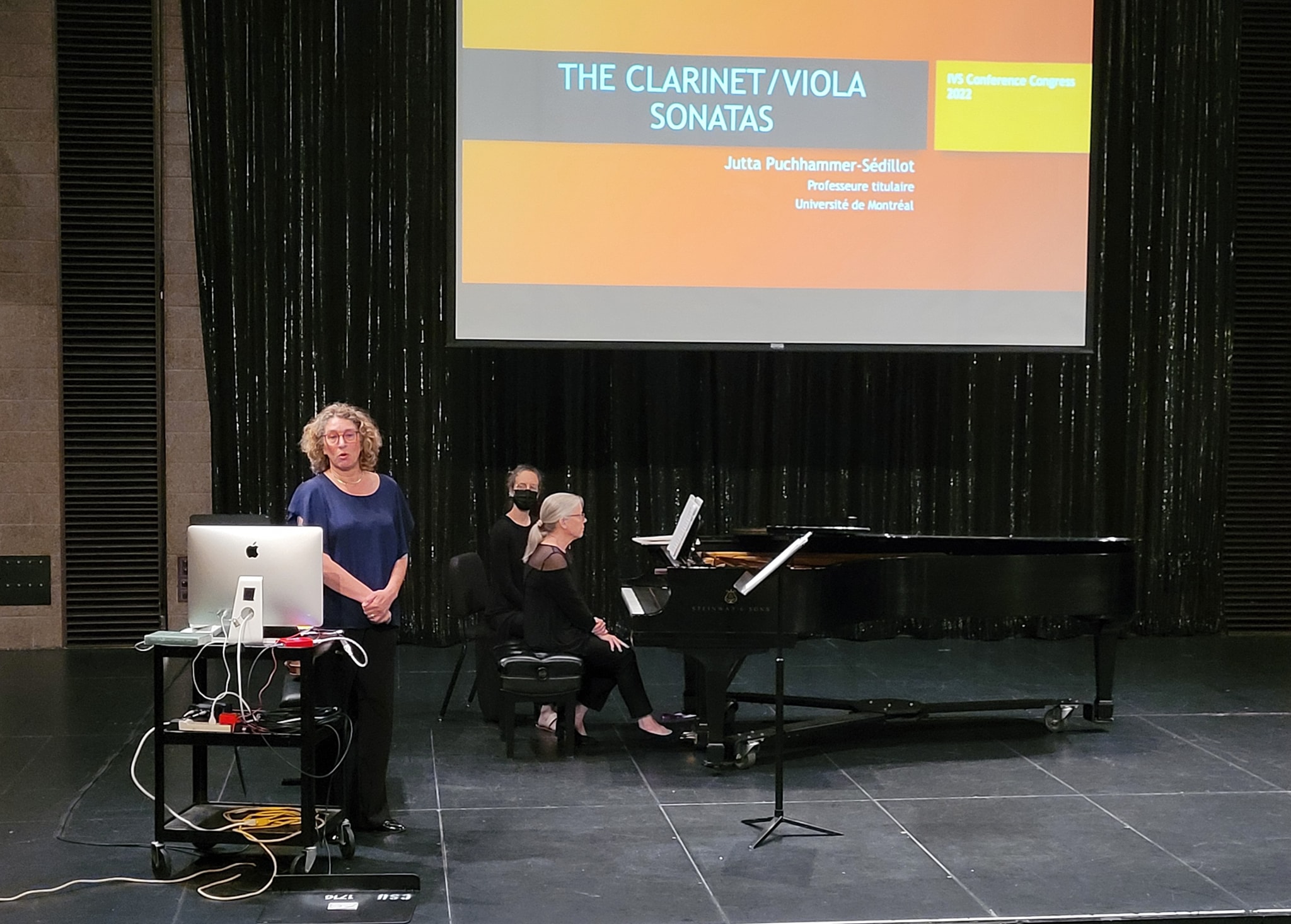
The third day of the International Viola Congress featured some important contributions from the Dutch Viola Society. Violist Elisabeth Smalt and singer Alfrin Schmidt performed their original adaptations of Harry Partch’s songs. I gave my lecture on early-recorded performance practices, and violist Jutta Puchhammer-Sedillot (Université de Montréal) opened her lecture-recital with a performance of Dutch composer Theodor Verhey’s (1848-1929) charming Characteristic Pieces. Puchhammer’s lecture-recital focused on the numerous little-known works from the 19th and early-20th centuries for clarinet and piano that were also published in versions for viola and piano. The lecture, entitled ‘It does not always have to be Brahms’, revealed a broad list of works by some better and lesser-known composers from Max Reger and Charles Villiers Stanford through Egon Kornauth and Albert Wustrow. Puchhammer and pianist Elise Desjardins performed a selection of movements from the works discovered with admirable intensity and dedication.

Jutta Puchhammer lecturing on clarinet/viola repertoire (source: Marcin Murawski)

A lecture-recital by violist Rose Wollman (University of Notre Dame) focused on her original recital project centered on Ligeti’s Viola Sonata. Wollmann chose 17th and 18th-century works and commissioned contemporary works to play between the sonata’s various movements. She performed the world premiere of some of these newly commissioned works by violist-composers such as Garth Knox and Atar Arad. The recital will no doubt be impressive when presented in its full form in the future.

Featured Artist Kim Kashkashian giving a Masterclass (source: Marcin Murawski)

Viola guru Kim Kashkashian is a featured artist at this year’s congress. She gave a masterclass in front of a large crowd of adoring violists. Our own Santiago Velo from Codarts University played a movement of the Ligeti for this class at a high level.

The evening showcase featured a unique standup comedy viola performance by Isabel Hagen. Hagen is a professional standup comedian who also studied the viola at Juilliard. Her performance featured comic songs performed with her own plucked viola accompaniment, as well as some humorous interchanges between short performance of serious viola music and hard-hitting jokes. Hagen touched on many of the standard tropes popular with today’s young generation of comedians. Seeing a violist thrive as a standup comedian on such a high level is a testament to both the versatility of the instrument and its players today.

Isabel Hagen, violist and standup comedian (photo source: livestream screenshot)

<previous day> <next day>

Editor’s notes:
1) You can also follow Karin Dolman’s Columbus IVC VLOG (yes, video!) on facebook, starting here, and continuing here, here, here, here, and here.
2) Even if you missed the live event, you can still register (as a “Virtual attendee”) to explore all the recorded contents (lectures, recitals, masterclasses) of this congress for another 3 months! See the Congress Website for full information.


IVC Columbus Blog – Day 2

The 47th International Viola Congress takes place in Columbus, Georgia (USA) from June 1st – 5th, 2022. This daily blog / report is delivered to you by DVS board member Emlyn Stam.

Day 2: Thursday, June 2nd, 2022
<previous day> <next day>

The second day of the IVC 2022 featured a packed schedule. The first recital with students from Université de Montréal started at 08:00 with Piéces de Concours. The hour was so early that none of our DVS delegates were able to attend. We were told that the unfortunate students had no opportunity to warm up because the building was closed beforehand.

The first lecture of the day was given by Sachin Shukla (a student at the New England Conservatory) on the Walton Viola Concerto. He explored the concerto’s cryptic dedication to Walton’s love interest Christabel in the context of Walton’s working class origins and Christabel’s status as a member of the nobility. His theoretical analysis of the concerto was highly original and an article in the American Viola Society’s Journal is forthcoming this fall.

Leanne Darling (State University of New York) gave an inspiring lecture recital on looping, the use of live, electronically recorded loops in solo viola repertoire. She explained the technological tools involved and gave practical advice on practicing with and using loops for improvisation. The presentation concluded with a performance of 5 fascinating contemporary works for solo viola involving looping. One of the highlights was the work Flight by New York composer Trevor New full of stilted textures, unusual in this genre of music.

Leanne Darling performing with loop station (source: Karin Dolman)

A short walk to the Columbus State University’s Space Science Center followed for a recital in the omnisphere cinema. Meditative 3D animations with scientific and space-related themes accompanied the performances. This multidisciplinary experience connecting science and viola music was an interesting addition to the conference program.

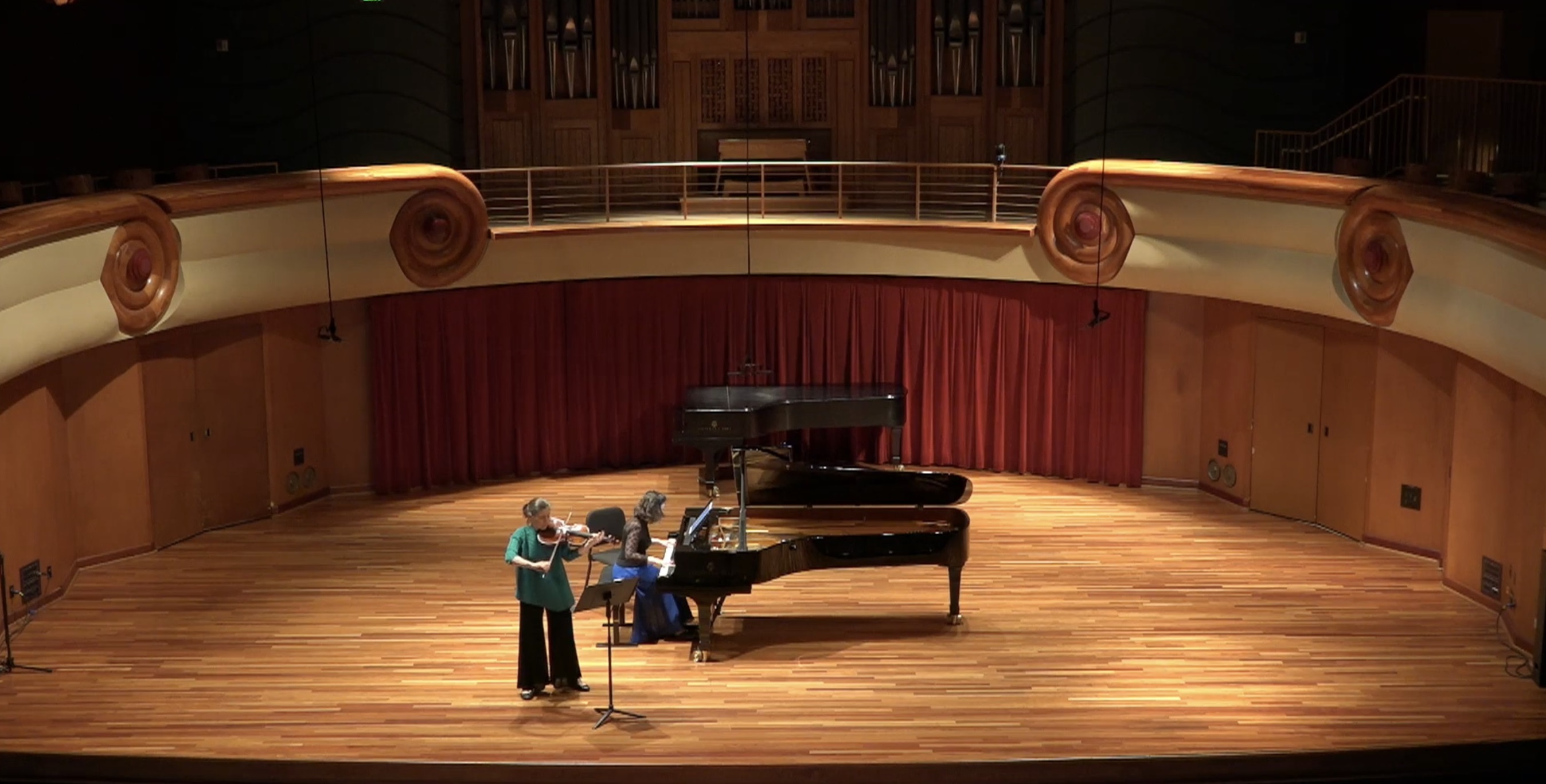
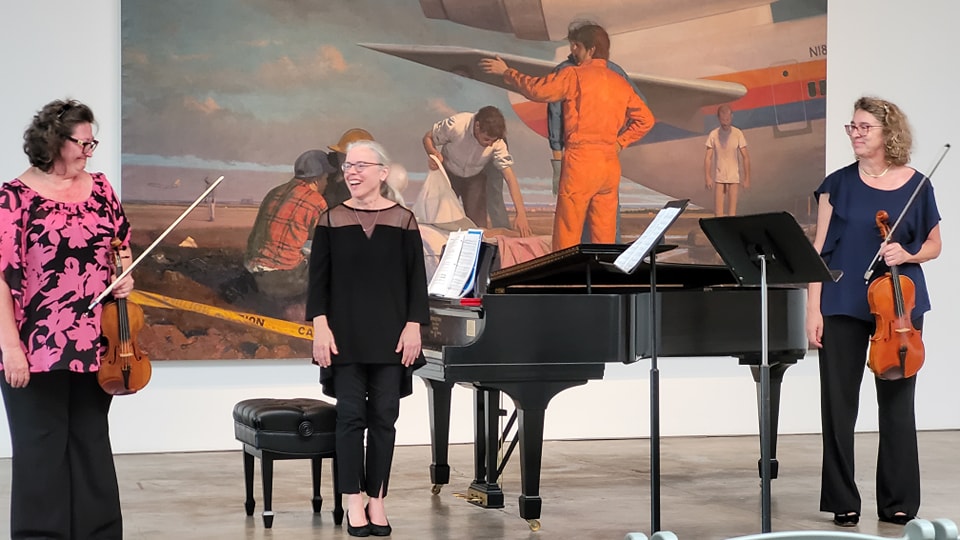
This was followed by a recital featuring the previously unknown concerto for violin and viola by Ferdinand Thierot, a salon-like composition which was admirably performed by violist Jutta Puchhammer, violinist Annette-Barbara Vogel and pianist Elise Desjardins.

Vogel, Desjardins and Puchhammer (photo credit: Marcin Murawski)

Daphne Gerling and Katherine Lewis gave a fine performance of Polish composer David Pajdzik’s concerto for two violas entitled Old Time Suite from 2019. The piece, a rather severe neo-classical work reminds one of Henryk Górecki’s late works.

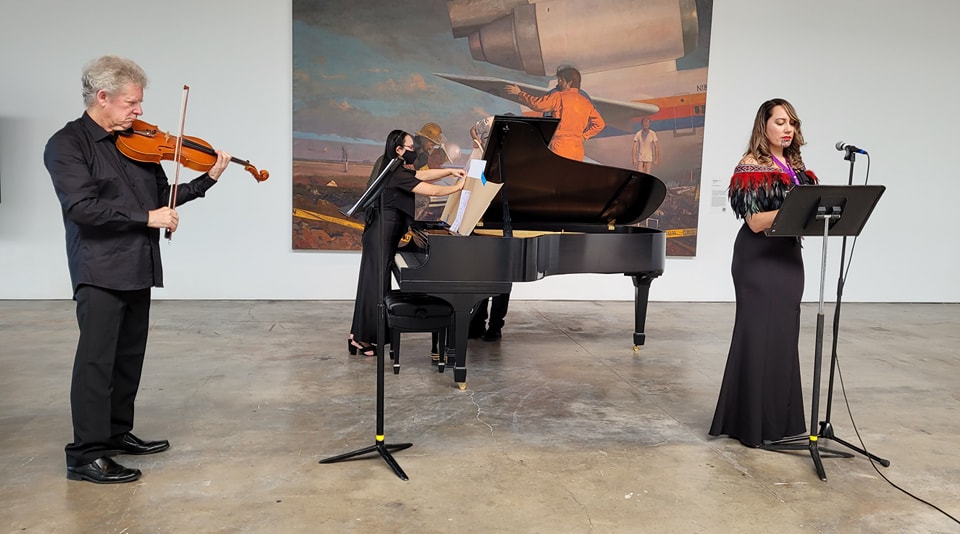
The socially engaged, multidisciplinary performance piece Taioro ki te Ao from New Zealand was one of the highlights of the congress. The performance features the Māori spoken word performer Sharn Maree Cassady whose texts reflect on the challenges her people face as a result of colonization. The work centers indigenous narratives conveyed through Cassady’s powerful and gripping stage presence and superb sense of rhythm and intonation. The music composed by Anthony Ritchie provides a strong emotional counterpoint to the text and was performed with seriousness and verve by violist Donald Maurice and pianist Sherry Grant.

From the performance of Taioro ki te Ao (photo credit: Marcin Murawski)

Timothy Ridout was the guest of honour for an evening concert featuring no fewer than 3 concerti accompanied by conductor Paul Hostetter and a professional orchestra pulled together for the occasion. His strong musical presence was palpable from the first note of Alessandro Rolla’s Viola Concerto in E flat major. Ridout plays with grace, incredible skill and a constant communicative sense of character. His proficiency extends to a complete knowledge of the orchestral score, a sense of engaged music making with the orchestra and an enormous pallet of sound colours which keep the listener engaged throughout. The second work on the program by Bulgarian composer Dobrinka Tabakova, called Suite in the Old Style, opened with Ridout playing a drum at the back of the orchestra. The work features uncanny orchestration with a prominent role given to the harpsichord. Tabakova draws on a myriad of influences in this attractive, colourful work including Stravinsky, Shostakovich and Bulgarian and Celtic folk musics. Compositional forms and tropes from the 18th century are used with a sense of fun and irony. The work represents a valuable contribution to the repertoire for viola and chamber orchestra. Ridout performed the piece with great zeal and a keen sense of timing. The final work of the evening was Johann Nepomuk Hummel’s Potpourri op.94. This work was previously known in a severely truncated form as the Fantasia for viola and orchestral owing to 20th century editions of the piece that cut out its middle sections. The full Potpourri contains myriad riches including variations on themes by Mozart, Rossini and others. Ridout played the work with ease and grace emphasizing its humorous character and tossing off technical fireworks with bravado. Ridout has clearly fulfilled his promise to become one of the leading violists of our time.

Featured Artist Tim Ridout stalked by DVS vloggers backstage (source: Karin Dolman)

<previous day> <next day>

Editor’s notes:
1) You can also follow Karin Dolman’s Columbus IVC VLOG (yes, video!) on facebook, starting here, and continuing here, here, here, here, and here.
2) Even if you missed the live event, you can still register (as a “Virtual attendee”) to explore all the recorded contents (lectures, recitals, masterclasses) of this congress for another 3 months! See the Congress Website for full information.

IVC Columbus Blog – Day 1

The 47th International Viola Congress takes place in Columbus, Georgia (USA) from June 1st – 5th, 2022. This daily blog / report is delivered to you by DVS board member Emlyn Stam.

Day 1: Wednesday, June 1st, 2022
<next day>

This year’s International Viola Congress is happening in the small town of Columbus, Georgia, USA. It’s been almost 3 years since the previous IVC (in Poznan, Poland), but more importantly, for the first time since 2012, the congress is once again organized in the United States, in conjunction with the American Viola Society’s annual festival.

Columbus is a quiet town with a distinctly southern atmosphere on the Alabama border. Houses with white columns and front porches with rocking chairs and friendly, southern hospitality. People routinely greet you when you pass them on the street. The various churches clearly play a big role in the community. It is also notable for those of us coming from abroad that numerous people on the street openly carry firearms. I also overheard one spirited discussion about politics in America at a local café.

Host Katrin Meidell welcoming Congress visitors (picture credit: Marcin Murawski)

The congress is taking place at the Columbus University’s Schwob School of Music and is hosted by the viola professor Dr. Katrin Meidell and her amicable team. The distinguished violist Manuel Diaz, her predecessor who is nearly 90 years old, was given an AVS award at the opening ceremony. He told the audience his incredible life story from his family’s flight during the Spanish Civil War to their arrival in Chile as refugees in the 1930s. In Chile, Diaz took up the viola and became the principal of the national orchestra. Eventually the coup in Chile forced Diaz to flee to the United States with his family where he in turn worked at the Atlanta Symphony and for a firm as an engineer before he was able to take up a professorship at Columbus State University.

After this warm introduction we were treated to an enthusiastic lecture by Andrea Houde (from the University of West Virginia) about using imagery to aid viola teaching. She spent a great deal of time addressing imagery for technical right and left hand matters which led to a spirited discussion. Her work does tend to assume that there is a single ‘correct’ bow hold and left hand position for playing the viola, which is at odds with the diversity of historical and contemporary practices.

Andrew Braddock (from West Kentucky University) gave an insightful lecture on Hans Werner Henze’s viola repertoire. He gave a spirited performance of Henze’s highly serious and fraught viola sonata. His performances exuded a great deal of precision while avoiding emotional extremes. His performance of the solo piece An Brenton similarly conveyed his great knowledge of the repertoire.

Numerous competitions and masterclasses also took place on day 1. Happy competitors of all ages received prizes from the American Viola Society. It was encouraging to see the racial diversity represented by today’s American viola students.

Visual impression from Natalie Loughran’s recital (image credit: Karin Dolman)l

The winner of the 2021 Primrose International Viola Competition Natalie Loughran gave the evening’s showcase recital with pianist Tatiana Muzanova. The program opened with Schumann’s Adagio and Allegro played with a warm, clean, graceful tone and an appealing vibrato. Loughran certainly plays with a high degree of precision and clarity of line and structure. She followed this with a performance of her own arrangement of the American composer William Grant Still’s (1895-1978) Suite, a beautiful if repetitive work with a neo-impressionist flavour. Still, an African composer born in Mississippi is rather unknown outside of the United States. Loughran’s performance of the second movement Loop from Ligeti’s Viola Sonata was unconventional in the application of a kind of Blues swing. I had never heard the piece played this way before and found it refreshing. The technical execution of the various left hand jumps was top notch. This was followed by a performance of American composer Stephen Coxe’s Elegy, an atmospheric if rather one-sided solo viola work which makes good use of the full register of the instrument. The final work on the program was Henri Vieuxtemp’s beloved Viola Sonata, performed with a great smoothness of sound and line and an intense vibrato. While performed with technical proficiency in every respect, the predictability of Loughran’s performance did little to overcome the deficiencies inherent in Vieuxtemp’s cookie cutter composition. Loughran’s playing reminds one a great deal of Kim Kashkashian’s in the subtle, smooth approach to sound and bowing. Given her young age of 24 and her already impressive accomplishments we are sure to hear more of Loughran in the future.

<next day>

Editor’s notes:
1) You can also follow Karin Dolman’s Columbus IVC VLOG (yes, video!) on facebook, starting here, and continuing here, here, here, here, and here.
2) Even if you missed the live event, you can still register (as a “Virtual attendee”) to explore all the recorded contents (lectures, recitals, masterclasses) of this congress for another 3 months! See the Congress Website for full information.


Trio Estatico & Bianca Bongers in Concert

Kristofer G. Skaug – Amstelkerk, April 3rd 2022

What a delightful surprise, to be invited to a concert dedicated entirely to (new) music for three violas! The Dutch composer Bianca Bongers joined forces with the newly formed Trio Estatico to create a very interesting evening in the Amstelkerk (Amsterdam).

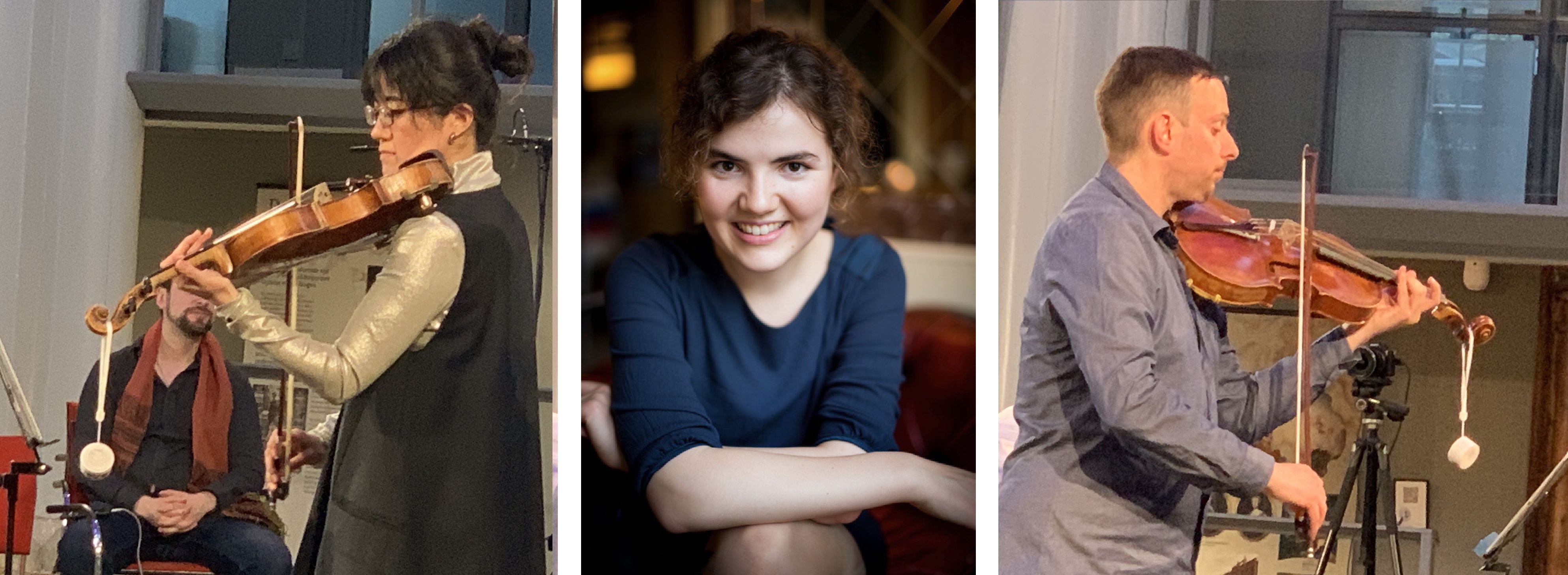
The Trio consists of viola players from top-notch European ensembles for contemporary music:  Paul Beckett (Klangforum Wien), Megumi Kasakawa (Ensemble Modern) and John Stulz (Ensemble Intercontemporain), and this was in fact their first live concert (!).

The performance was preceded by an extensive interview with three of the composers contributing to the programme: Jakob Böttcher, Bianca Bongers and Yang Song, discussing their pieces as well as their general approach to writing for the viola, and three violas in particular. The violist John Stulz joined them on stage to note that there was a relative lack of new repertoire for viola trio (Editor’s note: the DVS Catalogue of Viola Ensemble Music currently lists “only” 80 original compositions for this format – vastly outnumbered by viola duos and quartets).

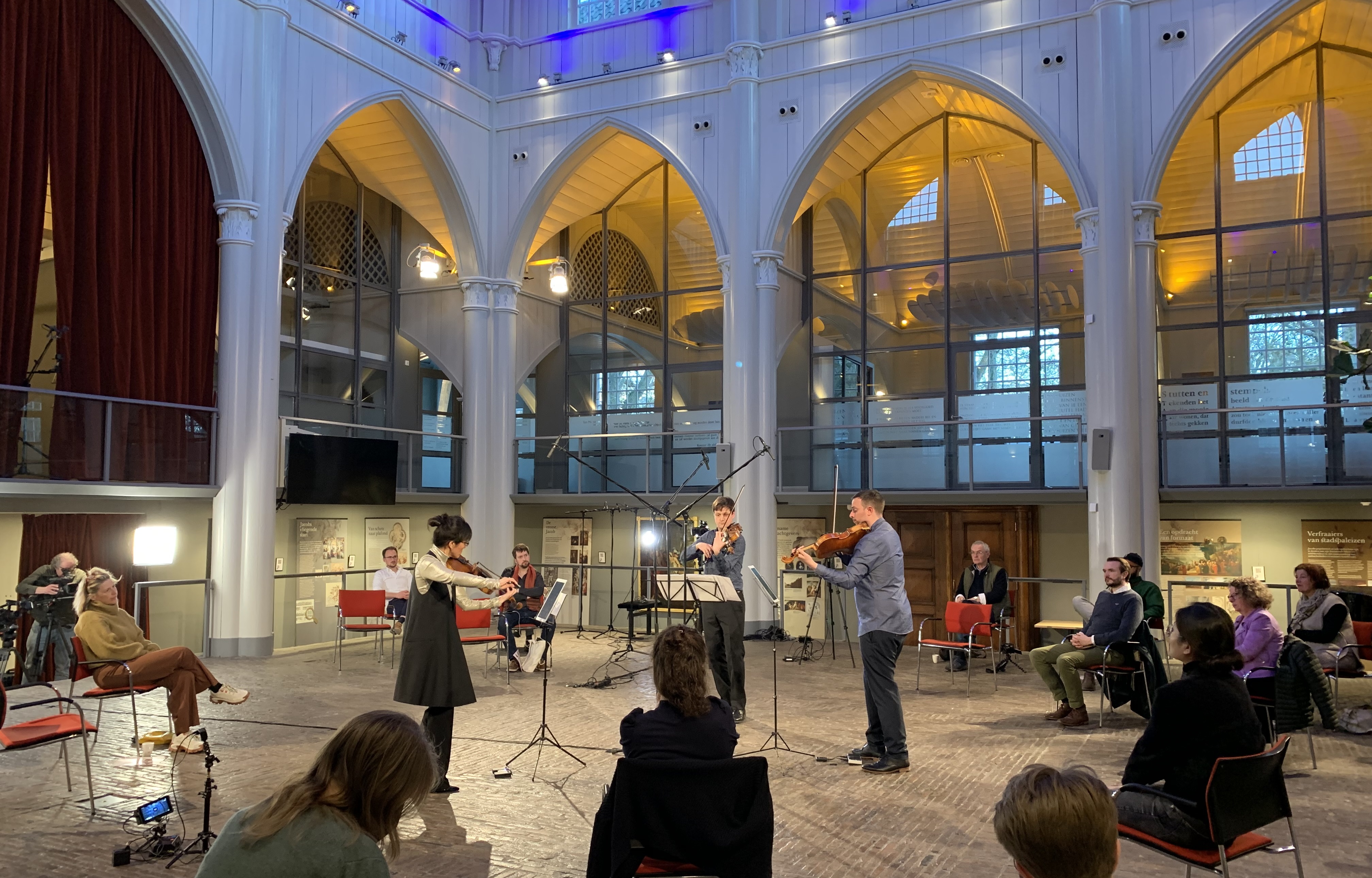
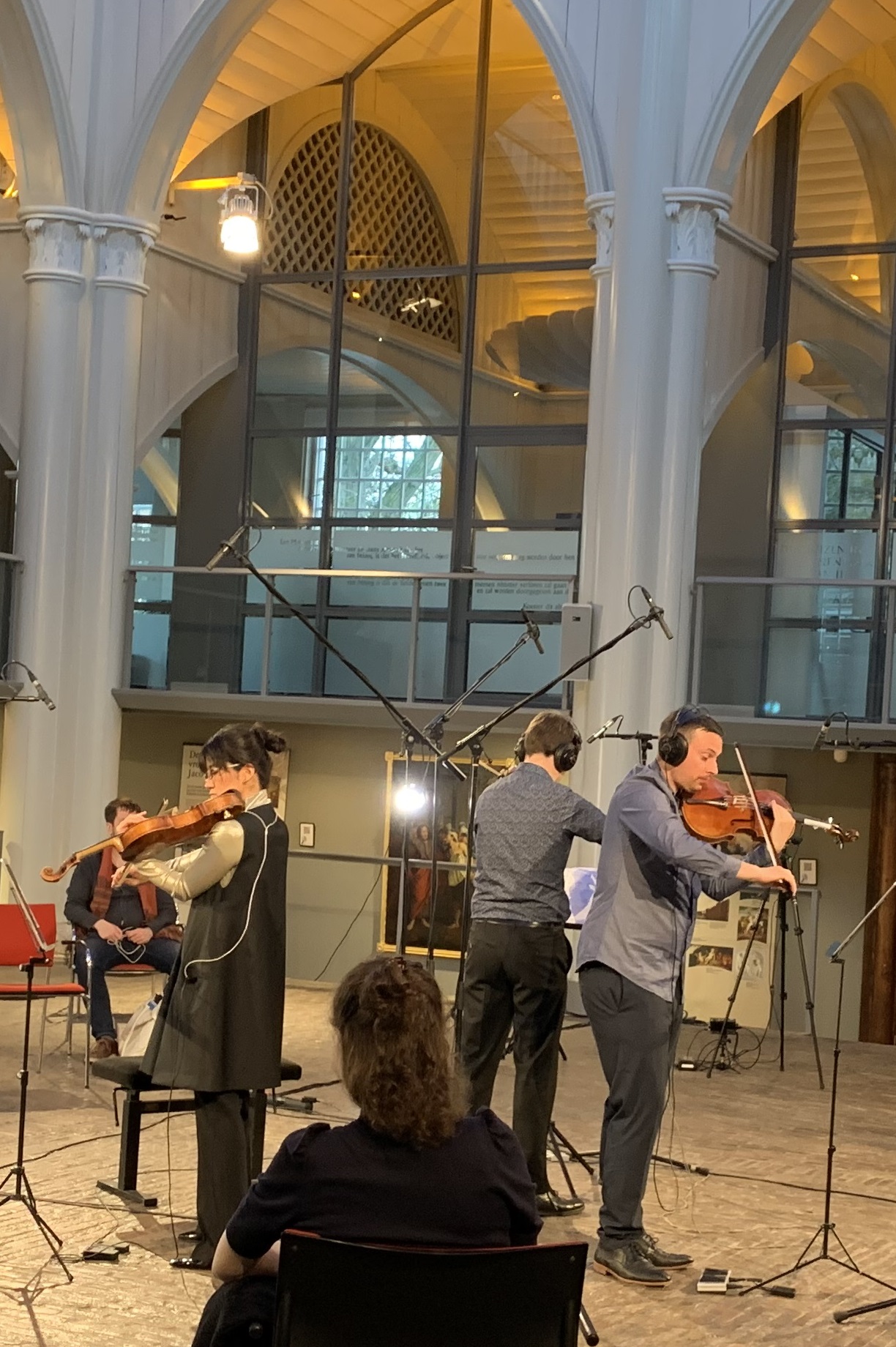
The opening piece was by composer Jakob Böttcher (from Hamburg, Germany), titled  Nebenwirkung (Side Effect). The three players stood in a circle facing outward to the audience. They wore headphones for a click track to synchronize themselves, as the music indeed had a very noticeable fixed pulse, but sometimes considerable rests that could lead to certain drift if left to the players to count out in their heads. Another interesting visible implement was a sheet of paper wrapped around the neck of each viola – for two purposes: to dampen unwanted upper-string harmonics, as well as the evocation of a certain subtle buzz – either of which could be regarded as either main or side effect. Hence the title, I suppose. The music itself featured a texture of brushy transversal bow strokes (up/down along the strings), as well as emphatic up-bow exclamations on the C-string with sudden stops. The unheard beat remained constant, but the periodicity of the played patterns varied throughout the piece.

The composition Micro-moments VII by Arshia Samsaminia (Iran) brought a different technical innovation: A small electronic transmitter – specially designed by the composer for this occasion – was suspended on a string from the scroll of each viola. These transmitters emitted pure sine waves at different frequencies. The violas, in turn, were configured with minuscule (micro) mutual tuning differences. What started as a play on very high and soft flageolet notes gradually increased in harmonic richness as the deeper notes on the violas were explored, giving rise to fascinating complex harmonics, a slow kaleidoscopic transformation (inspiration by – or evocation of – geometric shapes had been mentioned as a common theme among the composers), enriched and reinforced by the electronic tranmitters. For a final statement, the violas converged on the open C-string.

The next piece, Mitte (suitably located in the middle of the programme) was our hostess Bianca Bongers‘ (pictured also in the middle, above) specific musical contribution for this evening. Her background as professionally educated cellist was noticeable here, the violas were used with less unconventional techniques and with perhaps a more directed intention to exploit their characteristic sounds. A calm wavy motion from high to low pitch undulating between the players would be punctuated by more agitated pizzicato ripples. Glissando rising or falling notes with jagged tremolo bowing created interesting diagonal lines into the picture, seeking to either converge toward or diverge from a common centre, a place outlined as a “negative space” that would only be reached with the very final note, where the three voices came softly to rest.

The Slovenian composer Nina Šenk created the piece “…. da kehrte die Ruhe ein… (… and then came peace…)” (version II, 2022) with a texture of minimal oscillations between nearly-equal pitches and tone colours (typically played as 4th – 1st finger pairings across two strings). On this background the violas alternated to sing what sounded to me like fragments of a chorale. In the concluding stretch, the low strings came more prominently in the picture, evoking a rich spectrum of harmonics, with the soft chirping of birds oddly confirming the anticipated peace.

In Masks, the young (London-based) Chinese composer Zhenyan Li conceived of three episodes of what sounded to me like a very lively conversation in a group of three, with some quite engaging topics. The language consists of agitated crescendo up-strokes – some with flageolets – short statements exchanged in rapid succession from three sides. Occasionally a player gets a longer sentence in edgewise, spoken as a more free chat-like cadenza. An extremely long and slow glissando from high to low and then from low to high underlines the final exchanges.

Finally we were treated to a fascinating soundscape in Nomadic Sound by Yang Song, who hails from Inner Mongolia (China). The players distanced themselves from each other to spread the sound in the hall as much as possible. The composer’s intention was to coordinate the players by means of an electronic score with a synchronously moving barline (this can be seen in the video below!), requiring some quite funky technology (mutually time-slaved iPads), and is anyway clearly very challenging for the players (it’s not exactly how musicians are used to being “conducted”). The result was nevertheless very enjoyable, with a rich variety of sound effects: grinding, plucking, sliding, sweeping – it moved so vividly that I was unable to catch any development (if there was any), but it sure made me sit up and listen!

A big thank-you to the three violists and six composers who contributed to this very unusual and interesting concert. Let’s hope this is just a beginning to a wider interest in composing viola trios, and also the start to a well-deserved success for Trio Estatico! I hope this review will inspire more people to attend their future concerts.

Three of the pieces from this concert (Micro-moments VII, Masks, and Nomadic Sounds) can be seen and heard – among many other trio pieces – in a YouTube recording made by Trio Estatico for their premiere online concert earlier this year:

Sedna Heitzman wint het Nationaal Altvioolconcours 2021

Afgelopen week hebben 15 conservatoriumstudenten het beste uit zichzelf gehaald bij de 7e editie van het Nationaal Altvioolconcours bij het Conservatorium van Amsterdam.

Het concours ging over 3 ronden, met een pittig programma van verplichte stukken. Omdat dit concours onderdeel uitmaakte van het gelijktijdige Hindemith-festival van het conservatorium, werden in de voorrondes het 2e en 1e deel (respectievelijk) van Hindemiths altvioolconcert Der Schwanendreher gevraagd. Kamermuziek in een trio met klarinet en piano stond verder als een belangrijke component van het programma, met stukken van Bruch, Schumann en Leo Smit. Daarnaast was in de 1e ronde één van de Telemann-fantasias (naar keuze) verplicht stof, en in de 2e ronde de Rhapsodie uit de Suite Hébraïque van Ernest Bloch. In beide gevallen moest dit uit het hoofd gespeeld worden.

Na de eerste ronde gingen 8 kandidaten door naar de 2e ronde, en daarvan werden er weer 3 geselecteerd voor de finale. De internationale jury (Aart-Jan van der Pol (voorzitter), Garth Knox, Louise Lansdown, Lilli Maijala en Armen Nazarian) had de moeilijke taak om deze keuzes te maken.

De finale vond gistermiddag (zaterdag 27/11) plaats. Op het programma stond een integrale uitvoering (alle 3 delen) van Der Schwanendreher, met begeleiding van een gelegenheids-blazersensemble van het conservatorium.

Van de drie finalisten heeft de jury uiteindelijk Sedna Heitzman uitgeroepen tot winnares. Sedna is 3e jaars bachelor-studente bij Liesbeth Steffens aan het Koninklijk Conservatorium in Den Haag. Het grote publiek kent haar misschien ook als de altvioliste van het volprezen Viride Kwartet.

De 2e prijs ging naar Anuschka Cidlinsky, en de 3e prijs was voor Giulia Wechsler. Beiden zijn Master-studenten aan het Conservatorium van Amsterdam.

Er werden ook extra prijzen uitgereikt voor de beste uitvoeringen van diverse verplichte stukken uit de 1e en 2e ronde:

  • Beste Telemann: Sedna Heitzman
  • Beste Bloch: Giulia Wechsler
  • Beste Leo Smit-trio: Duleen van Gunsteren, mmv. Kerttu Keinnanen (klarinet) en Daniël Kramer (piano)

De DVS feliciteert alle prijswinnaars – en Sedna in het bijzonder – met de behaalde prestaties!

De volgende editie van het concours vindt naar verwachting in 2023 plaats.

Verslag Halve Finale Hindemith-concours

Van 14 t/m 20 oktober vindt in München het 1e Internationale Hindemith-concours plaats. Onze verslaggeefster ter plaatse is Karin Dolman, en ze geeft op haar unieke wijze met tekst en eigen tekeningen impressies van het concours door.
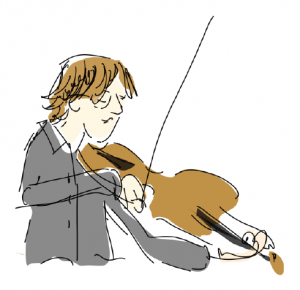
Ook op zondag (17/10) is het weer vroeg opstaan voor de masterclasses. vanochtend is Atar Arad met wat studenten aan het werk. Wij zijn ietwat aan de late kant, maar maken nog iets mee van de eerste kandidate met het eerste deel van de Es sonate van Brahms. Tips of Atar Arad on Brahms, look in to the manuscript About small edition changes. Soms denken uitgevers net iets te veel mee, door een accent weg te laten. Hier is er nog één, in Schubert’s Arpeggione-sonate staat de mordant van maat 21 de tweede keer er niet, maar de uitgever heeft die er toch bij gezet. Speel maar eens zonder en word dan betroffen door de eenvoud.
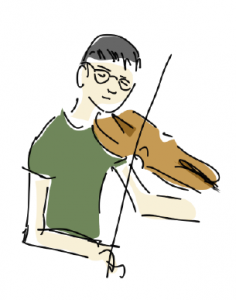
Second masterclass on the Reger second suite. Deze jongen speelt alles uit zijn hoofd en krijgt van Atar Arad nog twee adviezen mee. Elke noot moet vibreren. Niet iedere vinger moet vibreren, maar iedere noot moet vibreren, dus kijk of je noot altijd een vibratie mee kan geven. Snaarwisselingen goed met de voorbereiding van de arm en geniet ervan. Perfectie. Op de C snaar zoek altijd naar de diepte van de toon, dus de toets is eigenlijk verboden terrein. Con Molto, speel zoals te titel zegt. En speel met je mooiste houding.

Atar komt met een funny story: Over een nieuwe student van hem die hij zijn vingerzettingen en streken had meegeven. Bij de volgende les had de student 2 vragen: of hij misschien een streek mocht veranderen. Natuurlijk. I.p.v. opstreek wilde student liever afstreek staccato spelen. En de tweede vraag? Meneer Arad, hoe speel je afstreek staccato?
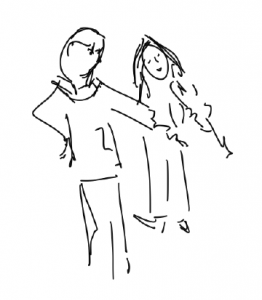
Celine speelt Andante en Rondo Ungarese van Webern. De opdracht voor Celine was mensen verleiden, en begin maar met de pianiste. Ungarese betekend Zigeuner muziek. Speel het stuk alsof je naar de tafel loopt en een vrouw versiert. Het was interessant om te zien wanneer de studente bereid was om over de grens van comfortabel heen te stappen ook echt een ander verhaal kon vertellen.

Om 13.30 gaat het verder met de halve finale van het Hindemith-concours.
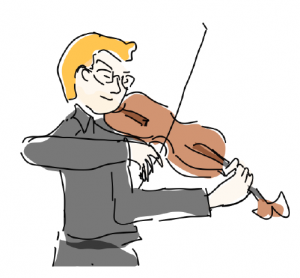
De eerste kandidaat van vanmiddag in de halve finale is Ionel Ungureanu, 26 uit Duitsland. Studeert op dit moment bij Roland Glassl. Is een veelzijdig musicus, arrangeert, componeert en speelt in een jazzgezelschap. Heeft al veel concoursen op zijn naam geschreven. Op het programma Bach tweede suite, Je merkt al bij de opening dat hij meer relaxed is dan gisteren. Intonatie is helemaal okay. Bach heeft blijkbaar een voorliefde voor Ionel. Met veel vrijheden speelt hij dan ook voor ons deze hele suite. De Allemande wordt met lekker veel timing vrijheid gespeeld. Ook de andere delen worden met smaak gespeeld. Penderecki’s Sarabande, had ik nog niet gehoord, is volgens mij ook een bewerking. Een heel mooi stukje met een bijzondere donkere sfeer! Op het programma een prachtig miniatuurtje van Ionel zelf. Jammer dat we het maar 1 keer kunnen horen, maar misschien valt daar wat aan te regelen. Daarna volgt de verplichte sonate 1939 van Hindemith. Een krachtig Hindemthiaanse opening. En direct een dialoog tussen piano en altviool. Zeer volwassen en met een dosis zelfvertrouwen staat hier een veelzijdig musicus. De afsluiting is onverwacht met een waanzinnig jazzy stuk van Kenji Bunch, The 3 Gs voor altviool solo! Waanzinnig, met alle extended techniques die er voor nodig zijn!
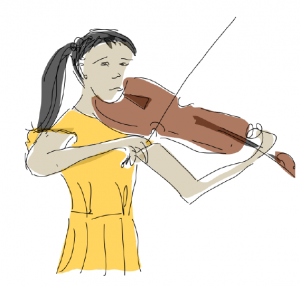
De tweede kandidate van vanmiddag is Yuri Yoon. Studeert ook in München, bij Hariold Schlichtig. Zij begint met de sonate 1939 van Hindemith. Zoals bij de aankondiging al werd gezegd, we hebben van alle kandidaten echt ook allemaal eigen persoonlijkheden gehoord. En dat maakt iedere sonate 1939 hopelijk iedere keer weer aantrekkelijk. En bij Yuri is het weer verschillend van Ionel. Als tweede stuk weer een miniatuurtje dit keer van Bach. Een bewerking van het Choraal voorspel Ich ruf zu Dir, Herr Jesu Christ. Ondanks dat ik niet begrijp waarom dit in het recital is, ben ik toch blij dat ze het speelt omdat het een prachtig stuk muziek geworden is. De Vieuxtemps wordt knap gespeeld. Een geweldig spiccato, en goede handvorming van de linker hand waardoor alles heel helder klinkt, Misschien is het programma voor mij niet uitdagend en verrassend genoeg, waardoor ik wat afschakel.
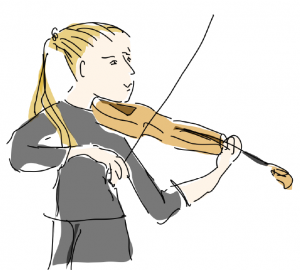
Alona Khievna is 25 en komt uit Oekraine. Opgeleid in Moskou. Eerst op viool en vanaf 15 naar de altviool. Ze heeft een prachtige stokvoering die per sfeer kan veranderen. bovenarms, onderarm, pols alles heeft zijn functie. En leunt echt in de muziek. Overigens even toch vermelden, er zitten 2 geweldige pianisten die alle kandidaten begeleiden. dat zijn Thomas Hoppe en Yumi Sekiya. Alona is een prachtige vertolkster van muziek. ik hoor bij haar ieder woord in de muziek. Sjostakovitsj sonate heeft Alona gekozen als grote tegenhanger. Zeer gepassioneerd gaat ze erin. Het tempo schommelt wel erg veel en ik heb het gevoel dat pianist en speler een beetje op zoek zijn naar elkaar. Alona probeert de zachtste klanken op de zoeken, maar de pianist kan niet meer zachter.

De laatste kandidate van vandaag is Carla Usberti, die studeert hier in München bij Roland Glassl. Wat een klas heeft die man. Carla begint met de Passacaglia van Biber. Een prachtig pure uitvoering. Daarna de sonate in Es van Brahms. Er staat hier na de Corona een hele generatie van geweldige altviolisten op. En deze Carla voorop. Met een prachtig vibrato om jaloers op te worden ondersteund door haar prachtige stokvoering is dit een sublieme uitvoering. Ook de hindemith 1939 wordt geweldig gespeeld. Je merkt helaas wel bij haar dat meteen de volgende dag na de eerste ronde, een heel uur recital in de 2e ronde te veel voor haar is. In de laatste Passacaglia van van Aleksey Igudesman (overigens een te gekke componist) kreeg ze zelfs kramp in haar linker hand. Maar dat kan ik wel begrijpen.

Maandag 18/10: laatste 2 halve finalisten
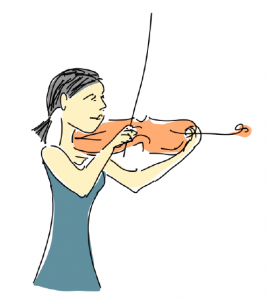
Emiko Yuasa is 25 jaar, komt uit Japan, en studeert nu in München. Zij begint met de 1939 sonate. Ja, perfecter kan eigenlijk niet. Mooie toon, mooi vibrato, goede podiumpresentatie, stalen zenuwen. Goede keuze van vingerzettingen. Als tweede stuk staat op het programma de Elegy van Benjamin Britten. Hij schreef het stuk toen hij zelf 16 jaar was en eindexamen deed aan de middelbare school. Een prachtig miniatuurtje waar je je hele ziel en zaligheid in kunt leggen. Dat laatste verzuimt Emiko een beetje. Haar streven naar perfectie maakt het net niet emotioneel genoeg. En dan hebben we nog een keer de Vieuxtemps sonate. Nou hebben we zo’n rijk repertoire en dan krijgen de kandidaten het nog voor elkaar om dezelfde stukken te spelen. Nou is Vieuxtemps wel een echt concoursstuk. Zoals te verwachten speelt ze de Vieuxtemps helemaal goed en verrassend levendig. de cadenza aan het einde van het eerste deel vind ik vooral erg mooi. De Barcarolle (tweede deel) had van mij meer “Venetië” mogen zijn. ik vond het iets teveel een langzaam deel van een sonate. Het derde deel was weer helder en vrolijk en grappig met al die versieringen.
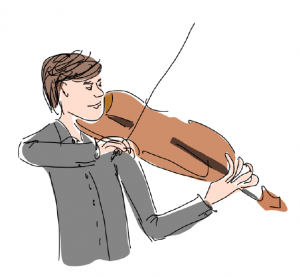
Njord Kårason Fossnes is de zesde en laatste kandidaat in de halve finale. Hij komt uit Noorwegen, en is samen met Carla de jongste deelnemer (20). Hij studeert bij Kim Kashkashian. Ook hij heeft de Brahms Es op het programma, en opent zijn recital hiermee. Bij Njord vraag ik me af of het wel zo handig is om grote handen te hebben. Positiewisselingen hoeven bijna niet gedaan te worden, hij grijpt ze gewoon. Maar dat betekent ook dat je ze niet kunt uitbuiten en dat is nou zo mooi bij Brahms. Hij neemt bewust de originele klarinetpartij voor zijn rekening, dus de oktaveringen zijn eruit gehaald. Soms is dat wel mooi, maar soms is het juist zo mooi om de donkere klank van de altviool te gebruiken. Het tweede stuk op het programma is het solostuk Eventyrsuite van Bjarne Brustad. eigenlijk voor viool maar o zo mooi een kwint lager voor de altviool. Mooi om iets van je eigen land mee te nemen. De Hindemith 1939 leeft helemaal, en Njord neemt ons mee in zijn verhaal. Wanneer je hem hoort wil je zelf zo snel mogelijk weer thuis zijn en de sonate gaan spelen.

Tsja, en dan moeten we wachten op de uitslag. Aangezien iedereen zwijn/haar mening heeft leg ik mijn oor te luister. Mijn favorieten waren Ionel, Alona en Carla, maar wanneer ik inde jury had gezeten na deze ronde had ik waarschijnlijk meer moeten kijken wie er het beste heeft gespeeld. En dan kom je gauw bij Emiko, Ionel en Njord. Wanneer je weer kijkt naar foutloos, stabiel dan kom je uit op Ionel, Yuri en Emiko. Wanneer je naar het talent als altviolist kijkt kom je uit op Emiko, Carla en Njord. Ik ga voor de musicus: Ionel de meest allround musicus met eigen compositie en vele stijlen van muziek, Ionel en Alona.

Dan het verlossende woord: Door naar de finale zijn: Emiko, Carla en Njord. De altviooltalenten.

De jury heeft het niet makkelijk gehad. Ze hebben er langer over gedaan, dus daar is ook hard gediscussieerd! Duidelijk dus dat het talent in deze ronde heeft gewonnen. wil niet zeggen dat de anderen geen talent hebben, en bij deze finalisten moeten we ook nog maar afwachten wat ze in de finale kunnen presteren!. De finale wordt ook weer gestreamd dus mochten er mensen tijd hebben of tijd ervoor willen maken. Kijk allemaal mee: woensdag 20 oktober 16.30
https://www.hindemithcompetition.org/stream.html