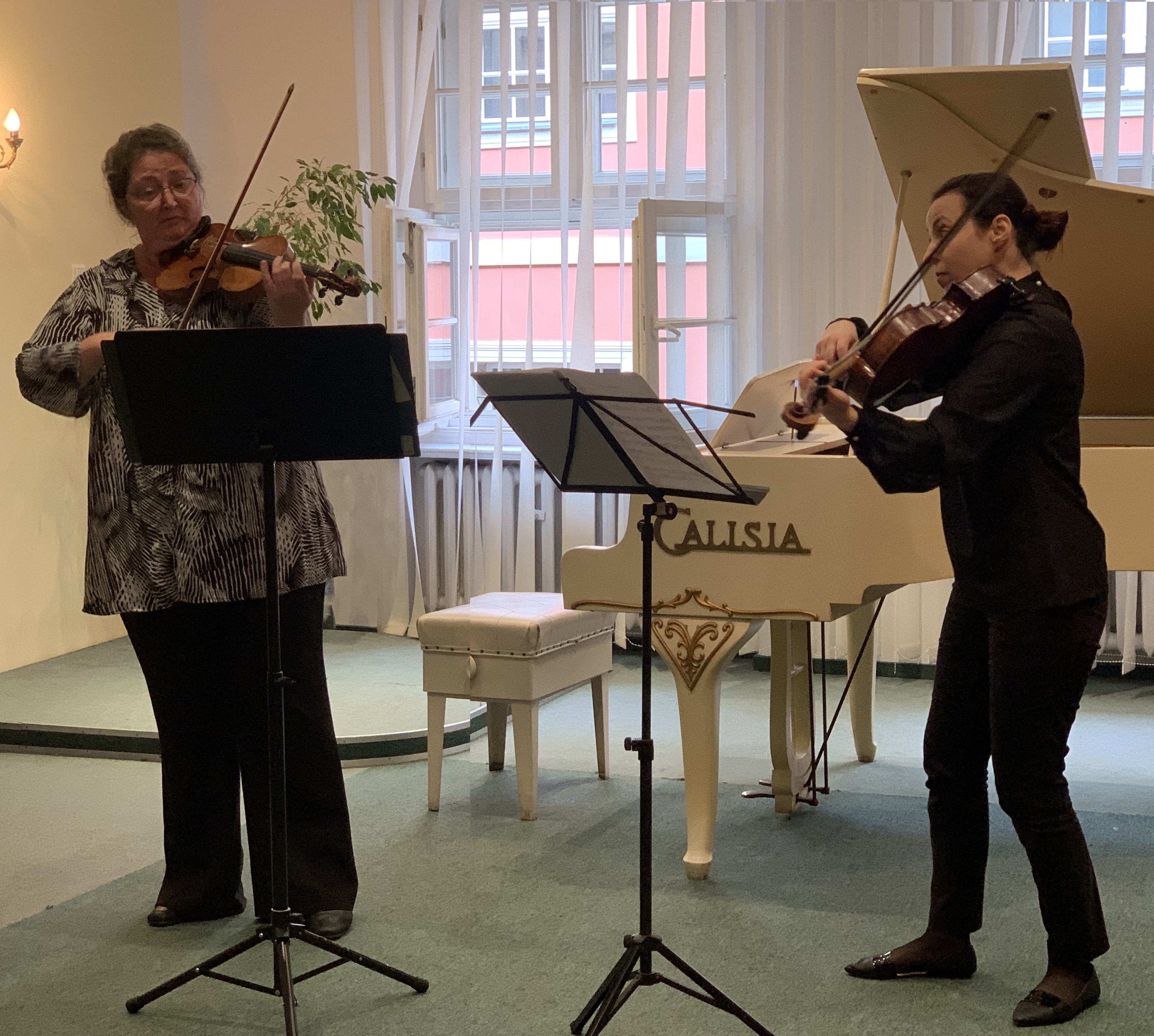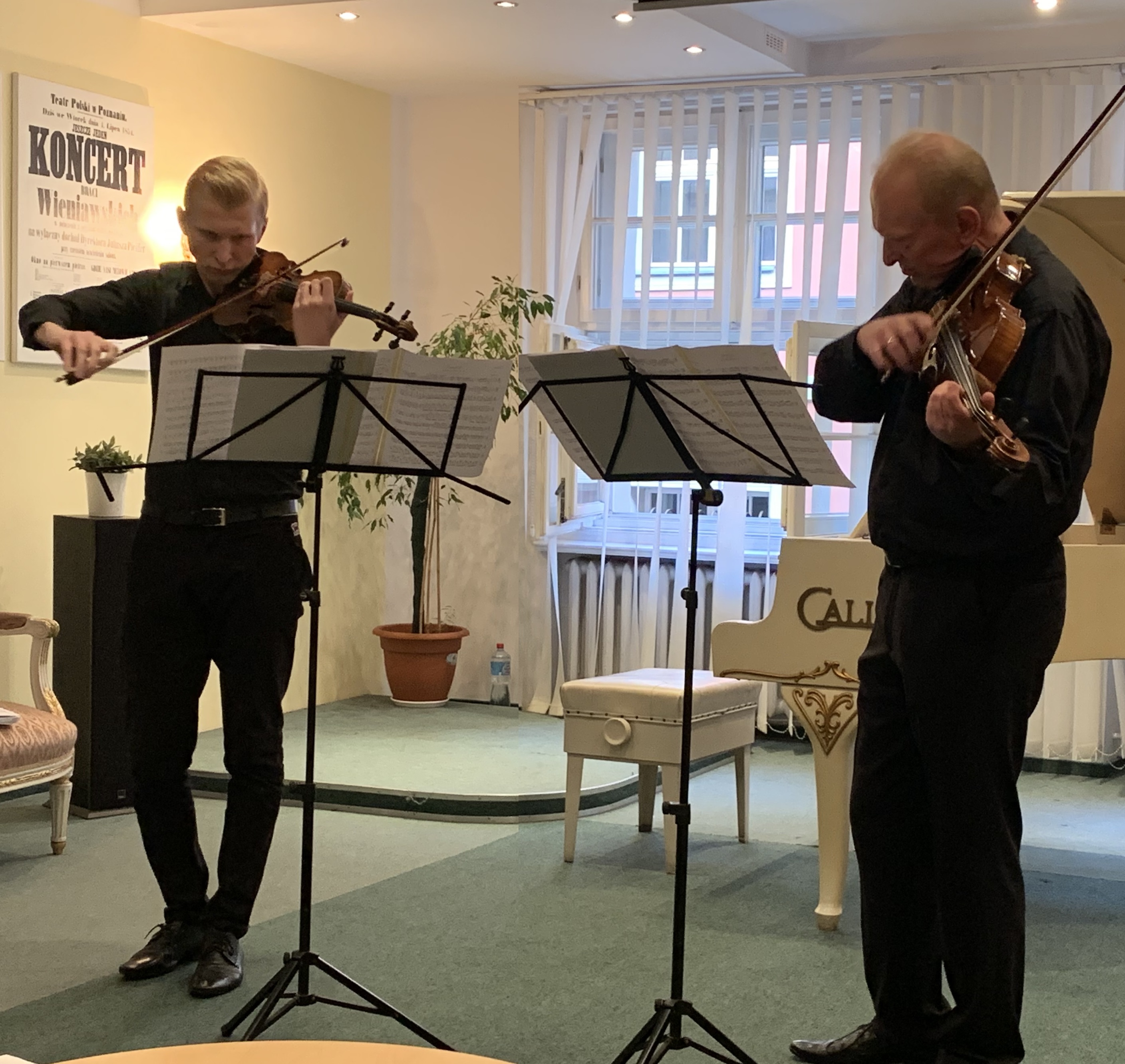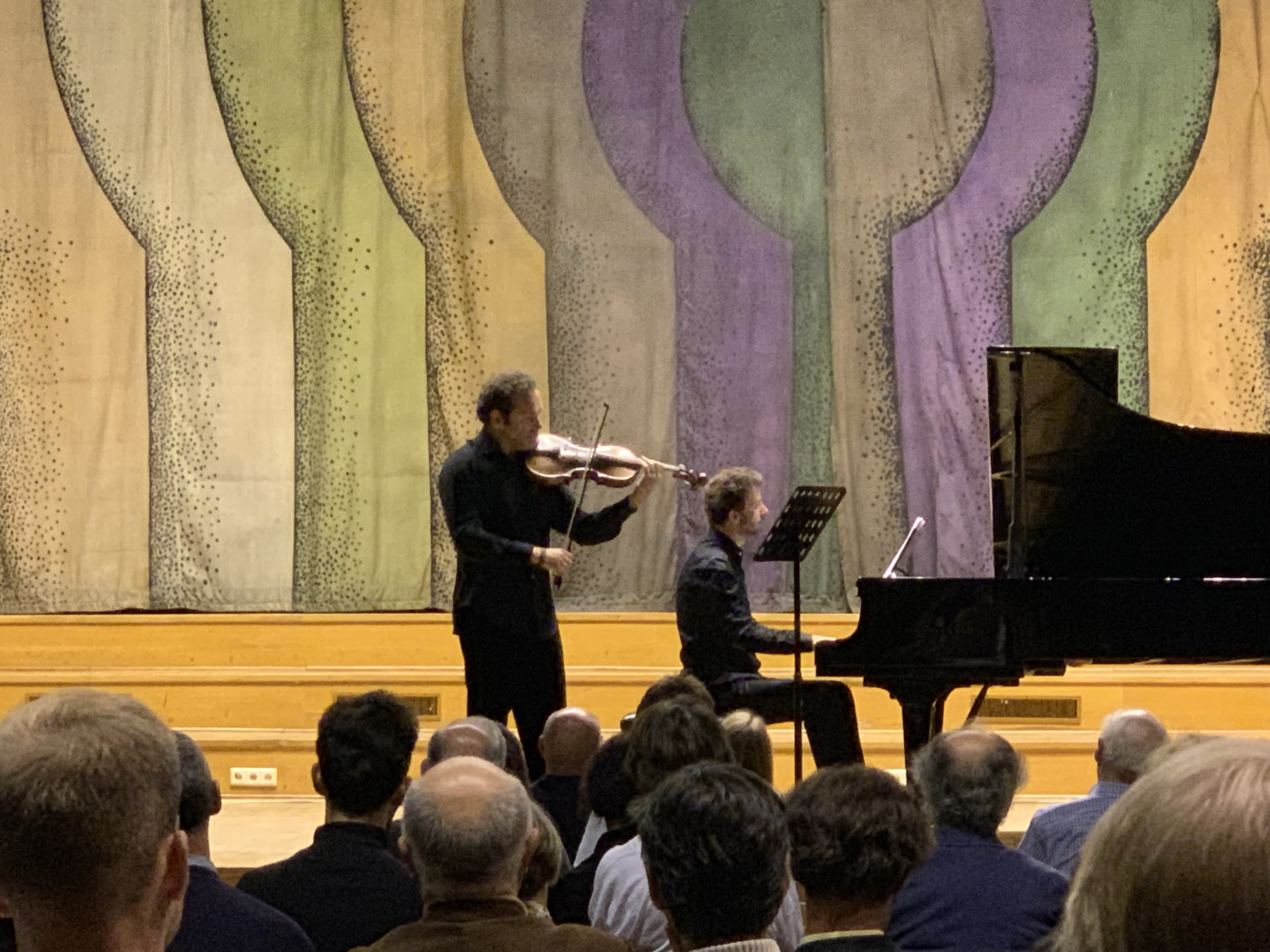
Nedbal Competition blog – 1st Round, day 1

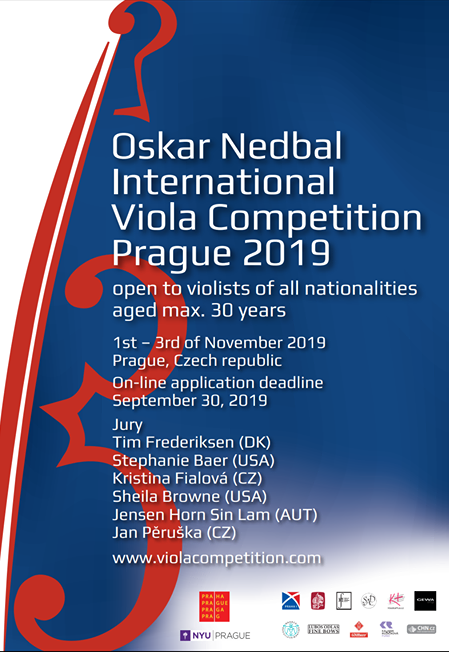
The DVS once again visits new viola frontiers! This time our intrepid reporter Karin Dolman is reporting from the very First Oskar Nedbal International Viola Competition in Prague (Oct 31st – Nov 3rd, 2019).

<previous post>                                                                                 <next post>

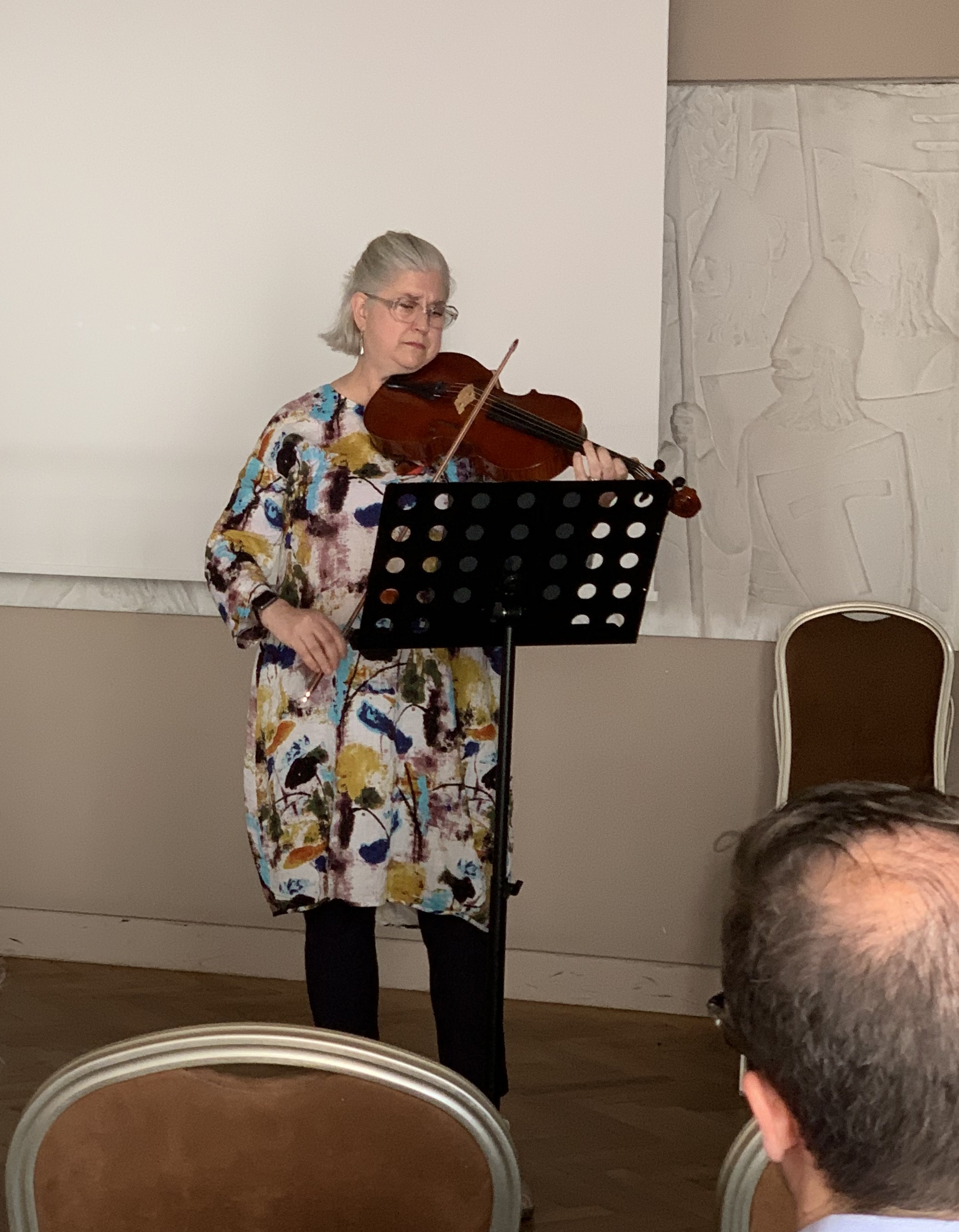
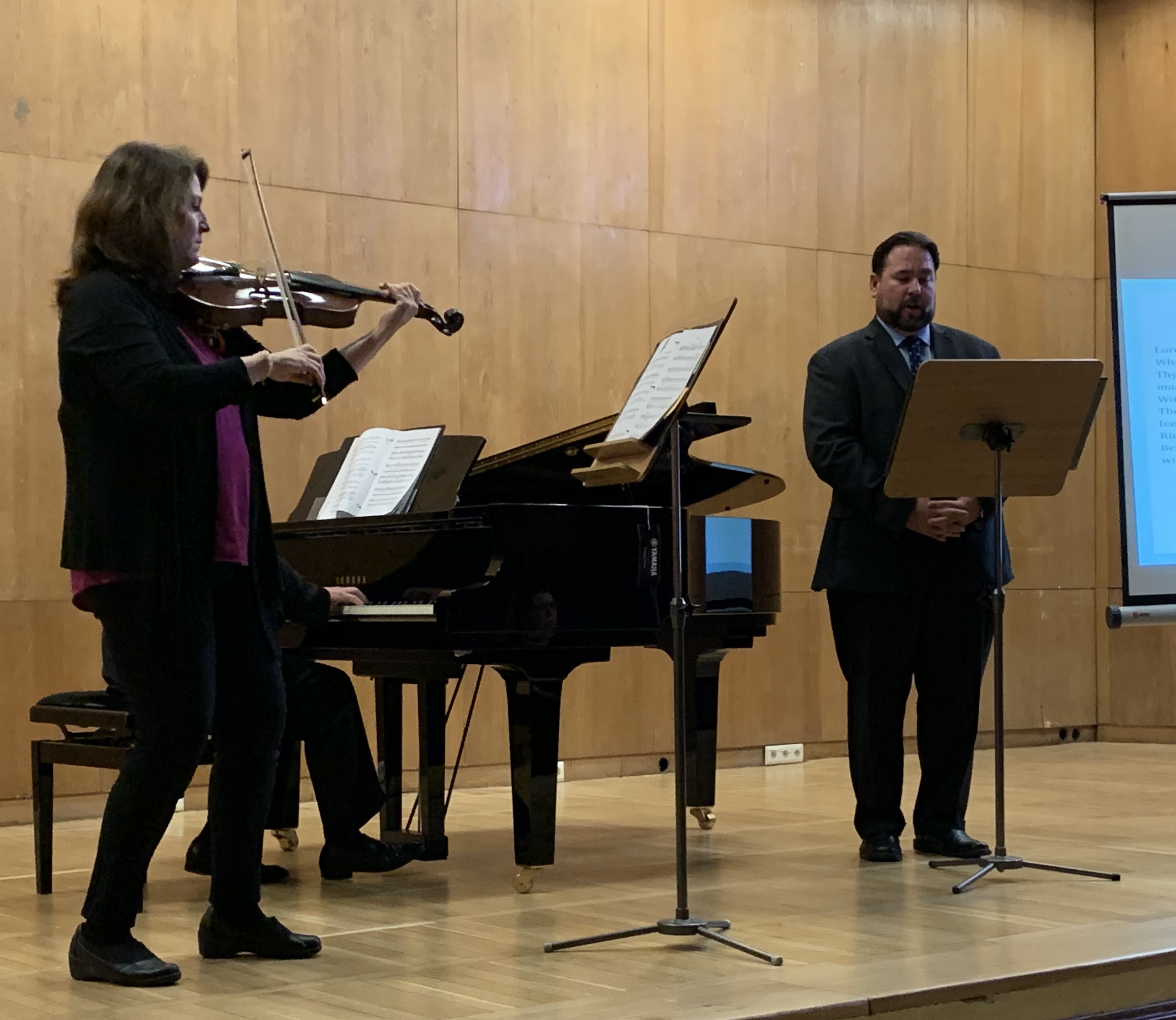
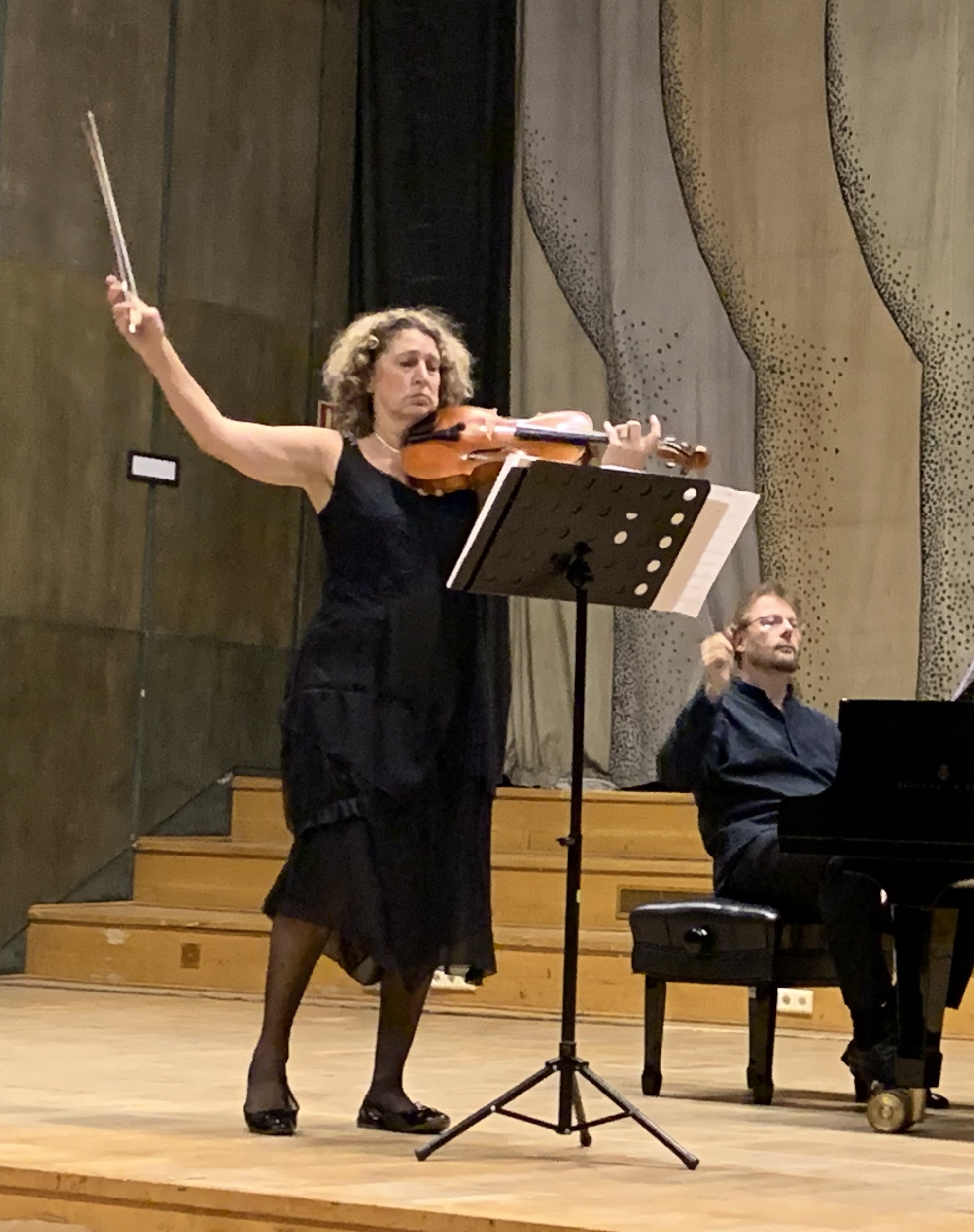
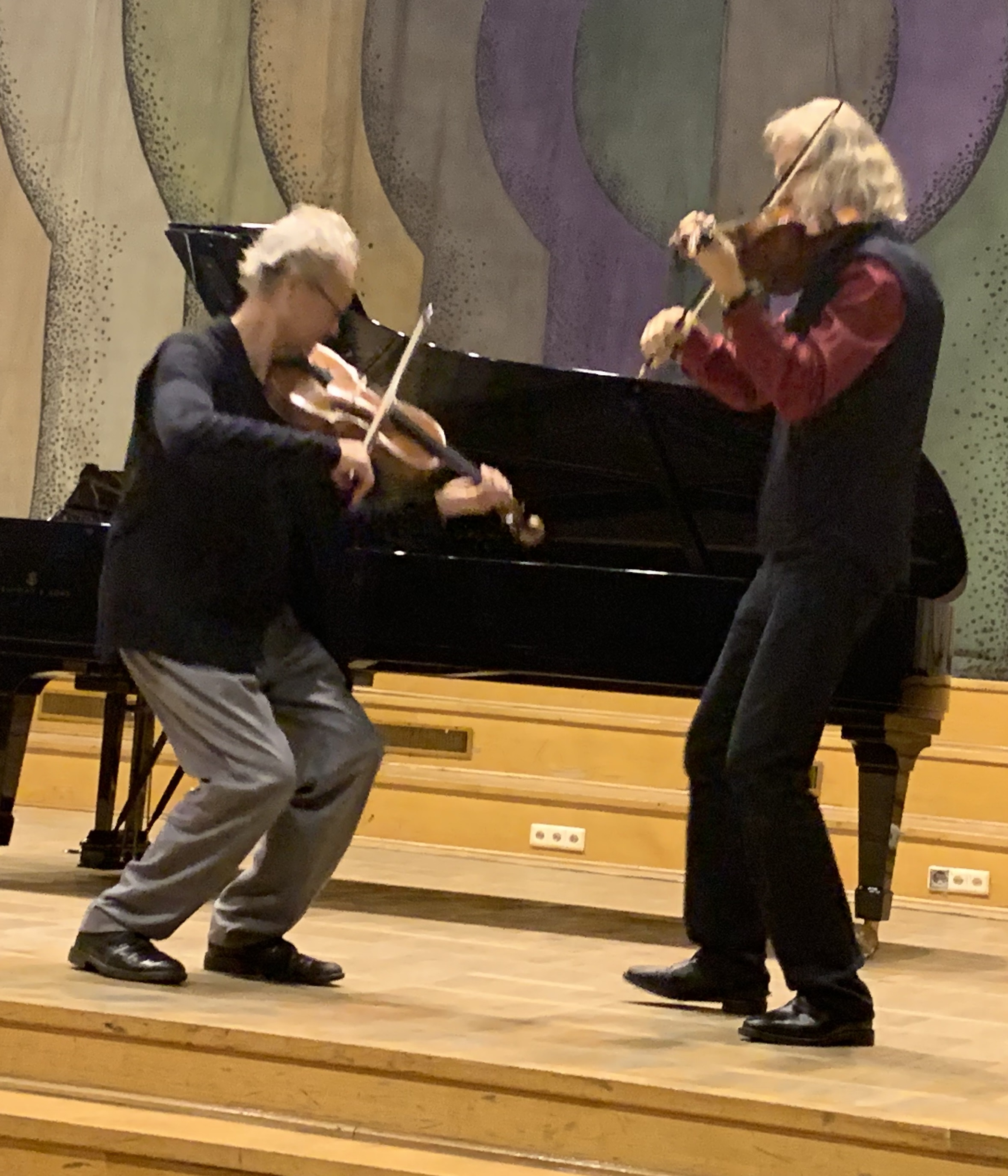
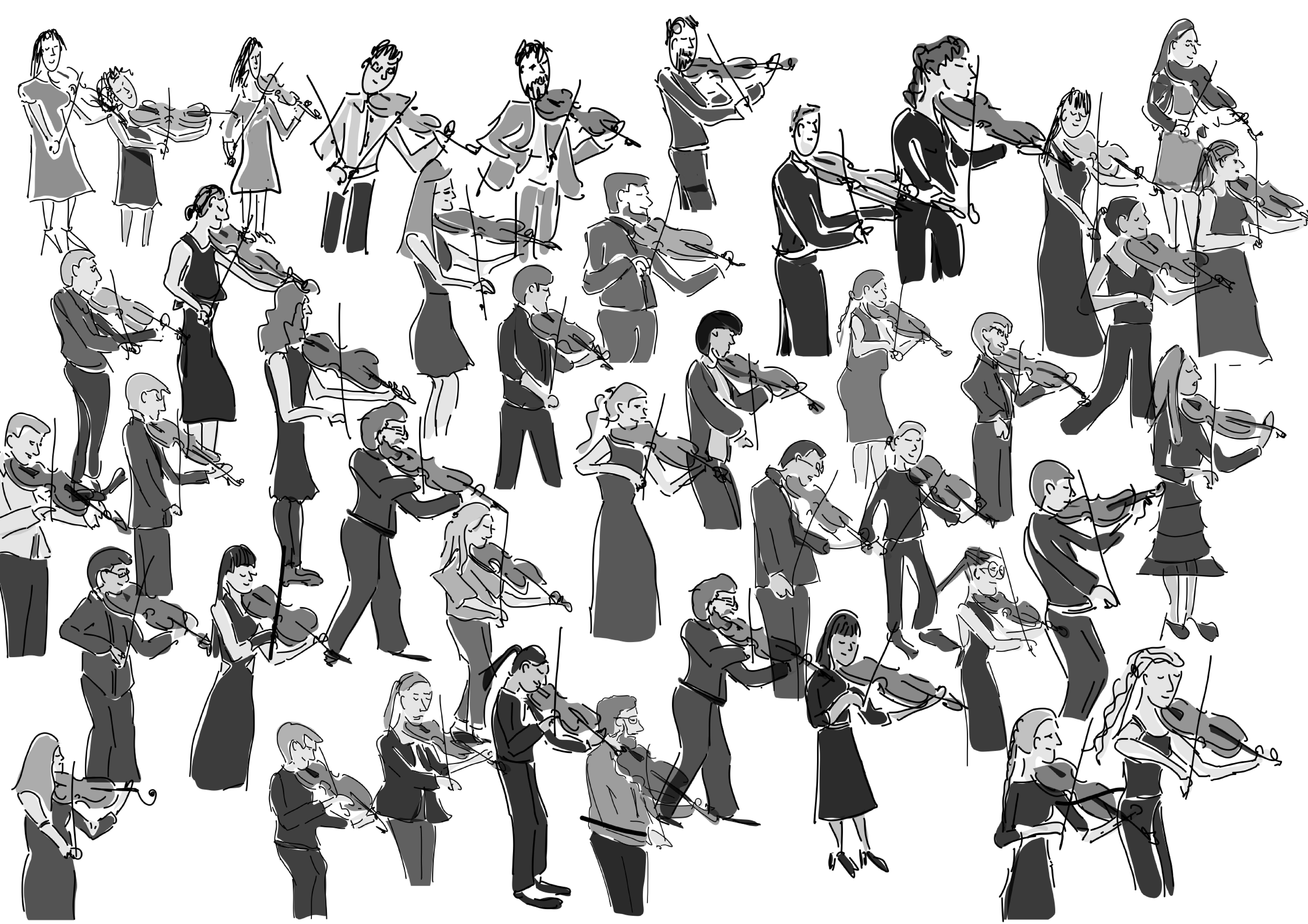
Well, it’s late Friday evening Nov 1st, I’ve spent all day listening to 41 candidates in the first round, with another 20+ to be heard tomorrow. I spent more than 12 hours in the recital hall today, for much of that time I was pretty much the only long-stay audience, except for the jury. I’ve been taking notes and making sketch drawings of all the candidates. I’m struggling to summarize my notes, but it’s an easy and fun start to assemble all the drawings into a composite picture:
For the sake of avoiding reader overload, in the following I will discuss only the roughly top-third of the candidates that impressed me the most. But among the other (not-mentioned) candidates, it must be said that the large majority set down very praiseworthy performances. But just like the jury, I simply cannot pick them all. Again, these are purely my personal opinions, but I’m of course curious to know how they match up with the jury’s decisions for the 2nd round. Note: My listing is chronological by playing order, there is no internal “ranking” implied among those mentioned below.

The first candidate to make my list was Karolina Bednarz (Poland, age 22). A rise-and-shine entry at 09:15 in the morning, her programme included the Sarabande and Gigue from Bach’s 4th suite, and Piazzolla’s Etude no. 3, Tango., which she had transcribed herself for the viola (the original is for flute). Karolina starts with Bach. She has a good sound and plays very securely. The Sarabanda has a grave feel to it, the Gigue is played freely. She wisely takes extra time between Bach and Piazzolla to set a different stage and mood. Her persona seems to change with it. A real Piazzolla with a rhythmic beginning and a melodic middle segment. This transcription of hers is definitely worthwhile!
Melissa Dattas (France, age 22) knows how to make an entry! She chooses to stand in front of the stage, instead of climbing it (now that I mention it, some of the candidates before her stood way too far back on the stage!). And then she sets off with a fantastic C major Prelude from the 3rd Bach suite. This prelude and the ensuing Sarabande are meticulously played with interesting musical ideas! She follows with an equally impressive Capriccio by Vieuxtemps. I forget to take notes … I hope to see her again in the 2nd round (when she would play the Rebecca Clarke sonata).
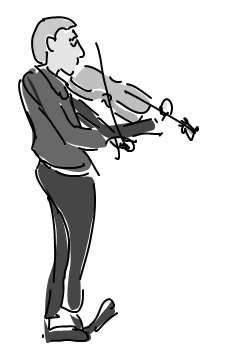
Jacob Dingstad (Norway, age 27) has long since graduated, and currently works as principal violist for the Finnish Radio Symphony Orchestra. His Prelude from 4th Bach suite (E flat) surprisingly starts out spiccato! It works quite well, giving a feeling of free flight, especially when the longer runs begin, later in the movement. Well done, and so free in his stage presence, it seems like he spontaneously creates it all in the moment. I feel like I ought to try playing more like that – very inspiring!

I sense some Norwegian Hardanger-fiddle music in the Sarabande. Perhaps he has some direct experience in this area? And then what a nice idea, transitioning directly from Bach’s final E-flat into the (C minor) Capriccio by Vieuxtemps! I would definitely like to see this Norwegian back in the next round.
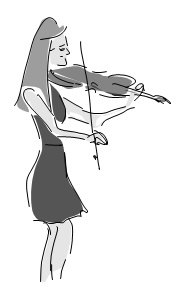
Martina Englmaierová (Czech Republic, age 24) starts with Prelude and Allemande from the 5th Bach suite, applying scordatura (the A-string tuned down to a G) to great effect in sound, and even giving a feel of naturally reinforced intonation. Martina has clearly studied the old performance practices, I really enjoy her playing.

Her “solo piece of choice” is the 1st movement from Hindemith’s1937 sonata, one of my personal “bucket list” pieces. Very well played! I wouldn’t be surprised to see her in the next round. She’s really good, perhaps not at first sight the most impressive of today’s candidates, but her sound is so clean and pure, with very sparing use of vibrato (which also is a suitable choice for the Hindemith).

It’s time for lunch break, particularly appreciated by my “seat muscles”, the wooden chairs are not so merciful for long sits. We have heard 14 candidates (one-third of today’s programme).

In the programme booklet, Yekun Fang (China, age 21) is depicted with his viola hovering in empty air between his hands (!) … he plays Sarabande and Gigue from the (violin) partita no.2. I’m very glad that he chose to play some repeats (in spite of the strict prohibition in the competition rules), in the Sarabande this is used to add beautiful ornamentations.  And he plays the Gigue with amazing speed (so the repeat is hardly noticeable), with a super light bowing, without incurring “collateral damage” in the form of unwanted noises.

He continues with the Capriccio by Vieuxtemps, beautifully played, as if imagined there-and-then. His stage presence can bear some improvement though, propped into the rear corner of the stage, as if playing mostly for himself (and being incredibly good at it).
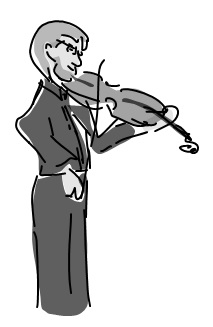
Then there’s Nicolas Garrigues (France, age 20), who plays the Molto sostenuto and Molto vivace from Reger’s 1st suite. Like his compatriot Mellissa Dattes, he chooses to stand in front of the stage, improving his contact with the audience, and also sounding better. With the exception of one small glitch in the fast movement, he plays a perfect Reger. His “choice” solo piece is Hindemith’s 25.1, 3rd and 4th movements. He creates great contrasts, he dares to play a real piano, in the slow 3rd movement. This beautiful recital hall allows it. His use of vibrato is carefully adapted to the local context. His rendition of the (in)famous “Tonschönheid ist Nebensache” is impeccable, going full throttle without sacrificing quality. From what I’ve heard so far, I can see this guy winning a prize. But you never know …
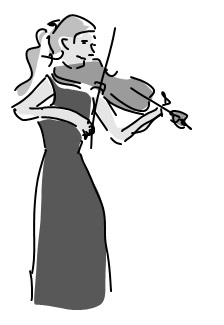
Next notable in my book is Clara Holdenried (Germany, age 24), playing the Prelude and Sarabande from Bach’s 4th suite, and the Vieuxtemps Capriccio. It’s a real pity that she loses her footing in the Prelude, because her playing is very beautiful and natural. For chamber music, you really want someone like Clara. I have the impression that she can produce any tone colour she wants. Her tone quality in Vieuxtemps is also very beautiful. She might try to generate more intimacy in her performance. I’m curious if she makes the 2nd round, I would certainly like to hear more of her.
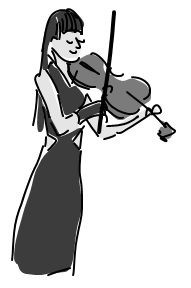
 

Alexandra Ivanova (Russia, age 25) launches a spectacular Hindemith 1937 sonata (1st mvt), with great ease of playing and lots of bravura.  She has an impressive stage presence. She then re-tunes her viola for the 5th Bach suite (Prelude and both Gavottes), embarking on a very authentic and personal interpretation, with striking ornamentation. The fugue section – so good! She definitely must be a 2nd round choice. A small error towards the end of the movement, I don’t really mind, but it was unexpected. And then some technical issues in the Gavottes, that could hurt her chances.
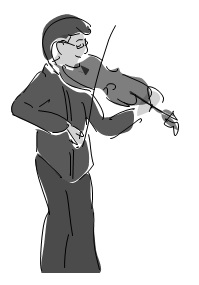
MinGwan Kim (South Korea, age 28) brings a violin-virtuosic programme. What more can one say when someone plays a perfect and musical Bach Chaconne? All the voices are perfectly audible.Followed by Ysaÿe’s breakneck Obsession (2nd sonata, 1st movement) with the Dies Irae theme. This is a serious prize candidate. To take those tenths, on such a big viola too. What a great violist!
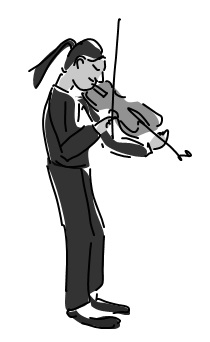


Yizilin Liang (China, age 19) plays from Bach’s 6th suite, as the only one so far employing a baroque bow for this purpose. In my ears she does not capitalize on this specialized hardware in the Prelude, but it works out very well in the Sarabande. The agility with string crossings is audibly and visibly improved, allowing to comfortably tackle challenges such as two chords in a single stroke.

She then switches to Vieuxtemps’ Capriccio (with a modern bow), a very good rendition. This could stand a chance for 2nd round selection. And to think she’s only 19… !
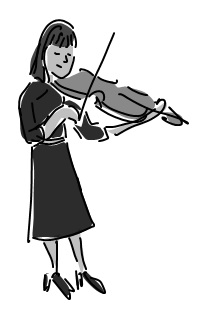
Entering the stage, Alyuan Liu (China, age 22)  gives a very unassuming and even self-conscious impression. But once she starts playing – what a sound, and what a personality! A magnificient start, with the 6th Bach suite, Prelude and Allemande  – you can hear a dialogue between different voices, different players.

And then Hindemith, the first 2 movements of op.25.1 – also so good. And so musical! She is definitely a strong candidate for the 2nd round. But then – when the music dies away, Alyuan disappears from the stage without so much as a smile. I’m inclined to think that such behaviour should count, it may be peripheral, but it’s still a part of the whole performance.
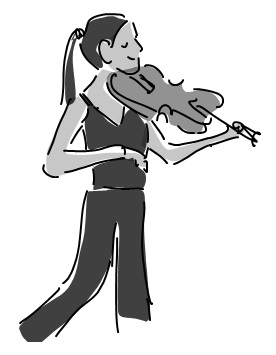
Hailing from Venezuela, Ruth Mogrovejo (age 25) starts off with a movement from Reger’s 3rd suite. Very well done. Good things are cooking in Venezuela, the cultural education results in many good young musicians. The “choice” piece is (once again) the Vieuxtemps Capriccio. I feel I’m getting a bit overexposed to this piece today, although that’s not Ruth’s fault (alone) of course..But her performance is certainly convincing, full of creative ideas. I wonder if the jury notices this too …
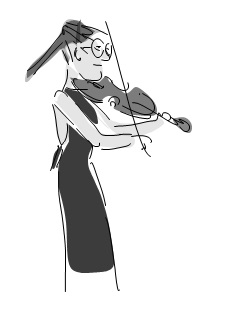
 

Julia Palecka (Poland, age 22) – at last, my prayers are heard: A free-choice piece NOT being Vieuxtemps or Hindemith! She brings the Fuga Libre by Garth Knox – such an amazing composer! Unfortunately the piece is longer than the maximum allowed 5 minutes, so although I could stay up all night listening to this, she is predictably interrupted by the jury before she can finish. She moves on to play the Prelude and Courante from the 5th Bach suite. I find Julia an intriguing young personality. Her Bach is very original. It is difficult to say whether such a strong character will make it to the next round, it depends on the taste of the jury. In my book, she’s in. I would love to hear what she would do with Schubert’s Arpeggione (her choice for round 2).
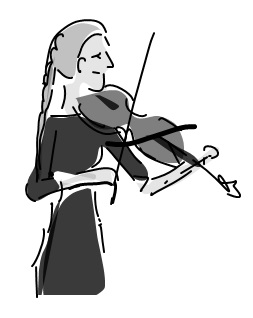
Then, last (for today) but not least, Connie Pharoah (Great Britain, age 20). She brings Bach’s 4th suite and the opening movements of Hindemith’s op.25 no.1. Her Bach is very good, even though it’s late evening by now. Like the French candidates, she positions herself in front of the stage. That sounds so much better!

She follows through with a very convincing Hindemith. She definitely has good chances for the next round.

Well, tomorrow brings another 24 interesting candidates!

Karin
<previous post>                                                                                 <next post>

Nedbal Competition blog – day 1 (Tourist)

The DVS once again visits new viola frontiers! This time our intrepid reporter Karin Dolman is reporting from the very First Oskar Nedbal International Viola Competition in Prague (Oct 31st – Nov 3rd, 2019).

<previous post>                                                                                 <next post>

Arrived in Prague! After having checked in at my hotel, I felt fit enough to explore the city. Same as during the IVC in Poznan last month, I found a hotel just around the corner from the central square in Prague, so I can hear the tolling of the bells in the tower. The weather is fantastic, and there are tourists everywhere. Fortunately I’m above average height (measured against the tourist population), so I can still see the sights :-). I occasionally make a dive into more quiet streets, but in general it is just like in Amsterdam, walking in a throng from one monument to the next. It is truly a magnificent city!

After having walked several kilometers like this, I return to my hotel and start browsing through the competition booklet with all the candidates, which I had picked up just before my walk. The two Dutch candidates are both familiar to me, as former Amsterdam Conservatory students: Lotus de Vries (currently studying in Berlin) and Michiel Wittink (now in London).

To my disappointment, the programme further reveals that nobody has chosen the Feld or Kalabis sonatas (for the 2nd round), so I’ll have to figure out what those sonatas are like on my own. There is a good distribution of nationalities among the participants: The extreme counts include 14 Chinese candidates, but on the other hand only one candidate from the U.S., Venezuela and Canada. But well, those countries are indeed far away!

I show up a bit early at the small, but nicely acoustic concert hall at the New York University, the main venue of the Nedbal competition.

Oskar Nedbal, who is famous in the Czech Republic for his operettas and theatrical music, was himself a violist in the famous Czech Quartet. He is also responsible for the first known sound recording of a solo viola piece. This recording tells us that excessive vibrato was not necessarily so commonplace in his time.

In total 11 (out of the originally accepted 76) candidates have cancelled, so “only” 65 people will play in the 1st round. This is probably normal at big competitions, but it’s a pity that four countries thereby are without representation here. On the upside, it allows everyone the luxury of a good night’s sleep, because the reduced number of participants means there is no need for anyone to play tonight. So we start tomorrow at 0900 am. Well, I was all geared up for tonight, but this allows me to write this report directly and get to bed early.

Tomorrow it all starts!

Karin
<previous post>                                                                                 <next post>

Nedbal Competition blog – day 1 (prologue)

The DVS once again visits new viola frontiers! This time our intrepid reporter Karin Dolman is reporting from the very First Oskar Nedbal International Viola Competition in Prague (Oct 31st – Nov 3rd, 2019).

<previous post>                                                                                 <next post>

By now I’m in the train from Berlin to Prague – so far no delays. After a few hours of sleep (:-)) I am sitting with my iPad connected to the onboard WiFi, browsing through the competition repertoire and the schedule.

The first round will start tonight – and Oh my, it continues throughout Friday and most of Saturday – there are 76 participants from 27 countries! The 2nd round participants (finalists) will only be announced on Saturday afternoon at 1700h! To my regret I will have to miss the prize winners’ concert on Sunday evening (I’ll be on my way back). But I suppose the most important decisions are made in the 1st round.

Now for the repertoire list – that seems not too bad in terms of playing time: Two contrasting movements from Bach’s solo sonatas/partitas or (cello) suites, or one of the Reger suites. And furthermore another 5-minute solo work of your own choice. Everything must be played by heart.

The 2nd round piece is a choice of sonata with piano: B. Martinů, P. Hindemith (op.11/4), R. Clarke, J. Brahms (op.120/1 and 2), F. Schubert, N. Paganini, J. Feld (Sonata), M. Reger, H. Vieuxtemps, V. Kalabis. The unknown ones for me are Feld en Kalabis. I sincerely hope that some of the finalists will have chosen those, and that we don’t get too many Rebecca Clarkes – clearly one of the most “fashionable” viola sonatas of recent years. To think that, back in my student days, I was the first violist in The Netherlands to play the Clarke sonata!

The most interesting aspect of this programme is the free choice of a solo work. What would I have chosen? Well, first I would want to know if it has to be an original viola composition. Then I would consider to have a solo piece commissioned for myself. Nowadays I’m studying the (transcription of the) 1st Britten cello suite, which is very challenging. This music assumes extensive use of the cello thumb position, for which I am trying to develop technical solutions on the viola. So if I were a Nedbal competition participant, I would have chosen Britten.

What am I hoping to hear? Of course Hindemith, but not the “Tonschönheid ist Nebensache” – I’d rather hear one of his other three solo sonatas. Or Stravinsky’s Elegy, or some (hopefully surprising) national repertoire from the participants’ home countries.

So in short – I’m tremendously looking forward to the 1st round. Almost 3 days long!

For now I decide to make another attempt at a power nap in the train. More thoughts tonight!

Karin
<previous post>                                                                                 <next post>

Nedbal Competition blog – day 0

The DVS once again visits new viola frontiers! This time our intrepid reporter Karin Dolman is reporting from the very First Oskar Nedbal International Viola Competition in Prague (Oct 31st – Nov 3rd, 2019).

<no previous post>                                                                                 <next post>

It is 3.30pm, and I have just set off on my monster train ride to Prague. All this just because – whenever possible – I’d like to avoid flying. At least I have 1st class seats all the way, so I should be reasonably comfortable. But why am I going to Prague? Because of the first Oskar Nedbal International Viola Competition which takes place there, in the coming days.

It is always interesting to see how they organize a new international competition. I haven’t studied the programme closely yet, but given the name “Oskar Nedbal”, I should think that at least his well-known Romance will be played at some point. But OK, I’ve got time enough to read in this train.

The first leg of 2 hours and 6 minutes goes by “sprinter” (local train) from Dordrecht to Arnhem, where I will have to change trains. I will visit an old friend there, before continuing my trip at 21:45 with the international train.

More news after I arrive in Prague tomorrow!

Karin

<no previous post>                                                                                 <next post>

Concertverslag – de hedendaagse altviool 17 sep. 2019

for English: please scroll down

Gehoord en gezien: de hedendaagse altviool op 17 september 2019 in Den Haag – Geschreven door Roald van Os namens de DVS.

De Chileens altviolist Pablo Salinas verliet zijn thuisland Chili en verruilde zijn vaste plek bij het Chilean National Symphony Orchestra om deze maand een tournee door de Benelux ter promotie van hedendaagse Chileense muziek te maken. Deze terugkerende concertserie van Chileense muziek wordt georganiseerd door de in Wenen gevestigde International Society for Chilean Music (SIMUC) en stond dit jaar in het teken van de altviool en vond zijn aftrap in Nederland, bij mij om de hoek in Den Haag! Deze bijzondere tour is tot stand gekomen door een samenwerking van de Chileense ambassade in Nederland, SIMUC en het ministerie van Cultuur, Kunst en Erfgoed van Chili. Leuk om vast te stellen dat een organisatie als SIMUC in haar missie en opzet veel weg heeft van onze eigen DVS en wereldwijde Viola Societies!

In het voorprogramma van het 50 minuten durende recital van Salinas stonden 2 altvioolstudenten van het Koninklijk Conservatorium; Gema Molina Jiménez en Oksana Mukosii. Zij speelden de eerste duo-sonate voor 2 altviolen van Bruni (1757-1821).

Na een korte inleiding van componist en tevens voorzitter van de SIMUC, Javier Party, was het de beurt aan Salinas. Op zijn programma stonden maarliefst 5(!) wereldpremières van Chileense componisten geboren in de jaren 70, 80 en 90 van de vorige eeuw.

Salinas opende zijn avond met een op zijn leven en lijf geschreven werk van Mario Feito (1971). Het werk met de naam Sal y Mar draagt de naam van de opdrachtgever; Salinas, en verwijst naar de herkomst van zijn familienaam: Sal (zout) en dan kom je vanzelf uit op ‘Mar’ (zee). In het werk met Chileens folkloristische invloeden was duidelijk optimaal gebruik gemaakt van de laagte van ons instrument, een genot om naar te luisteren.

Jean Daniel Barahona (1986) tekende met succes in op een door de SIMUC speciaal uitgeschreven wedstrijd met zijn Capricio nro 1 para Viola Sola. Een werk dat veel gelijkenissen vertoond met het welbekende deel met de veelzeggende aanduiding: Tonschönheit ist Nebensache uit de solosonate op. 25 van Paul Hindemith. Heel gek is dat ook weer niet daar de componist zelf ook actief altist is!

Na dit heerlijke stuk was het tijd voor een totaal andere klankbeleving met Polimerización van Robert Aravena (1993). De veelzijdigheid van Salinas als altviolist met zijn schat aan ervaring van barok tot modern komt ook in dit stuk weer goed van pas. Ook dit werk met een enorm scala aan flageoletten vroeg weer een enorme technische beheersing en controle van het instrument, Salinas kreeg dat ogenschijnlijk allemaal moeiteloos voor elkaar en wist de sfeer goed vatten. Ook opvallend: het publiek leek gedurende alle stukken geboeid te luisteren. Een verdienste van Salinas en als je het mij vraagt gewoon heel knap gedaan.

Na een 1 minuut durende razendsnelle compositie (Sinapsis) geschreven door Javier Party (1980) kregen wij het bijzondere slotstuk van Christián Mezzano (1978) voorgeschoteld. Salinas heeft hiervoor zijn altviool in zgn. scordatura stemming gebracht, ook dit vroeg weer de nodige aanpassing en behendigheid van onze Chileense toonkunstenaar. Concluderend kan ik zeggen dat het heel bijzonder was om Chileense moderne composities speciaal voor de altviool te horen in Nederland en wie weet wat er nog een Chileense muziek opduikt de komende tijd in de Lage Landen…

-English text below-

Continue reading

IVC2019 Poznan blog – Day 5

The 46th International Viola Congress takes place in Poznan (Poland) from Sept. 24th – 28th, 2019. Your intrepid bloggers Karin Dolman and Kristofer Skaug bring fresh reports daily from this temporary hotspot of the viola universe.

Day 5: Saturday, September 28th, 2019
<previous day>

Time flies, we have arrived at the last day of the 46th International Viola Congress. Days have been filled to the brim with viola music, and as much as I love the instrument, the music and the many great people who participate at the congress, everyone has his/her physical limits. So I had to concede this morning’s presentations to some self-healing sleep. This meant, unfortunately, missing Xi Liu‘s lecture-recital on Boris Pigovat’s viola works, including the live premiere performance of his viola quartet version of “Nigun” (a string quartet originally written in 2010 – sheet music presumably soon to become available on the composer’s website). I also missed Jesse Maximo Pereira‘s recital of Brazilian Music.

Premiere of “NIGUN” (photo credit: Marcin Murawski)

But let’s move on to what I didn’t miss: Kenneth Martinson‘s very interesting lecture-recital about the viola music of Marco Anzoletti (1866-1929). He started off with a very  well-prepared performance of Anzoletti’s Viola Sonata (1900), with Krzysztof Sowinski at the piano.

Martinson opened the lecture part of his presentation by postulating that Anzoletti’s bundle of twelve studies (caprices) for viola are a cornerstone of his music, and are some of the most difficult etudes ever written for our instrument. In support of this claim, he screened the Youtube performance of Anzoletti’s Caprice no.2 by Marco Misciagna – a real tour de force of virtuosity indeed. (Footnote: this caprice is written in the oddball key of D# minor – Anzoletti liked to use ALL key signatures from the circle of fifths – and he would ask his students to study each etude in each possible key, transposing on-the-fly!).

Anzoletti wrote a number of works for viola, here’s a brief overview:

  • Viola sonata
  • Sonata for viola and organ
  • 2 Viola concertos (without orchestration, optionally for piano)
  • Trio for viola-cello-piano
  • 2 sonatas for viola-cello
  • The “infamous” 12 studies (Caprices)
  • Numerous shorter pieces, scherzo’s etc.

He wrote four of those works for viola in only a 3-week span of April 1900 – a strange and unexplained peak of viola productivity!

Martinson played the opening from Anzoletti’s Viola concerto no.1 in F minor (1900 – “The Brahms concerto we never had”) – based on MIDI playback from his own  Finale score playback. Anzoletti’s complete cataogue contains more than 2000 works. A number of these are now available from Martinson’s Gems Music Publications.

It remains a mystery why Anzoletti’s music has not been played more. Martinson briefly summarized the composer’s life and career, first as violin soloist and later as a revered professor and composer at the Milan Conservatory. In spite of promising acclaim (contest prizes, peer recommendations e.g. from Brahms), his oeuvre somehow never “took off” with the greater public. Nevertheless, as this lecture-recital demonstrates, there are good reasons to give this composer a second chance!

The next lecture-recital was delivered by Greg Williams (adjunct viola professor at the City University of New York), presenting the three solo viola sonatas by the German-Jewish composer Günter Raphael (1903-1960). Raphael was extremely fortunate to survive the hell of WW2 Germany, in spite of extreme persecution, thanks to help from connections and his Danish in-law family. His health was chronically threatened by tuberculosis, so he spent a good deal of time in sanatoriums, where doctors helped to hide him from the authorities.

Raphael was a multi-talented composer and musician (pianist, organist, violist and violinist). In his prolific oeuvre there are several works for or with viola:

  • 3 solo viola sonatas (1924, 1940, 1946)
  • 2 romances (1923)
  • 2 sonatas for viola and piano (op.13/1926, op.80/1957)
  • Concertino for viola and chamber orchestra (1941)
  • Duos for violin and viola and viola/cello, op 47 (1941)

The viola solo sonatas have influences from the Reger suites, Hindemith’s solo sonatas and the Ysaÿe solo violin sonatas. Williams presented each of these sonatas in turn:

The first sonata op.7 no.1 (1924) was clearly inspired by Reger. It is in C minor and has 6 movements. Some details:
1. Praeludium: syncopated, chromatic, shifts across barlines
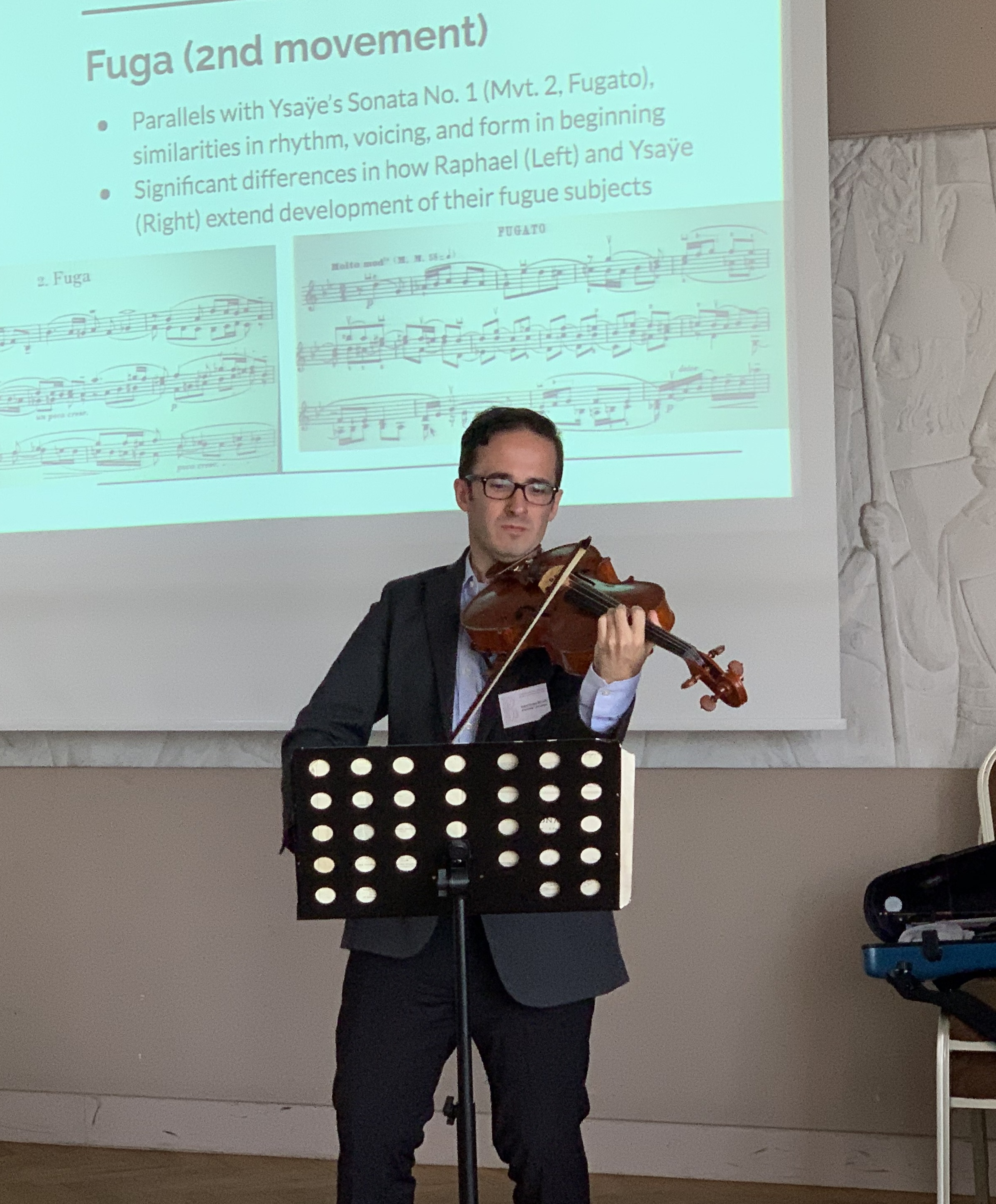
2. Fuga: similarities to Ysaÿe’s solo sonata no.1 mvt 2

The 2nd sonata, op.46 no.3 (1940) is written in 3 movements, and dedicated to Ernst Krenek. Some attention was given to the 1st movement, with layering of 3 voices, octatonic scaling and unannounced bar-length changes and other metrical dissonances.

The 3rd sonata op.46 no.4 (1946) is characterized by the total absence of barlines, the music bordering on atonal.

Greg Williams played one or two movements from each sonata, very beautifully done. He has also recorded all 3 solo sonatas (complete) last month as part of his Ph.D. work, the album hopefully to be released next year. Looking forward to that!

The 3 o’clock lecture by David Swanson and Jordan Wright had been spontaneously moved up to the 10am slot this morning (where master classes had been cancelled), so unfortunately we missed also this presentation, with the curiosity-evoking title “MyViola – New Technologies for Achieving Accessible String Instruments for those with Disabilities“.

So we had to wait a bit for the next recital, by Christine Rutledge: “Bach and the Poets: Slow Dancing” – an evolution of a presentation she gave last year in Rotterdam (and I missed it then!). Poets from Rutledge’s birthplace of Detroit, Michigan contributed their works (recited on prerecorded videos) to mesh with Rutledge’s performance of various movements from the Bach cello suites. Indeed, poetry and Bach combined well together to a meditative whole.

Following this performance, we were treated to a recital of “Late Romantic Chamber Works for Tenor, Viola and Piano” in the POSM Recital hall. Tenor Richard Novak was joined by violist Ames Asbell and Joey Martin on the piano. For those of us who thought that the classical viola + vocals chamber repertoire was limited to Brahms’  Zwei Gesänge, this was an eye- (and ear-) opener!

The Four Hymns for Tenor, Viola and Piano (1914) by Vaughan Williams is a song cycle based on poems by Jeremy Taylor, Isaac Watts, Richard Crashaw and Robert Bridges (translation from Greek text).

Sergei Rachmaninoff’s Five Songs for Tenor, Viola and Piano is a 2013 arrangement by Lorin Chisholm of songs originally only with piano accompaniment, adding a viola obbligato voice. The 4th song (op.4 no.4), however, has an obbligato written by Rachmaninoff himself, for Frits Kreisler. The sheet music, by the way, can be purchased here.

Tenor Richard Novak brought these songs with great conviction, and viola and piano realised a good complete sound picture. Thanks to Ames Asbell for bringing these rare works to the IVC, a very welcome diversification of the overall programme!

This beautiful recital was followed by the official “Closing Concert” of this IVC. The first part of this concert was in the safe hands of IVS Vice-president Jutta Puchhammer-Sedillot and pianist Paul Stewart. The programme title read “About Phantasies and Legends – rarely interpreted English music written for viola and piano in the era of Lionel Tertis“.

The program consisted of York Bowen’s Phantasie (1918), Arnold Bax’s Legend (1929) and Benjamin Dale’s extensive piece Phantasies op. 4 (1909). I have great recordings of all these pieces, but this was the first time I was privileged to hear them live; Jutta mastered them all with beautiful sonorosity and fearless virtuosity. She is a truly amazing violist… (could it be all those Pièces de Concours that she keeps practicing?). For this performance she received an extensive, heartfelt and totally deserved applause.

The Swedish delegation (violists Henrik Frendin and Håkan Olsson) was granted the honour of capping off the musical feast of the 46th International Viola Congress with their captivating program “Swedish polska” – demonstrating the migration of Polish folk music across the (not-so-wide after all) Baltic sea separating these two countries. In fact the “Polska” has become a genre of its own in Swedish folk music. Using baroque bows, the two men generally played facing each other at close distance, leaning into each other’s sound, expressively motioning their phrasing, and stomping out important departure points. It looked a lot like ad-lib improv session, with rich ornamentations and harmonies. This performance sent us off with a big smile on our face!

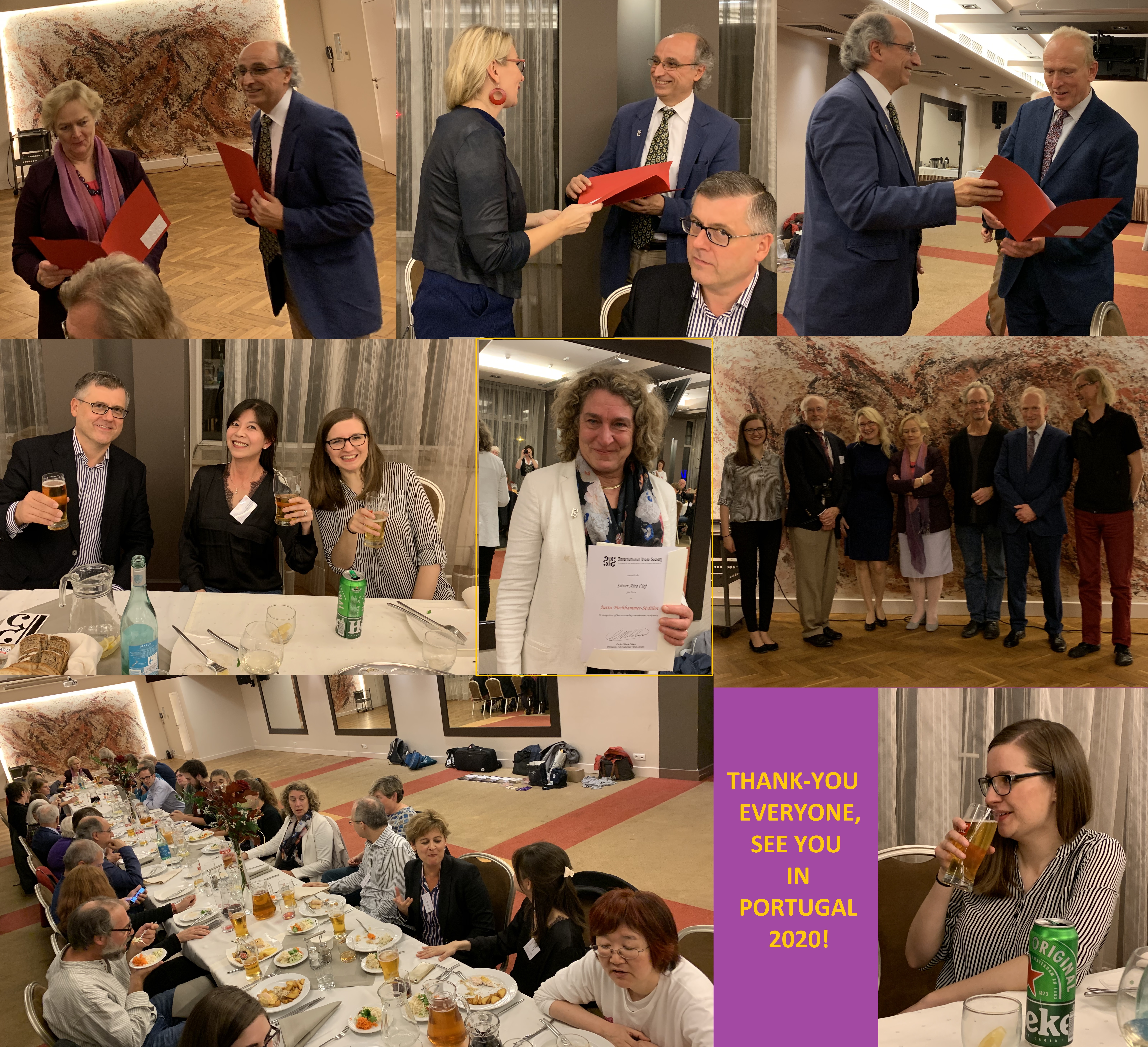
Following this we went to the Farewell party at Hotel Ikar, with speeches of thanks, food and drinks. Carlos Maria Solare awarded “Certificates of Appreciation” to our congress hosts Boguslawa Hubisz-Sielska, Ewa Guzowska and Lech Balaban for their work to organize the congress, and I was finally able to give our friendly congress host-assistant Edyta Butor the beer that I’d promised her (a well-known Dutch export). And last but not least, Jutta Puchhammer-Sedillot received the Silver Alto Clef, one of the highest awards of the International Viola Society. Her emotional response reflected how strongly she feels for the cause of the IVS and how much energy she puts into it.

It’s been a great 5 days in Poznan, with interesting programs, a nice ambiance, and happy reunions with old and new friends! In spite of a very compressed timeline to organize this congress, our hosts really pulled it off! So a zillion thanks go out to the Polish Viola Society and the organizing committee. I’d also like to mention the pianist Krzysztof Sowinski, who supported mulitiple recitals every day – a fantastic job!

Looking forward to see everyone again in Castelo Branco, Portugal, where the 47th IVC will take place from October 14th – 18th, 2020!

Signing off from Poznan,
your intrepid bloggers,

– Karin and Kristofer

IVC2019 Poznan blog – Day 3

The 46th International Viola Congress takes place in Poznan (Poland) from Sept. 24th – 28th, 2019. Your intrepid bloggers Karin Dolman and Kristofer Skaug bring fresh reports daily from this temporary hotspot of the viola universe.

Day 3: Thursday, September 26th, 2019
<previous day>  <next day>

In spite of my “Eager” intentions, I did not make it to the morning lectures, let alone the 8am ensemble rehearsal. Karin and I went to the IVS Delegates’ Meeting, where the International Viola Society board shares information and feedback with the national section representatives. Without going into details, I was happy to see that there is a constructive dialogue in progress about the workings and directions of the IVS for the future.

The first presentation that I attended was a familiar one – DVS president Karin Dolman and her husband Jan van der Elst proudly presented the results of the Viola-building project during IVC2018 in Rotterdam. Jan gave a very good and entertaining presentation of the Luthier team and the building process, “how to build a viola from scratch in 5 days”. As work progressed towards increased integration of the instrument assembly, the opportunities to work in parallel decreased, until in the final stages it was essentially a one-man job. Working under such time pressure allowed no margin for error, and gave rise to heroic feats like carving the scroll in one day – a job that normally takes up to a week!

The viola was presented “in the white” (i.e. unvarnished) during the Closing Ceremony in Rotterdam, where the uncalibrated product was given test drives by Kim Kashkashian and Atar Arad. Today, 10 months later (almost to the day), the viola could be admired complete with varnish – which in many ways acts as a “sound equalizer”.

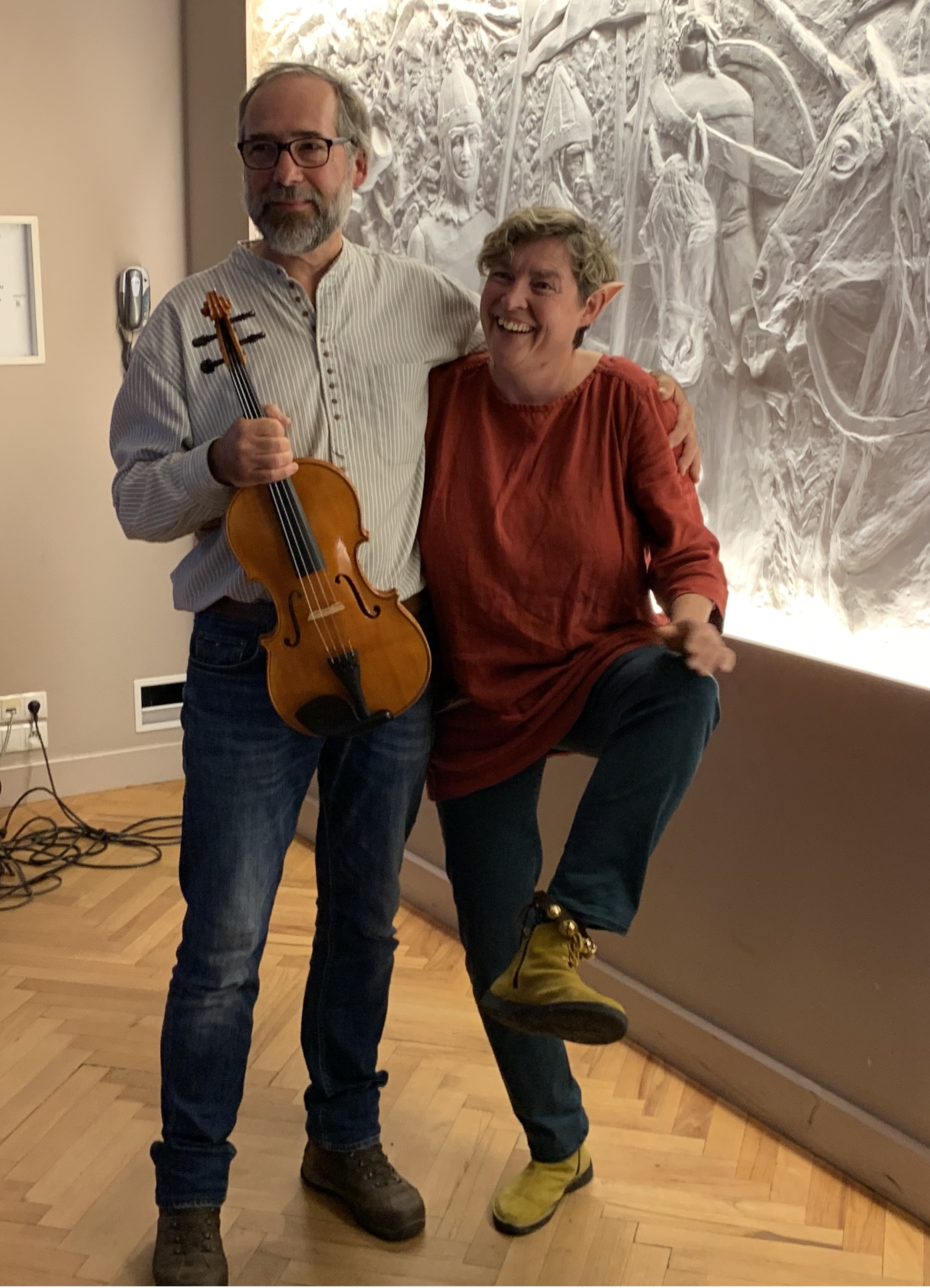
Karin played a composition on the new viola, specially commissioned for this occasion by the Polish/Australian composer Paul Kopetz: “The Leprechaun” – complete with elfin ears and jingle bells around her ankles. It was an entertaining performance in and of itself, but more importantly it evidenced the great sound and playability of this instrument.

There is more good news: The viola has been acquired by the Rotterdam-based Erasmus Foundation. Talented students can apply for a 2-year loan, during which they will be obliged to bring this “Erasmus Viola” to future IVC congresses, so that we can all enjoy this instrument as a kind of “international heritage”. More information about application procedures etc. will be posted here on the Dutch Viola Society website later.

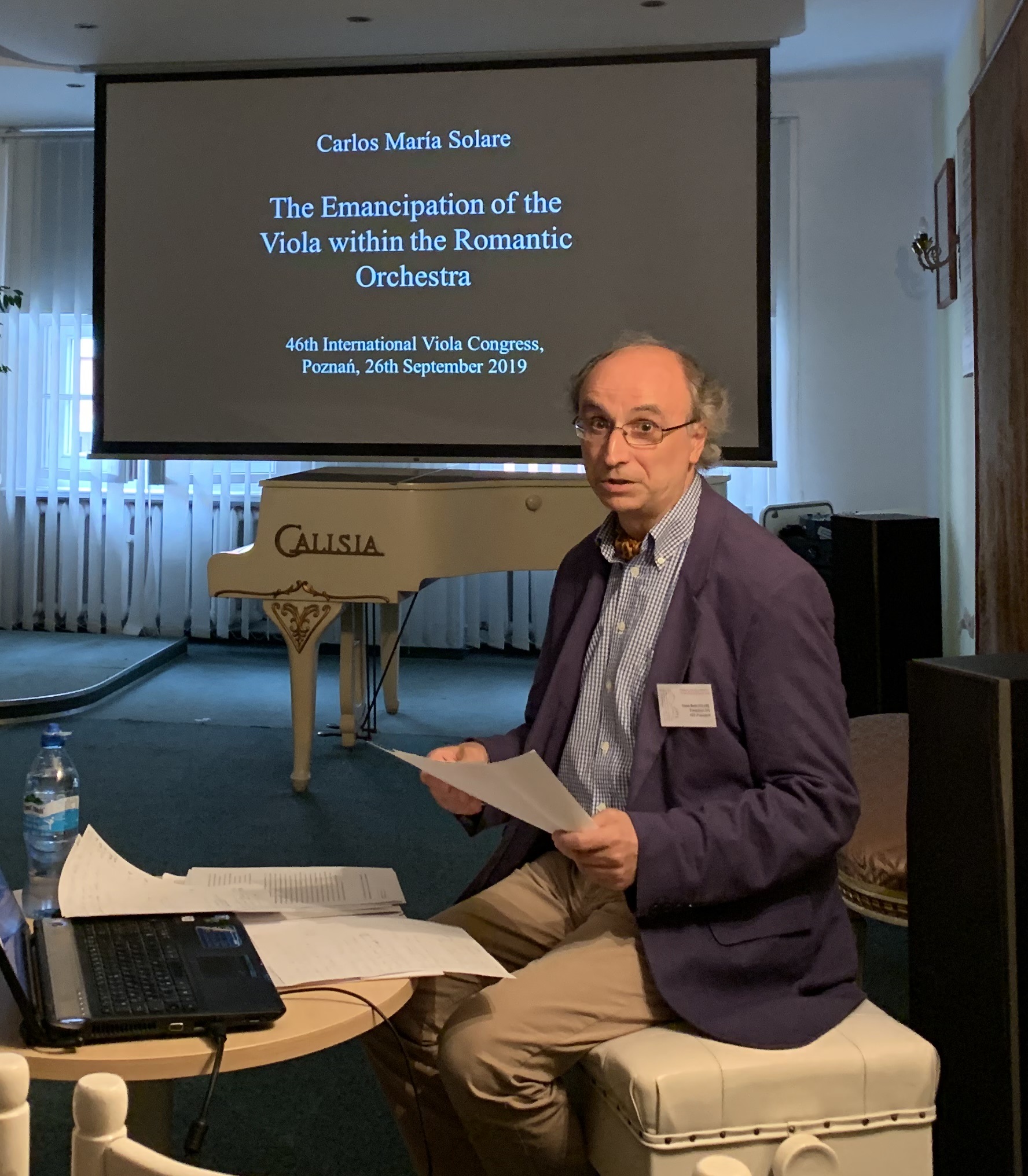
The rest of the presentations this afternoon took place in the Wieniawski house downtown, starting with a lecture by Carlos Maria Solare (IVS president) titled “The Emancipation of the Viola within the Romantic Orchestra“. Taking the classical viola “ripieno” role in 18th century music as a starting point, he illustrated with anecdotes and examples how the viola was entrusted new and more significant functions within the orchestra throughout the 19th century, including solo parts and dramatic underlining. Three composers were highlighted for their innovative use of the viola within the operatic literature in particular: Carl Maria von Weber (Der Freischütz, 1821), Hector Berlioz (La Damnation de Faust, 1846) and Richard Wagner (from Tannhäuser to Die Meistersinger von Nürnberg).

The lecture-recital “Recreating the 1919 Berkshire Music Festival Competition” by Hillary Herndon is the result of a project initiated by the American Viola Society last year towards a centennial commemoration of the 1919 Berkshire competition, which was entirely dedicated to viola sonatas. Previous to this composition contest, the viola literature only counted about 50 known sonatas; at the 1919 contest,  72 new compositions were submitted, more than doubling the available repertoire. It is known that the Rebecca Clarke and Ernest Bloch sonatas emerged tied in first place, but the other 70 non-winning entries were never identified. So this project attempts to identify viola sonatas that emerged around the 1919 time frame, and of which we may guess that they were submitted to the competition.

Accompanied by pianist Bernadette Lo, Hillary Herndon proceeded to play fragments from five unnamed pieces, and the audience got to vote which fragment they liked best. The winner turned out to be the 3rd movement (very much in the style of an Irish/Scottish jig) from Sir Granville Bantock’s viola sonata in F major. This work was subsequently played in its entirety (with some cuts – quote: “This music needed some pruning“, not only in order to fit into the available congress time slot…!). The artists received lots of well-deserved appreciation from the audience.

The “afternoon recital” at 1700h consisted of a rich set of violin-viola duos. First, Annette-Barbara Vogel (Canada) and Raquel Bastos (Australia) skillfully performed the Six Bagatelles for Violin and Viola by Australian composer Margaret Sutherland (1897-1984). This is surprising music with lots of fun hairpin turns and spanning a wide spectrum of techniques, colours and moods. I hope to encounter it again in the future!

Next came Lech Balaban with a solo Cadenza by Bogusław Schaeffer (1929-2019) – extracted from the same composer’s string quartet. It could be seen as a somewhat bipolar monologue, where each sentence is equipped with its own technical main feature: trills, fast runs of repeating figures, glissando, spiccato, pizzicato, tremolo, double stops and so on.

After this, Balaban was rejoined by his son Jan on violin, to extend their set of violin-viola duos from the Tuesday evening concert. They first premiered a Scherzo by Marcin Molski, a 20-year-old composer who was present at this recital. The vibrant energy of this music was undeniably catchy. They proceeded to play the ultimate vioin/viola classic: the Passacaglia by Händel/Halvorsen. Both players articulated with exceptional control, so one could clearly hear “stereo bounce” effects that often get lost in the more gung-ho encore-style performances of this piece. But perhaps they took this a little too far, denying themselves the relief of a smile along the way – after all, it’s still supposed to be fun playing this, IMO! :-).

The smiles surfaced nevertheless in the next piece, Arpeggio per viola by Alessandro Rolla. It has a furiously fast viola accompaniment, and with a very short length it seems designed as a show-off encore. I was left to wonder if this is an original Rolla, as the ending sounded quite unconventional (whence the smiles) …

Time to grab a quick pasta dish again before the Evening concert … however this time we were tempted to take dessert as well, which meant we arrived too late at the POSM Main Auditorium, where Polish violist Krzysztof Chorzelski had already started his recital with the (30-minute long) Schubert Arpeggione sonata.

The second piece tonight was Joseph Phibbs’ Letters from Warsaw, inspired by war-time letters that Chorzelski had found from his grandmother. The music starts calmly with an intimate sonorous song in the viola, increasing in intensity and then fading again. The next movement has a more agitated character, with tremolo-trills chasing some as-yet unseen target… the urgency increases and peaks with loud and dissonant chords. The third movement returns questioningly to the calm of the beginning, but the solace is temporary: The viola starts running frantically again, looking for some more permanent refuge. This cycle repeats itself, and then abruptly the running (and the movement) stops. The last movement rephrases the original song, after which the piano brings a soothing and serene lullaby. The viola echoes this lullaby with high harmonics, to end the piece. A beautiful and very personal performance by Chorzelski, with great control of tone. Compliments also to the pianist Lech Napierala!

Andrzej Czajkowski (1935-1982) was a Polish pianist, composer, and a great all-round intellectual. His major work was a very ambitious opera based on Shakespeare’s The Merchant of Venice, which he completed shortly before his death. Through his friend Maciej Grzybowski, Chorzelski obtained the manuscript of Czajkowski’s viola sonata from the collection of Halina Janowska, who passed away very recently; so tonight’s performance was dedicated to her.

The opening theme is dominated by large intervals reminiscent of a despairing Prokofiev. Different moods and expressions alternate in dissimilar episodes. The 2nd movement has a dark an sinister piano introduction, the viola fluttering above this chasm. At one point there’s another Prokofiev-like allegro, but this soon morphs into more feverish kaleidoscopics. There’s a free cadenza in the viola that is interrupted by a stern choral in the piano, bringing the movement to a close. In fact, the whole piece feels to me like a long “dreamscape” full of seemingly incoherent images. So for the remainder of the performance, I cease my analytical attempts and surrender to just riding the wild waves of this music. It is an impressive and virtuosic performance by both players, appreciated by the assembled viola enthusiasts with an emphatic applause.

The Czajkowski sonata needs and deserves more listenings, it is enormously rich in material, and it is impossible – at least for me – to take it all aboard and immediately “connect the dots”. Given the composer’s reputation as an intellectual, its analysis would probably be a fruitful subject for a research paper.

Editor’s postscript: We have learned that a dedicated web page exists for the Czajkowski viola sonata, maintained by mr. David Ferré – check it out here.

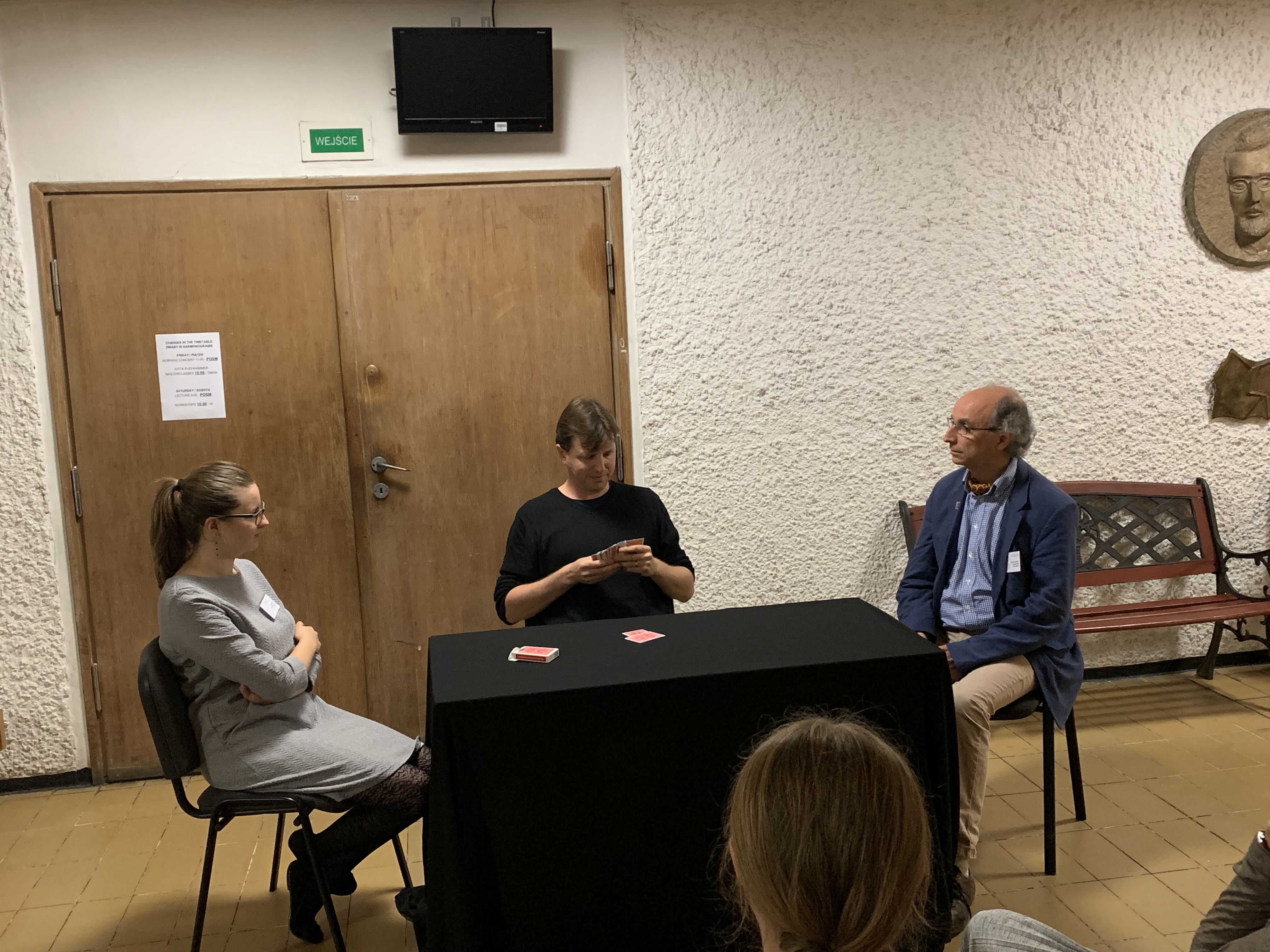
We stay on for Viacheslav Dinerchtein‘s late-night Magic show with “no strings attached” (52 cards and no viola!). With great humour and subtle misdirections (at least I’ll stick to that as explanation for sanity’s sake), Slava led us through a series of perplexing card-guessing games. The Poznan IVC Office’s always-friendly front-desk manager Edyta Butor (I promised her a beer when all this is over!) and IVS president Solare willingly acted as tableside victims of Dinerchtein’s playful deceptions. A much-appreciated non-viola-related wind-down activity after the 3rd full day of viola congress!

Onward to day 4…!

– Kristofer

<next day>

IVC2019 Poznan blog – Day 1

The 46th International Viola Congress takes place in Poznan (Poland) from Sept. 24th – 28th, 2019. Your intrepid bloggers Karin Dolman and Kristofer Skaug bring fresh reports daily from this temporary hotspot of the viola universe.

Day 1: Tuesday, September 24th, 2019
<next day>

Well, it was a very long drive from Holland (950km), but we’re finally here in Poznan, Poland! Last night, it did not take long to convince us that Poznan has much to offer in terms of food and drinks and a very amicable old city centre.

This morning, arriving at the main venue Hotel Ikar, we found a mid-size conference room with an intriguing mural of some historic Polish (?) battle scene, but no special facilities. Before 9am, however, the room was filled with some 30-odd viola congress participants, most of which are old acquaintances by now (Karin and/or I have attended every IVC since 2013). Many more are joining in the next days…!

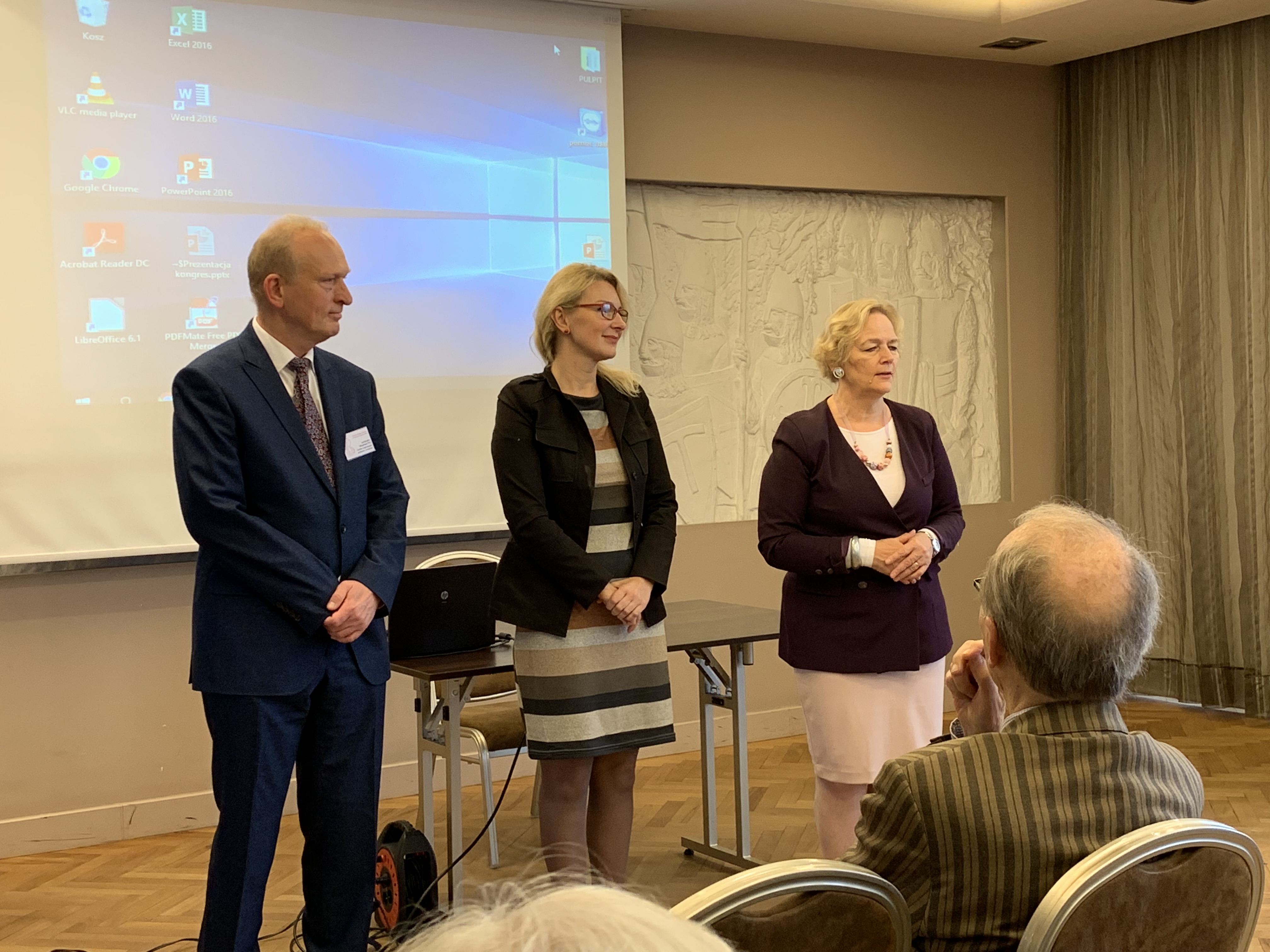
Our hosts Boguslawa Hubisz-Sielska, Ewa Guzowska and Lech Balaban, welcomed us to the congress; IVS president Carlos Maria Solare threw in some words of thanks (rehearsed in Polish – which instantly made him a local hero!) and blessings for a good week. By way of anecdotes he mentioned that Henryk Wieniawski, a great violinist and one of the musical legends of Poznan and Poland, had preferred to play the viola in string quartet context. So Wieniawski now has a viola alibi, too :-).

Special guests in the category “old viola gurus” at the IVC this week are IVS Co-founder Dietrich Bauer and Polish VS Honorary president prof. Stefan Kamasa.

Except for the above, the opening ceremony was quite straightforward and unadorned by long speeches and formalities, so without further introductions we leapt head-first into the congress programme:

Jadwiga Stanek presented a lecture about the Variations for solo viola by Gordon Jacob. Written in 1975, it remains a rarely played piece, but is certainly very interesting. It was a pity that Stanek did not perform it live, but her recordings of the nine variations were very nice. She pointed out the characteristics of each variation, and concluded that the piece bears significant didactic value, for its wide range of contrasting techniques.

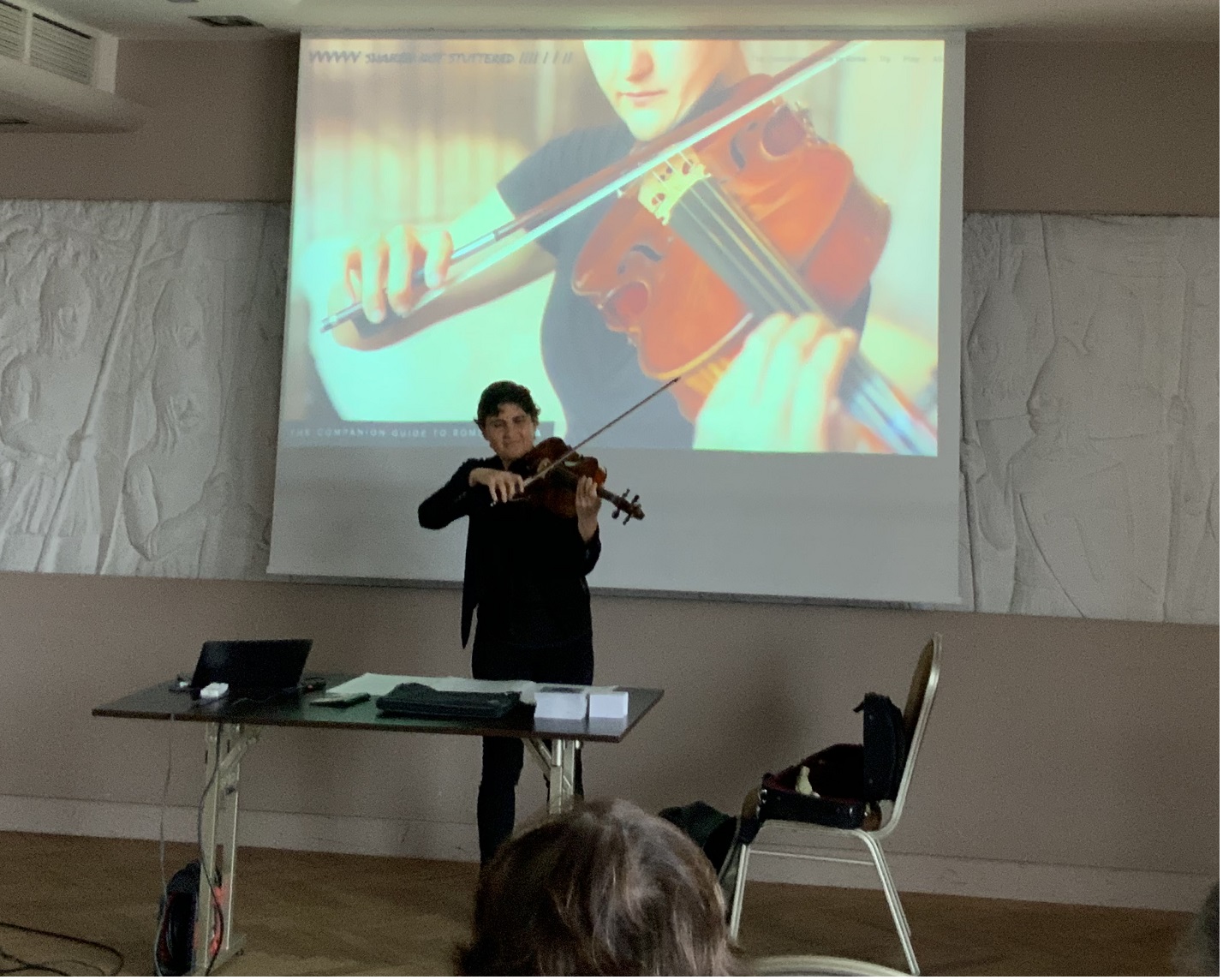
The next presenter was Anne Leilehua Lanzilotti, discussing the piece Sola for viola and electronics, which she commissioned from Anna Thorvaldsdottir on the occasion of the 100th anniversary of the legendary 1919 Berkshire viola composition contest. Anne first described the process of understanding and documenting the extended techniques used in this music by means of personal interviews with the composer, demonstrating the many subtle sound effects that could be produced by e.g. lateral bowing, false harmonics (“seagull effect”) and natural harmonics. In fact, Anne has created a really cool website where you can see numerous examples of such extended techniques and their notation, explained and demonstrated by composers and performers together: www.shakennotstuttered.com

She then went on to perform the piece in full. Among the many evocative passages, in particular a long episode of cascading natural harmonics had me carried away. It was a pity that the beamer equipment in the conference room produced a very annoying low-frequency buzz, which severely interfered with softer sounds. Let’s hope they can do something about it before it makes more musical casualties!

Next was the recital contribution (on behalf of the Dutch delegation) of the sisters Ursula and Sunniva Skaug, with the title “Related Souls: A Canonical Sister Act” – referring to their lives forming the analogy of a canon in multiple ways. The DVS logistics team had time to re-arrange the room for a more “concert friendly” layout, and fortunately we could do without the noisy conference room loudspeakers. Lutoslawski’s Bucolics for 2 violas (arranged by IVC host Hubisz-Sielska) and the serenade Related Souls by Dutch-Canadian composer Lowell Dykstra (written for Gisella and Annette Bergman) were received well, and the Message Ground (based on the song Message in a Bottle by The Police) was a successful close-out piece. Everybody was so enthusiastic! Even I (Karin) got compliments, although I wasn’t really involved!

After a short lunch break, the congress continued with an interesting lecture by prof. Stefan Kamasa, titled “Concerts of 20th century Polish composers”. Kamasa is former principal of the Warsaw Philharmonic and an eminent soloist, who has had the fortune to be personally involved in the early history of several 20th century Polish viola concertos: First the viola concerto by Aleksander Tansman (composed in exile, 1936-37), and the Grazyna Bacewicz concerto (commissioned by Kasama in 1968).  Then there was Tadeusz Baird’s much-appraised Concerto Lugubre (1974), Roman Palester’s concerto (1976-79), and last but certainly not least, the Penderecki concerto (1983). It was a fascinating review, full of personal anecdotes and recording fragments from these concertos.

This lecture transitioned directly into a master class, where prof. Kamasa gave advice to two Polish students: Lucja Jaskula played one of the Hindemith solo sonatas, and Justyna Robak gave a movement from one of the Bach solo suites her best shot. Although the spoken parts mostly consisted of a mix of Polish and German, the nonverbal signals (postures, gestures, and last but not least musical expressions) quickly filled the room and spoke their own language.

The University of Tennessee viola class (studio), led by Hillary Herndon, exposed us to a new viola etude collection called “18+3”, composed by Jorge Variego. Samples of the printed book were passed around so people could read along. Most of the exercises addressed challenges with string crossings, with additional accents such as harmonics, ornamentation, shifts, double stops, and so on. The students each introduced and performed one etude (live or pre-recorded), with titles such as “Look Inside”, “Riffin”, “Uninvention”, “Beyond the rail tracks”, “Mi caramelo” and more. Altogether it formed a varied and interesting set of exercises. They are quite suitable, so I (Karin) bought a copy of the book.

Unfortunately, once again the tech support branch of the congress came up a bit short, the UT team was on their own to figure out how to hook up sound and video, and when a (grumpy) local technician finally arrived, they had already employed a workaround which got them through their routine.

Change of venue – over to the Recital hall of the next-door POSM School of Music –
Our host Boguslawa Hubisz-Sielska opened the afternoon recital with a rendition of the (to me) unknown Vieuxtemps piece “Romance on the theme of Halka (by Stanisław Moniuszko)“, technically quite demanding. Her performance gave a good view on the piece.

Next came a piece that we were really curious about, by the (African-)American composer Adolphus Hailstork (b. 1941): Sanctum for Viola and Piano, performed by Kathryn (Katie) Brown, a regular of recent IVC’s. The music starts with a long and very personal viola solo introduction, and develops beautifully together with the piano. At one point, Brown and her pianist Théo Narayan were both improvising. It was a convincing and authentic whole. After her performance, Brown gave a short lecture championing diversified programming, while of course putting in a good word for Hailstork to this end. Hearing of the adversities faced by the composer in gaining renown, it was necessary to be reminded that Hailstork’s skin colour played an important role in Brown’s personal advocacy. We definitely have to get his music to be played more in Europe. As with many other American compositions!

Rising to the challenge of an uncomfortably short dinner break, some of us found a quick pasta dish in a nearby Italian restaurant, while others sought improvised solutions such as picnicking in a nearby park. We subsequently gathered at 1900h in the POSM Main Auditorium for the “Inaugural evening concert” of this Congress.

The main part of this concert belonged to the Balaban family, in the form of a father-son duo: Violist Lech Balaban and his violinist son Jan. Together they performed a number of duets, most of quite recent date:  Ewa Fabiańska-Jelińska’s Passacaglia (2018), Piotr A. Komorowski’s Albo – albo (Either – or) (2019) and Sławomir Czarnecki’s Capriccio Brda (2019). Common to these pieces was a predilection for the violin part to stay close to the viola range, not seeking the extreme of its (high) registers.Together with pianist Krzysztof Sowinski, with whom he also performed in Rotterdam last year, Lech Balaban next delivered Szymon Godziemba-Trytek’s Contemplatio in memory of his father, violinist Henryk Bałaban, who passed away 3 years ago. It was a very personal music, melancholic and introverted, including a passage with descending figures of mourning.

On to some lighter material, Philipp Scharwenka’s Duo with piano accompaniment op.105. Apart from the somewhat unusual violin-viola-piano trio instrumentation, this throwback to 19th century idioms did not bring much news, in fact it is a rather long spin-out of a single theme. It struck me as a somewhat romantic but still mostly undramatic divertimento. The ending was quite funny: The viola makes a run down with some chords of the piano and violin.

After a short break, Maxim Rysanov took the stage to perform the Shostakovich viola  sonata (op.147); being the last work that Shostakovich completed before his death, it bears witness of his great love for Beethoven (esp. in the last movement). Rysanov and Sowinski brought a highly charged and very personal interpretation, with which they easily had the audience on the edge of their seats. We look forward to hearing more from Rysanov later this week.

Due to a delayed flight, the Portuguese delegation did not make it in time for their programmed late-night session, so the first IVC2019 congress day ended here. Check back tomorrow for more news!

– Karin & Kristofer

<next day>

Verslag Britten Altvioolconcours 2019

door Kristofer G. Skaug, DVS redactie

Redactionele opmerking: Uitspraken van subjectieve aard worden op persoonlijke titel gepubliceerd, en vertegenwoordigen derhalve geen officiëel standpunt van de DVS.

De vierde editie van het Britten Altvioolconcours is afgelopen zondag (17 maart) gehouden bij het ArTEZ conservatorium in Zwolle. Onze wensen naar aanleiding van de deelname in de 2017-editie zijn verhoord: Niet alleen was er dit jaar sprake van een recordaantal van 19 deelnemers, maar ze kwamen ook nog eens van een groot aantal verschillende docenten af – zowel de voorlopleidingen / talentenklassen van Amsterdam, Den Haag, Rotterdam en Zwolle waren goed vertegenwoordigd.

De deelnemers uit Categorie 2 (15-18 jaar) waren als eerste aan de beurt. Het verplichte stuk was het Adagio uit het altvioolconcert van Henk Badings, een stuk dat veel vraagt van de muzikale verbeeldingskracht van de spelers. Daarnaast speelde iedereen een stuk naar eigen keuze.

Het gaat te ver om een uitgebreide evaluatie te doen, maar we hebben kunnen genieten van in totaal 15 vertolkingen van Badings. Dit was voor de jury ook een onmisbaar ijkpunt om de kandidaten met elkaar te kunnen vergelijken.

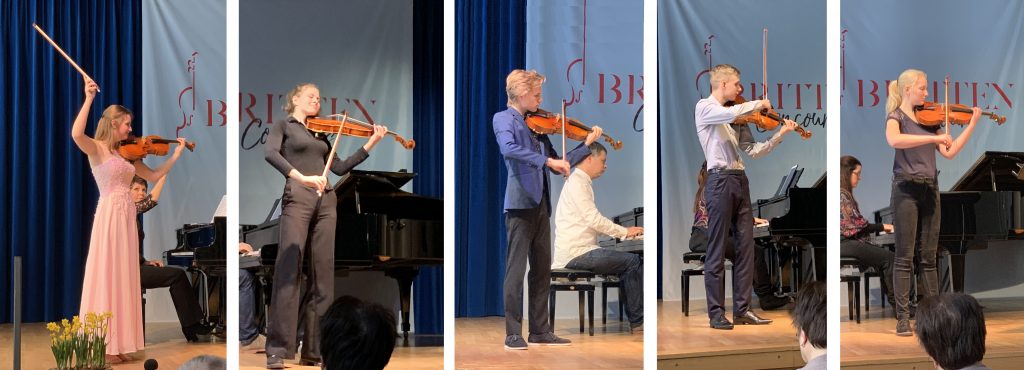
Enkele deelnemers uit Categorie 2: Vlnr. Steffie, Mila, Sylven, Simon, Ida

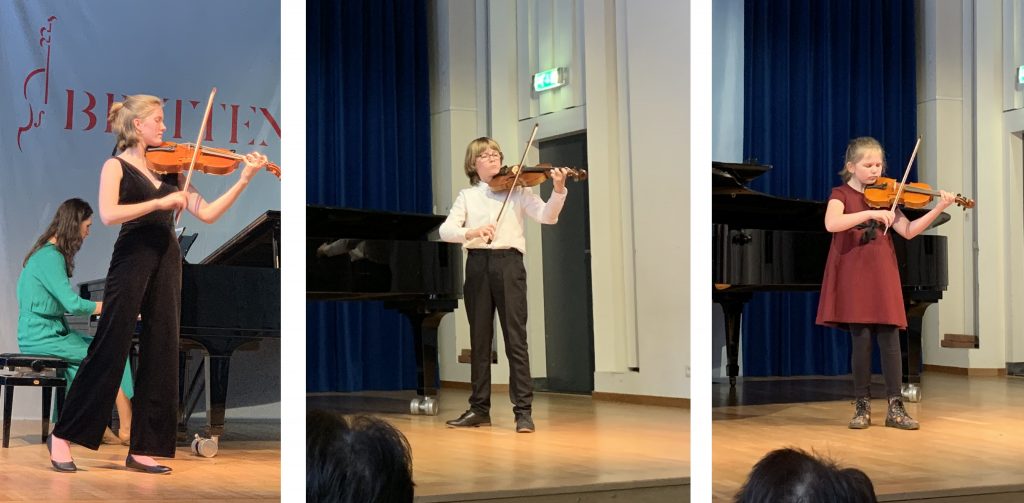
Onder de opmerkelijke keuzestukken kunnen we noemen het technische hoogstandje Carnavale di Venezia (Paganini/Kugel), uitgevoerd door Brittenconcousveteraan Steffie de Konink (17, Delfgauw). De conservatoriumstudente Raquel Roldán (18, Utrecht) bracht een deel uit een zelden gehoord altvioolconcert (bewerking?) van J. Chr. Bach, met mooie volle klanken. De machtige Grand Tango van Piazzolla werd met veel bravoure gespeeld door Mila Kastelein (16, Den Haag). Een hele verademing tussen alle Bruch, Schumann, en overige “ijzeren repertoire” was dan ook de Blues voor Bennie (E. Pütz), een jazzy, Gerschwin-acthtig deuntje, met gepaste luchtigheid neergezet door Sylven van Sasse van Ysselt. Uberhaupt is mijn wens voor toekomstige edities van het Brittenconcours dat er bij de keuzestukken een “verbod” komt op standaardstukken zoals de Fantasie van Hummel, het Hoffmeister-concert enz. Er is zoveel leuk altvioolrepertoire van de 20e en 21e eeuw – duik daar maar in!

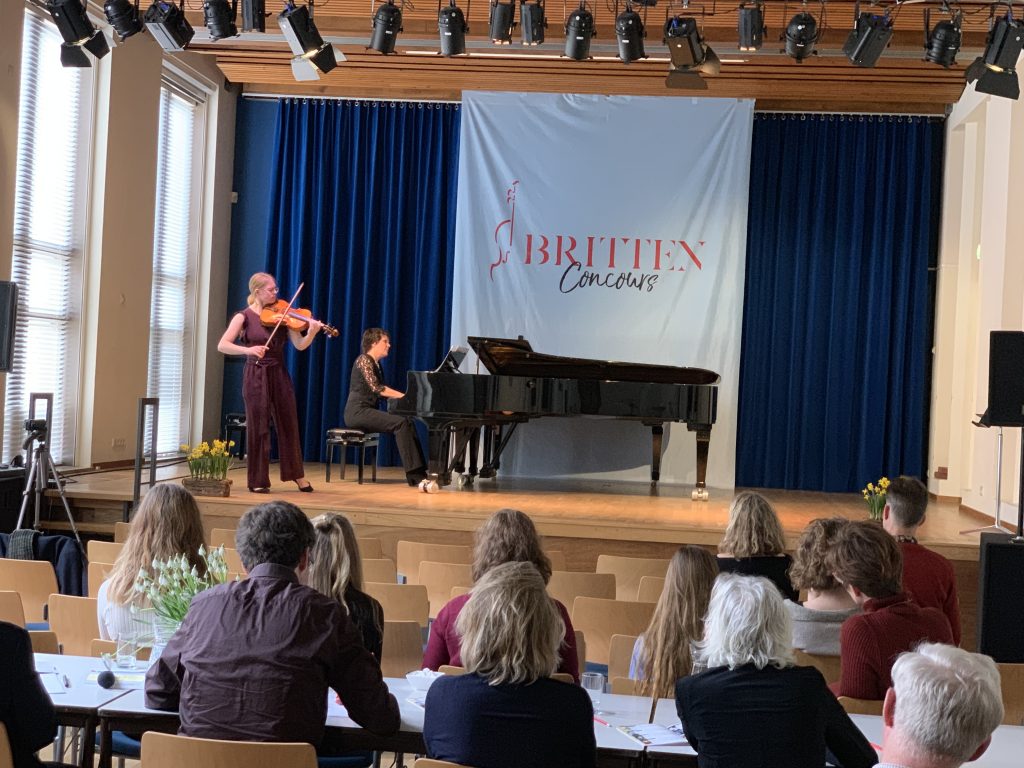
Sfeerimpressie: De jury luistert naar Sunniva’s voordracht van Tsintsadze

Tijdens de uitgebreide lunchpauze (die konden we goed gebruiken!) was er juryberaad voor Categorie 2. De DVS had een stand neergezet om nieuwe vrienden te werven en ook het verkoop van een breed assortiment van gadgets, stickers en CD’s.

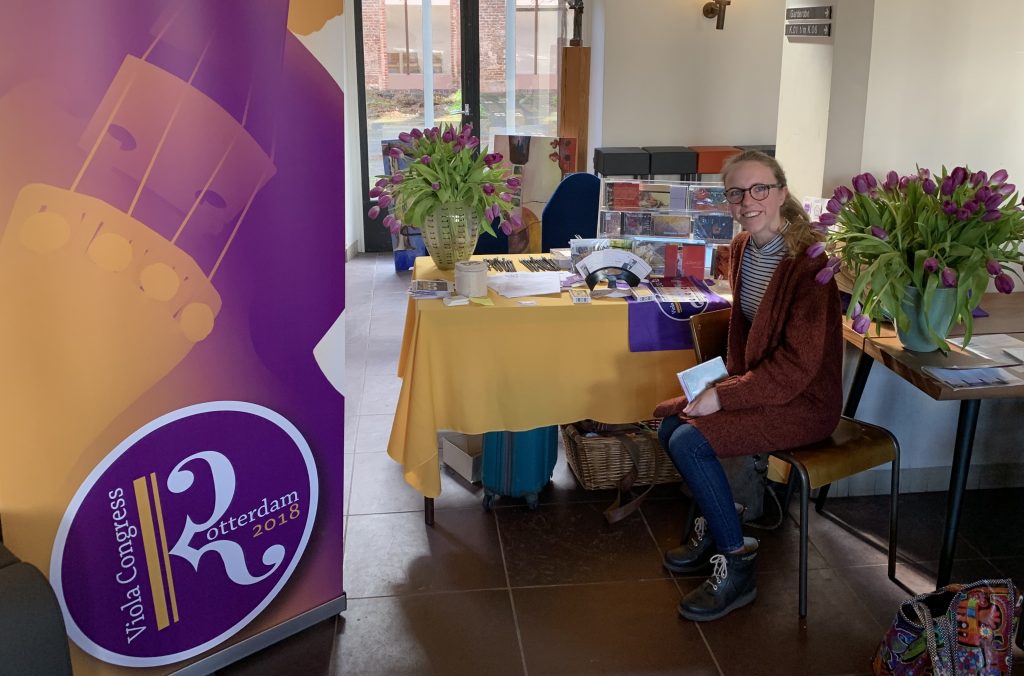
De stand van DVS, bemand door Sofie!

Na de break waren de jongsten aan de beurt: In Categorie 1 (10-14 jaar) waren er vier kandidaten dit jaar. Het verplichte werk was het derde deel uit de Sonatine (op.35b) van Berthold Hummel, een leuk allegro dat hobbelt tussen 4/4 en 3/4 maten, technisch goed toegankelijk voor jonge altviolisten (alles kan desnoods in de 1e positie gespeeld worden), maar met genoeg mogelijkheden tot uitdieping en tempoversnelling voor de iets meer gevorderden.

Deelnemers uit Categorie 1: vlnr. Norea, Tygo, Sarah

Norea Quirijnen (14, Zutphen) liet al gelijk zien hoe dat moest: ze speelde met grote expressiviteit de hele Sonatine (waar ook hele mooie lyrische passages in zitten), en rondde af met het verplichte laatste deel in een verrukkelijk hoog tempo. Daarna kwam Juliëtte Gielen (12, Rijswijk) met het mooie – en voor mij nog onbekende – Chanson Celtique van Forsyth. Tygo de Waal (12, Ooltgensplaat) had een concert van Händel voorbereid, en de charmante Sarah Sikkes (10 jaar, Amstelveen) bracht als laatste kandidate van dit concours de bekende Siciliënne van Fauré.

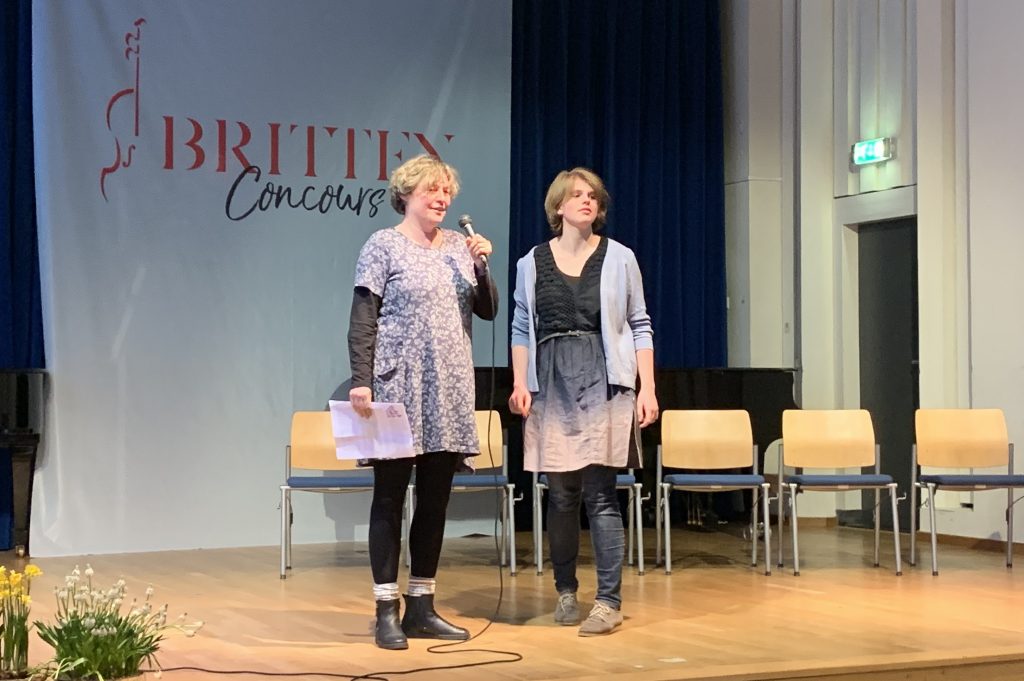
Tijdens het wachten op de uitslag van de jury hielden Karin Dolman en Ursula Skaug een pitch namens de DVS, waarin o.a. een oproep werd gedaan voor nieuwe bestuursleden, rayonhoofden en student-contactleden. Gelukkig hadden ze heel veel te melden, want de jury had echt even nodig om eruit te komen, met zoveel goede kandidaten.

Karin en Ursula pitchen voor de DVS tijdens het juryberaad

Om 17:20u kwam de jury eindelijk in de zaal terug en nam plaats op het podium: Yke Topoel, Ásdís Valdimarsdóttir, Roeland Jagers, Loes Visser, Liesbeth Steffens en Francien Schatborn. De uitslag luidde als volgt:

Categorie 1 (10 t/m 14 jaar)
1e prijs en jongerenjuryprijs: Norea Quirijnen (14 jaar, Zutphen)
Uit het juryrapport: “Norea Quirijnen is een echte verhalenverteller. Ze maakte indruk met haar sprookjesachtige spel, mooie uitstraling en enorme flair.”
Aanmoedigingsprijs (DVS Bladmuziekprijs): Sarah Sikkes (10 jaar, Amstelveen)

Categorie 2 (15 t/m 18 jaar)
1e prijs en jongerenjuryprijs: Sunniva Skaug (15 jaar, Delft)
Uit het juryrapport: “Sunniva Skaug gaat volledig op in de muziek en geeft met haar gedreven energie en muzikaliteit elke noot een eigen lading mee.”
2e prijs: Elin Haver (15 jaar, Amstelveen)
3e prijs: Mila Kastelein (16 jaar, Den Haag): Woudschotenprijs
Aanmoedigingsprijzen:
Raquel Roldán i Montserrat (18 jaar, Utrecht): DVS Bladmuziekprijs
Ida Weidner (17 jaar, Amsterdam): Concertbonnenprijs Orkest van het Oosten
Extra jongerenjuryprijs: Steffie de Konink (17 jaar, Delfgauw)

De DVS Bladmuziekprijzen gingen naar Sarah Sikkes en Raquel Roldán.

De volledige uitslag (inclusief het Britten Celloconcours 2019) vindt u hier.

Norea en Sunniva zullen met het Britten Jeugd Strijkorkest soleren op zondag 7 april bij het traditionele laureatenconcert in De Spiegel (Zwolle). Meer informatie over dit concert vindt u hier.

Hartelijk dank aan de organisatie, met name René Luijpen (die na dit concours terugtreedt als voorzitter), Jorien Quirijnen, Dorien Deodatus en Loes Visser.

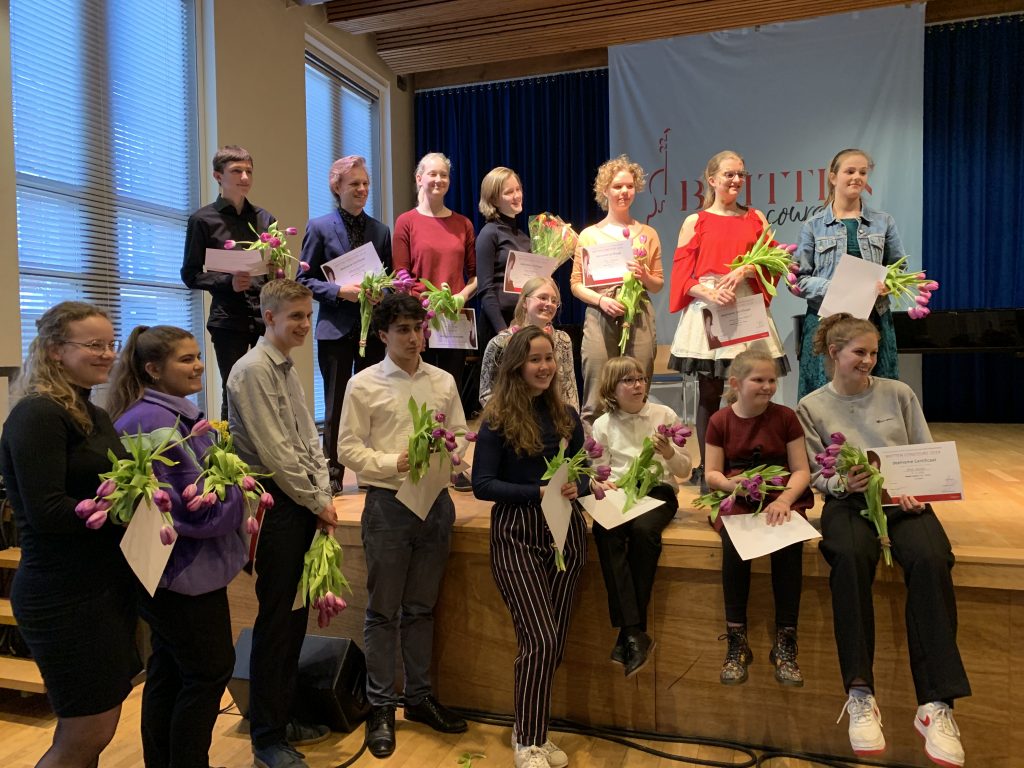
(Bijna) Alle deelnemers van het Britten Altvioolconcours 2019

Masterclass Tabea Zimmermann

Er is mooi nieuws! Tabea Zimmermann komt deze week een masterclass geven in het Conservatorium van Amsterdam (CvA) – op woensdag 6 maart as. van 14-18!
De masterclass vindt plaats in de Sweelinckzaal, toegang is gratis.
Er spelen 5 studenten van CvA, ieder heeft 45 minuten les.

Mis deze kans niet, om deze grote altvioliste en pedagoge les te zien geven!

Tabea in actie, DVS-masterclass 2015 (TivoliVredenburg Utrecht), met Lisa Eggen