Het kan vriezen, het kan dooien…

Verslag van DVS concertbezoek Concert Marc Tooten in dubbelconcert van M. Bruch op 26 januari 2013.

Na een ijzelige tocht kwam de DVS delegatie veilig aan bij muziekcentrum Frits Philips in Eindhoven alwaar Marc Tooten samen met klarinettist Arno van Houtert en het Brabants Orkest ons die avond zouden gaan trakteren op Bruch. We besloten eerst maar eens een gezellig hapje te eten want er was honger en hadden tijd over. Onder het genot van een drankje werd aan tafel al druk gediscussieerd over wat we mogelijk allemaal te horen én te zien zouden krijgen. Alle aanwezige altisten blijken dit dubbelconcert te kennen en sommigen hebben het zelf wel eens geprobeerd te spelen in kamerbezetting als trio met piano. Na het diner konden we direct doorlopen met onze kortingskaarten. Bedankt daarvoor nog Brabants Orkest! Om de solisten goed te kunnen zien hebben we gekozen voor goede plaatsen ´op ooghoogte´ van de spelers. Na de Holbergsuite van Grieg (NB een compositie met ook zo’n waanzinnig virtuoze altsolo waarvan je in het begin denkt dat je alleen de concertmeester hoort en ziet zwoegen op die snelle loopjes, en een moment later dan plots een reeds in het zweet gewerkte altiste precies hetzelfde ziet doen op zo’n ‘reuzeviool’… hetgeen wij natuurlijk erg knap vinden) was het dan eindelijk tijd voor het dubbelconcert waarbij de altist (who else?) mag aftrappen met een krachtig openingsakkoord. Marc deed dit vol verve en liet aan het publiek goed zien wat je allemaal uit een altviool kunt halen. De altviool als solo instrument met orkest is voor heel wat concertbezoekers nog altijd een soort rariteit. Je hoort de mensen bijna denken; “Is het een viool?, nee dat is het niet. Maar die klank dan?… Is het een cello? Nee, dat kan niet…”
Terug naar het concert, want DVS vond de solisten – die in het dagelijks leven ook collega’s in hetzelfde orkest zijn – mooi samenspelen waarbij het plezier er vaak vanaf spatte. Het publiek genoot daar deze avond ook zichtbaar van, erg leuk om mee te maken. Het orkest volgde beide heren en ook de pianissimo passages droegen bij aan de magie van dit prachtige concert. Na de drie heerlijk romige delen volgde een welverdiend applaus door een enthousiast publiek voor Marc en zijn collega. De DVS delegatie werd zelfs nog even toegelaten voor een korte meet and greet achter de schermen. Daar konden we niet alleen de altviolisten van het Brabants Orkest maar ook onze Marc even feliciteren en de hand schudden. Al met al een geslaagd concertbezoek. We hopen dit in de toekomst nog wel vaker met de Vrienden van de DVS te kunnen organiseren. Wat DVS betreft mag er daarom best wat vaker een altviool in de schijnwerpers staan op de grotere podia van Nederland!

rvo

Interview met altvioliste Esra Pehlivanli

“We have to push composers to write viola music without limits” – Esra Pehlivanli 
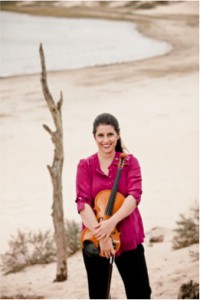

Esra Pehlivanli
voltooide haar muziekstudies met onderscheiding aan het Staatsconservatorium in Ankara en vervolgens bij de altvioolvirtuoos Michael Kugel aan het Koninklijk Conservatorium Gent en aan het Conservatorium Maastricht. Ze won prijzen op prestigieuze concoursen zoals de “Kryzstof Penderecki International Contemporary Music Competition” (Polen) en de “Torneo Internazionale di Musica” (Italië), ontving de Jur Naessens Muziekprijs (Nederland) en de eerste prijs bij de “Premio Valentino Bucchi International Viola Competition” in Rome, waar ze ook een eremedaille uitgereikt kreeg van de president van Italië.

Esra Pehlivanli treedt veel binnen Nederland op (Concertgebouw Amsterdam, Concertgebouw Nijmegen, De Doelen Rotterdam, Frits Philips Eindhoven) en in heel Europa (van Ierland tot Turkije), Zuid Amerika en China.

Onlangs heeft Esra Pehlivanli vijf CD’s uitgebracht, met opnames van meesterwerken uit het verleden en nieuwe composities speciaal voor haar geschreven. Naast de uitvoering van de klassieke meesterwerken voor altviool, werkt Esra graag met componisten samen om nieuw repertoire te creëren, en de hedendaagse muziek voor altviool te promoten.

DVS: At what age did you first start playing the viola, and how did that come about?

When I was 11, I entered the Ankara State Conservatory where I was born, and began to learn how to play viola. The music education system in Turkey is different than in some other countries. There are no music schools that you can go first and later on you decide if you want to become a professional musician or not. You directly start with the conservatory and it takes ten years. Before that I was singing at the children choir of the Ankara State Opera & Ballet House. This was for me the start with music. I enjoyed so much, especially the part when we were on stage performing with full orchestra, soloists, choir, costumes, decors and lights….  I knew I wanted to be a musician and wanted to keep on experiencing such a charming momentum all my life.

DVS: Can you tell us any specific “revelations” from your viola studies that greatly influenced your technique and style?

I love Kreutzer studies. I think if you are really able to play the etudes, you are a great instrumentalist. You have everything in these studies, all about right and left hand. Vibrato is very important, I learned this from my previous teacher Mikhail Kugel. Not many violists pay attention to that area. Therefore it’s quite common to hear violists with very slow vibrato, as if they are 80 years old! I learned from this viola master not only about vibrato but all about the technique, style and most important how to become a stage performer and musician. 

DVS: Viola students of today have the opportunity to watch (and learn from) great violists in action on YouTube. Which artists would you particularly recommend studying?

I wouldn’t say studying but maybe observing if your purpose of watching is about learning. I like very much to listen to Mikhail Kugel, Yuri Bashmet and Tabea Zimmerman. They are all very different from each other but very unique. I also find it very important to watch or listen to not only violists but many other instruments as well. We can learn so much from music, it doesn’t have to be specifically viola music. I always believe, music develops your playing technique very much (I don’t mean for beginners). Therefore I’d always recommend to listen to every musician which gives you pleasure and make you feel something.

DVS: Which qualities do you seek first and foremost in a viola (for your own use)?
What about the bow?

I don’t have very big hands, therefore for me the size is important so I can hold it and play it comfortably. But of course the sound is very very important. I have to have a connection with the instrument. It’s a piece of wood, I give life to it. It has to be a special connection between the instrument and the player. I like very much if the viola has a dark sound on the low strings and not so sharp A string. Viola has a great range, this we must hear in the instrument. Therefore the balance between the four strings is very important too.

I use a heavy violin bow. This is very good to play for recitals, chamber music and solo concerts. You can do many things much easier than with the viola bow. More and more viola players are choosing this type of bows. If you haven’t tried it yet, I’d advise you to do so. 

DVS: Your play in ensembles with some unconventional instrument combinations such as accordion, pan flute, recorder, percussion. How does this differ from the “usual” viola partners such as the clarinet, the piano, and the string quartet?

Until now I performed in many different chamber music settings and it always requires different attention on tuning, sound production, vibrato, breathing… I have four ensembles where I play regularly: Duo MARES with accordion, Black Pencil (which we reviewed last month, ed.) with block flute (recorder), panflute, accordion, percussion, Trio Kybele with a mezzo-soprano and piano, and the Duo Pehlivanli & Safonova with piano. Viola has a wonderful range, which can fit into any kind of chamber music ensemble. It has the middle register, warm sound, not so high as violin and not so deep as cello or contrabass. This opens a lot of doors to combine it with any instrument such as in ensemble Black Pencil.

Viola with blockflute, panflute, percussion, accordion? It is really unique and actually difficult to combine. Every time I’m trying to find a way to melt better with those instruments. They do as well, this is chamber music. For example, if we have a slow unison motive and I play it with my full vibrato, it doesn’t work that well. The pitch changes, I have to find a way to combine it, little slower and smaller vibrato. So I get closer to the wind vibration. Same as if you play with clarinet. Intonation is another issue. When you play with piano, you know that there is one well-tempered instrument and you have to adjust your intonation into that instrument, whether it is good or not, you have to. But playing with instruments where there is no fixed pitch, then the intonation becomes relevant. To play with accordion is the same. I have to be extra careful with my intonation. The tones changes with the bellow change, with the register change, and it’s a wind instrument.

DVS: Do you have a favourite viola concerto? (as a performer and/or as a listener)

It’s difficult for me to tell, because I’m quite a moody person. Although I like very much Walton, Schnittke concertos, Hindemith’s works with orchestra and of course Mozart Sinfonia Concertante and Bruch double concerto.

DVS: Every cellist’s “school orchestra trauma” seems to be the Pachelbel “Canon”. What is the most infuriatingly annoying viola part you’ve ever had to play?

There are many unfortunately (!) I wouldn’t like to name it for respect to the composers.

DVS: Speaking of repertoire, would you say that contemporary composers are more aware of the viola than their predecessors, in general?

Definitely! Viola is the instrument of today. It has not been discovered enough until the second half of the 20th century. In my opinion it also comes from the players’ abilities. Today’s violists are much better than 50 years ago. We can inspire composers better, and they know that viola is no longer an accompaniment instrument but can perfectly be a solo instrument too. It is the performers’ duty to improve the instrument, if the composers are still writing a relaxed viola part, we have to push them to write it without limits. There are no limits to improve and do it better. At least this is how I think all the time. I like very much new music and the collaboration with the composers, to create it, perform it, to receive a score that no one has played before, and afterward leave it to everyone. This is a great process. 

DVS: Is there a viola “community” in Turkey, and do you see a Turkish Viola Society arising in the (near) future?

Well, you just gave me a great idea! There is a big unofficial viola society in Turkey. It just needs to be organised. Why not, maybe in the near future.

DVS: What are your expectations of the Dutch Viola Society, in practical terms? What could it do to help you as a professional violist?

There are many violists living or based in The Netherlands who are working in the orchestras or performing as a chamber musician or soloist from all ages. We should have a better infrastructure to come together, share ideas, knowledge, and repertory. This can be organised as conferences or broadly oriented festivals. The website is great and of course we are living in the social media times. Maybe it’s not a bad idea to add a page where you mention the new CD recordings especially from the Netherlands. One of the things I wanted to do is to create an online catalogue for the contemporary viola repertory. Maybe we can work on this topic together. The DVS can occasionally commission new works to Dutch composers, there are many interesting people around. Networking is very important in order to enlarge our Dutch Viola Society.

© Dutch Viola Society / edited by Kristofer G. Skaug

Recensie Black Pencil concert: een altviool in ongewoon gezelschap!

Blokfluitfestival Amsterdam: Concert Black Pencil mmv. Walter van Hauwe, 21/10/2012

Het is een druilerige oktober-zondag, en uw onbevreesde DVS-reporter stapt in de trein om het blokfluitfestival in Amsterdam te  bezoeken. Blokfluit mwah, stoffig geitenwollensokkending, hoor ik u denken – en wat is de relevantie voor onze Viola Society?

Nuwel, het ensemble Black Pencil treedt bij deze gelegenheid op, waarin altiste Esra Pehlivanli bijdraagt als enige strijkende klankpilaar in een unieke combinatie met blokfluit (Jorge Isaac), panfluit (Matthijs Koene), slagwerk (Enric Monfort) en accordeon (Marko Kassl). Deze instrumenten hebben bijna allemaal te kampen met een soort muzikaal-sociologisch stigma, voormalige stiefkinderen van de klassieke muziekgeschiedenis. De gedreven musici van Black Pencil hebben deze (ex-)outcasts nu bij elkaar gebracht – en het resultaat is zeer aansprekend.

Het accordeon staat garant voor een klankbodem van stevige diepe orgelnoten, maar wordt ook ingezet als verbreding van het steeds terugkerende slagwerkfeestje. De blokfluitvirtuoos Jorge Isaac bespeelt alle registers – de vier klassieke blokfluiten (sopraan, alt, tenor, bas) liggen paraat en nemen het van elkaar over. De panfluit komt hiernaast heel goed tot zijn recht, vaak als welgevormde en heldere middenstem tussen de blokfluit en de altviool in, verfrissend anders dan we gewend zijn van het Simon & Garfunkel-cliché (El Condor Pasa). En last but not least de altviool, een innemende warme klank van trillende snaren die het klankbeeld op een mooie (en in onze DVS-oren noodzakelijke!) manier aanvult.

Blokfluitgoeroe Walter van Hauwe legt in een filmpje uit hoe de blokfluit in allerlei soorten en maten voorkomt, en dat dit instrument (en zijn muziek) heus niet in de 17e eeuw is blijven hangen. Als voorbeeld horen we het baanbrekende solostuk “Gesti” (1966) van Luciano Berio, waar de blokfluittechniek wordt uitgebreid met effecten die vroeger werden beschouwd als onwenselijke bijgeluiden: De spookachtige holle resonantie van kleppen aanslaan (zonder te blazen), explosieve uitstootjes, rollende tong-trillers en zelfs modulaties van de stembanden die door de fluitpijp gieren.

De lichaamstaal van de blokfluitist en zijn ensemblegenoten trekt ook de nodige aandacht. Wij strijkers hebben onderling bepaalde conventies, hoe men samen ademt, samen strijkt. In de aanwezigheid van andere instrumenten moet men naar elkaar toe werken, en gewoontes durven loslaten. Bij Black Pencil leidt dit aanpassingsproces tot een fascinerende en authentieke choreografie.

Tussen de vijf musici wordt er een nieuwe muzikale ruimte uitgespannen, die gevuld wordt met speciaal voor hen geschreven composities, niks stoffig dus. Bij de stukken Danzai (2011) van Chiel Meijering en Farfanesque (2011) van Nico Huijbregts komen regelmatig “etnische” idiomen voor, en dialogen worden gevoerd die in hun relaxte vorm grenzen aan jazz-improvisatie. De muziek wordt gebalanceerd en zelfbewust uitgedragen. Er klinkt een wervelend gesprek tussen een cajón (een soort kas-trommel) en een contrabasfluit –  met elektronische versterking komen we met dit verrassende instrument in didgeridoo-achtige klanksferen terecht. Het is een boeiende voorstelling, en voor je het weet is de uitsmijter er al: In het stuk Fuerza Interior (2011) van Roderik de Man slaat de figuurlijke vlam in de pan – met temperamentsvolle spreekkoren en (letterlijk) gebalde vuisten galoppeert men (paard-ruikt-stal) naar de finishlijn toe.

Kristofer G. Skaug

Tabea Zimmerman in het Concertgebouw!

Recensie geschreven door: Lisa Eggen!

29 september 2012 gaf een van de beste altviolisten van dit moment, Tabea Zimmermann, een concert in de grote zaal van het Concertgebouw in Amsterdam.

Zij werd begeleid door Ensemble Resonanz onder leiding van de italiaanse dirigent Emilio Pomàrico. Het concert werd geopend met het Konzert für Streichorchester van Bernd-Alois Zimmermann. Meteen werd duidelijk dat Ensemble Resonanz niet zomaar een strijkorkest is, maar een zeer goed op elkaar ingespeeld ensemble. De verschillende soli waren mooi en de musici beleefden zichtbaar het stuk met elkaar.
Tabea Zimmermann startte met Schnittkes Monolog. Helaas was de zaal niet uitverkocht en wist ik tot mijn grote verbazing ook geen andere altviool studenten in het publiek te ontdekken. Er viel namelijk ongelofelijk veel te leren van deze soliste! Met het grootste gemak en een prachtige toon trotseerde Tabea Zimmermann de enorme sprongen die veel voorkwamen in het stuk van Schnittke. Daarnaast wist ze de sfeer van het stuk van het begin tot het eind bij iedereen vast te houden. Dit gold ook voor het meer bekende stuk van Britten, Lachrymae, waar ze het concert mee vervolgden. Dit was erg verfijnd en spannend!

Na de pauze speelde Ensemble Resonanz nog symfonie nummer 4 van Karl Amadeus Hartmann. Het leuke was dat de opstelling binnen het ensemble bij dit vierde stuk van de middag ook al voor de vierde keer werd veranderd. Hierdoor werd de gelijkwaardigheid binnen het ensemble uitgelicht en benadrukt. Al met al was het een prachtig concert en zeker de moeite waard om (nog) eens te beluisteren via het concerthuis van radio 4:  Concert Tabea Zimmermann radio 4

Lisa Eggen

Concoursen

Nederland telt vele grote muziekconcoursen. Als je jong bent en de ambitie hebt om aan een muziekwedstrijd mee te doen is het voor aanbod voor de altviool helaas niet al te uitgebreid. Want helaas is er één grote deelnemer afgevallen: de Stichting Jong Muziektalent Nederland, dit was het grootste altvioolconcours waar jonge altviolisten aan deel konden nemen.

Toch zijn er nog wat opties! Je kunt natuurlijk aan het prinses Christinaconcours mee doen, dit raad ik alle jonge instrumentalisten aan. Daarnaast zijn er in elke regio ook kleinere wedstrijden te vinden.

Zo heb je bijvoorbeeld in de regio Zuid-Holland de ‘Maassluis muziekdagen’. Daar mag iedereen die goed voorbereid is aan mee doen en iedereen krijgt achteraf een rapport van de jury.

Voor studenten en net afgestudeerden is er het Nationaal altvioolconcours, wat eens in de twee jaar in Amsterdam wordt georganiseerd.

Wanneer doe je mee aan een concours?

  1. Je zit op de middelbare school en overweegt naar het conservatorium te gaan. Doe dan in ieder geval 2 keer mee met het prinses Christinaconcours en een wedstrijd in je regio.
  2. Je studeert aan één van de conservatoria in Nederland en je wilt laten zien aan iedereen hoe goed jij altviool speelt.
  3. Het lijkt je leuk en je vindt het ook niet erg om niet te winnen.

Hoe bereid je je voor op een concours?

Het is aan te raden je met een coach of muziekdocent voor te bereiden. Zorg dat je een vaste pianist hebt die je begeleid.

Afhankelijk van het concours is er ook de voorbereidingstijd, die hangt af van de grootte van het concours:

Prinses Christinaconcours: Zoek samen met je docent een stuk (of twee stukken) van ± 8 minuten uit rond de zomer. Je hebt dan tot 1 oktober om te kiezen. Na 1 oktober kun je je inschrijven. Zorg dat je het stuk in november goed kunt spelen. Vanaf dan tot aan het concours (februari/maart) kun je het zo veel mogelijk gaan voorspelen en uit je hoofd leren. Daarnaast kun je het concoursstuk ook op je regionale wedstrijd spelen.

Nationaal concours: Het nationaal concours kent een aantal verplichte werken. Die worden na de zomer bekend gemaakt op de website maar soms ook vanuit de organisatie, zorg dat je ze op tijd hebt! Vanaf dan is het hard werken naar het concours (maart 2013) toe! Doe dit ook met je leraar of zoek een coach.

Internationale concoursen

Daar zijn er heel wat van zoals de Lionel Tertis competition op the Isle of Man, München ARD Wettbewerb, Tokio viola competition en de William Primrose competition zijn de grootste. Wanneer je zo ver bent om daar aan mee te doen, heb je waarschijnlijk de tips op deze website niet meer nodig.

Veel succes!

Karin Dolman & Francien Schatborn


Interview Ásdís Valdimarsdóttir

“When I found the viola I felt like I had -come home- in a way”

Altviolisten in de wereld zijn er in vele soorten en maten. Elke maand zal onze eigen razende reporter en bestuurslid Kristofer G. Skaug iemand de hemd van het lijf vragen over de altviool en meer! Deze maand trappen we af met niemand minder dan altiste Ásdís Valdimarsdóttir!

Ásdís Valdimarsdóttir

De in Amsterdam woonachtige IJslandse altiste Ásdís Valdimarsdóttir studeerde altviool aan de Julliard School of Music in New York bij Paul Doktor, Felix Galimir en het Juilliard Quartet, en later in Detmold bij Nobuko Imai; medeoprichter van het Miami String Quartet; van 1995-2003 lid van het Chilingirian String Quartet; speelde in verschillende kamerorkesten zoals de Deutsche Kammerphilharmonie Bremen, het Chamber Orchestra of Europe en het Ensemble Modern; hoofdvakdocent aan The Royal Northern College of Music, Manchester; en sinds kort ook bij het Koninklijk Conservatorium in Den Haag.  Zij is ook als docent verbonden aan de jaarlijkse Internationale Masterclasses in Apeldoorn voor jonge kamermusici.

DVS: Tell us something about the beginnings of your viola training on Iceland?

I started on the violin… there are not very many people in Iceland (300.000) and very few played the viola. I had never heard the viola being played in a solo capacity until one day when I was walking in the hallway of the Reykjavík music school when I was about 14 or 15. I heard this amazing sound coming out of one of the rooms – so I opened the door and found out it was coming from a viola! An Icelandic woman called Unnur Sveinbjarnardóttir, who had left home to study in Germany with Bruno Giuranna, was preparing for a recital with a local pianist. From then on I knew I wanted to play viola. When I finally told my violin teacher I wanted to change completely to viola, she told me I was ruining my life!! After that it was a bit tricky because there was no viola teacher at the school! So I had some lessons with members of the Iceland Symphony, listened to as many recordings as I could get my hands on and managed to get away to the Juilliard school in New York when I was 18.

DVS: Are there more musicians in your family?

Only one other professional one- my sister Lilja. She plays the French horn in the Iceland symphony. She is a few years older than me and was a big help in my early musical development.

DVS: At which point did you know you wanted to become a violist?

I think I knew straight away when I started violin that I wanted to be a musician- a very strong instinct that I never doubted somehow. When I found the viola – as told above – I felt like I had -come home- in a way, or found my voice.

DVS: What was the single most valuable viola playing advice you have ever had?

Actually that one came from an American oboist, whose name I have forgotten, who was obsessed with overtones! He was one of those people who need to talk a lot- and wanted to tell me all about his theory of how musicians of all genders and instruments need to think more about letting the natural over tone series ring on their instrument. So for viola this means to not give more pressure with the bow- or try to put more weight on the string when you want more sound, but in fact the opposite! In other words allowing your strings to vibrate as much as possible produces a much bigger sound than pressing and squashing your string. You can actually see the oscillations on the string if you observe what happens when you press too hard and how much wider the string swings from side to side when you don´t press.  This is even more important on a viola than a violin or a cello because of the acoustic size problems.

DVS: Tell us about your instrument. How did your paths cross, and what do you see as its finest qualities?

I play a viola by Otto Erdesz, a Hungarian man who lived and worked in Canada. He was married to Rivka Golany and made her ´cut away´ viola. I found it many years ago through Andreas Post. I had asked him to let me know when he would get a great sounding instrument that I would be able to afford into his shop- so one day he called me up and told me about this one.  I was living in Germany at the time, but I went to pick it up and promptly got a bank loan! I have played it ever since, and it has managed to survive – when I was in the Chilingirian Quartet next to two golden period Strads- and next to many other great old instruments I have had the good fortune to play next to. It is definitely a male! Very strong and robust and usually does what I ask … Sometimes I wish for a more elegant instrument- but one can’t have everything!!

DVS: What are your favourite viola solo pieces? and chamber music?

When I´m asked that question I usually think- hopefully whatever I´m playing just then… but I love playing solo Hindemith- particularly the Passacaglia sonata.  In Chamber music I would not like to be without the late Beethoven quartets or the Mozart viola quintets…

DVS: What was your most memorable viola moment?

Is this one a joke? As in when I walked on stage without my bow? (a pencil in my right hand!) Or if you mean it seriously – perhaps playing the York Bowen fantasy [viola quartet] with Isabella van Keulen, Esther van Stralen and Béatrice Muthelet at the Delft Chamber Music Festival a few years ago was a really memorable viola moment!

DVS: Have you had any association with the Icelandic Viola Society (Víólufélag Íslands)? Is there a characteristic viola culture on Iceland, compared to other countries?

I have been away from Iceland for so long now – and when I left there were hardly any viola players at all- even the small viola section in the orchestra was mostly non Icelanders who were there for a short time then. But luckily this has changed and in fact there is indeed an Icelandic viola society. They even had a congress there a few years ago – but unfortunately I was in the middle of a quartet tour and could not go. I hope there will be more activity there in the future.

DVS: Do you have any expectations of the activities of the Dutch Viola Society, in practical terms?

I hope it will be very active at promoting viola music in general- and in particular prove all the viola jokes wrong!! Thankfully that is already happening. The standard of viola playing is really getting higher – I really believe that the same technical standard should be demanded of viola players as violinists and cellists.  A viola society can only enhance the profile of our wonderful instrument – the soul of the string quartet!

© Dutch Viola Society / edited by Kristofer G. Skaug, September 2012