Verslag Workshop en Concert Jutta Puchhammer

door Laura Keuzenkamp

Afgelopen zondag, 18 oktober, was er in de Trinitatiskapel in Dordrecht een lezing/workshop over natuurlijke beweging met aansluitend een recital door Jutta Puchhammer.

010 - detail

Tijdens de lezing, die hier en daar ook het karakter had van een workshop, vertelde Jutta uitgebreid over welke bewegingen een heel natuurlijk karakter hebben tijdens het bespelen van de altviool. Zo werd bijvoorbeeld de vergelijking gemaakt tussen het krabben op je schouder en het spelen in hoge posities. Op het eerste gezicht lijkt het spelen in hoge posities heel oncomfortabel en onnatuurlijk, maar toen iedereen eerst aan zijn of haar schouder had gekrabd, zag iedereen de gelijkenis en voelde het positiespel gelijk een stuk natuurlijker aan.

366 - detail

Ook hebben we veel geleerd over het vasthouden van de stok. We moesten een apparaatje (stemapparaat, metronoom, telefoon, oid.) vasthouden met de vingers aan de ene kant en de duim aan de andere, waarna Jutta ons bewust liet worden van de functies van de verschillende vingers als we iets vasthouden. Daarna werden de stokken erbij gepakt en voelde iedereen gelijkenissen met de voorafgaande oefening. Wat vooral bleek, was dat de duim voornamelijk een ondersteunende rol heeft.

Daarnaast liet Jutta ons ook zien hoe een positiewisseling eigenlijk werkt: door een vinger van de linker hand op het bovenbeen te plaatsen en daarna te beseffen dat je wel móet loslaten voor je van A naar B kunt verplaatsen.

Door deze inzichten in hoe natuurlijke bewegingen toegepast kunnen worden bij het altvioolspel, zijn er meer oefeningen die je kunt doen om je techniek te verbeteren, zonder in eerste instantie naar je instrument te grijpen.

Na een gezellige pauze met zelfgebakken appeltaart én warme chocolademelk met slagroom, was er een recital door Jutta Puchhammer en Caecilia Boschman (piano). Op het programma stond geen standaard altviool-repertoire, maar onbekende werken van Canadese en Franse componisten.

015 - detail
Het concert begon met delen uit een bekend werk van Prokofjev: Romeo et Juliette. Dit stuk alleen was al genieten en beloofde veel goeds voor de rest van het concert. Hierna volgden twee stukken van de Canadese componisten Isabelle Panneton en Nikolas Gilbert.

Het stuk van Gilbert bestond uit 25 fragmenten die eerst allemaal gespeeld moesten worden en vervolgend naar keuze herhaald, waarbij de fragmenten nooit in dezelfde volgorde mochten passeren. Dit was voor Jutta de eerste keer dat zij dit stuk speelde, maar zij slaagde er in een spannende en gewaagde ‘compositie’ neer te zetten, welke zeker werd gewaardeerd door het aanwezige publiek.

Tot slot speelden de musici drie stukken welke geschreven werden als verplicht te spelen eindexamenrepertoire voor altvioolstudenten van het Conservatoire de Paris.

Interview Jutta Puchhammer

The Viennese-born Jutta Puchhammer-Sédillot is described as a violist of  exceptional quality. She is professor of viola and chamber music at the University of Montréal (Canada), and holding part time tenures at a number of other institutions.

She is renown for her performances of rare post-romantic viola repertoire, and has released acclaimed solo CDs with works in this genre. Jutta has a vast experience in chamber music, having been part of the Quatuor Claudel String quartet, The Kegelstatt Clarinet/vla/pno Trio, The Montreal String Trio, and several other ensembles. At various festivals she has performed with artists of international reputation. Jutta is the principal viola of the Canadian Laval Symphony orchestra, and the Vice president of the International Viola Society. She has been awarded the Maurice Riley prize for international achievement. This weekend (16-18 October) Jutta is in The Netherlands, invited by the Dutch Viola Society. On Friday she gives a masterclass for conservatory students in Rotterdam, while her workshop and recital in Dordrecht on Sunday are aimed at a general public.

by Kristofer G. Skaug, DVS_N6A4690-Modifier
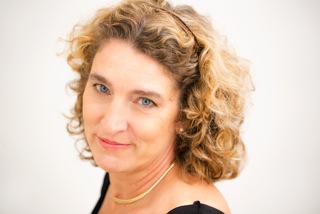
DVS: At what point in your life did you decide to become a violist, and did your family (background) support you in this respect?

I started out on the violin, but at age 15 my violin teacher at the music school in Vienna proposed that I play the viola in my youth orchestra. So I did, and I really liked it, I liked the character of my fellow violists, there was no competition, and more enjoyment of playing together. I continued this way for 2-3 years, until I met a viola teacher from the University of Vienna, Siegfried Führlinger. He knew my parents, and after we played some duets together, he asked me to study with him at the university.

DVS: Did you continue studying the violin also?

Only for one year. The last violin piece I studied was the Mendelssohn concerto, and I realised I couldn’t stand the squeaky high sounds anymore. So that’s when I stopped.

DVS: What or who moved you to travel out, away from Vienna?

In European schools you learn a lot of languages, and we were encouraged to have pen-pals in other countries. My pen-pal was a French-Canadian, with whom a romance began. When I was 25, after having completed my studies in Vienna, I decided that it would be easier for me to move to Canada than for him to come to Austria. So I came to Montreal, which was a challenge, because I had not studied here, and had no connections. Montreal is unusual in that it has two communities divided by language, and also the musical job market is divided, and each circle is difficult to get access to. I was fortunate to get some help in this respect from the conductor Agnes Grossmann, whom I knew from Vienna.

DVS: How is musical life there, compared to Europe?

Well, there are differences in taste, which become apparent after some time. I decided to study for a Master’s degree with Heidi Castleman (at Juilliard), in order to have a recognised paper here. And then I came to appreciate some differences in taste and approach to viola technique.

DVS: Can you elaborate on this distinct taste?

It is for a large part the school of technique, which I learnt from Heidi Castleman. It’s clean and crisp playing. The sound is very clear, designed to carry well. I notice also stylistic accents in chamber music, a tendency to make statement entrances rather than merging in softly. The priority is technique first, then music making.

DVS: Are there specific traits of the Montreal music scene, that you would like to mention?

I tend to think of Montreal as somewhat “up North”, far away from the centre of events. We do get frequent visits from international artists fortunately, and in some respects the classical music scene is doing quite well, for example there is are many good contemporary composers. But chamber music is in decline. And a couple of years ago we lost our only serious classical music radio station. This is very sad.

And then there are the schools – they used to offer instrumental music lessons. Thanks to public spending cuts, this has now been reduced to group lessons, in the best case. So a decline in musical education.

The OSM (Montreal Symphony Orchestra) still gets money. But just about everything else is being cut. And musicians have to work longer hours for less pay. The students even play for free, hoping to gain a toe-hold somewhere. But this goes at the expense of established musicians. Not a good situation!

Meanwhile, students stay in school and obtain doctorates, but that doesn’t help them getting an orchestra job. The orchestras audition internationally, and even then they often don’t hire.

DVS: What is the make of your viola, and how did you come to choose this one?

I have a viola by Geoffrey Ovington (Vermont, USA) – in fact I have had two of them. The first one I bought after a summer music camp in 1982, where I came across one of his instruments. I decided to just order a new viola from this maker. The second one, a 43cm Mantegazza model, he actually gave me as a wedding gift in 1989, after I had helped him access the European market. It’s actually made from Austrian wood. I actually never tried anything else. I prefer modern violas, they often respond better to changing conditions (traveling). I say, rather 10 new violas than one old instrument.

I also prefer to use a light bow, it’s easier to put on weight (by ‘leaning in’) than to take it away. And it allows you to add more tone colours, because you are less likely to ‘strangle’ the sound. In some situations a heavier bow can be easier to use, particularly in orchestra playing. But I like to work hard with my instrument, to feel it respond to what I want.

DVS: Do you have any main creeds in your viola teaching?

My teaching revolves around _N6A4447-Modifierdeveloping the artistic personality of every student, to hear his inner voice and producing the confidence to make that sound happen. I always hope to expose what makes each student special.
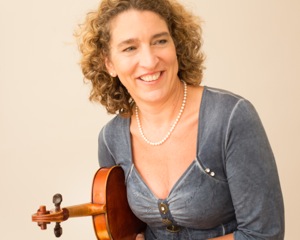
Another important theme is movement: To avoid forcing yourself, but letting your body work in the most natural way. Everything should be easy. So I visualise movements that are somewhat similar to the actual movement you need for the viola, and we practice that, without the actual instrument: Getting away from the instrument in order to come back to it. My workshops in The Netherlands will also be focussing on this.

DVS: You are also active in the Canadian Viola Society, what are the main activities and future goals of the CVS?

The CVS tries to hold a national event every 2 years, but geography is a real challenge in Canada. Core CVS members travel around a bit to encourage activities in various parts of the country. The distances are hard to cover, it’s a 6-hour drive from here to Toronto, and that’s only the beginning. Differing holiday periods and even time zone difference get in the way sometimes. We hosted the International Congress in 2006…

But nowadays I am mostly involved as board member of the International Viola Society (IVS). And as such, I think that participation by national delegations at the International congresses is a very important activity. Unfortunately the financing of International congresses is also becoming more difficult, so regular Society members often cannot afford to go, even if they would like to.

DVS: Jennifer Stumm recently gave us this quote: “I dream of the day when we don’t need Viola Societies”. Do you sympathize?

No, not at all. The Viola Societies encourage international exchange and learning among violists. The CVS and IVS have given me many valuable experiences, to learn about how the viola is used in different parts of the world. For example hearing the viola played together with African instruments, or in Iceland with stone drums. I’m a big believer!

DVS: What about your personal future goals?

I “rediscovered” a collection of French pièces de concours, very virtuosic repertoire written for the (yearly) final examination of all viola students at the conservatory in Paris. The first piece is from 1896, and from there we follow the series up to 1940. Some of the pieces became quite popular in their own time, but both the pieces and their composers are mostly forgotten now. One exception is Enescu’s Konzertstück, which was also a part of this series. After World War II, the tradition changed, and they started using more standard repertoire pieces for the examinations instead of writing new stuff.

We are in the finishing phases of editing a Schott edition of this music, in three volumes (13 pieces), to be released next year. The edition is complete with fingerings, allowing students to catch on quickly. It is difficult enough as it is, this music is very challenging. I also hope to be able to record some of these pieces, and I intend to present this work at the IVC in Cremona next fall. Some of these pieces will also be on the recital programme in Dordrecht this Sunday!
Verslag Tweede Nationaal Altvioolcongres

nationaal altviool congres_def5_smallestZijn er echt alweer 2 jaar verstreken sinds het Eerste Nationaal Altvioolcongres in Deventer? Kennelijk klopt het dat “Time flies when you’re having fun“, want opeens was het weer tijd om nummer Twee te draaien! Volgens wiskundige denkwijze kunnen wij nu pas terecht spreken over een ‘reeks’, want één is maar eenmalig; maar met twee punten kun je echter een koers uitsteken.

En dus: Op 27 juni komen enkele tientallen altvioolliefhebbers, zowel professionals, studenten en amateurs, van alle leeftijden, bij elkaar in het gloednieuwe Akoesticum in Ede. Prachtige ruimtes, gerenoveerd met oog op muziekmaken. Het voelt gelijk vertrouwd.

We beginnen ‘s ochtends met workshops, waarbij de altviool gelijk onder de kin mag. De professionele docenten Julia Dinerstein, Esra Pehlivanli, RIchard Wolfe en Karin Dolman leiden groepslessen in techniek en ensemblespel. Geen altviolist? Dan is hier en nu je kans om te proberen! Dankzij aanwezige leeninstrumenten (ter beschikking gesteld door vioolbouwer Jan van der Elst) hoeft niemand als muurbloempje de lessen gade te slaan.

20150627_NAC_105

Na de (zeer smakelijke) lunch begint het officiële congresprogramma. Voorzitter Karin Dolman wenst iedereen welkom, en dit wordt onderstreept door enkele optredens van ad-hoc altvioolensembles bestaande uit docenten en deelnemers.

20150627_NAC_long

Eerst een première-uitvoering van het Divertimento voor 8 altviolen, gecomponeerd door Arie van Hoek.  Na een kwartetstukje uitgevoerd door Richard Wolfe en drie (conservatorium)studenten, mogen de drie jongste deelnemers een stuntje proberen: Zeshandig spelen op één altviool! Ziet er leuk uit, is ook leuk 🙂

20150627_NAC_120Hierna is musicoloog-componist Leo Samama aan de beurt, met een biografisch verhaal over de rol van de altviool in zijn leven en in zijn composities. Hij laat veel geluidsfragmenten horen van zijn diverse compositiestijlen. Het is een reis door de tijd, en vooral ook een dwarsdoorsnede van het Nederlandse muziekleven waar veel namen van belang in voorkomen.

20150627_NAC_122De beroemde russische altvioolvirtuoos en -pedagoog Michaël Kugel neemt het stokje van Samama over. Hij vertelt over zijn (altviool)onderwijs en de vele verschillende aspecten die bijdragen om een musicus te vormen. Hji betrekt een aantal favoriete composities bij zijn verhaal, met name de altvioolsonate van Shostakovich, waar hij ook een heel boek aan heeft gewijd. Vervolgens demonstreert hij op spectaculaire wijze een aantal virtuose technieken op de altviool. Het is een fascinerend betoog. Zijn (oud-) leerlingen (en dan met name de bekende altvioolfamilie Zemtsov) is in grote getale gekomen voor dit relatief zeldzame optreden van Kugel “boven de rivieren”.

20150627_NAC_137


Het jonge altviooltalent Anuschka Pedano mag vervolgens een kort recital ten gehore brengen. Anuschka won dit jaar zowel de Maassluise Muziekweek en het Tweede Britten Altvioolconcours. Daarnaast was ze finaliste van het Concertgebouwconcours en regionale finaliste bij het PCC. Met het folkloristische “Kharumi” van Tsintsadze maakt ze opzwepende rytmes en tussendoor ook mooie klanknuances.

Klaar voor volgende onderdeel, ‘The Battle of the Bees’ … tijd voor iedereen om weer de altviool uit te pakken. Met voor de aanleiding genaaid hoofdtooi (inclusief voelsprietjes! mogelijk doelde Niels Mönkemeyer hierop, met zijn bewering dat altviolisten vaak een tikkeltje nerdy zijn). We spelen we met z’n allen een DVS-bewerking van “de Bij” van Schubert, maar nu voor vierdelig altvioolzwerm. Heerlijke muziek, smaakt naar meer!

20150627_NAC_140

Na het diner (aan lange tafels op zonnig terras, een genot!) houdt de DVS een presentatie over “Verleden, Heden en Toekomst” van onze Society (het presentatiemateriaal kunt u hier downloaden: 20150627_DVS_Presentatie). Hierin onthult de DVS grote toekomstambities, we willen in 2018 het Internationale Viola Congress (IVC) in Rotterdam organiseren!

En dan, en dan: Tot besluit, het optreden van het duitse megatalent Barbara Buntrock. We voelen ons priviligeerd om haar in zo’n intieme kring te mogen beluisteren. hoewel wij natuurlijk hadden gehoopt op veel meer publiek voor dit onderdeel. Maar zulke gedachten moeten wijken voor de ontvangst van haar spel, met grote muzikaliteit gebracht.

CIqN1zVWEAA_5UpBij het naborrelen pinken we gezamenlijk een traantje weg over de tegenvallende opkomst. Maar tegelijk komt het besef dat het inhoudelijk een zeer geslaagde dag geweest is! Voor je het weet, is het 2017! En dan kunnen we hopelijk weer zo’n mooie dag organiseren.

Kristofer G. Skaug


Iris stelt zichzelf voor…

Iris_Frederiks

Beste lezers,

Ik ben Iris Frederiks, het nieuwe bestuurslid van de DVS. In tegenstelling tot de andere DVS bestuursleden, heb ik geen carrière in de muziek of volg ik een opleiding daartoe. Ik ben echter wel een amateur, liefhebber en ex-leerling van Karin.

Momenteel volg ik de opleiding “Liberal Arts & Sciences” aan de Erasmus Universiteit in Rotterdam. Dit is een brede studie waarin nog ruimte is om een richting te kiezen.

Ik voel me vereerd dat ik gevraagd ben voor het bestuur van DVS en ik kan niet wachten om betrokken te raken bij de organisatie van alle activiteiten en (alle?) leden te ontmoeten!

Groeten, Iris Frederiks

Workshops Jutta Puchhammer

10387617_994609133886001_4241899677234162159_n

Jutta Puchhammer-Sédillot

Friday, October 16th 2015: Workshop and Masterclass

Location: Codarts Rotterdam (near Rotterdam Central Station)

Fees:  Free entrance (auditors), active participation by invitation only

Programme:
10.00 – 12.00 Workshop strings “sound colors”
13.00 – 17.00 Masterclass Viola with Codarts students
(students enrolled elsewhere are welcome as auditors!)

Sunday, October 18th 2015: Lecture and Recital

Location: Trinitatiskapel
Vriesestraat 20, Dordrecht (10 minutes’ walk from Dordrecht railway station)

Fees:
Lecture + recital €15,00
Recital only €10,00
DVS friends: Free entrance

Programme:
13.00 Doors open
13.30 Lecture “Natural Movement”  – open to violists of all ages and levels!
          (interactive, so bring your own instrument!) -> sign up here ….!
15.15 Break
16.30 Recital Jutta Puchhammer (viola) and Caecilia Boschman (piano)

If you would like to attend the interactive lecture “Natural Movement”,  please register now through our online inscription form so that we can better anticipate how many people are coming.

The Viennese-born violist Jutta Puchhammer-Sédillot, former student of Siegfried Führlinger (Vienna) and Heidi Castleman (USA), is described as a violist of exceptional qualitity. She is full time professor of viola and chamber music at the University of Montréal, Canada, as well as on the faculties of the Orford Arts Center (Quebec),and The Heifetz International Music Institute (Virginia) ), the North American Viola Institute (NAVI) as well as the TTT Project (teach teachers teach) in Villaricca,Chile and also has taught at the Perlman Music Programm (PMP) .

She is renown for her performances of rare post-romantic viola repertoire. Her solo CDs, entitled “Alto Romantic Fantasies” (works by Ph. Scharwenka, C.Reinecke, R. Fuchs, J. Joachim)(Eclectra ECCD-2060) and « German Romantic Works » (sonatas by R.Fuchs, E. Naumann, F. Kiel, R.Schumann), (Fidelio FIDC 018) have both been acclaimed in Fanfare magazine with praise :“Here the viola shines with as much fire as a passionate violin, cries with as much desperation as a cello, entices, seduces, and convinces the listener that no string instrument could be more versatile or beautiful.”

Jutta has a vast experience in chamber-music, having been part of the Quatuor Claudel String quartett, The Kegelstatt Clarinet/vla/pno Trio, The Montreal String Trio, The Wiener Nonet, the Ensemble La Piéta and actually the Ondine Piano Quartett and the Puchhammer-Desjardins Duo (vla/pno). Her participation at diverse festivals have permitted her to play with various artists of international reputation.

Jutta is the principal viola of the Laval Symphony orchestra, Canada, and the Vice president of the International Viola Society. She has been awarded the Maurice Riley prize for international achievement.

Highlights of the 2015/16 season will include the finalization of her réedition of the French “Pièces de Concours” (written from 1896-1940) with the SCHOTT edition in 3 volumes (available autumn 2016), some of which she also plans to record this season. Her performance of the viola concerto written for her by Tim Brady and the Nova Scotia Symphony orchestra will appear on CD this autumn 2015, as well as the recording of the G.Fauré, R. Strauss, and A. Dvorak piano quartetts with her Quatuor Ondine this Spring 2016.

This season Jutta has been invited to give masterclasses at the Juilliard School of Music, the Curtis Institute of Music (USA), The Hautes Ecoles de Musique de Genève (HEM) and de Lausanne (HEMU) as well as the Conservatory of Rotterdam (Netherlands), and will be giving a conference and recital for the Dutch Viola Society in Dordrecht, Netherlands.

Opname “Secret Society” van Jeppe Moulijn, IVC 2014

Bij het Internationale Altvioolcongres in Porto vorig jaar is de opdrachtscompositie “Secret Society” van Jeppe Moulijn in de premiere gegaan. Hier is een opname van deze unieke gebeurtenis.

“Secret Society” by Jeppe Moulijn
for 4 solo violas and six-part viola ensemble
commissioned by the Dutch Viola Society

World Premiere performance at the International Viola Congress in Porto (Portugal), November 29th 2014

Soloists (in order of appearance):
Emlyn Stam (Netherlands), Louise Landsdown (UK), Lucy Nolan (UK), Karin Dolman (Netherlands)

Conductor: Frank Brakkee (Netherlands)

Verslag Masterclass Jürgen Kussmaul

Verslag door deelneemster Steffie de Konink
Zondag 19 april 2015, Cultuurschip “Thor”, Zwolle

Afgelopen zondag kregen we (Andrea Passalacqua, Anuschka Pedano en ik) de masterclass met Jürgen Kussmaul die we gewonnen hadden met het Britten Altviool Concours. Jürgen bleek erg aardig te zijn en hij sprak goed Nederlands. Hij heeft me goede aanwijzingen gegeven. Tussendoor vertelde hij leuke verhalen om uit te leggen wat hij bedoelde. Een ding wat hij zei was bijvoorbeeld dat ik heel goed moest luisteren hoe iets voelde. Als het niet goed aanvoelt, legde hij uit, dan moest ik proberen het net iets anders te doen; bijv. door een andere dynamiek of tempo te kiezen. Hij vertelde hierbij dat hij dat zelf ook had moeten doen toen hij na zijn ongeluk moest leren zijn alt anders vast te houden.

Kussmaul_3 Kussmaul_4 Kussmaul_1

Het was een super leuke en leerzame masterclass. Dank je wel Staalbankiers voor de prijs, Het Britten orkest dat ze dit geregeld hebben en Jürgen voor al zijn aanwijzingen.

Steffie de Konink

Masterclass Jürgen Kussmaul in Zwolle, 18 april 2015

Drie prijswinnaars van het Britten Altvioolconcours 2015 krijgen op zaterdag 18 april een uitgebreide masterclass met altviooldocent (tevens DVS-erelid) Jürgen Kussmaul.

Kussmaul_2

Jürgen Kussmaul (niet gespiegeld)

De deelnemende jonge altviolisten zijn Steffie de Konink (13, Delfgauw), Anuschka Pedano (14, Zoetermeer) en Andrea Passalacqua (15, Den Haag). Deze openbare masterclass loopt van 13:30-17:15u is en gratis toegankelijk.

Locatie: Cultuurschip Thor, Pletterstraat 24 te Zwolle
(niet ver van het ArtEZ Conservatorium)

Interview Tabea Zimmermann

World renowned violist Tabea Zimmermann hardly needs an introduction. She has established herself firmly as an elite solo and chamber music artist. She is also one of the most sought-after viola pedagogues today. The DVS is immensely honoured to host her Masterclass this coming weekend in Utrecht, where she will work with four talented Dutch viola students. This same weekend, she will also perform Hindemith’s Der Schwanendreher twice with the Dutch Radio Philharmonic Orchestra. Amidst her busy teaching and performing schedule, she kindly found time to answer a few written questions for the DVS website.

by Kristofer G. Skaug

DVS: You started out on the viola at the unusually young age of 3. Was this a conscious choice of instrument, instead of the more usual violin or anything else?

My choice was to play music like my older siblings. Otherwise my parents would not have introduced me to the violin teacher of my sister. It was his suggestion to avoid both playing the same instruments and to make chamber music possible from the start. I joined my first string quartet at age 4 :-))

tabea-zimmermann_03_marco-borggreveDVS: Which teachers or role models inspired you most in your development as a musician?

My first teacher, the late Dietmar Mantel, influenced me most. But it took a long time until I realized that. My second teacher, Ulrich Koch in Freiburg, tried very hard to give me more stability (less flexibility) and to make me follow his rules of equal bow speed throughout a phrase, same speed vibrato etc.

When I studied with Sandor Vegh later, I understood that all the fantasy, flexibility etc were actually wonderful qualities!


DVS: Do you feel a belonging or affinity to a particular ‘school’ of viola playing (and teaching), and if so, which school would that be?

No particular school is big enough or wide enough for all styles. I like to look out for a maximum freedom in a very strict text. Technique according to musical context, not according to school.

DVS: Which traits or capabilities do you seek to nurture most in your students?

The capability to come to an individual judgement, based on knowledge, skills, taste, and abilities.

DVS: The viola is often described as a particularly ‘sensuous’ instrument.
This would imply that development of the senses and imagination play an important role. How do you go about consciously cultivating these capabilities?

It helps to imagine before playing. Singing, clapping or speaking the rhythm, imagining bow movement or left hand activity, there are many ways to ‘unsettle’ old habits.

DVS: Is there such a thing as a healthy balance between compulsive practice and complacency for a would-be musician?

I try to show ways to enjoy the practicing part. This is the most precious time we have to explore, develop, learn etc.

If it feels like a compulsion, you are on the wrong way…..

DVS: On this visit, you will be performing the Schwanendreher. Why do violists never seem to tire of Hindemith, where so many other musicians seem to hold a noncommittal opinion of him? Is Hindemith’s viola legacy somehow musically stronger than his other compositions?

I can only speak for myself. I find Hindemith a great composer and I would like to see more of his music on the big programs, but the truth is also that if I had concerti by Mozart, Beethoven, Brahms, Sibelius, Tchaikovsky, Glazunov, Berg, and Stravinsky to choose from, I would probably play a bit less of the Hindemith…

DVS: There seems to be a very strong “viola culture” in Germany, compared to other European countries. Would you agree, and if so, how would you explain this?

Unfortunately I cannot agree! I would love to see many more young German Violists…..

DVS: Which dreams are still on your ‘bucket list’, and (how) are you planning to pursue them?

I would love to know a lot more about music!!!

But apart from that, my secret probably was so far that I did not plan far ahead but took the opportunities as they came along and tried to make the best out of it.

Many wonderful crossings in my life just ‘happened’.

Stay open, do the best you can in any given situation and share your experience with others…

Information about the DVS Masterclass on March 21st can be found here. Information about the performances of the Schwanendreher can be found here (March 20th, Utrecht) and here (March 22nd, Amsterdam).