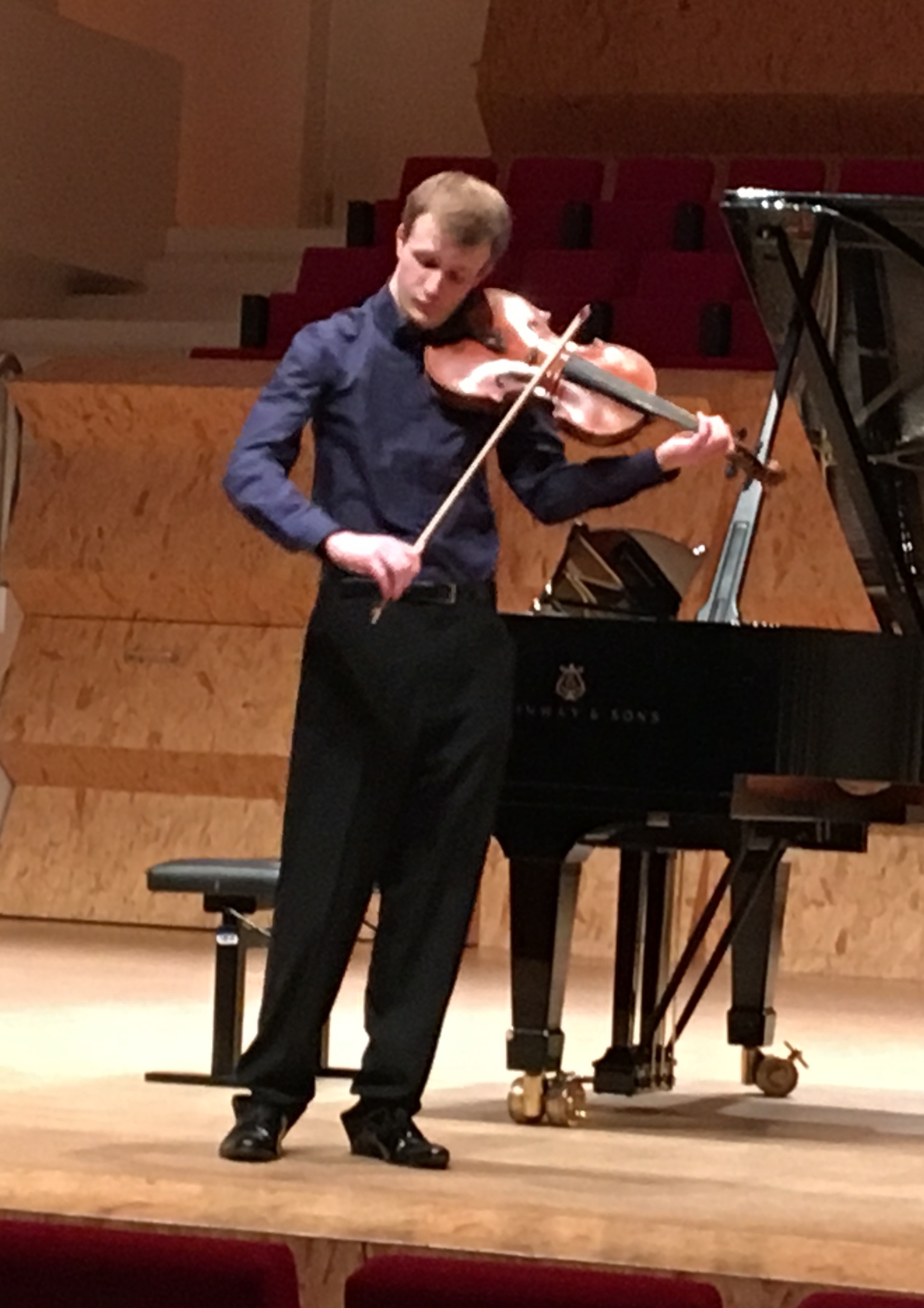
Anuschka Pedano wint 1e Prijs PCC West

Anuschka Pedano (foto: MajankaFotografie)

Anuschka Pedano (foto: MajankaFotografie)

Het toptalent Anuschka Pedano uit Zoetermeer, dat al veel prijzen in de wacht sleepte met de altviool, heeft vanmiddag de 1e Prijs gewonnen in categorie 2 bij de Regiofinale West 1 van het Prinses Christina Concours in Rotterdam. Bij deze prijs komt een optreden met Domestica Rotterdam.

Hartelijk gefeliciteerd namens de DVS!

AVF 2017, Dag 3: Kang, Imai, Ligeti en Brahms

door Kristofer G. Skaug

English version below! Follow this link.

089

Wenting Kang

Na de halve finale van het Altvioolconcours gaan we ‘s avonds terug naar de Haitinkzaal voor een bijzonder concert.

Wenting Kang speelt voor ons drie delen uit de solosonate van Ligeti: Fascinerende muziek gespeeld door en eveneens fascinerende musicus. Met haar toon en vibrato maakt ze van de Hora Lunga toch een heel ander verhaal, in combinatie met haar draaiende armen en bovenlichaam heeft het bijna een hypnotische werking!

De Loop is een sequens in snelle complexe maatsoorten, althans zo klinkt het. Spannend gespeeld. En Facsar lijkt wel een soort doorgedraaide sample van de beroemde Chaconne van Bach (voor solo viool). Heel mooi gedaan, voor mijn part had ze de hele sonate mogen spelen, maar dat zat er kennelijk dit keer niet in.

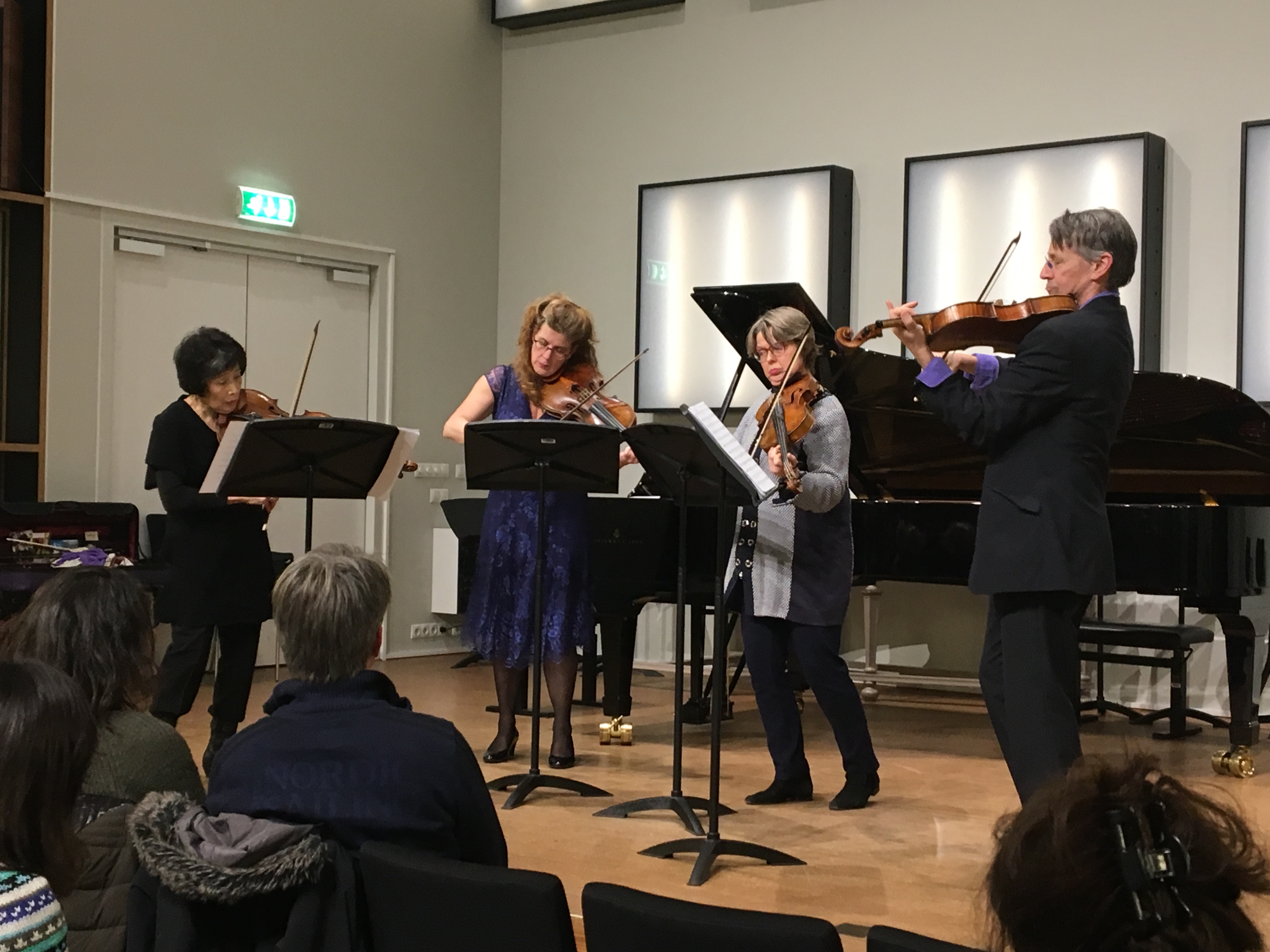
Nobuko Imai en Martijn Willers

Nobuko Imai en Martijn Willers

Daarna komt Nobuko Imai zelf met een bewerking van de cellosonate in e kl.t. van Brahms, begeleid door Martijn Willers op de piano. In het eerste deel valt op dat de bewerking heel erg in de hoogte gaat en tegelijk ook de C-snaar veelvuldig aanspreekt. Grote spanwijdte dus. In het 2e deel is er sprake van een neiging naar variaties, maar daar draait het uiteindelijk niet helemaal op uit. In het derde deel zijn er heftige fuga-achtige startpunten. Mooi altvioolstuk dit!

Door tijdgebrek heb ik het 2e deel van het concet helaas niet gehoord, daar stonden allerlei Bartok-duetten op het programma.


~~~~~~~~~~~~~~~~~~~~~~~~~~~~~~~~~~~~~~~~~~~~
English Version

After the semifinal round of the Viola competition, we return to the Haitinkzaal in the evening for a special concert.

Wenting Kang plays three movements from the the Ligeti solo viola sonata. Fascinating music brought by an equally fascinating musician. When played with her tone and vibrato, the Hora Lunga becomes quite a different story (compared to e.g. the rendition heard in the semifinals earlier). And in combination with her “rotating” gestures it takes on an almost hypnotic effect!

The Loop is a sequence in fast, complex tempi and measures, or at least that’s how it sounds. Played with proper musical tension. And the Facsar sounds like a warped sample oft eh Bach Chaconne (for violin solo). Very beautfifully done, and as far as I’m concerned she could have gone on to play the whole sonata, but that was apparently not possible thi time.

Next comes Nobuko Imai herself with an arrangement of the cello sonata in E minor by Brahms, accompanied by Martijn Willers on the piano. In the first movement there are lots of extremes, from C-string up to extreme heights. A large spanwidth, in other words. In the 2nd movements for a moment I think we’re going into variations, but in the end that’s not what it comes down to. In the 3rd movement there are fiery passages with fuga-like intentions. This is a very beautiful piece for the viola!!

Due to time pressure, I unfortunately was not able to be stay on for the 2nd half of the concert, in which a whole list of Bartok duos was programmed.

AVF 2017, Dag 3: De Halve Finale

door Kristofer G. Skaug

English version below! Follow this link.

We zitten in de Haitinkzaal van het Conservatorium voor de tweede ronde van het Nationaal Altvioolconcours. Er heerst opwinding onder de meegekomen fans van de acht geselecteerde halve finalisten.

Evgeniya Peschanskaya speelt de sonate in c kl.t. van Röntgen. Een van mijn favoriete altvioolsonates. Het eerste deel zit vol temperament. Het 2e deel heeft die mooie kenmerkende melancholische Röntgen-sfeer. Totdat er opeens een mooi recitatief in C groot komt. Een en al grote liefde die opbloeit.

Evgeniya Peschanskaya

Evgeniya Peschanskaya

Helaas hapert de linkerhand in het laatste en beslissende klimmetje – jammer. Het gekke bitonale scherzo gaat weer prima, en in het vierde deel komt de passie terug uit het eerste deel. Er had wel wat mij betreft wat meer klank geproduceerd mogen worden bij de hoogtepunten.

Nu komt de solosonate van Hindemith, op. 31.4, met het eerste deel dat in lange passages leunt op arpeggios met resonanties rondom de open A- en D-snaar. In allerlei opzichten een hele atletische toer voor links. Hier kampt ze wel met de intonatie, waardoor de beoogde resonantie soms wegvalt. Ze vecht zich dapper door tot het einde.

Hessel Moeselaar

Hessel Moeselaar

Hessel Moeselaar komt op, en speelt het Cadenza van Penderecki met heel veel energie en ook ingetogenheid. Hier en daar is de klank wat ruw, maar de concentratie is intens. Hij schrikt wakker van het enthousiaste applaus. De sonate van Badings is een mooi stuk en wordt niet vaak gehoord. In het eerste deel zit een triomfantelijk openingsthema. Hierna lijkt Hessel iets minder goed voorbereid, onzeker van de richting. Bij de inzet van de reprise komt het weer goed. Dit goede gevoel neemt hij mee naar het lyrische 2e deel, dat erg mooi wordt gebracht. Via een scherzo-achtige beweging sluit hij af met veel stormachtigheid in een landschap dat lijkt op het begindeel. Goed gespeeld!

060

Martin Moriarty

Martin Moriarty speelt delen uit de Britten solo cellosuites. Deze bewerking door Nobuko Imai biedt spannend nieuw materiaal voor altviolisten. De uitvoering is ook heel spannend. Het laatste deel “Moto Perpetuo e Canto Quarto” valt op. In de daaropvolgende sonate van Bax heeft het 1e deel een heel mooi lied als hoofdthema. Ik heb wel het idee dat Martin hier meer had kunnen doen met klank. Technisch valt er niets te klagen, hij heeft het goed op een rijtje. Het 2e deel heeft een heel catchy thema gebouwd op een onheilspellende “Jaws”-achtige piano ostinato. De lichaamstaal van deze man moet ook genoemd worden. Hij staat regelmatig gespannen als en veer, en is niet wars van dramatische bewegingen. Het oogt als een authentiek gevoel, maar hier en daar slaat het wel door in zijn klank, niet altijd op de wenselijke manier. Wel een boeiende speler!

064

Lara Albesano

Lara Albesano opent met de 1e sonate van Martinu. Ze heeft een hele mooie klank en een rustige uitstraling. Ook in het tweede deel, waar de muzikale vlam in de pan slaat, houdt ze haar hoofd koel. Goed verzorgd spel, maar ik mis wel een beetje Roemeense vurigheid – die komt nu voornamelijk van de hollander achter de toetsen (Daniël Kramer), die overigens een pittige klus heeft hier.  En dan, Hindemith’s mooie opus 25.1. De fraseringen in het eerste deel slaan voor mijn gevoel een aantal mooie kansen over. Het ingetogen 3e deel heeft een mooie sfeer. Vervolgens gaat ze in een verbijsterend tempo door het beruchte 4e deel (met bijschrift “Tonschönheid ist Nebensache”) heenrazen, daar is de adrenaline wel aan het gieren. Het troostrijke laatste deel (met naweeën van pijn) brengt ze heel mooi.

Lotus de Vries

Lotus de Vries

Na de lunchpauze zijn we klaar voor Lotus de Vries: ook zij speelt Martinu. Haar presentatie is een stuk minder volkomen dan die van Lara, maar het is daartegenover wel spannender.  Als solostuk heeft ze de 1e suite van Reger gekozen. Hier word ik herinnerd aan het lastige van deze ronde: Hoe vergelijk je zo’n Reger met de Hindemiths, de Penderecki en de Britten van daarnet? Het is een heel andere muziek. Qua diepgang in mijn beleving is de compositie ook minder interessant, het heeft meer weg van een lyrisch uit de hand gelopen etude. Wel goed gedaan, daar niet van.

William “Billy” Murray speelt exact hetzelfde programma als Lara, maar dan in omgekeerde volgorde: Beginnend met Hindemith op. 25.1. Hij heeft duidelijk talloze keren dit stuk al uit zijn hoofd gespeeld, want hij neemt het niet meer zo nauw met wat er feitelijk op papier staat, vooral qua rytmiek is het soms erg vrij. Hij vertrouwt volledig op zijn Amati, dat er hoe dan ook altijd iets moois uit komt. En schrikt zichtbaar, wanneer dat per ongeluk toch niet het geval is.

Billy Murray

Billy Murray

Het is al met al slordiger dan de renditie van Lara, en ook minder virtuoos (een langzamer 4e deel), maar nooit saai. Hij geniet van de klank en de ruimte, en maakt er een diep persoonlijke vertolking van. Daarna speelt hij de Martinu sonate. Ook dit is bij lange na niet technisch perfect, maar je kunt er enorm van genieten vanwege het plezier waarmee de man staat te spelen. Hij weet heel goed waar de muziek over gaat. Hij neemt bescheiden twee stapjes terug als in het tweede deel de piano een solopartij heeft, en mompelt binnensmonds de pianostem mee. En hij is honderd prosent aanwezig, tot de laatste noot.

Take Konoye

Take Konoye

De volgende is Take Konoye. Hij begint met Reger suite no.1. Ik impliceerde net al dat ik dit niet zo’n interessant stuk vind, maar hij maakt het wel boeiend, hij ziet kansen om profielen te maken met klank en frasering, en benut deze kansen ook helemaal. En met bijna perfecte intonatie en stokbeheersing. Een hoogstandje! Hij vervolgt met de Bax-sonate. Heel muzikaal en technisch secuur. Ik heb maar één gemis, ik zou hem eens een keer helemaal los willen zien gaan. Risico durven nemen om een nòg grotere klank en nòg meer passie in het spel te leggen. Omdat die dus overduidelijk al zoveel kan. Maar dat is wel heel veel gevraagd op een concours, waar een finaleplaats op het spel staat.

Hannah Shaw

Hannah Shaw

Als laatste in deze ronde speelt Hannah Shaw. De solosonate van Ligeti. Hier komt in de Hora Lunga toch een hoop klank bovendrijven! Op een gegeven moment stijgt die op naar de eeuwige harsvelden via micrometerwerk op natuurtoon flageoletten. Knap. In het 2e deel (“Loop“) allerlei dissonante akkoorden, een kippenhok. Ben geen kenner van deze sonate, dus ik bewaar mijn oordeel voor een andere keer. Ze gaat verder met de Bax-sonate. Gisteren had ze een felgekleurde shirt aan bij een kleurarme Enescu, vandaag staat ze in het zwart maar is haar muziek een stuk kleurrijker. Toeval? De klank is mooi verzorgd, misschien wel tè mooi. Ook haar zou ik meer durf toewensen. Zelfs in de opwindende versnelling aan het eind van het 2e deel laat ze zich niet helemaal gaan.

Wie van deze 8 spelen zondag in de finale? De keus van de jury is voor mij geen verrassing: Martin, Billy en Take.

~~~~~~~~~~~~~~~~~~~~~~~~~~~~~~~~~~~~~~~~~~~~
English Version:

We are seated in the Haitinkzaal of the CvA for the 2nd round of the National Viola Competition. There is a buzz of excitement among the fans of the eight selected semifinalists.

Evgeniya Peschanskaya plays the C minor sonata by Röntgen. This is one of my favourite viola sonatas. The first movement is full of temperament. The second movement has this beautiful melancholic atmosphere typical of Röntgen. And then a wonderful recitativo in C major appears, blossoming love! Unfortunately her left hand falters in the final and decisive climb to the high note, a pity! The weird bitonal scherzo works fine, and the fourth movement sees the return of the passion from the first movement. I had hoped for a bit more sound production around the various climaxes in this piece.

Next she plays the solo sonata op. 31.4 by Hindemith, with a first movement that for a large part consists of double-stop arpeggios with resonances on the open A- and D-strings. This is a big athletic feat for the left hand, but she is struggling a bit with the intonation, and as a result the intended resonances are sometimes not heard. She bravely fights her way to the finish.

The next candidate is Hessel Moeselaar, he plays the Penderecki Cadenza with alternations of outward energy and silent introspection. Here and there there are some rough spots in the sound, but his concentration is intense. He is jerked awake by the enthousiastic applause. The Badings sonata is very beautiful and yet not often heard. The first movement has a triumphant opening theme. After this introductory section however, Hessel seems a bit unsure of his direction. At the recapitulation of the main theme, he recovers. He takes the feeling of relief with him into the more lyric opening of the 2nd movement, which is very pleasing. There is a scherzo-like section that brings us to a tempestuous closure of the sonata, with a landscape reminiscent of the first movement. Well played!

Martin Moriarty plays the 1st cello suite by Britten. This transcription by Nobuko Imai offers interesting new repertoire for violists. His performance is also very enjoyable. The last movement “Moto Perpetuo e Canto Quarto” particularly triggers my interest. The subsequent Bax viola sonata has a very beautiful opening theme, an English folk song. In my view, Martin could have achieved more variety of tone production here. In the technical sense there is not much to complain about, he has got the stuff well sorted out. The second movement has a very catchy and energetic dancing theme, which floats on top of an ominous “Jaws”-like ostinato in the piano. I also need to mention the body language of this man. He regularly stands like a compressed spring, and he does not shy away from dramatic movements. It looks emotionally authentic to me, but now and then it undeniably affect his playing, in a negative sense. But this is by all means a fascinating player!

Lara Albesano starts with the 1st Martinu sonata. She has a very beautiful sound and a calm appearance on stage. Also in the second movement, where musical fireworks take place, she keeps her head cool. Her playing is carefully curated, but I do miss a bit of Rumanian temper – which is now supplied mostly by the Dutch guy at the piano (Daniël Kramer), who by the way has his hands full with this piece. And then, Hindemith’s beautiful opus 25.1 (solo sonata). Her phrasing in the 1st movement misses a number of nice musical opportunities, in my view. Her rendition of the calm 3rd movement hits the right mood. And she goes on to play the infamous 4th movement (with the subtitle “Tonschönheid ist Nebensache”) at a ferocious speed, which gets the adrenaline flowing for sure. The soothing last movement (with echoes of pain) is performed very beautifully.

After a short lunch break we are ready for Lotus de Vries: she, too, plays Martinu. Her rendition is quite a bit less perfect than Lara’s, but is on the other hand more musically interesting. Her chose solo piece is the 1st Reger suite. At this point I am forced to consider a difficulty for the jury in this round: How do you compare such a Reger with the Hindemiths, the Penderecki and the Britten solo pieces? This is a very different music. I feel much less depth in this composition, it seems more like an etude that got out of hand. Don’t get me wrong, she plays it very well.

William “Billy” Murray plays exactly the same programme as Lara before, but in the opposite order, starting with Hindemith op. 25.1. He has clearly played this piece by heart countless times already, because he’s not so preoccupied with what is actually written on paper. Especially his rhythmic reading is at times very free. Furthermore he completely trust his Amati that it will produce something beautiful regardless, and he is visibly jolted when this charm fails to work. His Hindemith is overall less perfect than Lara’s, and also less virtuosic (a slower pace in the 4th movement), but it is never dull. He enjoys the sounds and the space he’s in, and produces a deeply personal interpretation. Subsequently he plays the Martinu. This, too, is far from technically perfect, but it is very enjoyable due to the sheer pleasure with which this man is playing. He knows very well what the music is all about. He modestly takes two steps back when there’s a solo for the pianist, all the while however silently mouthing the piano’s musical words. And he is one hundred percent present in the music, until the very last note.

The next candidate is Take Konoye. He starts with the Reger solo suite no.1. I was implying just then that this piece doesn’t interest me so much. But he manages to make it interesting, spotting and using opportunities to create extra profiles with sound and phrasings. And he has an almost perfect intonation and bow control. A masterpiece! He follows up with the Bax sonata, very musical and technically robust. I really have only one want: I would like to see him play with more abandon, daring to take some risks in search of an even bigger sound and even more passion in his playing. Just because he obviously already masters so much. But I fully realize that this is a lot to ask in a competition, with a spot in the final round at stake.

The last turn in this semifinal goes to Hannah Shaw, with the Ligeti sonata (two movements). Finally, here she generates a lot of sound in the Hora Lunga! At a certain point the music ascends to the very highest pitches where left-hand fingers are probing their way in resolutions of micrometers to find the right natural flageolets. Well done! In the 2nd movement (“Loop“) we hear all sorts of dissonant chords, it gets quite chaotic. I’m not very familiar with this piece so I will reserve my judgement for another time. She continues with the Bax sonata. Yesterday she played a blandish Enescu in a very brightly coloured shirt, but today she plays a colourful Bax, dressed in black. Can it be a coincidence? Her sound is very clean and pure, perhaps too pure. For her, too, I would wish a bit more “guts”. Even in the exciting acceleration at the close of the 2nd movement, she doesn’t let herself go entirely.

Which of these 8 will play in the final on Sunday? The jury’s choice is not a big surprise for me: Martin, Billy and Take.

AVF 2017, Dag 2: Oene en Docentenconcert

door Kristofer G. Skaug

English version below! Follow this link.

Na een lange dag altvioolconcours 044laten we ons verwennen met een bijzonder concert in de Sweelinckzaal.

Het Altvioolconcert van Oene van Geel staat op het programma, uitgevoerd door een conservatoriumensemble met de componist zelf op cajon en Annemarie Hensens als soliste. Een levendige compositie, die begint met een cello “drone” en een soort glissando-slalom op de altviool. Dat wordt gaandeweg aangevuld met slagwerk en houtblazers. Op een gegeven moment ontstaat een leuke duo-improvisatie tussen de soliste en de klarinet. 045Via diverse rytmische en gesyncopeerde secties en weidse klanklandschappen komt het stuk tot een mooi einde.

Groot en terecht gejuich voor deze leuke compositie (en zijn componist!), maar vooral ook voor de geweldige soliste, met een plastische speelstijl en heel veel klanken in haar register. Bovendien heb ik nog nooit iemand zo leuk zien blozen bij een applaus. Tot in de puntjes altviolistisch.

Na de pauze zijn de docenten van het Conservatorium aan de beurt. Richard Wolfe en Marjolein Dispa beginnen met een bewerking van een aantal Bach-inventionen voor twee altviolen. Heel mooi gedaan.

Daarna spelen Francien Schatborn samen met Marjolein Dispa en Daniël Kramer enkele liederen van Schumann bewerkt voor 2 altviolen en piano. Nu is de duitse liederentraditie niet echt mijn “cup of tea”, maar zo met twee alten vind ik het een stuk interessanter.

049Joel Hoffmann heeft een stuk voor altvioolkwartet geschreven met de mysterieuze titel “… the first time and the last”. Gelukkig is de componist zelf in de zaal om zijn intenties toe te kunnen lichten: Het is een vierstemmig motet van Orlando di Lasso, dat hij heeft gebruikt als basismaterial voor een studie in het grensgebied tussen geluid en stilte. Zo wordt het motet met verschillende frequenties opgehakt met rusten van variërende lengte. Mijn oren kunnen die rusten goed waarderen na 18 rendities van het Enescu concertstuk binnen 24 uur. Maar toch vind ik het stuk te lang duren hierdoor, zonder dat het me lukt om ook in emotionele zin wijzer te worden van die rusten.

Het Docentenkwartet (Schatborn, Dispa, Wolfe en Judith Wijzenbeek) zet nu het welbekende “Fantasy Quartet” van York Bowen op de lessenaar. Dit is een van mijn 051favoriete altvioolkwartetstukken (en dat is niet zo grappig als het klinkt!), en ze maken er iets moois van.

In het laatste nummer van de avond neemt Nobuko Imai plaats in het kwartet voor een bewerkte klavecimbelsonate van Scarlatti. Dit wordt een levendig dansje, waardoor iedereen met een glimlach huiswaarts kon keren.


~~~~~~~~~~~~~~~~~~~~~~~~~~~~~~~~~~~~~~~~~~~~
English Version:

After a long day of viola competition, we are treated to a very special concert in the  Sweelinckzaal.

The Viola Concerto of Oene van Geel is played by a Conservatory ensemble with the composer himself playing the cajon, and with Annemarie Hensens as a soloist. It is a very lively composition, beginning with a cello “drone” and a “glissando slalom” on the viola. As we go along, percussion and woodwind instruments join in. At a certain point, a duo-improv section is played by the viola and the clarinet. The piece is wrapped up with various very rhythmical and syncopated sections and grand soundscapes.

There is abundant and well-deserved applause for this interesting composition (and its composer), but especially for the excellent soloist with a very nimble playing style and many different sounds in her palette. I have also never before seen blush so intensely during an applause. Very “violistic”!

After the break, it is the Conservatory teachers’ turn. Richard Wolfe and Marjolein Dispa start out with a transcription of a number of Bach Inventions for two violas (originally for keyboard). Very nicely done!

Next, Francien Schatborn and Marjolein Dispa join Daniël Kramer for some Schumann songs arranged for two violas and piano. Now the German Lieder tradition was never my cup of tea, but in this version with two violas, I find it strangely attractive 🙂

Joel Hoffmann wrote a piece for viola quartet, with the mysterious title “…. the first time and the last”. Fortunately the composer himself is present this evening to explain  soe of his ideas to us. It is a four-part motet by Orlando di Lasso, which he has used as material for a study of the border between sound and silence. The motet is partitioned into fragments that are played with various lengths of rests in-between. My ears can certainly appreciate those rests, after 18 renditions of the Enescu Concert piece in the past 24 hours. And yet, the rests push this piece over the “too long” limit for me, even though I still don’t feel emotionally enriched by those rests.

The quartet (consisting of Conservatory teachers Schatborn, Dispa, Wolfe and Judith Wijzenbeek) now put the “Fantasy Quartet” by York Bowen on their music stands. This is one of my favourite viola quartets (and that is not as funny as it sounds!), and they give a nice rendition.

In the last piece of the evening, Nobuko Imai assumes a role in the quartet for a transcribed keyboard sonata by Scarlatti. This becomes a very lively dance, so that everybody returns home with a smile on his face.

AVF 2017, Dag 2: Hard werken

door Kristofer G. Skaug

English version below! Follow this link.

001

Jury vlnr: Jürgen Kussmaul, Hannah Strijbos, Eric vd Wel, Roland Kieft

Wij zijn vroeg aanwezig, om geen ene noot van Dag 2 van de 1e Ronde te hoeven missen. De jury heeft er ook duidelijk zin in.

Masterstudente Lara Albasano bijt de spits af met een hele schone Mozart (G). De “Skip Count” van Oene van Geel is technisch zeer goed, en lijkt toch behoorlijk relaxed! De Enescu was eveneens steengoed, haar spel is heel volwassen. Als ik heel picky zou moeten zijn, heel af en toe haperde het samenspel met Daniël Kramer… ietsje. Maar hier is een statement gemaakt, het zal voor menigeen dringen worden om de volgende ronde te bereiken van dit concours.

Kellen en Danielle

Kellen en Danielle

Kellen McDaniel komt uit Californië, maar studeert bij Zemtsov in Den Haag. Hij opent met Mozart in G, samen met Danielle Daoukayeva op viool, met wie hij al jaren in het Babylon kwartet samenspeelt, en dat is goed te horen. Ondanks enkele foutjes is het een charmante vertolking. Enescu met Gerard Boeters wordt iets meer “op zeker” gespeeld. En dan, voorafgegaan met een “one, two, one-two-three-four” – zijn Skip Count is met stip de meest catchy versie tot nu toe, met meedeinende bassist, alerte timing en swingende energie. De bassist helpt ook mee in “Gesualdo” met enkele diepe ondertonen. De vrije improvisatie is goed aan Kellen besteed. Interessante beurt!

Kardelen Buruk

Kardelen Buruk

De uit Turkije afkomstige Kardelen Buruk begint met Enescu. Een beetje tam in de inleiding, maar gaandeweg komt ze in een goede flow. Haar Mozart gaat ook goed. In Skip Count raakt ze de bassist even kwijt, maar ze herpakt zich en maakt het stuk toch nog met veel bravoure af. In Gesualdo veel flageoletten in de improv, fraai afgerond met een paar sappige Bartok-pizzicato’s.

En dan komt met Lotus de Vries en verrassing: Eindelijk iemand die het “andere” Mozart duo in Bes groot (KV424) speelt. Het is technisch voor met name de viool wat pittiger. Maar de toonsoort is wel heel goed geschikt voor een mooie altvioolstem, en bij Lotus komt die heel mooi uit de verf. In de improvisaties van “Gesualdo’s bovenkamer” komt er eerst een lieflijk volksliedje en daarna iets dat me doet denken aan een motief uit Shostakovich 10e symfonie, maar dan veel heftiger. Enescu is wat zwaar, maar ze komt er goed uit.

Esther Fernandez Olalla

Esther Fernandez Olalla

De volgende is Esther Fernandez Olalla, een studente van Karin Dolman in Rotterdam. Ze wordt begeleid door Roderigo Robles de Medina in het Concertstuk van Enescu, dat gaat prima! Ze heeft zeker voortgang gemaakt sinds de masterclass met Richard Wolfe vorige maand, waar ze ditzelfde stuk voorspeelde. “Skip Count” biedt een dramatische plot twist – Esther laat zich begeleiden door haar docent op altviool! Strict gesproken onreglementair, maar daarom ook best leuk. Het relatief gebrek aan een dwingende baspuls wordt wel deels goedgemaakt door zelfgemaakte swing. Not bad! De Mozart biedt een andersoortige personele première – want voor de eerste keer zien we een mannelijke violist op het podium, een secuur en muzikaal spelende Manuel Muñoz. Toch ontbrak in dit stuk muzikale spanning.

Vierdejaars KC-studente Sophie Vroegop komt nu op samen met Vera Werkman voor het Bes-groot duo van Mozart. Er wordt fijne samenklanken gemaakt, ondanks wat intonatiefoutjes is het wel mooi muzikaal. Enescu brengt ze goed

031

Sophie Vroegop

samen met Gerard Boeters, ze maakt goede dynamische spanningsbogen. Bij het stuk van Oene van Geel weer iets nieuws een live basgitarist! Dat swingt lekker. In “Gesualdo” weer een nieuwe vondst: improvisatie in gitaarmodus, altviool onder de arm.

Komt de volgende: William Murray. Mozart in Bes met Cordelia Paw is een waar feestje, om echt blij van te worden. In “Gesualdo’s bovenkamer” gaat hij hardop zingen, samen met zijn altviool wordt het een heus madrigaalkoor, geweldig! Maar zijn Enescu is nog beter, hier kan hij de kracht van zijn mooie diepe Amati altviool goed uitbuiten. Hij heeft een goede uitstraling op het podium, projecteert zelfvertrouwen en plezier in zijn werk. Hem zullen we ongetwijfeld in de volgende ronde terugzien.

Takehiro (“Take”) Konoye is de jongste deelnemer van het concours, maar zeker niet de geringste. Hij begint met Van Geel, een erg goede en virtuoze Skip Count. In Gesualdo laat hij zien dat hij ook heel goed overweg kan met klank. In het G-duo van Mozart speelt hij tot mijn verrassing niet samen met zijn tweelingzusje, waarmee hij al sinds jaren een prijsbeloonde viool/altviool duo vormt. Maar zijn samenspel met violist Shin Sihan mag er ook wezen. En hij sluit af met een zeer beheerste Enescu.

Hannah Shaw komt uit de categorie “allang afgestudeerden”, en heeft derhalve een behoorlijk volwassen vriendenkring. Als partner in het Bes-duo van Mozart heeft ze niemand minder dan Ben Gilmore bij zich, Oskar Back winnar van 2013. De stukken van Oene van Geel kan ze makkelijk mee uit de voeten, hoewel de improvisaties in “Gesualdo” niet de origineelste van allemaal zijn. Ze sluit af met Enescu samen met Daniël Kramer, een puike uitvoering, zij het misschien een beetje voorzichtig, in relatie tot haar ervaring.

We naderen het einde van de 1e ronde, nog maar 3 kandidaten te gaan. Het concertstuk

Michiel Wittink

Michiel Wittink en Margot Kolodziej

van Enescu hebben we inmiddels 15 keer gehoord. Michiel Wittink komt met uitvoering nummer 16, en niet onverdienstelijk. Sommige plekken vallen ten prooi aan stress-gerelateerd haastgevoel, maar hij rondt af met een elegante “telemark landing” (om maar een term uit de schansspringsport te lenen), en oogst daarmee verdiend applaus. De “Skip Count” is virtuoos gedaan, hij zit even wat achterop de beat, maar herstelt zich op tijd. In mijn oor een beetje jiddische invloed (a la Ernst Bloch) op de harmonieën in zijn Gesualdo-improvisaties. En hij sluit af met een opgetogen Mozart in G (samen met Margot Klodziej).

Joosep Ahun

Joosep Ahun

Hierna komt Joosep Ahun, masterstudent uit Den Haag. Zijn Van Geel heeft een eenvoudige maar eigenzinnige improvisatie die een zware wissel trekt op zijn bas-stembanden. Mozart in G samen met Eva de Vries is netjes, maar een beetje kleurloos als je mag vergelijken met de beste uitvoeringen tot nu toe. Gerard Boeters begeleidt alweer voor de 4e keer vandaag in Enescu. Zeker niet slecht, maar hoe goed? Die vraag begint nu steeds heftiger op te spelen in de hoofden van menig kandidaat.

Olga Kowalczyk

Olga Kowalczyk

De allerlaatste: Olga Kowalczyk opent met Mozart in G, zij wèl samen met haar zus, Maria. Nadeel voor haar is dat ik na een hele dag altvioolconcours niet meer weet of ik mijn oren goed kan vertrouwen. Maar volgens mij is er niet veel mis met deze Mozart. Na een “Skip Count” op volle toeren streelt de klankvorming in “Gesualdo” mijn vermoeide oren, en ook hier komt een zangstem in het spel. In het afsluitende Concertstuk melden mijn oren een paar ruwe plekken, maar zoals gezegd, die vertrouw ik nu al niet meer. Het is even doorbijten, maar ik geloof het maar al te graag als ik een prachtig opbouw naar het slotgedeelte hoor. Voilà! (of moet dat zijn: VIOLA!?): het is afgelopen.

Nu is de taak aan de jury. Er zijn in mijn boekje heel veel kanshebbers voor de 2e ronde. Ben benieuwd!

Drie kwartier later komt de uitslag – de volgende zijn door naar de 2e ronde:  Evgeniya Peschanskaya, Hessel Moeselaar, Martin Moriarty, Lara Albesano, Lotus de Vries, William Murray, Take Konoye en Hannah Shaw.

Succes allemaal, morgen (vrijdag) vanaf 11.30u in de Haitinkzaal!

O ja, nog even de volgende extra juryprijzen:
Beste Mozart: William Murray
Beste Van Geel: Take Konoye  (dat had m.i. wel Kellen McDaniel moeten zijn!)


~~~~~~~~~~~~~~~~~~~~~~~~~~~~~~~~~~~~~~~~~~~~
English Version:

We are up early today, in order not to miss a single note of the second day of this viola competition. The jury is clearly also eager to go.

Master student Lara Albesano kicks off the day with a very beautiful Mozart (in G major). The jazzy “Skip Count Sweet Miles” by Oene van Geel is technically very good, and performed with apparent ease! The Enescu was also very good, her playing is very mature. If I had to be very picky, a few times the sync with pianist Daniël Kramer is a tiny bit off. But she makes a clear statement here: There will be many competitors in the running for the 2nd round.

Kellen McDaniel hails from California, but currently studies with Zemtsov in The Hague. His opening statement is the Mozart duet in G, together with violinist Danielle Daoukayeva, with whom he has played for several years in the Babylon string quartet, and it shows. In spite of a few mistakes, it is a charming interpretation. The Enescu with Gerard Boeters is however played in ‘safe mode’. But then, preceded with a “one, two, one-two-three-four” – his “Skip Count” is easily the most catchy rendition so far, including a jumping bass player, alert timing and swinging energy.  The bass player also assists with some deeper undertones in the “Gesualdo” improv, which Kellen makes good use of. Interesting turn!

The Turkish student Kardelen Buruk starts off with Enescu. A bit timid in the introduction, but gradually she reaches a good state of flow. Her Mozart is also good. In the “Skip Count” she loses track of the bassist for a while, but recovers nicely in time to finish the piece with bravoura. In the Gesualdo her improv includes a lot of flageolet notes, and a few juicy Bartok-pizzicato’s.

And then Lotus de Vries offers us a nice surprise: Finally someone who has chose the “other” Mozart duo in B flat (KV424). It is technically more demanding, especially for the violinist. But the key is very suitable for a sounding viola voice, and Lotus really succeeds in making that happen. In the improvisations of “Gesualdo” we hear first a folk song and in the next part something that makes me think of a motif from the Shostakovich 10th Symphony, but then much more intense. Finally, her Enescu was a bit ‘heavy’ at times, but she came out all right in the end.

Next up is Esther Fernandez Olalla, a student of Karin Dolman in Rotterdam. She is accompanied by Roderigo Robles de Medina in the Enescu concert piece, and that goes very well! She has booked a lot of progress since the masterclass with Richard Wolfe in January. “Skip Count” offers a dramatic plot twist – Esther is accompanied by her teacher, on the viola! Strictly speaking against the competition rules, but that makes it all the more fun. The relative lack of a steady base pulse is compensated in part by self-induced swing. Not bad! The Mozart offers a different “first”, that of a male violinist, a quite steady Manuel Muñoz. But I missed musical “suspense” in this piece.

Fourth-year student Sophie Vroegop enters the stage with Vera Werkman for the B flat Mozart duo. Some nices harmonies are made together, and in spite of some intonation issues, there is enough musicality. She then moves on to Enescu (with Gerard Boeters), succeeding in making good dynamic arcs. In the piece of Oene van Geel she appears with a live bass guitarist! That swings nicely. In “Gesualdo” another new invention is brought up: Improvisation in guitar style, with the viola tucked under the arm.

Up next: William Murray. Mozart in B flat with Cordelia Paw is a musical feast! In “Gesualdo” he starts singing out loud, and in combination with his viola it suddenly becomes a madrigal choir, fantastic! But his true prowess shows in Enescu, where he can fully exploit the power of his sonorous, deep Amati viola. He has a good stage presence, projecting confidence and pleasure in his work. I’m sure we will see him in the next round.

Takehiro (“Take”) Konoye is the youngest contestant of them all, but far from the least capable. He starts out with Oene van Geel, with a very good and virtuosic “Skip Count”. In “Gesualdo” he demonstrates that he also knows what to do with tone coloring and sound production. In the Mozart G-major duo he plays – to my surprise – with Shin Sihan, rather than his own twin sister Mayu, with whom he has already won several prizes as a duo. But mr. Sihan certainly knows his Mozart, so no problem. Take closes out with a very well-controlled Enescu.

Hannah Shaw participates in the category of “postgraduates”, and as such she can tap into a very grown-up network fo musical friends. Hence, in the Mozart duo (B flat), she appears with Ben Gilmore, the 2013 Oskar Back competition winner. She also manages well with the pieces by Oene van Geel, although the improvisations in “Gesualdo” are not the most original ones. She finishes with Enescu, accompanied by Daniël Kramer, a fine performance, albeit perhaps a bit on the “risk-averse” side, in light of her already significant professional experience.

We are nearing the end of the 1st round, only 3 candidates left. We have now heard the Enescu piece 15 times. Michiel Wittink brings us number 16, and quite meritably so. Some spots fall victim to stress-induced hastening, but he closes out with an elegant “Telemark landing” (to borrow some ski-jumping terminology), and receives deserved applause for this feat. The “Skip Count” piece is done very virtuosically, for a short while he is slightly behind the beat, but recovers. His the Gesualdo-improvs have a Yiddish flavour, in an Ernst-Bloch-like sense. His “home stretch” is a jubilant Mozart in G, together with Margot Kolodziej.

After this comes Joosep Ahun, Master student from The Hague. His “Gesualdo” has a simple but wayward improvisation which makes a big demand on his bass vocal chords. Mozart duo in G with Eva de Vries is totally OK but a bit bland when compared to the best renditions so far. Gerard Boeters then accompanies the Enescu for the 4th time today. Joosep’s version is certainly not bad, but how good is it? This question looms in many a candidate’s mind right now.

The last candidate, Olga Kowalczyk, starts with Mozart duo in G. Unlike Take, she does play with her sister, Maria. A disadvantage for her is that I’m starting to distrust my ears after a whole day’s worth of viola competition. But as far as I can tell, there’s not much wrong with her Mozart. After a “Skip Count” at full speed, her tranquil sounds in the “Gesualdo” is soothing to my weary ears. She throws in some vocal cords for good measure. In the final rendition of the Concert piece my ears signal a few rough spots, but like I said, they’re not to be trusted anymore. Hanging on with my last bits of auditive concentration, I am so willing to believe that I just experienced a magnificent build-up towards the finale of this piece. Voilà! (or should that be VIOLA!?). It is finished.

Now the rest is up to the jury. In my book there are many people in the running for the 2nd round. I’m curious!

Three quarters of an hour later we have the verdict of the jury – the following people go on to the 2nd round:  Evgeniya Peschanskaya, Hessel Moeselaar, Martin Moriarty, Lara Albesano, Lotus de Vries, William Murray, Take Konoye and Hannah Shaw.

We wish you good luck tomorrow (Friday), starting at 11.30h in the Haitinkzaal!

Almost forgot, there were two extra jury prizes:
Best Mozart: William Murray
Best Van Geel: Take Konoye  (that should have been Kellen McDaniel, IMHO!)

AVF 2017, Dag 1: Kick-off

door Kristofer G. Skaug

English version below! Follow this link.

Francien Schatborn opent het 6e Amsterdam Viola Festival

Francien Schatborn opent het 6e Amsterdam Viola Festival

Het is zover, het 6e Amsterdam Viola Festival is van start gegaan. We worden welkom geheten door artistiek leider Francien Schatborn. Vanavond begint de eerste ronde van het Nationaal Altvioolconcours, waarbij de eerste zes (van in totaal 18) kandidaten hun kunsten zullen laten horen.

Het programma vanavond is vrij bijzonder, alle kandidaten spelen precies dezelfde stukken. Ze hadden mogen kiezen tussen twee Mozart-duos, maar iedereen heeft de uitbundige G-groot duo gekozen.

Verder staat het Concertstuk van Enescu en een opdrachtsstuk van Oene van Geel als verplichte werken op het programma.

De eerste kandidaat is de Argentijns-Italiaanse Carla Regio. De Mozart gaat haar goed af, zij speelt dit duo vanavond als enige uit het hoofd, samen met violiste Cordelia Paw. In het snelle jazzstuk “Skip Count Sweet Miles” (opdrachtsstuk van Oene van Geel)

025

Carla Regio in actie met “Skip Count Sweet Miles” van Oene van Geel

laat ze zich begeleiden door een contrabas (ipv het bandje met Mark Haanstra op basgitaar). Dit verhoogt wel de kamermuzikale gehalte van het optreden, maar kent ook risico’s. In dit geval wiebelt het tempo ietswat, en komt de swing er niet goed uit. In “Gesualdo’s bovenkamer” laat ze haar klank in de improv-stukken aanvullen met een electronica-loop, waarin haar stem ook meewerkt. Effectvol gedaan! Haar inspanningen worden beloond met luid gejuich van vele aanwezige fans.

Hierna komt de russische Evgeniya Peschanskaya, masterstudente in Den Haag. Zij speelt een krachtvolle Mozart en Enescu, en in “Gesualdo’s bovenkamer” zet ze een groots uitgewerkte cadenza neer. Veel energie, veel temperament.

José Nunes

José Nunes

José Nunes laat zien dat hij veel in huis heeft. Door de zenuwen sluipen er wat schoonheidsfouten in, maar die maakt hij snel weer goed door hele sublieme zaken te doen. De Mozart was heel aardig, en in het afsluitende “Gesualdo’s bovenkamer” zijn er heel veel mooie klanken, ook al is de improvisatie niet echt heel origineel. Veel respect voor dit optreden.

Na en verkorte koffiepauze is Hessel Moeselaar aan de beurt. Een oude bekende, die wederom niet teleurstelt. In het Mozart-duo heeft hij een ongekend spannende pianissimo-plek gemaakt. De Enescu is van hoge kwaliteit. In zijn poging om de onwennige riedels in “Skip Count Sweet Miles” te bezweren, komt het een beetje flegmatiek over. In “Gesualdo’s bovenkamer” zit een improvisatie die nogal neoklassiek overkomt, daarin zijn we nogal ver afgedwaald van de grillige harmonieën van “modernist-ver-voor-zijn-tijd-uit” Gesualdo. .

De volgende kandidate is Ursula Skaug. Before you ask, ja, dat is mijn dochter, dus ik kan er niet zo objectief over schrijven. Zowel Mozart (met Vera Werkman, viool) en Enescu (met Gerard Boeters op piano) zitten goed in elkaar. In de improv van “Gesualdo’s bovenkamer” voegt ze een vleugje boventoonszang toe. Best cool.

032a

Martin Moriarty in het Mozart-duo

Als laatste kandidaat van de avond verschijnt Martin Moriarty. Hij is als altvioolspeler enorm gegroeid in Amsterdam. Wat hij laat horen is in zijn totaliteit zonder meer de beste prestatie van deze avond. Vooral zijn Enescu maakt indruk, hij neemt tijd en ruimte om het stuk meer persoonlijkheid te geven. Zelfverzekerd veegt hij de vloer aan met alle technische obstakels. Bravo.

Morgen volgen nog 12 kandidaten.

Ben blij dat ik niet in de jury zit.


~~~~~~~~~~~~~~~~~~~~~~~~~~~~~~~~~~~~~~~~~~~~
English Version:

Finally, the 6th Amsterdam Viola Festival has started. Artistic leader Francien Schatborn welcomes the audience. Tonight, the first round of the National Viola Competition starts, whereby the first six (of in total 18) candidates will perform.

The programme this evening is quite special, all candidates will play exactly the same pieces. They did have the choice between two different Mozart duets, but everyone chose the same exuberant G major duet. The (in)famous “Concert piece” by Enescu and a commissioned piece by Oene van Geel are also mandatory works in this round.

The first candidate is the Argentinian-Italian Carla Regio. Mozart suits her nicely, she plays this duet by heart, together with violinist Cordelia Paw. In the fast jazzy piece “Skip Count Sweet Miles”, she has brought in a double-bass player for accompaniment (instead of the tape with bass guitar played by Mark Haanstra). This heightens the chamber-music feel of the performance, but it also brings some risks. In this case the tempo is unstable, and the ‘swing’ doesn’t quite work out. In the piece “Gesualdo’s top floor”, she uses electronic sampling loops to enrich the sound, including some contributions from her own voice. Quite a nice effect! Her efforts are rewarded with loud cheers from her loyal fans.

The next candidate is the russian Evgeniya Peschanskaya, currently a master student in The Hague. Her Mozart and Enescu are forecully delivered, and the “Gesualdo’s top floor” includes a quite expansive cadenza. Lots of energy and temperament.

José Nunes demonstrates that he has quite a lot to offer. Here and there the nervousness leads to some errors, but he quickly amends for those with sublime playing. His Mozart is very good, and in the closing piece “Gesualdo’s top floor”, there are many beautiful sounds to be heard, even though the improv isn’t too original. Overall though, my respect for this performance.

After an abridged coffee break, it is Hessel Moeselaar‘s turn. An old acquaintance, who once again does not disappoint us. In the Mozart duet, he makes an unbelievably soft pianissimo. And he plays a high-quality Enescu. In an attempt to conquer the unwieldy runs in “Skip Count Sweet Miles” with an appropriate measure of jazzy laid-backness, the result becomes a bit too phlegmatic, however. In the “Gesualdo’s top floor” he builds an elaborate improvisation that sounds oddly neoclassical, in other words it strays quite far from the quirky harmonies of “modernist-far-before-his-time” Gesualdo.

Ursula Skaug is the next one up. Before you ask, yes, she is my daughter – so I can hardly write objectively about her. Both her Mozart (with Vera Werkman, violin) and Enescu (with Gerard Boeters, piano) are well done. During the improv in “Gesualdo’s top floor'”, she throws a waft of overtone singing into the mix, quite cool.

The last candidate for tonight is Martin Moriarty. He has grown enormously as a a violist during his years in Amsterdam. His overall performance is hands-down the best achievement of this evening. Especially his Enescu is impressive, he takes the time and space to give the piece more personality. He confidently deals with all technical challenges in this piece. Bravo.

Tomorrow, the 1st Round continues with 12 more candidates.

I’m glad that I’m not in the jury.


Interview Oene van Geel

door Kristofer G. Skaug

English version below! Follow this link.

Oene van Geel: altviolist, improvisator, componist. In 2013 winnaar van de prestigieuze Boy Edgar prijs. Deze week is hij in beeld bij het Amsterdam Viola Festival, waar hij zowel als componist, masterclassdocent en musicus deelneemt. Tegelijkertijd treedt hij op met zijn groep “Estafest” in het Bimhuis. Vorig jaar is ook zijn eerste solo-CD uitgekomen, “Sudoku”. De DVS ging op bezoek bij Oene thuis in Landsmeer om deze muzikale allesvreter beter te leren kennen.

DVS: Denk je bij het componeren primair aan bezettingen, of meer aan specifieke mensen en groepen?

Ik denk zoveel mogelijk vanuit specifieke mensen. Toen ik het altvioolconcert ging schrijven ging het mij veel meer om de persoon Emlyn Stam (voor wie het concert geschreven werd, red.), dan dat ik iets voor altviool wilde maken. Ik ging in overleg met hem, waarbij het ook ging om de mensen in zijn New European Ensemble. We hebben uitgebreid gesproken over zijn muzikale voorkeuren. Ik vind het juist zo gaaf om iets te schrijven voor mensen die mij inspireren, dat geeft heel veel richting. Dode musici en dode componisten, die kunnen niet meer overleggen – hoe mooi die muziek ook is.
Wat bezetting en muziekstijl betreft, ik vind het hele spectrum interessant, van zeer uitgesproken rytmisch tot heel melodisch of harmonisch. Noem mij maar een nerderige knutselaar, die allerlei dingen probeert te ontleden tot de kern. En dan kun je van alles daarmee gaan combineren.

DVS: Je hebt voor het komende Nationaal Altvioolconcours twee stukjes geschreven, is dat voor het eerst dat je een concoursstuk schrijft?

Nee, ik heb voor de Cellobiënnale in 2008 een concoursstuk gemaakt, dat was hartstikke leuk om te doen. Het eerste deel daarvan wordt nog steeds veel gespeeld. Het derde deel heb ik onlangs herschreven, omdat het eigenlijk te moeilijk was.  Dat was leerzaam.

En met deze stukken hoop ik om altisten iets nieuws mee te geven, dat ze met andere dingen in aanraking komen.

Voor het eerste stuk (“Skip Count Sweet Miles”) leek het me leuk om iets te doen met totale jazz-esthetiek, met mensen zoals Lee Konitz en Warne Marsh, Amerikanen die vooral samen met anderen zich baseerden op standards van bekende stukken, maar daar op een eigenzinnige manier geraffineerde themas overheen schreven. Ik heb drie stukken van Monk, Coltrane en Dave Brubeck gemengd tot één stuk, en daar ben ik een thema op gaan bouwen.

DVS: Hier zit een basgitaar track bij, best snel!

Ja, daarom heb ik later een paar langzamere tempi meegegeven als alternatief. Het gaat mij erom dat er een bepaalde swing of drive erin zit.
20170209_008

Oene coacht concoursdeelnemer Hessel Moeselaar in “Skip Count Sweet Miles” met contrabas

DVS: En het tweede stuk “Gesualdo’s Bovenkamer” is heel anders, met juist vrije tempi?

Gesualdo was een interessante componist. Zijn levensverhaal was dramatisch, hij vermoorde zijn eerste vrouw, uit jaloezie. Maar zijn muziek is nog bijzonderder. Ik kocht een CD van Collegium Vocale Gent met een paar van zijn madrigalen, en ik raakte gebiologeerd door die klankwereld, hele boeiende muziek. Je herkent er wel de wetten van contrapunt en stemvoering in, maar het moduleert alle kanten op! Uit een aantal van deze madrigalen heb ik elementen gehaald, en die fragmenten van 5-stemmige muziek heb ik teruggebracht naar een altviool solostuk. De originele eindsequens van 4 harmonieën heb ik doorgebouwd, die systematiek heb ik doorgezet naar een langere afdalende lijn. Er zijn drie gemarkeerde gedeelten in dit stuk, en daartussen zitten twee korte improvisatieplekken waar de deelnemers iets van zichzelf kunnen laten horen. Ik hoop dus dat deze plekken elke keer totaal anders zijn! Misschien bedenken de deelnemers zelf van tevoren een kadens, of een spontane improvisatie ter plekke. Mijn enige verwachting is dat deze inbreng ergens in verhouding staat tot de door mij uitgeschreven noten.

DVS: Spannend voor de altviolist om op avontuur te gaan met dit stuk!

Het avontuur van de improvisatie, dat vind ik ook leuk om als luisteraar mee te maken, en daar wou ik de concoursdeelnemers ook in stimuleren. In het eerste stuk (Skip Count…) loopt de begeleiding (bas) gewoon door, dat heb je mee te “dealen”. Daarom is het mooi als contrast, een tweede stuk waar je helemaal zelf de boog mag maken.

DVS: Behalve dit contrast, had je een verband gedacht tussen deze twee stukken?

Nee, bewust niet. Er was eerst ook een derde deel bij, een stuk helemaal pizzicato, in gitaarhouding. Dan vraag ik wéér een helemaal andere techniek en een onbekende speelwijze. Het werd echter te lang en teveel nieuw materiaal bij elkaar, dus dat laatste deel heb ik weggelaten. Maar ik had dus bewust drie heel vershillende stukken bedacht.

DVS: De twee eerste stukken veroorzaken misschien al genoeg “angst”?

Ik hoop dat we het niet over ‘angst’ hoeven te hebben, en meer over wat er te ontdekken valt! Het is een concours, maar het gaat mij niet om wie ‘de beste’ is. Ik wil vooral zien wat er bij eenieder te halen valt. Soms kunnen gevoelens van weerstand en angst je wel uit de automatische piloot halen, waardoor je wel verder komt, dus dat gevoel is in mijn optiek niet altijd verkeerd, als het maar geen kramp wordt. Maar ik hoop vooral dat er een gevoel gaat heersen van ‘oh, leuk!’ eerder dan ‘oh, help!’, want dat laatste is niet wat ik beoog met zo’n concoursstuk.
20170209_012

Workshop met Oene bij Conservatorium van Amsterdam, vorig week.

DVS: Je bent net terug van een reisje naar Taiwan – wat heb je daar gedaan?

Met de Nordanians heb ik daar op een percussiefestival gespeeld. De Nordanians is een groep met tabla (indiase drums, red.), gitaar, ik op vijfsnarige viool en tegenwoordig ook een bayan (een Russische knoppen-accordeon). En we hebben een chinese gast-percussionist, een jongen die ook klassiek slagwerk heeft gestudeerd, en nu voor dirigent studeert in Helsinki, hij speelt harstikke goed. Dus we waren met z’n vijven dit keer. Op een gegeven moment werd ik door vier man gedragen terwijl ik op een grote Chinese trommel  stond te spelen. Het was een heel leuk avontuur. Er waren veel slagwerkgroepen, vooral uit Azië. Het is leuk als je zo ver weg bent, in een hele andere entourage, en je toch ook zo welkom voelt.

Het was al de 10e keer dat dit festival georganiseerd werd. Stampvol, veel publiek. Twee Taiko-groepen uit Japan, met fluit en Shamisen erbij; en traditionele Chineze groepen. Wij waren erbij als cross-over groep, met ook invloeden uit Indiase muziek, jazz, kamermuziek, balkan, Moldavië…  daarin waren wij wel heel anders dan de meeste andere groepen, maar dat vond men hartstikke leuk.

DVS: Je hebt een aantal musici om je heen, verschillende bezettingen: Je strijkkwartet Zapp4, The Nordanians, en nog meer?

Ik heb ook een duo met Mark Haanstra op basgitaar, we spelen al 20 jaar samen, zeer boeiend. Je moet alles met z’n tweeën overeind houden. Alle passages die normaal gesproken door een violist worden gespeeld, moeten dan op de altviool eruit komen. Dat gaat dus soms opeens enorm hoog en snel, dan kan ik totaal niet achterover leunen. Maar het is heel leuk om met z’n tweeën te wisselen tussen heel sober spelen en groots orkestraal uitpakken. Hoe kleiner de bezetting, hoe flexibeler kun je reageren, net als in de kamermuziek.

Een andere belangrijke groep is Estafest: Gitaar, piano, sax, en ik op altviool en percussie. Ten tijde van het altvioolfestival spelen wij in het Bimhuis.

DVS: Zoek je in elke groep bewust er iets anders uit te kunnen halen?

Ja, zeker! Maar het gaat mij vooral heel erg om de persoonlijkheden die erin meespelen, en er is altijd wel een link met geïmproviseerde muziek. Er is geen ene groep waar er alleen maar vaststaande noten worden gespeeld – dat doe ik als componist al genoeg. Ik vind het als speler vooral leuk om samen met elkaar de muziek te boetseren.

DVS: Zijn de muziekstijlen dan ook heel anders in deze ensembles?

Ja, bij de Nordanians is Niti Ranjan bijvoorbeeld een grootmeester op de Tabla – hij kent die muziek van haver tot gort. Ritmisch is onze muziek dus heel erg door indiase muziek geïnspireerd. Maar wat we harmonisch en melodisch daarop doen heeft meer met moderne jazz te maken. Maar het is geen abstracte band. Estafest kan daarentegen soms een heel abstracte kant op gaan. Het is juist leuk dat je niet bij elke band hetzelfde hoeft te doen.

Wat ik ook heel spannend vind is een nieuwe duo met een danseres, dus altviool en dans. Zij heet Miri Lee, en komt oorspronkelijk uit Korea. Dat is helemaal geïmproviseerd, en uit al die dansbewegingen krijg je zo’n andere soort informatie, vergeleken met collega musici. Het is heel boeiend om naar dans te kijken en te ervaren wat dat oproept, waardoor je vaak meer “beeldend” werkt en denkt.

DVS: Soms benadert het lichamelijke werk van een musicus ook een soort choreografie; er wordt vaak gediscussieerd over niet-functionele “uitspattingen” bij podiumartiesten, terwijl oude helden als Menuhin en Heifetz geen spier teveel gebruikten.

Daar valt veel voor te zeggen, want als je perfect efficiënt bent, kom je technisch waarschijnlijk verder. Het belangrijkste is om te weten wat je bij jezelf vindt passen. Zelfbeheersing moet niet als een keurslijf aanvoelen, maar aan de andere kant moet je ook niet denken dat je alleen voor de show moet bewegen. Interessante vraag: Hoe sta je als speler, componist en mens uberhaupt dicht bij jezelf? Dat moet je zelf ontdekken, en af en toe eens ook uit de bocht durven vliegen.

DVS: Je krijgt heel veel minutieuze instructies op (alt)vioolles, continu prikkels en correcties. Het is moeilijk om daardoorheen nog je eigen authentieke lichaamstaal te ontdekken.

In die zin heb ik zelf een onorthodox parcours gedaan. Ik had wel klassiek bijvak, maar ik heb altijd vooral op mijn eigen manier gespeeld: Technieken verzonnen die ongebruikelijk zijn, en heel eigenwijs klassikale technieken niet geoefend.
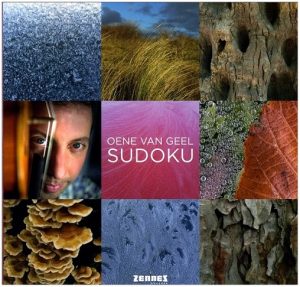
Sudoku_vanGEel

Oene’s eerste soloalbum, “Sudoku” (2016)

DVS: Je concoursstukken zijn voor de klassieke conservatoriumstudenten aanleiding om uit hun comfort zone te worden getrokken met jazz en improvisatie. In het algemeen moet een musicus in staat zijn om muziek zelfstandig uit te vormen met frasering en klank. Wordt er bij klassieke muziekstudenten wel genoeg tijd voor uitgetrokken om de muzikale fantasie te stimuleren?

Ik heb veel overleg gehad tussendoor met Marjolein Dispa en Francien Schatborn (docenten van het CvA, red). Ik heb met Francien en ook Joël Waterman samen in de altvioolsectie gezeten bij een project het muzikantencollectief Splendor. Francien vond dit project super leuk en wilde graag nieuwe invloeden bij het Conservatorium in huis halen. Dit is een soort speldenprik om de jonge musici in die richting te bewegen. Ik vond het heel belangrijk om, naast de noten van mijn stukken, ook allerlei voorbeelden (YouTube-links) aan te mogen leveren die samenhangen met deze muziek – o.a. de Gesualdo-madrigalen, en voorbeelden van Konitz, Monk, en Miles Davis. Het is fijn dat de studenten te weten komen waar ik het allemaal vandaan heb, welke tradities er achter de noten staan. Dat moet niet per se, maar het kan hen wel op ideeën brengen. Al is het maar dat ze een ochtendje thuis uittrekken om de klankwereld van Gesualdo in te duiken. Dan is er al iets bereikt.

Ik ben zelf altijd heel nieuwsgierig naar vensters op iets nieuws. De eerste keer dat ik Quatuor pour la Fin du Temps (Messiaen) hoorde, er ging een wereld voor mij open. Of als ik bepaalde stukken van Penderecki eens hoor. Nieuwe geluiden kunnen je beeld zo verrijken. Dus zo’n nieuwe compositie kan aanleiding zijn tot zelfwerkzaamheid en een soort veldonderzoek. Maar dat is ook de graver en de nerd in mij die altijd maar wil zoeken en fascinerende dingen vindt die hij wil gaan uitpluizen. Iedereen is anders natuurlijk, maar het zou leuk zijn als er mensen bij het concours zijn die daar ook in gestimuleerd worden.

DVS: Behalve met je vaste groepen, zijn er optredens geweest met musici aan wie je bijzondere herinneringen koestert?

Ja, dan moet ik meteen denken aan de samenwerking van Zapp4 met Jan Bang. Dat is een Noorse elektronica-speler, hij had van ons allevier het microfoonkanaal aangesloten en werkte met live sampling/ klankmanipulatie. Wij waren helemaal aan het improviseren, en hij kon als een schaker de verschillende samples naast elkaar leggen en op nieuwe manieren combineren in tijd, soms ook met een nieuwe toonhoogte. Daar reageerden wij dan weer op, en zo ontstond een hele bijzondere klankwereld. Het is alsof je de muziek teruggespiegeld krijgt, maar dan vervormd, zodat er ook nieuwe dingen ontstaan. Die combinatie van akoestisch en elektronica werd heel bijzonder, dankzij zijn organische spelenderwijs componeren met het opgenomen materiaal. Alles was gebaseerd op een “open visier” aanname van onze klanken, expres zonder andere inbreng “van buitenaf”.

DVS: En daarnaast zijn er misschien mensen met wie je nog graag in de toekomst zou willen samenwerken?

Zeker! Theo Loevendie is een van mijn grote helden; componist en nu 86 jaar en nog altijd heel actief. Hij speelde tot zijn 84e nog saxofoon maar moest daarmee stoppen vanwege de oogdruk. Dus nu speelt hij piano. Hij maakt daar enorme vooruitgang mee. Op het festival Wonderfeel (in juli) komt een premiere van een nieuw stuk van hem, geschreven voor Erik Bosgraaf, hem en mijzelf. Theo is voor mij hèt voorbeeld van iemand die altijd blijft zoeken, contact maakt met alle generaties, componeert, speelt, en improviseert. Ik vind het een grote eer om in zijn nieuwe stuk, samen het hem te mogen spelen.
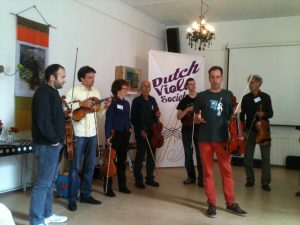
Oene van Geel geeft workshop Improvisatie tijdens DVS congres 2013

Oene van Geel geeft workshop Improvisatie tijdens DVS congres 2013

DVS: Wij zitten natuurlijk ook te hopen dat je iets wilt doen bij het Internationale Altvioolcongres in Rotterdam, dat we in november 2018 gaan organiseren.

Klinkt harstikke leuk, ja! Dat najaar doe ik ook mee bij het festival November Music in Den Bosch, daar wordt dan van mij een dubbel celloconcert en opnieuw het altvioolconcert (met Emlyn) uitgevoerd. Ik zou het ook erg leuk vinden om dan bij het congres iets met bijvoorbeeld George Dumitriu samen te doen. Een altvioolkwartet misschien, dat lijkt mij een mooie uitdaging!

DVS: Ik zou zeggen, “hold that thought”! En dank voor je tijd!

De concoursstukken van Oene zijn te horen in de 1e Ronde van het Nationaal Altvioolconcours, op 15-16 februari as.. De door de jury als beste gekozen vertolking van deze stukken wordt nog eens uitgevoerd bij de “Bonte avond” op zaterdag 18 februari in Splendor, aanvang 20.30u.

Het altvioolconcert van Oene wordt uitgevoerd door Annemarie Hensen, begeleid door een conservatorium-ensemble met Oene zelf op cajon! Donderdag 16 februari in de Sweelinckzaal van het CvA, aanvang 19.30u.

Het optreden van Estafest in het Bimhuis Amsterdam is ook op donderdag 16 februari, aanvang 20.30u (meer informatie: http://bimhuis.nl/concerten/estafest-8).

Oene geeft daarnaast een masterclass improvisatie op zaterdag 18 februari in de Haitinkzaal van het conservatorium, aanvang 11.00u.

~~~~~~~~~~~~~~~~~~~~~~~~~~~~~~

English Version:

Oene van Geel: violist, improviser, composer. In 2013 he won the prestigious Boy Edgar award. This week he is in the picture at the Amsterdam Viola Festival, where he participates in the capacity of composer, masterclass teacher and musician. He also performs with his group “Estafest” in the Bimhuis this week. Last year he released his first solo album “Sudoku”. The DVS visited Oene at home in Landsmeer, to learn more about this multi-talented musician.

DVS: When you compose, do you think primarily in terms of instrumentation, or rather about the specific people you are writing for?

I tend to think as much as possible about specific people. When I started out writing my viola concerto, I was definitely more preoccupied with the person Emlyn Stam (for whom the concerto is written, red.) than with the purpose of creating something for the viola as such. I talked to him, also about the people in his New European Ensemble. We discussed extensively about his musical preferences. I particularly enjoy writing music for people who inspire me, this gives me a lot of direction. Dead musicians and dead composers are not able to discuss with each other, no matter how beautiful their music may be.

In terms of instrumentation and musical style, I am interested in all styles, from markedly rhythmical to very melodic or harmonic music. You can call me a nerdy dabbler, who tries to reduce (musical) things to their core. And then you can combine all sorts of things with that.

DVS: For the upcoming National Viola Competition, you wrote two pieces. Is this the first time that you wrote a competition piece?

No, I also composed for the National Cello competition at the Cellobiënnale in 2008, and I really enjoyed that. The first movement of that piece is still frequently played. I recently re-wrote the third movement, because it was really a bit too difficult. So that was a learning point.

With these viola pieces I hope to offer something new to violists, so that they get in touch with other things than they’re used to.

For the first piece (“Skip Count Sweet Miles”) I thought it would be fun to do something purely jazz, inspired by people like Lee Konitz en Warne Marsh, Americans who – in cooperation with others – started with standards of well-known pieces, but wrote their own refined themes on top of that, in their very own wayward manner. I have mixed three pieces by Monk, Coltrane and Dave Brubeck, and then built a theme based on that.

DVS: There’s a bass guitar track to go with this piece, and it’s quite fast!

Yes, and therefore I added a few tracks with slower beats later on, as options. The important thing is that there’s a certain swing or drive in the performance.

DVS: And the second piece, called “Gesualdo’s Bovenkamer” (Gesualdo’s Top Floor) is very different, with free tempi?

Gesualdo was an interesting composer. His life story was a dramatic one: he murdered his first wife out of jealousy. But his music is even more special. I bought a CD by Collegium Vocale Gent with a few of his madrigals, and I was fascinated by that sound idiom, very captivating music. You can recognize the laws of counterpoint and voice leading in this music, but it modulates all over the place! From a number of these madrigals I took some elements; and these fragments in five voices were then boiled down to a solo viola piece. I also extended the system in the original closing sequence of four harmonies, into a longer descending line. The piece has three marked sections, with two breaks for short improvisations. This is where the contestants can really expose something of their own. So I do hope that these two improvs are very different every time! Maybe the contestants have worked out a cadenza in advance, or they do a spontaneous improv on the spot. But I would still hope that this own contribution bears some relation to my written score.

DVS: It is surely exciting for the violist to get to be adventurous with this piece!

The adventure of improvisation, I enjoy this experience as a listener, and I wanted to encourage the competition candidates in this respect. In the first piece (Skip Count…) the bass runs along whatever happens, and you have no choice but to deal with that. That’s why the second (Gesualdo) part is such a gratifying contrast, where you are in control of the flow of time.

DVS: Apart from this contrast, did you have a logical connection between the two parts in mind?

No, consciously not. Initially I also had a third piece in mind, altogether pizzicato, to be played guitar style. This requires yet another uncommon technique. But it all became too long and too much new material for the purpose and timeframe of this project, so I left out that last part. But the point is that I had conceived on three completely different pieces, on purpose.

DVS: The two first pieces may already cause enough anxiety among the contestants?

I really hope that we won’t have to discuss anxiety in this context, just all the features that are there to be discovered! Yes, it is a competition, but it is for me not so important who “the best player” is. I most of all want to see what potential each player offers. Sometimes, feelings of resistance and fear can help to kick you out of the ‘automatic pilot’, thus advancing your progress. So such discomfort is in my view not necessarily a bad thing, so long as it doesn’t work like a constraint.  But I mostly hope that my music will evoke a feeling of “oh, great!” rather than “oh, help!”, because the latter is certainly not my intention with this piece.

DVS: You just returned from a trip to Taiwan – what did you do there?

There was a percussion festival there, and I played with the Nordanians, a group with tabla (indian drums), guitar, myself on a 5-string viola and currently also a bayan (a Russian accordeon). And we have a Chinese guest percussionist, a guy who also studied classical percussion and now studies conducting in Helsinki. He’s a really good player. So there were five of us this time. At a certain point I was carried around by four men while playing big Chinese drum. It was a great adventure. There were lots of percussion groups, mainly from Asia. It’s very nice when you’re so far from home, in a completely different setting, and still can feel so welcome.

This was the 10th edition of this festival. Full house, lots of audience. Two Taiko groups from Japan, with flute and Shamisen (a kind of banjo), and traditional Chinese ensembles. We participated as cross-over group, with influences from Indian music, jazz, chamber music, Balkan, Moldavian music … in this respect we were definitely the “odd band out”, but we felt very much appreciated there.

DVS: You are surrounded by a number of musicians in different settings: Your string quartet Zapp4, The Nordanians… what more?

There’s this duo with Mark Haanstra on bass guitar, we’ve played together for 20 years, very stimulating. We have to keep everything going with just the two of us. All bits that usually are played by a violist, I have to somehow produce with the viola. That sometimes takes me to extreme heights and speeds, so there’s no relaxation possible. But I like the way we are able to vary between thin, modest passages and big orchestral flourish. The smaller the group, the more flexible you can react to each other’s impulses, just like in chamber music.

Another important group is Estafest: Guitar, piano, sax, en myself on the viola and percussion. During this week’s Viola Festival, I also perform with this group in the Bimhuis!

DVS: Are you consciously looking to achieve different things with the different groups?

Yes, for sure! But the most important thing for me are the different personalities that I get to play with in each band. And there is almost always a link with improvised music. None of my groups play only written, fixed notes – I get to do enough of that as a composer. As a performing musician, I particularly enjoy shaping the music, together.

DVS: Are the musical styles in your bands very different?

Yes – in the Nordanians we have Niti Ranjan, for example; he’s a true grand master of the Tabla, he knows all the ins and outs of this music. So rhythmically speaking, our music is therefore very much inspired by Indian music. But harmonically and melodically, what we put on top of that is more akin to modern jazz. However, it’s not really an abstract band.

In Estafest, on the other hand, we can sometimes take a very abstract direction. I’m very glad that I don’t have to do the same thing with every band!

I’m also very excited about a new partnership, viola with a dancer. Her name is Miri Lee, she’s originally from Korea. It is all completely improvised, and from all those dance movements you get such a different kind of information, compared to fellow musicians. It is very fascinating to watch her dance and to sense what that evokes in me, whereby I work and think more in visual terms.

DVS: Sometimes, the physical exertions of a musician also approach a kind of choreography. There are regular debates about non-functional “histrionics” of musicians on stage, while old heroes like Menuhin and Heifetz hardly made any excess movements while playing.

There’s a lot to be said for that, because if you’re perfectly efficient, you will probably advance further technically. But you should be aware what suits yourself best. Self-control should not be experiences as a straightjacket, but on the other hand you also shouldn’t be compelled to move just for the show effect. Interesting question: How do you manage as artist, composer and human being to remain authentic? This has to be your own personal discovery, whereby you also must dare to go over the edge at times.

DVS: During your violin/viola training, you receive myriads of detailed instructions, a continuous stream of stimuli and corrections. It can be hard to discover your own authentic body language through all that.

In that sense I have followed an unorthodox path. I did have classical studies as minor subjects in school, but I always played things my own way, inventing unusual techniques, while quite stubbornly neglected to practice the classical techniques.

DVS: Your two pieces for the competition are certain to draw most classical viola students out of their comfort zone, with jazz and improvisation. But in general, a musician must be prepared to shape his own music independently, in terms of phrasing and sound. Is enough time allocated at the  Conservatory to stimulate and develop the musical imagination of the classical students?

Well, I have discussed quite a bit with Marjolein Dispa and Francien Schatborn (viola teachers at the Conservatory of Amsterdam, red).  I once sat together with Francien and also with Joël Waterman in the viola section of a project at the musician’s collective Splendor. Francine loved this project, and wanted very much to draw new influences into the Conservatory.

So these pieces are a stimulus to move the young musicians in that direction. Next to the scores, I also had the opportunity to provide all kinds of examples (YouTube links) that relate to these pieces – for example the Gesualdo madrigals, and pieces of Konitz, Monk, en Miles Davis. It is important for me that the students learn where it all came from, which traditions are behind the notes. It’s not mandatory of course, but it can inspire some ideas in them. Even if they just spend one extra morning at home to explore the sound world of Gesualdo. Then we have achieved something.

I was always very curious for new things. The first time that I heard Quatuor pour la Fin du Temps (Messiaen), it was a new world for me. Or hearing certain pieces of Penderecki. New sounds can enrich your outlook so much. So new compositions promote an active stance in the musician to do field research. But then again, that is the digger and the nerd in me, who is always searching for fascinating things to sort out. So everyone is different of course, but I would be pleased if some of the competition entrants actually pick up on this.

DVS: Outside of your regular bands, have there been performances or collaborations with other musicians that you particularly enjoyed?

Yes, that immediately makes me think of the collaboration of Zapp4 with Jan Bang, a Norwegian electronics artist. He hooked into the microphone channel of each of us, and then started sampling and manipulating these sounds in real time. We were totally improvising, and he mixed and combined the different samples in new ways, sometimes even with a modified pitch. We reacted to this in our turn, and thus a very peculiar sound world arose. It was as if you get the music mirrored back at you, but transformed, so that new things were created. This combination of acoustic and electronic sound became very special, thanks to his organic and playful composing with the recorded material. All of it was based on an open acceptance of our sounds, without any external additions.

DVS: And then there are perhaps people with whom you are looking forward to work in the future?

Absolutely! Theo Loevendie is one of my big heroes; a composer, 86 years old and still going strong. He played the saxophone until very recently, but had to stop due to high eye pressure. So he started playing the piano instead, and he’s making giant strides with it. At the Wonderfeel festival (in July) he will premiere a new piece, written for Erik Bosgraaf, him, and myself. Theo is for me the ultimate example of someone who always keeps searching, connecting with all generations, composes, plays and improvises. It is a great honour for me to get to play with him in his new piece.

DVS: We are of course also hoping that you would like to contribute something at the International Viola Congress in Rotterdam, which we are working to organise in 2018.

That sounds like fun, sure! During that time, I am also contributing at the November Music festival in Den Bosch, where a double cello concerto of mine will be performed, along with my viola concerto (again with Emlyn as soloist). I would really like to work with for example George Dumitriu at your congress. A viola quartet perhaps, that sounds like a nice challenge!

DVS: Well, hold that thought! – And thanks for your time!

Oene’s competition pieces can be heard in the 1st Round of the National Viola Competition, Feb. 15-16th in the Sweelinckzaal at the Conservatory of Amsterdam. The best interpretations (as deemed by the competition jury) will be performed during the concert in Splendor Amsterdam, on Saturday Feb. 18th, starting at 20.30h.

The viola concerto will be performed by Annemarie Hensen, accompanied by a conservatory ensemble with Oene himself on cajon! Thursday Feb 16th in the Sweelinckzaal, starting 19.30h.

The Estafest performance at Bimhuis Amsterdam is also on Thursday Feb 16th, starting 20.30h. (more information: http://bimhuis.nl/concerten/estafest-8).

Oene also teaches a Masterclass Improvisation on Saturday Feb 18th int he Haitinkzaal of the Conservatory, starting at 11.00h.



Interview Jan van der Elst, vioolbouwer

door Kristofer G. Skaug

English version below! Follow this link.

Velen erkennen het belang van de verbindende middenstem in de muziek. Een belangrijke maar toch ook vaak introverte stem. De altviool valt eigenlijk vooral op als, om wat voor reden dan ook, haar stem tijdelijk zwijgt. Opeens klinkt het ensemble dun en onsamenhangend. Alle betrokkenen, behoudens wellicht de enkele eerste violen, kijken dan verbaasd op en verlangen naar de terugkeer van het vriendelijke bronzen altgeluid. De eisen die in de loop der tijd aan de altviool worden gesteld zijn echter enorm toegenomen. De welluidende middenstem moet heden ten dage ook echt luid kunnen klinken en de aandacht op zich kunnen vestigen. Dit heeft geleid tot een veelheid aan verschillende maten, timbres en innovaties.

Een vioolbouwer die zich het lot van de altviool en haar bespelers heeft aangetrokken is de Dordtse vioolbouwer Jan van der Elst. In zijn atelier te Dordrecht zet hij zich al 20 jaar in voor de ontwikkeling van de altviool. Tijdens het Altvioolfestival in Amsterdam zal hij ingaan op praktische zaken die het leven van de altist kunnen verlichten. Geen onnodige theoretische verhandelingen, maar nuttige wenken omtrent de verzorging van het geliefde strijkinstrument de altviool.

Jan_vd_Elst_website_1DVS: Hoe ben je begonnen met vioolbouwen?

Normaal gesproken ga je eerst naar school toe, en daarna bij een meester in de leer. Maar ik heb het eigenlijk precies andersom gedaan. Ik ben eerst in de leer gegaan bij vioolbouwer Robert Walters in Rotterdam (bij velen bekend als “Rob Viool”, en onlangs in 2013 overleden – red.), daar heb ik mijn eerste viool gebouwd. Daarna, midden jaren tachtig, ben ik naar de school in Newark-on-Trent gegaan in Engeland. Het was heel moeilijk om op die school toegelaten te worden, maar mede dankzij mijn opgedane ervaring en meegenomen viool als proefstuk is dat gelukt.

DVS: Leerde je toen alle strijkinstrumenten bouwen?

Nee, je begint met de viool. Een viool bouwen is niet technisch moeilijker of makkelijker dan altviool of cello, maar het is voor de school organisatorisch eenvoudiger als iedereen hetzelfde bouwt. Daarnaast is een viool bouwen in financiëel opzicht minder riskant dan de grotere instrumenten, want als er iets misgaat ben je niet zoveel kostbaar hout kwijt.

Onze school zat in een oud bankgebouw, de opleiding duurde 3 jaar, in elk jaar zaten 12 leerlingen. De atelierruimtes waren te klein voor het met z’n allen bouwen van grote instrumenten zoals cello en contrabas. In het 3e jaar mocht je kiezen om een cello te bouwen, maar niet voor je eindexamen. Dat moest altijd een Stradivarius-model zijn. Ik heb tot de dag van vandaag nog nooit een cello gebouwd.

DVS: Hoe ben je dan uiteindelijk op het spoor van altvioolbouw terechtgekomen?

In het 2e jaar van school heb ik mijn eerste altviool gebouwd. Dat is de altviool waar Karin (Dolman, red) nu nog op speelt. Die heb ik meegenomen naar Nederland terwijl de lak nog niet eens klaar was. Ik vond de altviool niet goed klinken, dus heb ik hem op de plank gezet als een mislukt project.

Karin was toen aanvoerder van het NJO (Nederlands Jeugdorkest, red.), en speelde op een kleine en vrij dure altviool. We hadden toen nog niets, ze woonde hier gewoon in dezelfde straat. Zij vond mijn eerste altviool wel mooi. En bovendien vond de leiding van het NJO dat een grotere altviool beter bij haar status als aanvoerder paste! Zo heb ik Karin leren kennen, en sindsdien ben ik mij steeds meer in Karin en altviolen gaan interesseren.

DVS: Zijn je altvioolklanten anders dan bijvoorbeeld violisten?

Altviolisten zijn veel makkelijker in de omgang. Niet dat ze minder eisen stellen, maar ze blijken vaak intelligenter dan mede-musici door hebben, en hebben oog voor het het grotere geheel, waardoor ze meestal minder navelstaren. Ze zijn teamspelers, die gewend zijn om een middenstem met verbindende functie te spelen. Dat ondersteunt een bepaald karakter, een bepaald overzicht. Er worden festivals voor cello en altviool georganiseerd, maar niet voor violisten. Dat heeft waarschijnlijk met de typische rol van dit instrument te maken.

DVS: Zijn jouw altviolen gebaseerd op een bepaald idee, een bepaald model waar je naartoe bent gegroeid?

Ik vind het nederlands niet altijd zo’n mooie taal, maar het woord “altviool” vind ik wel heel duidelijk. Het gaat om een alt-viool, niet om een tenor-cello. Dus mijn streven is niet om een altviool a la Max Möller te maken, die heel diep klinkt. In het orkest is het wel goed om een paar heel diep klinkende altviolen te hebben, maar in een strijkkwartet zit je daarmee al gauw de cello in de weg. Dus mijn idee is om uit te gaan van het woord: altviool.

Het model van mijn eerste altviool (die Karin nu bespeelt) is van de Guarneri-familie. Dat is een standaard model voor een moderne altviool, die èn behoorlijk diep klinkt èn ook solistisch goed uit de verf komt. Maar ik ga daarbij uit van het vioolmodel van Bartolomeo Guarneri Del Gesù (de kleinzoon van Andrea Guarneri), die zelf geen altviolen bouwde. Van daaruit heb ik mijn eigen altviool ontwikkeld. Het standaardmodel is 41.7cm, uitgaande van een 37.5cm mensuur. Een paar maanden geleden heb ik voor het eerst een kleiner model getekend, 40.5cm.

Tussendoor heb ik ook een Maggini-model gemaakt, met hele korte mensuur en hele kleine C-tjes; maar ik heb daarbij ondervonden dat dit niet “mijn ding” is, dus daar ben ik weer vanaf gestapt. In feite heb ik dus door de jaren heen 4 altvioolmodellen gemaakt.

DVS: Heb je nog ontwikkelingen in gedachte voor de toekomst?

Nou, dit is al een hele stap hoor, om een ietsje kleinere altviool te maken. De altvioolmarkt is eigenlijk heel klein. Maar wie weet …!

Ik bouw ook graag violen, maar violen kunnen soms echt afschuwelijk mislukken, zodat ze helemaal niet klinken. Alles zit zo dicht bij elkaar, dan kan een kleine onnauwkeurigheid grote gevolgen hebben. Bij altviolen is die risico kleiner.

Het leuke met altviolen is bovendien dat de afmetingen veel minder vastliggen dan bij violen. En ook de meningen over hoe een altviool hoort te klinken hebben een grotere spreiding. Persoonlijk houd ik van een helder instrument.

Een praktijkvoorbeeld: Ik had laatst iemand die altviolen kwam uitzoeken van een bepaald type. Ik had er zes of zeven staan. Daarvan bleven uiteindelijk twee over: Een heel donker klinkend instrument dat in een kleine ruimte veruit het mooiste klonk; en een wat minder klinkend instrument, maar met meer helderheid. Toen heeft Karin deze instrumenten vanuit mijn werkplaats bespeeld terwijl de klant met mij in de winkel bleef staan. De meer heldere altviool won het in deze situatie glansrijk van de andere, en hij klonk ook dieper. Bij zulke instrumenten bestaan de lage tonen bij de gratie van de hoge tonen, dat vind ik fascinerend, en dat is mijn ideale klankbeeld voor de altviool. Als je geen hoge tonen hebt in het lage, dan blijft er niets over. En daarom heet het dus ook een alt-viool.

DVS: Wat wil je nog meer graag kwijt aan de altviolisten van deze wereld?

Een van mijn stokpaardjes is bijvoorbeeld het staartstuk! Een staartstuk moet altijd ingebouwde fijnstemmers hebben, omdat veel altviolisten op stalen snaren spelen, die je eigenlijk niet goed met een stemschroef kunt stemmen. Het is onbegrijpelijk dat niet alle staartstukken zo gemaakt worden. Voor de snaren zelf wordt nog veel aan innovatie gedaan, qua materialen en productie. Maar de staartstukken zijn daarin vaak niet meegekomen. De plastic staartstukken van tegenwoordig zijn niet altijd zo sterk, en zijn lelijk bovendien. De oude houten staartstukken hadden vaak een onhandig push-systeem van snarenbevestiging, hopeloos! Maar dit jaar komt er vanuit Duitsland een nieuwe soort staartstukken met een hele goede fijnstemmer mechanisme. Daar zit ik echt op te wachten!

20150808_121

Jan van der Elst bij het KamermuziekAtelier Delft, 2015

DVS: Wat vind je van schuine staartstukken?

Mijn kritiek daarop is dat het vaak bijna onmogelijk is om die staartstukken achter de kam perfect (af)gestemd te krijgen. En zolang dat niet lukt, komt dat staartstuk niet tot zijn recht. Het is geen nieuw idee, en het is een vrij duur verhaal. Misschien geeft het de speler meer zelfvertrouwen, een “onoverwinnelijk” gevoel, maar ik constateer dat een heleboel spelers daar toch weer vanaf stappen.

Ik heb veel aandacht voor de afstand tussen kam en staartstuk, en voor de kwaliteit van de lus van het staartstuk. Of die lus van kevlar of van plastic is, dat maakt een behoorlijk verschil.

Maar belangrijker dan zulke innovaties vind ik, dat mensen goed met hun instrumenten om kunnen gaan. En daar gaat mijn lezing straks over!

Jan van der Elst geeft zijn lezing tijdens de 3e Nationaal Altvioolbijeenkomst in Splendor Amsterdam, 18 februari 2017 om 16:30u. Volledige programma-informatie hier.

Links:

Jan van der Elst, website

Newark School of Violin Building (artikel in Amati magazine)

Amsterdam Altvioolfestival 2017


English Version:

The importance of the middle voice as an integrating force in music is commonly recognised. It is a crucial but yet often introverted voice. The impact of the viola is often noticed most when, for whatever reason, its voice temporarily falls silent. The ensemble suddenly sounds weak and incoherent. Everyone present, except perhaps for a first violin, will long for the return of the friendly bronze sound.

The technical demands on the viola have increased significantly over time. The sonorous middle voice must nowadays also be able to make a big sound in order to draw attention. As a result, violas are currently made in a multitude of sizes and innovative shapes, leading to a great variety of timbres.

The Dordrecht-based luthier Jan van der Elst has taken a particular interest in the viola and violists, having developed and built violas for more than 20 years. During the Amsterdam Viola Festival, he will give a presentation on instrument maintenance, with practical advice to improve the everyday life of viola players. No needlessly theoretical explanations, just best practices to care for your favourite instrument, the viola.

DVS: How did you start with violin making?

The usual path is to seek an education at a violin making school, and then to find an apprenticeship in a master’s workshop. But I actually did it exactly the other way around. I started as an apprentice with luthier Robert Walters in Rotterdam (known to many as “Rob viool”, passed away in 2013 – red.). I built my first violin there. After that, in the mid-1980s, I went to the school in Newark-on-Trent, in England. It was very difficult to get admitted to this school, but thanks to my experience and the violin that I could show as proof of my skills, I made it in.

DVS: Did you then learn how to build all string instruments?

No, you start with the violin. Building a violin is not necessarily harder or easier than a viola or a cello, but it is simpler for the course organisation at school when everyone builds roughly the same. Furthermore, building a violin incurs less financial risk than the larger instruments, as you will lose less expensive wood, should the project fail.

Our school building had formerly been a bank. The school had 3 years, each with 12 students. The workshop spaces were simply too small to allow everyone to build a cello or a double bass. In the third year you could choose to build a cello, but for your final exam you had to build a violin, a Stradivarius model. To this day I have never built a cello.

DVS: So how did you end up building violas?

I built my first viola during my second year at school. That is the instrument which Karin (Dolman, red.) is still playing. Ik took it back to the Netherlands while the varnish wasn’t even finished. I didn’t like the sound it made, so I shelved it as a failed project.

At that time, Karin was principal violist of the NJO (the Dutch Youth Orchestra), and she had a quite small but expensive viola. We didn’t have a relationship at that time, she just lived here down the street. She did like my first viola, and she was encouraged by the proposition that a larger viola would better suit her status as principal violist! So this is how I got to know Karin, and since then I have taken an ever increasing interest in both Karin and violas.

DVS: Are your viola customers different from violinists, for example?

Violists are much more easy-going. It’s not that they are less demanding, but they often turn out to be more intelligent than their colleagues suspect. They can see the big picture, so they are less self-obsessed. They are team players, accustomed to the connecting role as a middle voice. This requires and supports a certain character, a certain outlook.  You see viola societies, viola festivals etc. – but no equivalents for violinists. This is probably due to the specific role of the viola.

DVS: Are your violas based on a particular idea or a model that you have developed?

Dutch can be a clumsy language at times, but I really like the clarity of the word “altviool”. It truly captures its nature as an “alto violin”, rather than a “tenor cello”. So my goal is not to make a Max Möller-like viola, which sounds very deep. Sure, in a symphony orchestra it is good to have a few very deep violas. But in a string quartet, you could easily end up getting in the way of the cello with such a sound. So my principle idea is to use the name “alto violin” as a starting point.

My first viola (the one that Karin now plays) is a Guarneri model, a quite standard model for a modern viola, which has a decent depth of voice, but can also hold its own as a soloist instrument. I have chosen a specific design of Bartolomeo Guarneri Del Gesù (the grandson of Andrea Guarneri), who did not build violas himself. From this I have developed my own viola. The standard size is 41.7cm, based on a 37.5cm mensur. A couple of months ago, I designed my first smaller model: 40.5cm.

I also tried a relatively small-dimensioned Maggini model, however I found that this was just not “my thing”, so I didn’t pursue that path further. So all in all I have made four different viola models, over the years.

DVS: Do you have any other developments in mind for the future?

Well, it’s really already quite a big step for me to make a smaller viola. The viola market is really quite small. But who knows… !

I like to build violins too, but they can fail miserably, with no sound at all. Everything is so close together, so a small inaccuracy can have big consequences. With violas, that risk is smaller.

The fun thing about the viola is that its size and shape is much less fixed than the violin. And also the opinions about how a viola should sound vary a lot. Personally I prefer a clear and bright sound.

A real-life example: A while ago, someone came to my shop to try out certain types of viola. I had six or seven of them lined up. In the end, two of them were left over as final candidates. One very dark instrument, which sounded by far most pleasant in the confined acoustics of my shop; and a less sonorous instrument with more brightness in the timbre. Then Karin took both instruments to my workshop down the hall and played from there: In this situation, the sound from the brighter viola reaching the shop room won hands-down, and even sounded deeper. On such instruments, the lower tones are amplified thanks to the higher tones. I find that fascinating, and I have made this my ideal viola sound. If you don’t have that component of brightness in your sound, then you may lose everything. So that’s why it is called a “tenor violin”.

DVS: What else would you like to share with the viola community?

One of my pet issues is the tailpiece! A tailpiece should always have built-in fine tuners. Many violists use steel strings, which are really difficult to tune with the big pegs. I really don’t understand why not all tailpieces are made this way. There’s a lot of innovation going into string technology, but tailpieces seem to have been lagging behind the developments. The plastic tailpieces they make nowadays aren’t always so strong, and they’re often quite ugly as well. The old wooden tailpieces usually had a hopelessly impractical “push” system for the string fastening. But this year, we expect a new model tailpiece with a greatly improved fine tuning mechanism. I can’t wait to get those!

DVS: What is your opinion of tapered tailpieces?

My beef with tapered tailpieces is that they are often impossible to get perfectly tuned behind the bridge, therefore they rarely ever achieve the promised potential. It is not a new idea, and it’s quite an expensive change to make. Maybe it gives the player more confidence, a feeling of “invincibility”, but my observation is that a lot of players are abandoning this tailpiece design.

I do pay a lot of attention to optimising the distance between the bridge and the tailpiece, and to the material quality of the tail gut. It makes a great difference whether this is made of e.g. kevlar or plastic.

But even more important than such innovations is the care and maintenance for your instrument. And that will be the topic of my lecture!

Jan van der Elst gives his lecture during the 3e National Viola Assembly in Splendor Amsterdam, on February 18th 2017, at 16:30h. Complete programme information here.

Links:

Jan van der Elst, website

Newark School of Violin Building (article, Amati magazine)

Amsterdam Viola Festival 2017


Verslag Masterclass Richard Wolfe

Utrecht, 14 januari 201720170114_021

Deze workshop “Ter voorbereiding van het Nationaal Altvioolconcours 2017” werd door de doelgroep aanvankelijk wat afwachtend bekeken: Welke van de 20 concours-deelnemers zouden het lef hebben (“just watch this!“) om hun spel in een openbare masterclass te laten bekritiseren door conservatoriumdocent en NedPhO-aanvoerder Richard Wolfe?

Uiteindelijk heeft de leergierigheid het gewonnen van de verlegenheid: Wie niet waagt, die niet wint! De vijf moedigen waren:

  • Esther Fernandez Olalla (Codarts),
  • Raquel Sanchez Gonzalez (Codarts, hors concours),
  • Kardelen Buruk (KonCon),
  • Martin Moriarty (CvA)
  • William Murray (CvA). .

Helaas was de pianist ziek, dus het moest allemaal zonder begeleiding, maar dat mocht de pret niet drukken.

Het “Konzertstück” van Enescu is één van de drie verplichte werken in de eerste ronde van het concours. De overige twee verplichte werken zijn: Een Mozart-duet viool/altviool en een opdrachtscompositie van Oene van Geel, die pas vorig week is uitgegeven.

Vandaar dat bijna alle deelnemers ervoor hadden gekozen om aan het stuk van Enescu te werken in de masterclass. Dit is een echte “Pièce de concours“, geschreven voor de eindexamens bij het conservatorium in Parijs (vorig jaar heeft de DVS over deze categorie stukken een aparte workshop gegeven). Het bevat een groot aantal technische uitdagingen, die allemaal binnen 10 minuutjes de revu passeren: Arpeggio’s, chromatische toonladders, van laag tot heel hoog, akelige dubbelgrepen, noem maar op.

Sommigen maken grote indruk met zeer precies en virtuoos linkerhandwerk, maar hebben dan weer moeite met stokindeling, adem en frasering. Anderen zijn onzeker mbt de intonatie op dubbelgrepen. Sommigen hebben moeite om genoeg klank te produceren in de uitbundige passages, anderen vinden juist een uitdaging in het maken van een voldoende subtiele pianissimo. Een terugkerend gespreksonderwerp van de docent is het verbinden van noten en frasen en de rol van streek en vibrato hierbij.

Ondanks dat ik me had voorgenomen om geen individuele prestaties met naam te noemen, wil ik toch twee uitzonderingen maken:

Ten eerste Raquel Sanchez Gonzalez (Codarts), die geen concoursdeelnemer is, maar heeft laten horen dat ze met haar Walton-concert goed bezig is.

Ten tweede William Murray, die niet alleen in bezit is van een erg mooie Amati altviool, maar tevens een verpletterende Hindemith op.25/1 in huis blijkt te hebben.

De deelnemers (en toehoorders) hebben veel inspiratie opgedaan bij deze uitgebreide masterclass-dag, wat dat betreft is het Nationaal Altvioolconcours, dat over een maand begint, opeens heel veel dichterbij gekomen. Veel dank aan Richard Wolfe! En wij wensen iedereen heel veel succes met de laatste weken van concoursvoorbereidingen!

Kristofer G. Skaug

20170114_029 20170114_037

20170114_04520170114_053


20170114_054


Aankondiging 6th Amsterdam Viola Festival & 5th National Viola Competition 2017

AVF_Logo Het Conservatorium van Amsterdam verwelkomt van 15-19 februari 2017 altviool-enthousiasten uit het hele land voor een festival met twee componenten:

  • Het Amsterdam Viola Festival, met lezingen, masterclasses en concerten, in samenwerking met de Dutch Viola Society, die hierbinnen het 3e Nationaal Altvioolcongres organiseert;
  • Het Nationaal Altvioolconcours, voor conservatoriumstudenten en jonge professionals tot 30 jaar.

Officieel programmaboekje van het festival [NIEUW]: Download Link [PDF].

Overzicht / samenvatting:
Hieronder wordt een samenvatting van het festivalprogramma gepresenteerd.
Wij wijzen erop dat onderstaande informatie wordt beheerd door de leiding van het festival, en zou kunnen veranderen. In geval van discrepantie zal de informatie op de
festivalwebsite van het Conservatorium altijd leidend zijn.

Woensdag 15/02

19:00-23:00: Sweelinckzaal:
Nationaal Altvioolconcours, 1e Ronde met verplicht programma:
Mozart Duo viool/altviool; Enescu Konzertstück; Opdrachtsompositie Oene van Geel;

Donderdag 16/02

09:30-19:00: Diverse locaties:
Masterclasses met Nobuko Imai, Sven Arne Tepl en Wenting Kang

10:00-17:00: Sweelinckzaal:
Nationaal Altvioolconcours, 1e Ronde (voortzetting van 15/02)

avf2017_strip_2_artists

Artiesten van het AVF’2017: Annemarie Hensens en Wenting Kang

19:30-21:30: Sweelinckzaal:
Altvioolconcert van Oene van Geel:
Annemarie Hensens soleert met ensemble CvA
Docentenconcert
– mmv Nobuko Imai, Judith Wijzenbeek e.a.

Vrijdag 17/02

09:30-17:00: Diverse locaties (4e verdieping):
Masterclasses met Francien Schatborn, Marjolein Dispa, Richard Wolfe, Tepl en Kang

11:30-17:00: Haitinkzaal:
Nationaal Altvioolconcours, 2e Ronde met als programma:
– Sonate van Röntgen, Martinu, De Cruck, Milhaud, Koechlin, Badings of Bax
– 20e eeuw Solosonate van Hindemith, Strawinsky, Penderecki, Reger, Britten of Ligeti

20:00-21:30: Haitinkzaal:
Concert – mmv Nobuko Imai en Wenting Kang (muziek van Bartok en Brahms);

avf2017_strip_1_artists

Artiesten van het AVF’2017: Nobuko Imai, Oene van Geel, Saeko Oguma

Zaterdag 18/02

10:00-15:00: Diverse locaties (4e verdieping):
Masterclasses met o.a. Jürgen Kussmaul en Oene van Geel (improvisatieworkshop)

11:00-14:00: Sweelinckzaal: Marathon Mozart-kwintetten

Strijkkwintet nr. 6 in Es gr.t., K.614
– William Murray en Ásdis Valdimarsdottir (altviool)
mmv. Cordelia Paw en Richard Wolfe (viool), Mick Stirling, cello

Strijkkwintet nr. 5 in D gr.t., K.593
– Francien Schatborn (altviool), Lisa Eggen (altviool) en haar Dostojevski Kwartet

Strijkkwintet nr. 2 in c kl.t., K.406/516b
– Laura Hovestad en Jurriaan Klapwijk (altviool),
mmv. Ana Cikste en Richard Wolfe (viool), Madara Fogelmane, cello

Pauze (tot 13:00)

Strijkkwintet nr. 3 in C gr.t., K.515
– Marjolein Dispa (altviool), Carlos Delgado Antequera (altviool) en zijn Canto Quartet

Strijkkwintet nr. 1 in Bes gr.t., K.174
– Richard Wolfe (altviool), Shih-Hsien Tsai (altviool) en zijn Cheng Quartet

16:30-23:30: Splendor: 3e Nationaal Altvioolbijeenkomst (Dutch Viola Society):
Feestelijk evenement georganiseerd door de DVS. Toegang met korting voor studenten en vrienden van de DVS.

  • Lezing over onderhoud door vioolbouwer Jan van der Elst (Dordrecht)
  • Presentatie Dutch Viola Society en Projectplan IVC Rotterdam 2018
  • Viola Pitch
  • Viola Lounge
  • Bonte Avond, met diverse optredens van concoursdeelnemers, altvioolensembles, Oene van Geel en Saeko Oguma

Zie voor meer details deze pagina over de DVS-bijeenkomst.

Zondag 19/02

12:00-13:00: Sweelinckzaal:
Concert – mmv Francien Schatborn & friends (muziek van Telemann en Mozart);

14:00-16:00: Haitinkzaal:
Nationaal Altvioolconcours, 3e Ronde (Finale)
met als programma:
– Enescu Konzertstück;
– 1e deel uit concert van Walton, Bartok, of Hindemiths Schwanendreher

avf2017_strip_3_jury

Juryleden van het Nationaal Altvioolconcours 2017: Roland Kieft, Hannah Strijbos, Jürgen Kussmaul (niet op de foto: Erik van de Wel)

16:30: Mezzo / kantine:  Afsluitende borrel