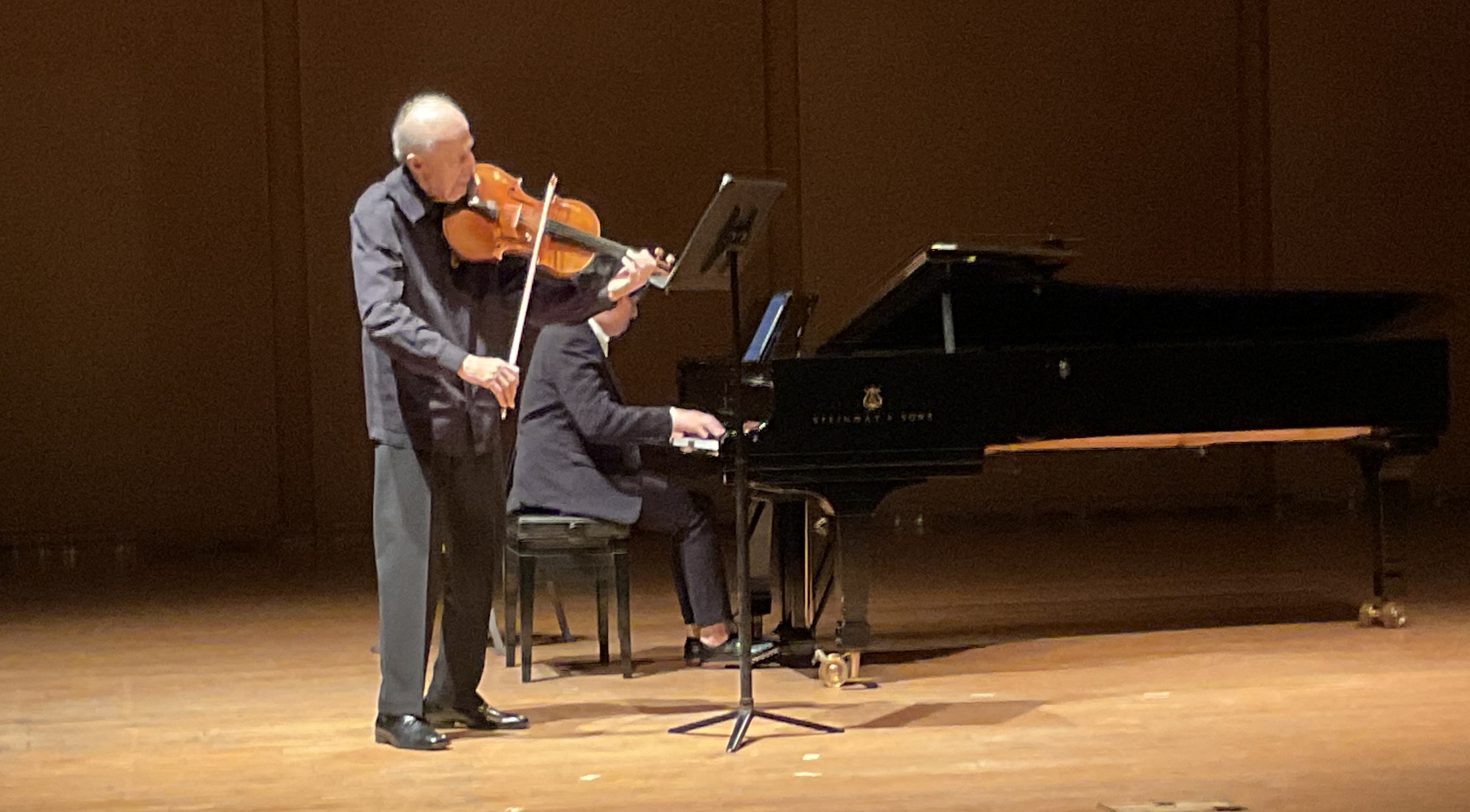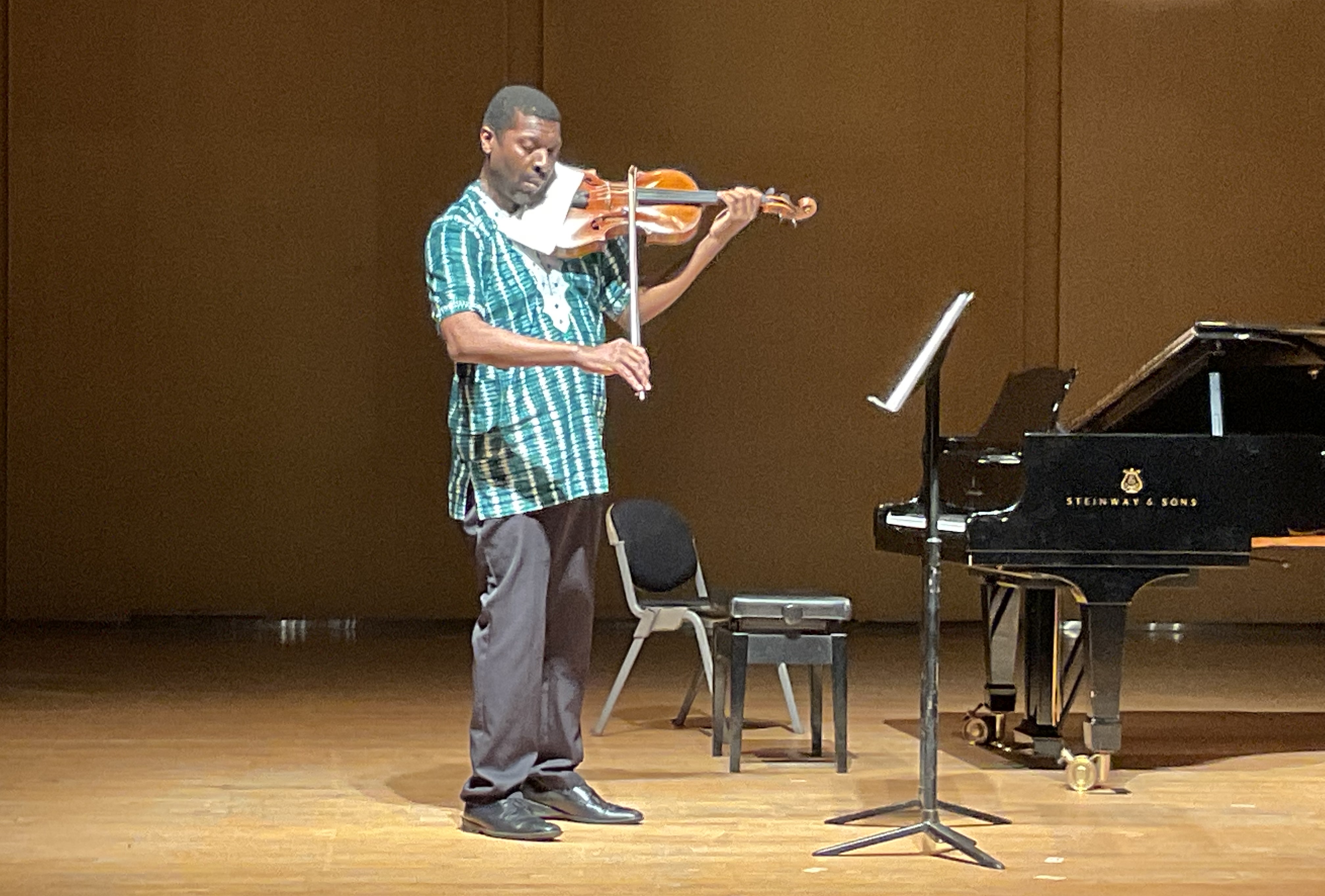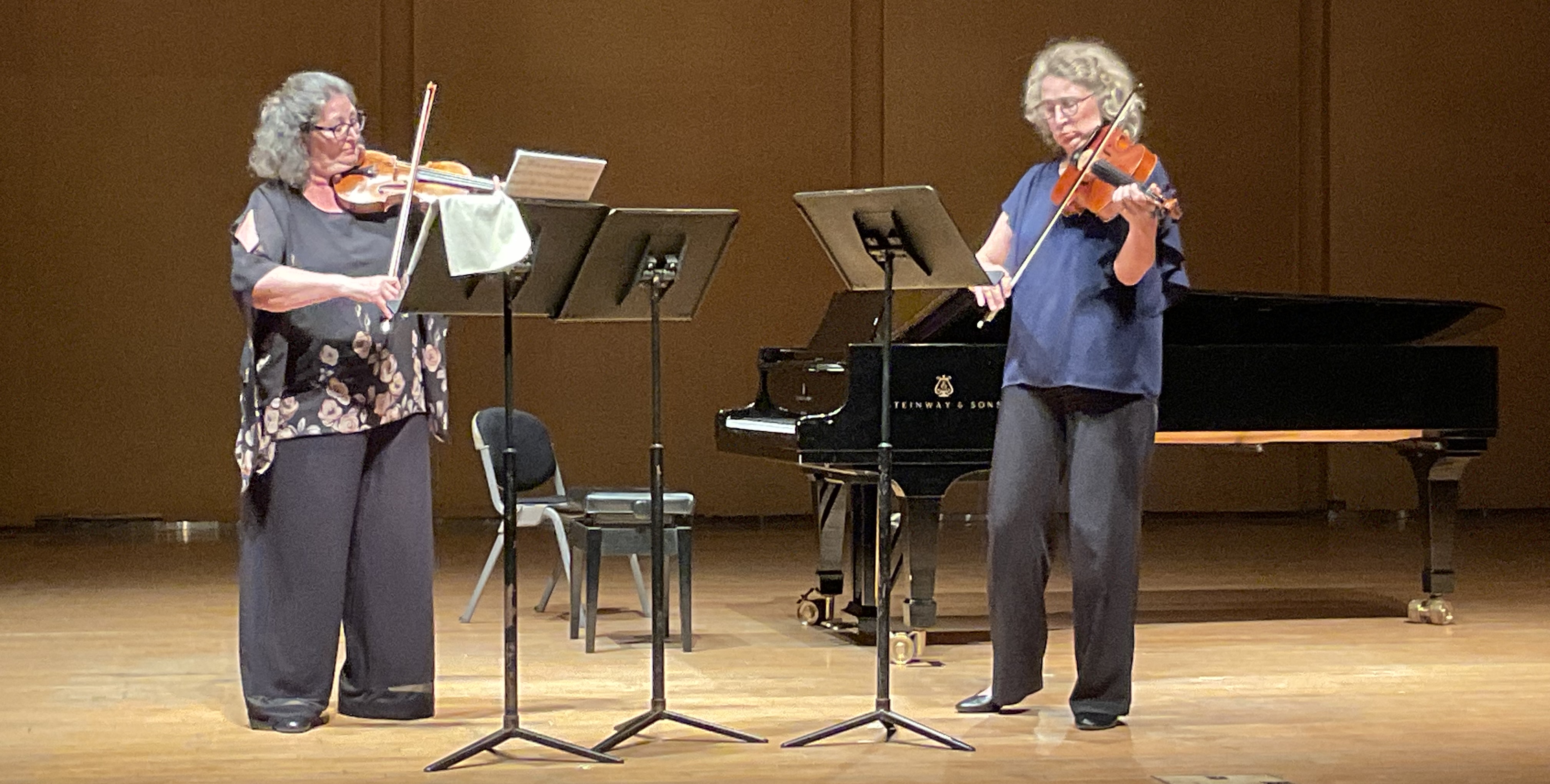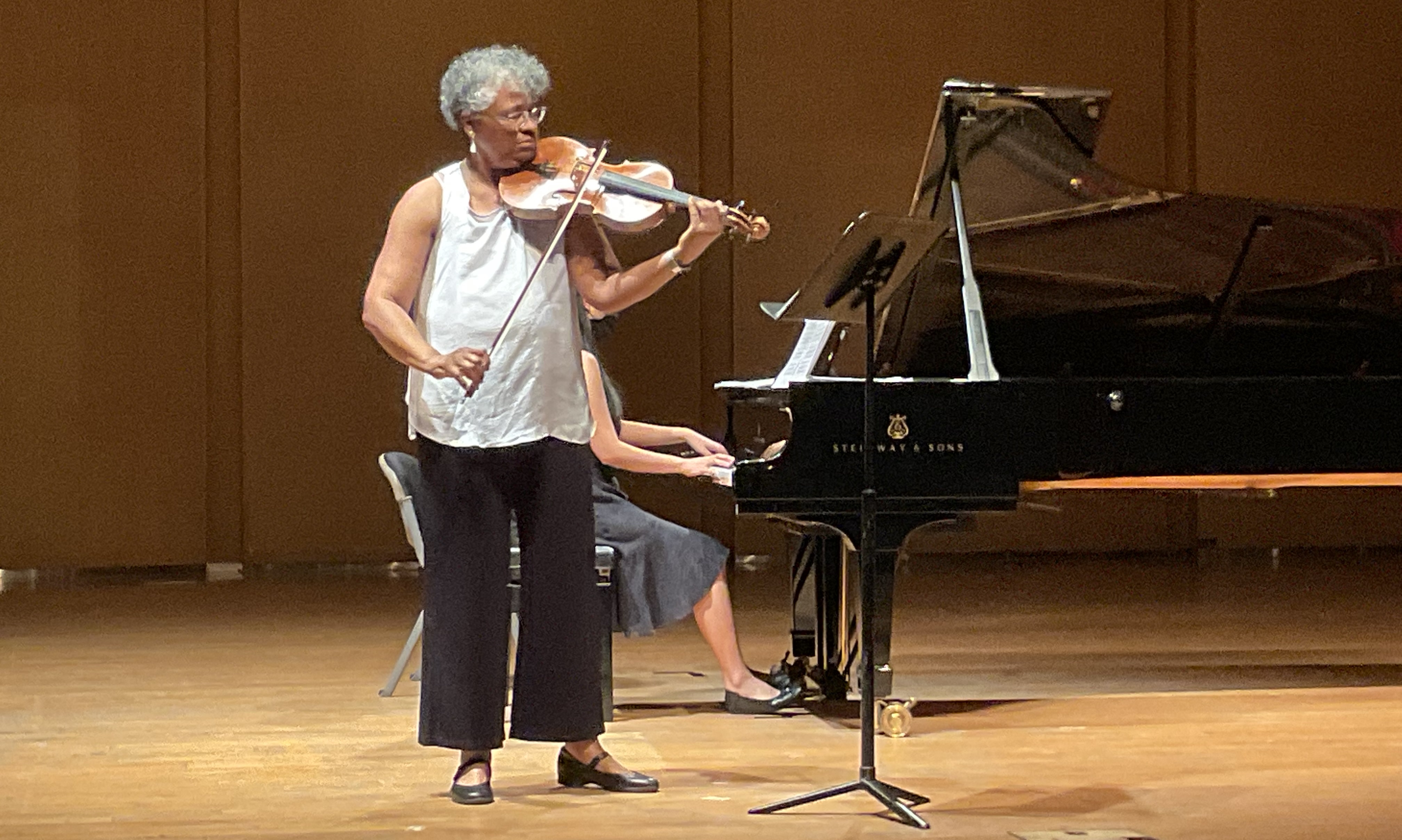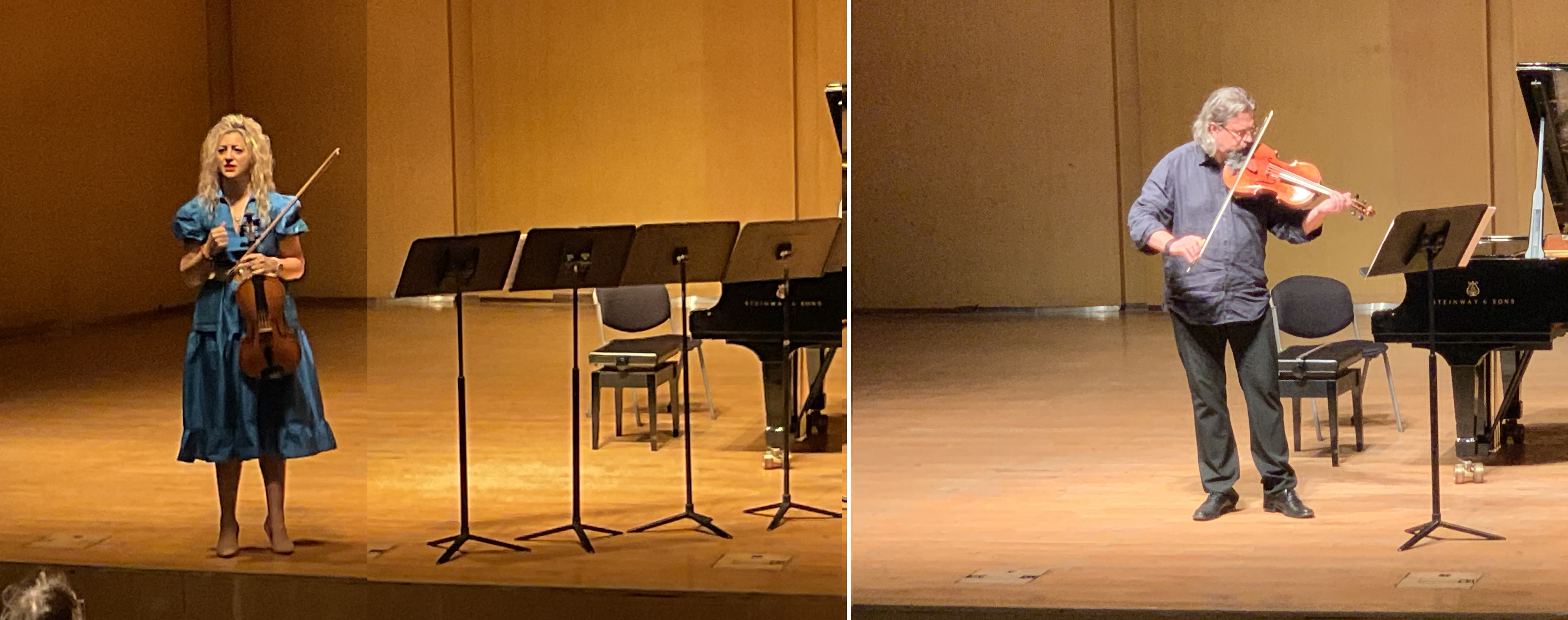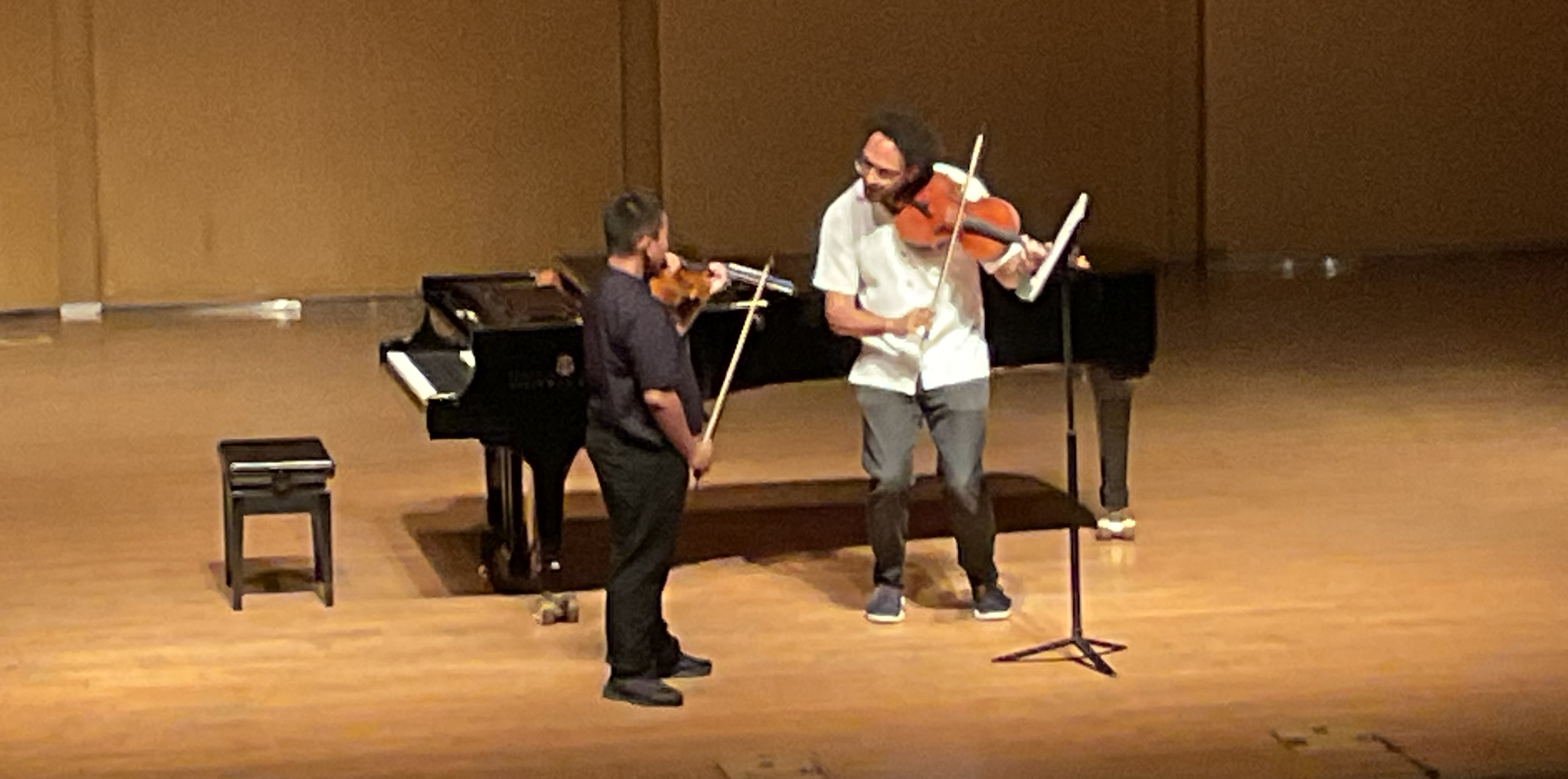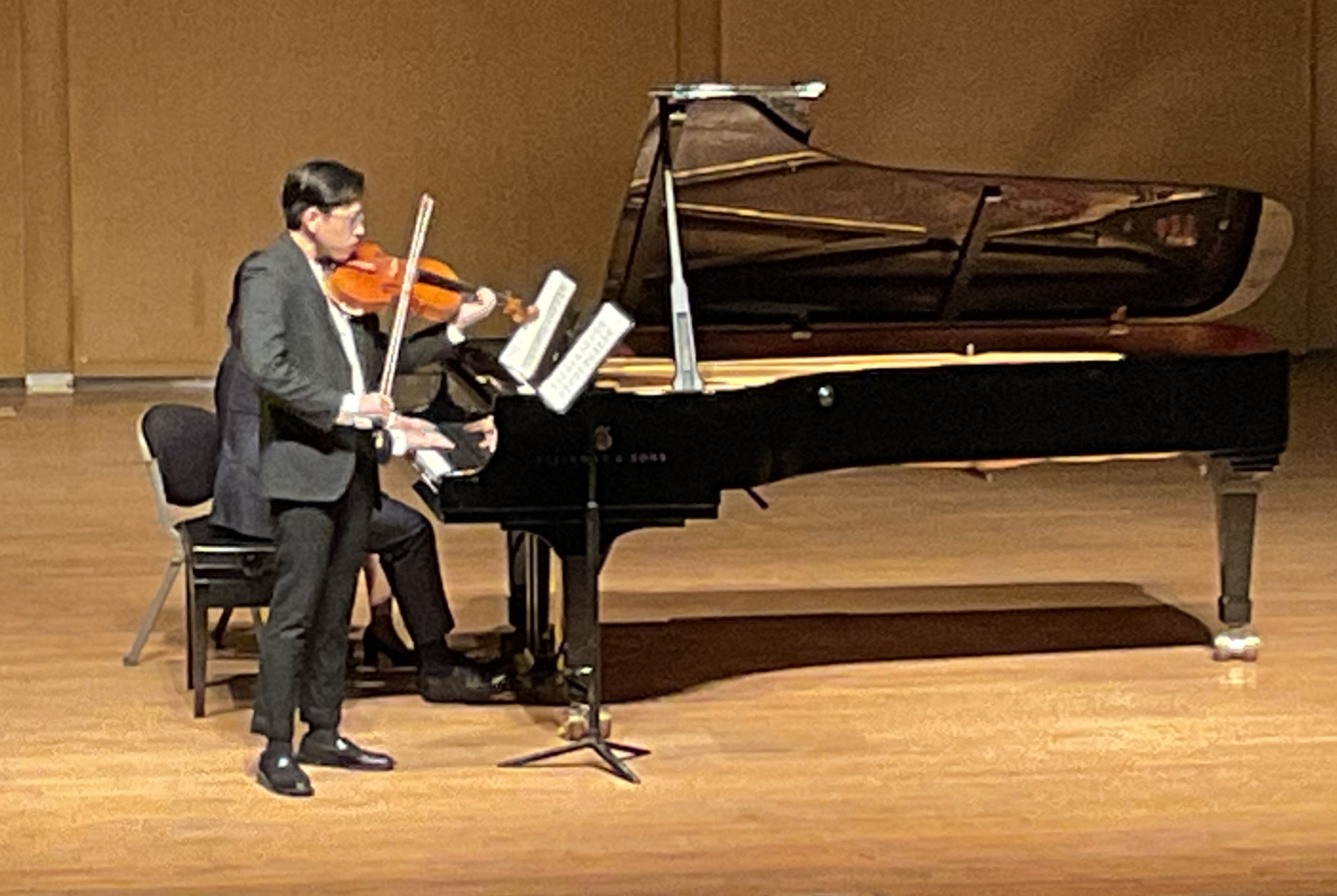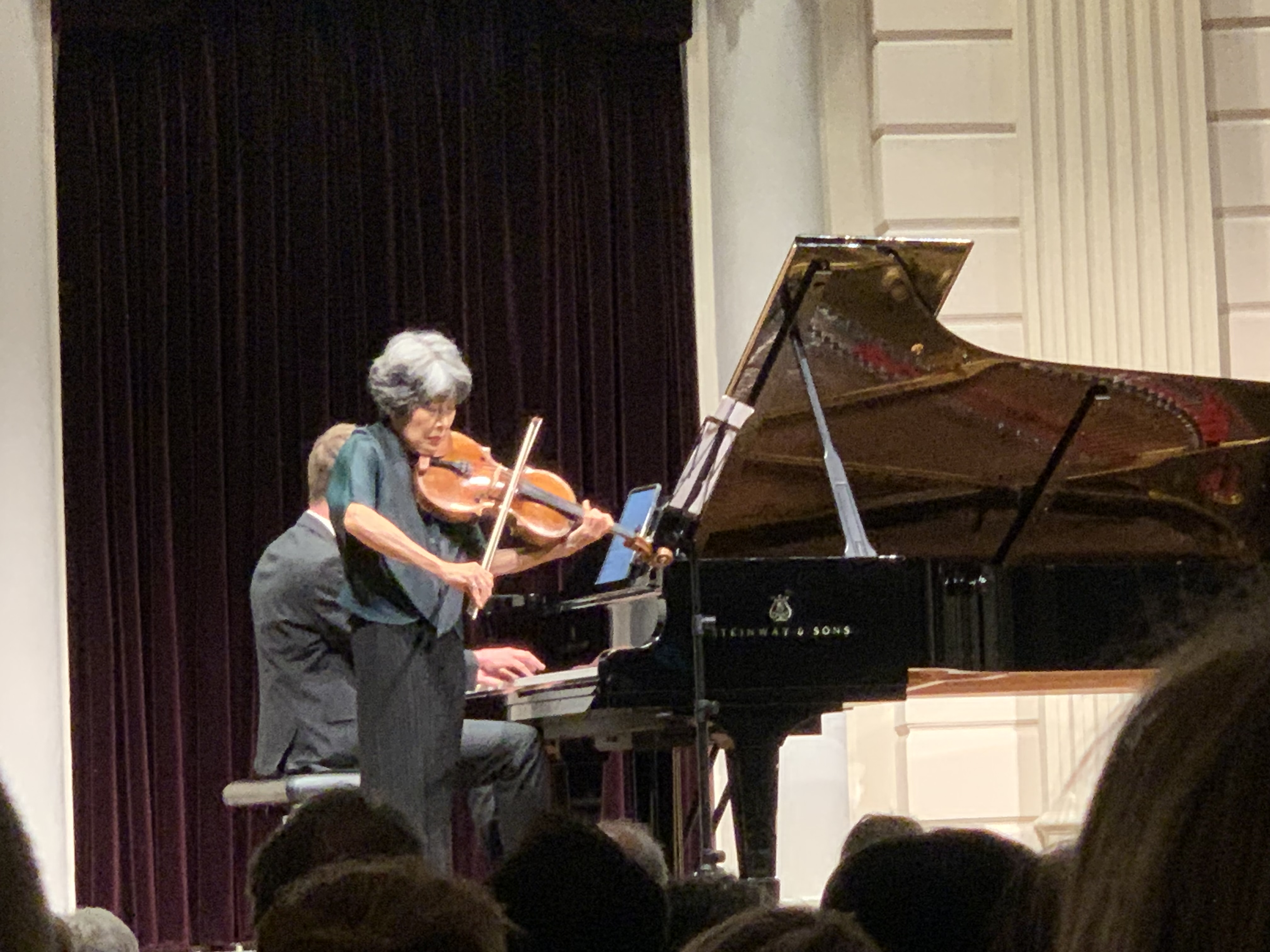
Report from ARD Competition 2023, 2nd Round (Day 1)

The prestigious ARD music competition 2023 (ARD Wettbewerb) for Viola is ongoing these days in Munich (D). Karin Dolman reports exclusively for the DVS her personal impressions day-by-day until the Final on Sunday, Sept. 10th.

<next blog report>
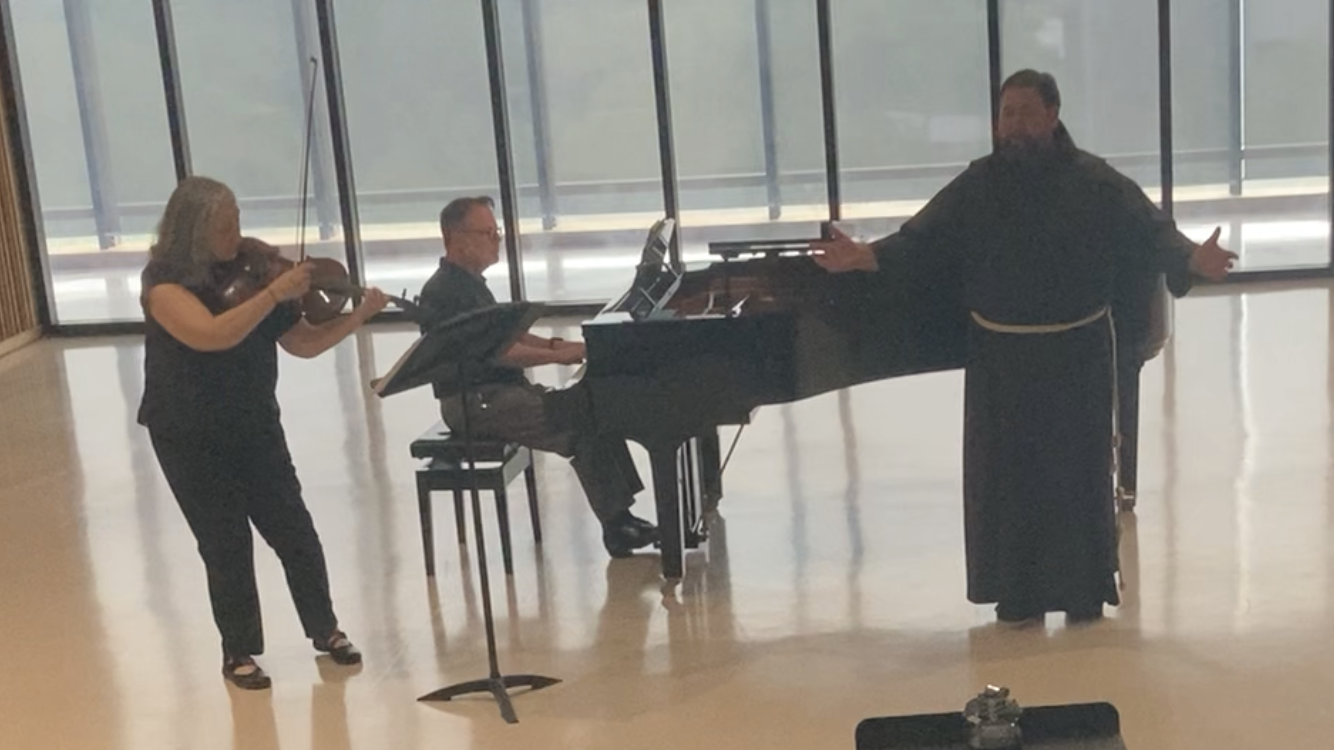
Round 2, Day 1 (Sept 5th, 2023):
Today I will make my first report from the ARD international Viola Competition in Munich. The First round was played last weekend, and from the 46 candidates who were pre-selected by video, 17 went to the quarter finals. The great young violists selected are:

  • Noga Shaham, Israel
  • Wassili Wohlgemuth, Germany
  • Rebecca Benjamin, USA
  • Aleksandr Tatarinov, Russia
  • Njord Kårason Fossnes, Norway
  • Yoonsun Jang, South Korea
  • Brian Isaacs, USA
  • Ionel Ungureanu, Germany
  • Takehiro Konoe, Japan (but born, raised and educated in the Netherlands!)
  • Kyungsik Shin, South Korea
  • Gaeun Song, South Korea
  • Zihan Zhang, China
  • Penguin Zhu, China
  • Carla Usberti, Germany
  • Haesue Lee, South Korea
  • Yixiu Lin, China
  • Emad Zolfaghari, Canada

Before the competition started, I had to leave my belongings at the cloakroom. Therefore, I am unable to make drawings this time. I also have to learn to type very quickly on my phone. Good practice.

I met Jamie from Australia, 18 years old and visiting his first international viola competition. He was allowed to take a notebook, which makes sense. Young musicians should be able to take notes.

Noga Shaham (relative of a famous violinist?) was the first competitor. She started off with the solo piece ‘Ariel’ by UK composer Sally Beamish. Beamish is a composer I am not very familiar with her music, despite her numerous contributions to the viola repertoire. I will definitely buy this piece and listen to more of her compositions! This modest piece was well treated by Noga.

The second piece on her program was the ‘Lacrimae’ by Benjamin Britten. Her performance was very free and with a very beautiful warm tone which suits the work. When the sordino comes off the string, the power of this young violist is on full display. Noga chooses for the variations with flageolets in the ossia part.

This was followed by the whole first sonata by Johannes Brahms. All played with a beautiful bright tone.

Next was Wassili Wohlgemuth, one of the three German competitors. He started with the second sonata by Brahms. What appeals to me is that his colours in the Brahms are so rich. A very nice quick tempo in the first movement which suits him very well. In the first movement he plays the higher octaves, like the clarinet, which makes sense and he handles it very easily. Also the second movement was quick again, the contrast with the subito piano ending works well. Great performance

The Beamish piece is totally different in Wassili’s hands. More funny moments in it, with humor. The ricochet is very clear. He plays the piece by heart which makes the performance special. Wassili plays with a lot of rosin on his bow. When he pulls off a broken hair you see the dust come off..

The Britten ‘Lachrimae’ is more straight and gives one an idea of the sorts of variations. The last variation is so quick that I feared he would lose tempo, but he managed to keep this up. The Dowland quote is played with great purity, thank you Wassili.

After a small break and a meeting with Lars Tomter and Jutta Puchhammer, both in the jury, we continue with Rebecca Benjamin.

She starts off with the second Brahms sonata. She is a bit insecure in the beginning but already in the second phrase she is on track with a beautiful vibrato and singing voice. Rebecca is a delicate player, not very often associated with the USA. I like her approach to Brahms very much. And she is enjoying it!

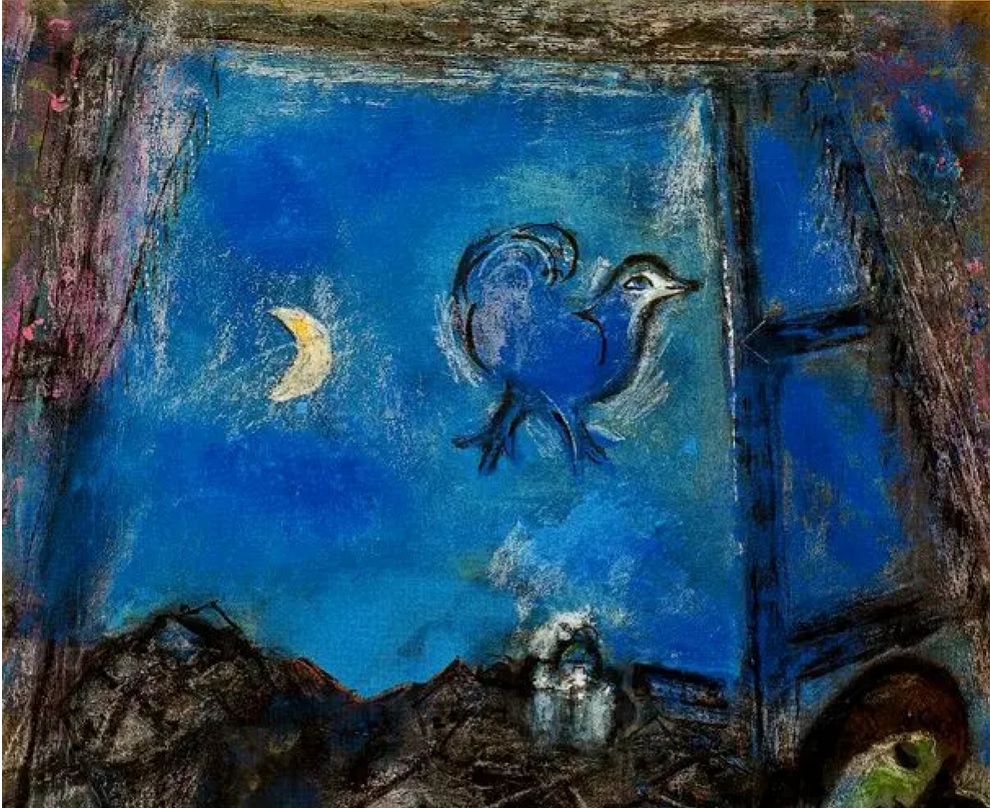
In the next piece by Konstantia Gourzi you can really hear that the composer is Greek. The harmonies, intervals and slides and the bells around the foot give a Mediterranean feeling. The piece is named after a painting by Chagall ’Evening at the window’ and has 6 movements:

A Rooster in the sky
The yellow moon
Smoke from the chimney
The yellow Moon
In your arms
The yellow MOON

The first movement is a rhythmic movement, Greek folk music with bells. “The yellow moon” is short with a hotel mute, which gives a specific sound not often used. The third movement is with pizzicatos and glittering quick notes. “The yellow Moon”, is played with a normal mute. “In your arms” definitely refers to two people and has distinctly Arabic sounds. Clearly a love song and passionate. The last movement “The yellow MOON” this time is played without the mute! Great piece and great performance. Like the Beamish, this is a piece to take with me to the viola classroom.

The last piece on the program is the romantic sonata opus 11 nr 4 by Paul Hindemith. Rebecca gives a wonderful performance!

The fourth candidate Aleksandr Tatarinov also plays the piece by Gourzi, which gives us the opportunity to know this piece better. Aleksandr is a performer and plays with his audience. The “Smoke rising from the chimney” is more jazzy! He dares to really play on the fingerboard. The piece is even more rich in his hands! And he plays the instrument as if he is born with it.

The second piece is the Adagio and Allegro by Schumann. In the adagio he takes beautiful opportunities to use octave layers.

In Britten’s Lachrimae, you see that Aleksandr dares to use the bow differently. Like in the tremolo he turns the hair towards the fingerboard which gives a great sound. His playing is humorous as well in the pizzicato, and he communicates with his pianist. On the other hand, sometimes it is as if he is reading his part. It is like he didn’t expect to be in this round of the competition. The Britten is clearly not completely prepared. But I love his way of treating the viola and music.

After a good lunch with two friends, I am ready for the next four competitors. First is Njord Kårason Fossnes, 2nd prize winner of the Hindemith competition 2022. This very young violist is a student of Kim Kashkashian. She is so capable of giving every student the space to develop their own character. So Njord is not a copy of someone, but just himself.

He starts off with Schumann’s Fantasiestücke. The viola looks like a toy instrument in his giant hands. He is so well prepared. The sheet music is only pro forma. And the way he plays shows he is used to playing in competitions and concerts. Maybe these Fantasy pieces could also be played in the lower registers instead of so high on the instrument. Or could the piano score be altered?

The piece by the French composer Betsie Jolas, “Episode no 6” (1984) is much more abstract than many composers write today. It’s like a half awake dream, where your thoughts go from one absurd moment to the other, where you wake up and still don’t know what you dreamed. It’s music which doesn’t get into your memory. I played the piece myself once and couldn’t remember any of it. But Njord knows the piece very well and plays it by heart, making a story out of it.

The last piece is the Hindemith Sonata op. 25 no. 4, which is a very pushy sonata. Even in the lyric solos in the viola, the piano never stops pushing and pounding on the beat. You don’t get any chance to breathe. But the second movement gives some air to the player and public. I think this movement is one of the most touching movements in his oeuvre. With nearly no notes and use of the sordino. You only have to play what is written and no more. In the last movement Hindemith runs again. With some funny moments but with a pushy piano part. The passage on the C string is one of my favourite passages. This giant Njord is a sublime viola player who deserved the bravos received from the audience.

The second candidate of the afternoon is Yoonsun Jang from South Korea. She starts with Gourzi. Barefoot on stage, which makes sense with the first piece. Let’s see how this rooster sings. She has very clear left hand pizzicato’s. And also her timing of the bells is very clear, as if she is playing with a second player. I like again the use of the hotel mute! In solo viola pieces it is so good to use! The third movement is played more quietly, and gives the impression of two persons being on stage. Well done. I like the tempo, it feels timeless. Her “Smoke from the chimney” is more like the white smoke of a newly chosen pope. The second “yellow moon” sounds very beautiful, not messy but very bright. I like this performance of Gourzi very much.

To play Schubert’s Arpeggione in a competition is very dangerous. Every jury member will have a very strong opinion on the piece. It is a big task to listen with an open mind to the player. Same goes for an audience member. What are the rules to play such a piece on stage: first of all, you have to doubt every arrangement and make one your own. Second, you have to tell a story. And third, you have to communicate with the pianist. Very often the pianists play the piece as an automatic machine, so you have to wake them up and make it joyful for both players and share that with your audience. Only if you are capable of that, go ahead and play it in a competition.

The Hindemith Sonata 1939 is clearly written in a time when everyone was confused. The culture world couldn’t believe the hate that was spreading at the time. I think this disbelief is what this sonata is all about. Desperate, hopeful, joyful, sad, crying, laughter, every second of this sonata changes. It is a sonata that should be played more often and helps us be aware of the political choices we make.

Back to the competition. Yoonsun brings out this message well. Portraying all of the characters in the piece.

17.40 we go on with the last two competitors. First Brian Isaacs from New York, now studying with Tabea Zimmermann.

Brian starts off with a transcription of Grieg’s 3rd violin sonata, which suits the viola very well. Grieg needed much more time writing this sonata than for the first two he wrote. The heroic opening of the first movement is in great contrast to the lyric second theme. Brian is a very virtuoso violist, plays incredibly in tune and has a great vibrato. And he lets us believe we are in the mountains looking over the fjords in Norway.

Clearly Grieg was a pianist. The second movement starts with a heavenly piano solo where you only think the viola will disturb it, but Brian joins in heavenly manner. The second theme is like a dance of fairies. The third movement looked like a whole sonata on its own, and so passionately played. Wow, how beautifully this young man plays!

Grażyna Bacewicz was one of the first recognized female composers from Poland with an international career. Born in 1909, trained as a violinist, she composed mainly for her beloved violin. We hear her fourth capriccio for violin solo but now on the viola, composed one year before she died, only 60 years old.

The capriccio (I suppose a fifth lower) is really in a Polish style. They were much more into avant-garde techniques than the rest of Europe at the time. The capriccio seems to be in more parts. The second part with a lot of flageolets and very demanding. How well in tune are all of the octaves. The third part is with a lot of double stops and arpeggios. The fourth part is more lyrical, ending with the most virtuosic passages imagined.

Brian wraps up with the sonata opus 25 no. 4 by Paul Hindemith. As well so perfect and with great taste! Like what I said, just play the second movement and didn’t do too much. The sonata was written earlier in 1922 after the Great War, when Hindemith decided to fully concentrate on the viola. Lucky we are that he did so. I nearly cry listening to the second movement. The chords of the last movement are really recognizable as tonal chords. With a lot of players you hear only a kind of percussion here. The passage on the c-string is played more at the frog, which sounds really crispy. After the long B, the tempo stays very slow which gives us a great ending! Bravo. He only lost about 20 bow hairs!

Brian should be careful that he keeps a few hairs on his bow for the final on Sunday. Because I think he is definitely a candidate for that!

The last candidate is Ionel Ungureanu. He starts off with the Beamish piece. Ungureanu is a great musician, and a composer himself. He has a great clear viola. But of course he still has to do it. All the notes, flageolets, ricochet, come out so easily.

Next piece on the program are the Fantasiestücke by Schumann. In this arrangement I miss a bit of the lower register of the viola. Ionel was also a competitor at the Hindemith competition last year, and I was already in favour of him then. He has grown even more, with this clear voice, and incredibly good intonation, playing so nice and clean and still with passion and grabbing you by the throat.

Once more Hindemith’s  “1939” Sonata. Ionel knows the piece very well, and brings all the characters out. All the arpeggios so perfect. I think in Ionel will be another finalist!

So many gifted viola players walking around… is this the case with the violin as well I wonder? I am looking forward to tomorrow’s session!

Note: The competition is Livestreamed on the ARD website, and also on YouTube, where you can go back and listen (if you missed it) and make up your own mind of the performances!

<next blog report>
IVC Salaya Blog – Day 3

The 48th International Viola Congress took place in Salaya, Thailand from June 6th – 10th, 2023. With a bit longer delay than usual, this daily blog report is delivered to you by Kristofer Skaug.

Day 3: Thursday, June 8th, 2023
<previous day> <next day>
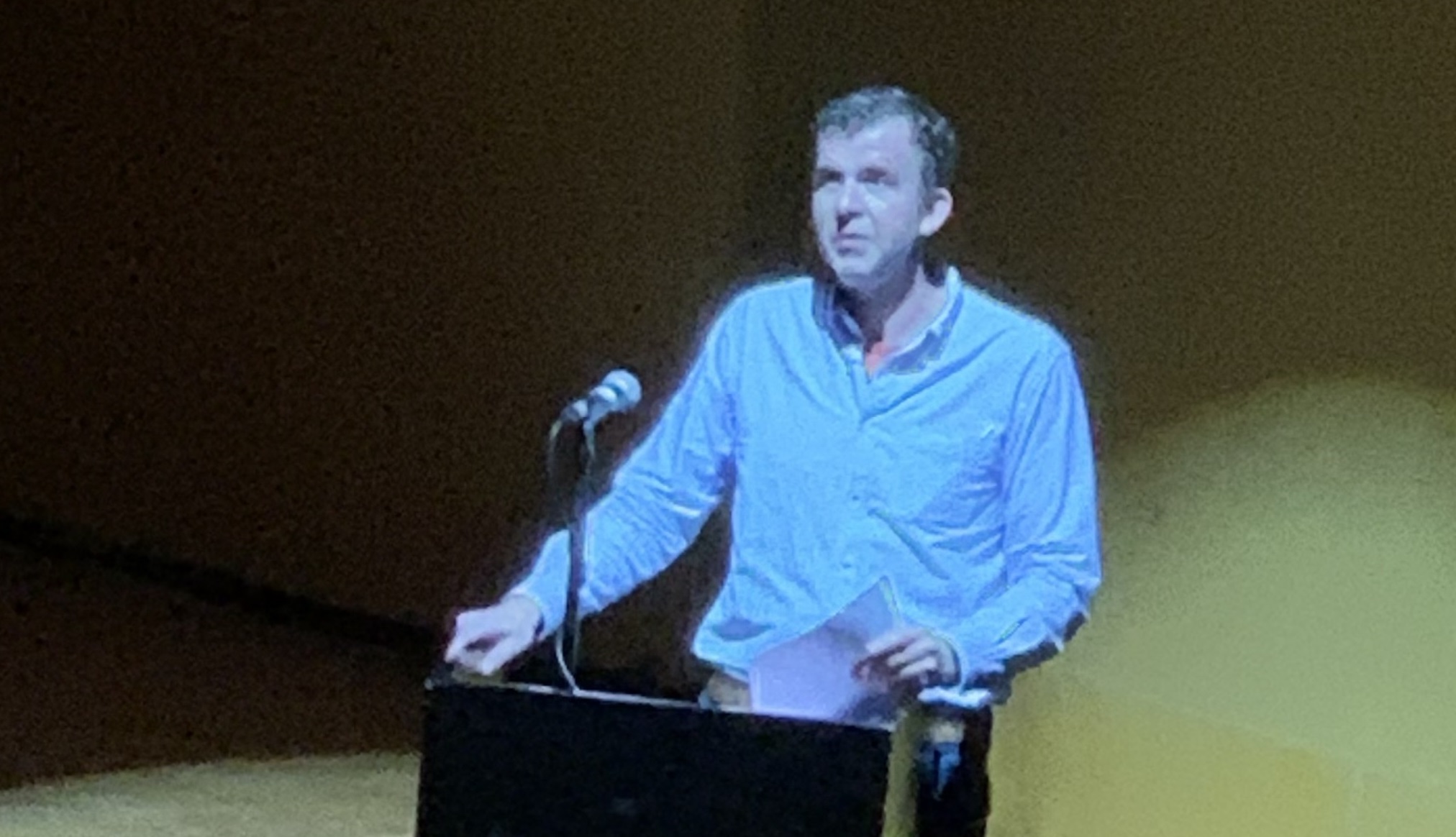
The third day of the IVC in Salaya started off with a lecture doubleheader. The first lecture by Paul Groh discussed the Telemann Fantasias and their adaptation to the viola. Next up was Hillary Herndon and her students from the University of Tennessee, presenting a first printed anthology of works from the ground-breaking AVS Under-represented Composers Database. The album is called “Mosaic” and draws from the works of black and latino composers. A number of these pieces were performed.
Unfortunately I missed both of these morning lectures, which my better (rise-and-shiney) half told me were indeed very interesting. She even took a picture for me:

The first recital I did attend today was that of Jorge Alves, with a programme titled “Beautiful songs by 20th century Portuguese Composers“, The works were by Joly Braga Santos, Armando José Fernandes and a sonatine by Luiz Costa. Especially this sonatine spoke to me, indeed beautiful (as advertised), without any overly modernistic pretentions. I admire Jorge for his persistent drive to bring us this music from his homeland, and my guess is that we stlll have much to look forward to from him.

Now the stage was set for special guest artist Krit Supabpanich in the MACM auditorium. Supabpanich is a “home grown” former student of the Mahidol Univ. College of Music and currently is a member of the Thailand Philharmonic. The program consisted predominantly of new (premiere) music by Thai composers, several of which were present at the concert. We’re all ears!

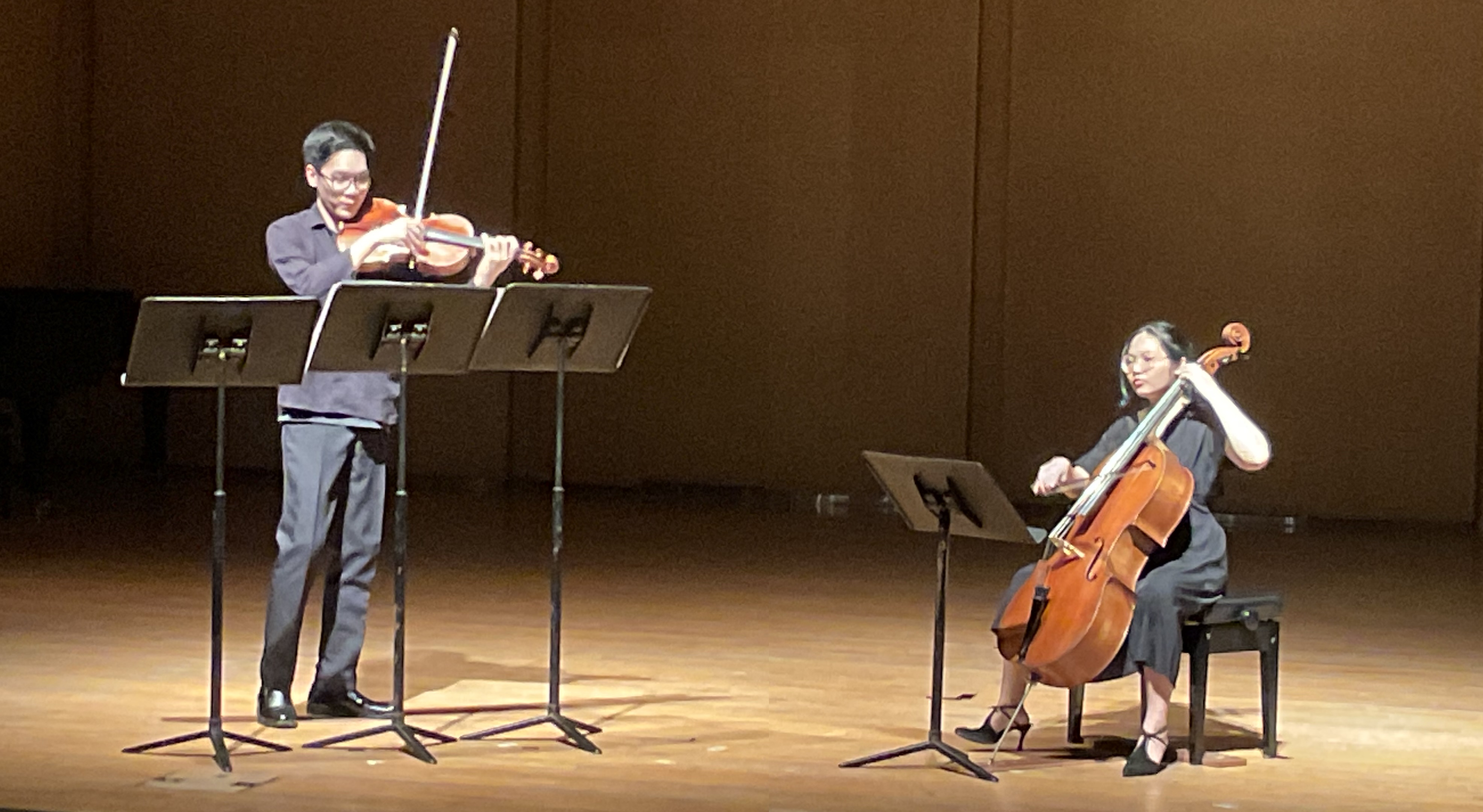
He starts off with a solo piece called “Student’s Parade” (by Cherng-Woei Tai), no doubt meant as a nod to his past at this school. It has a certain idiomatic and agreeable motion and harmony, which however soon was to be outshone by the ensuing viola/cello duet called “Perpetual Transience” (composed by Chanathip Chaisirinon) – which had a captivating effect on me.

After this came a bit of a letdown, Study nr.2 for solo viola (composed by Rattana Suparatanachatpan) leaned heavily on Extended Techniques but seemed more a showcase of how to produce weird sounds with your viola, rather than a truly artistic expression. The Lazzi for solo viola (by Jirapat Leetrakulnumchai) maneuvred us back to the conceptual world of the initial Parade piece, which I feel more at ease with.

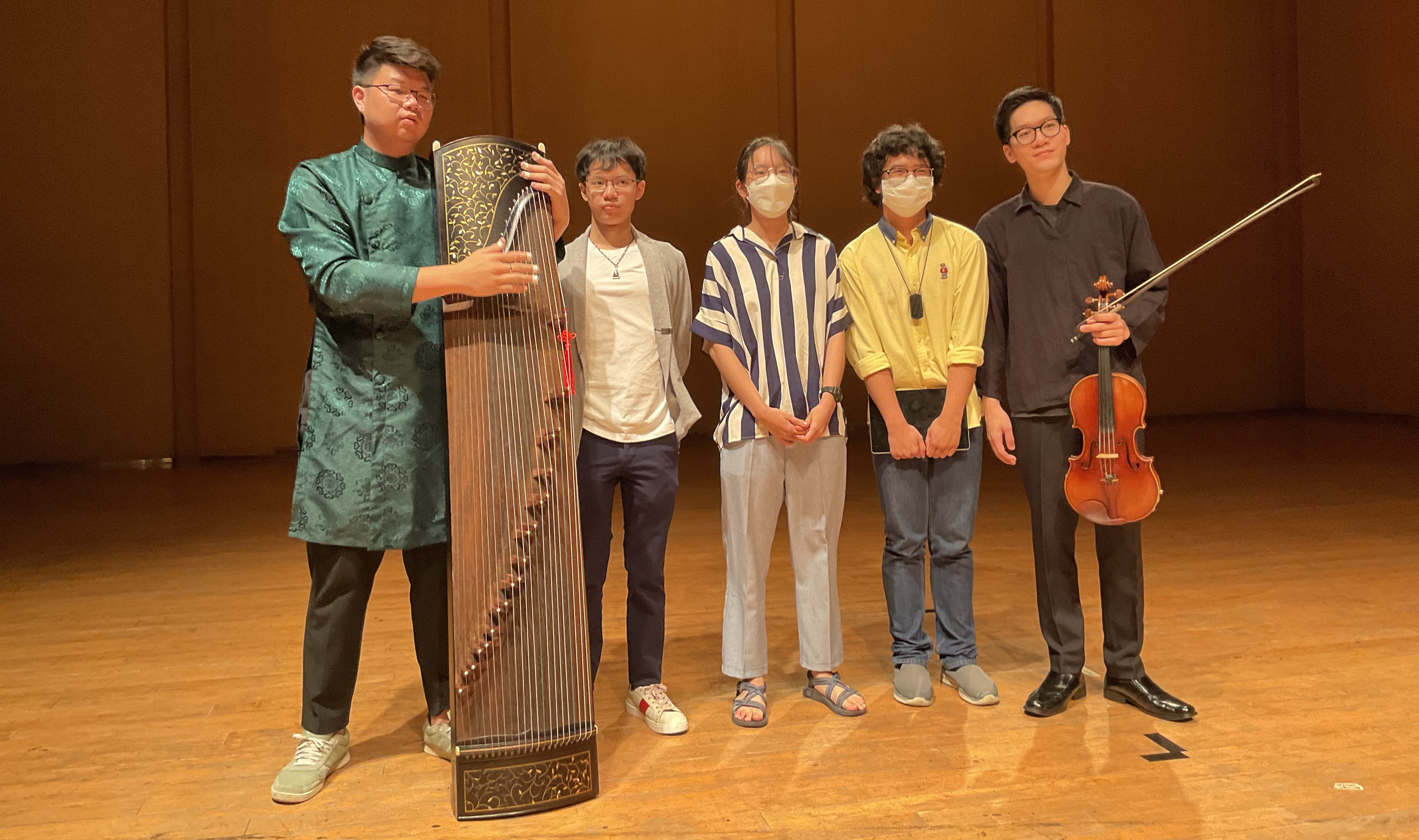
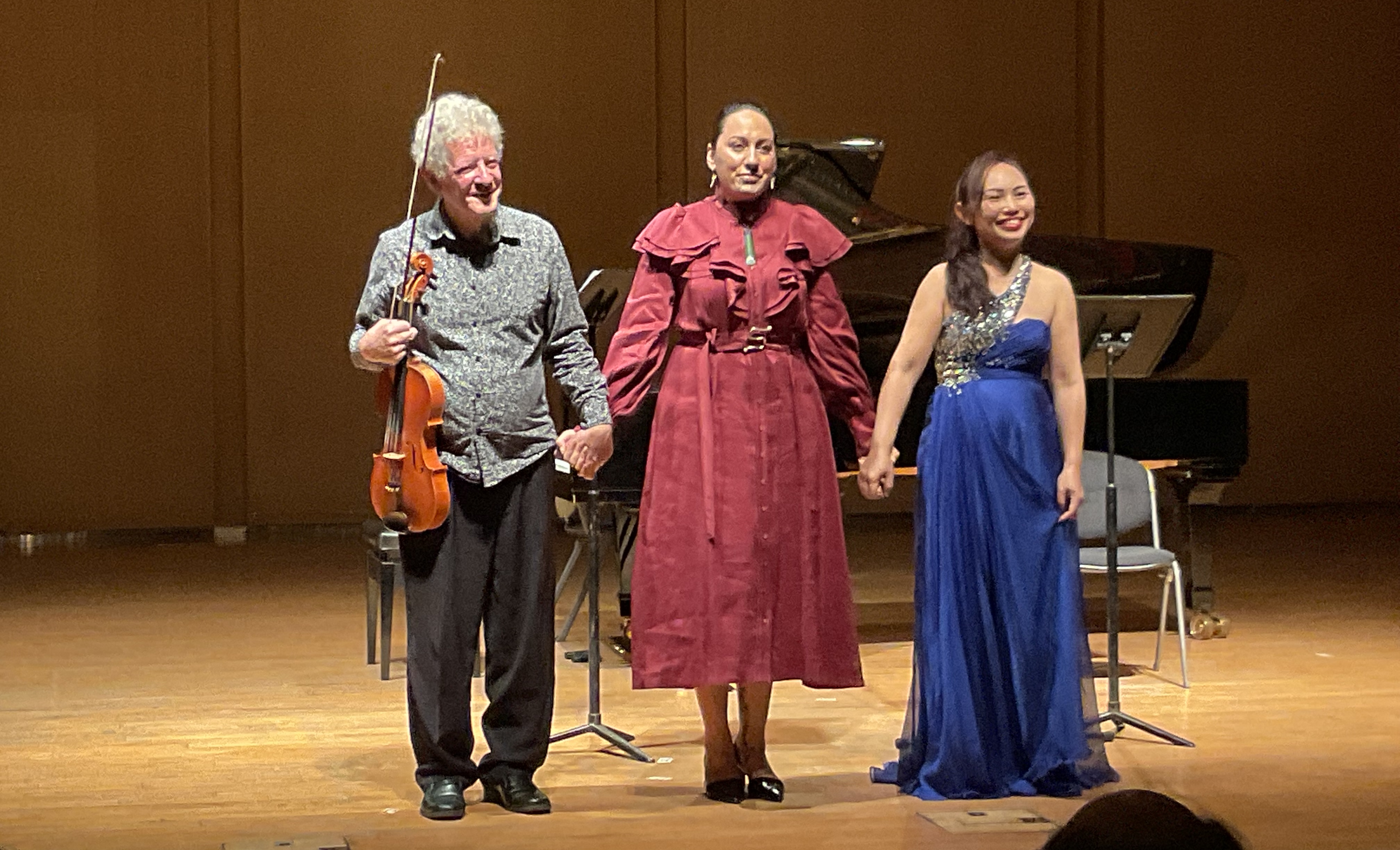
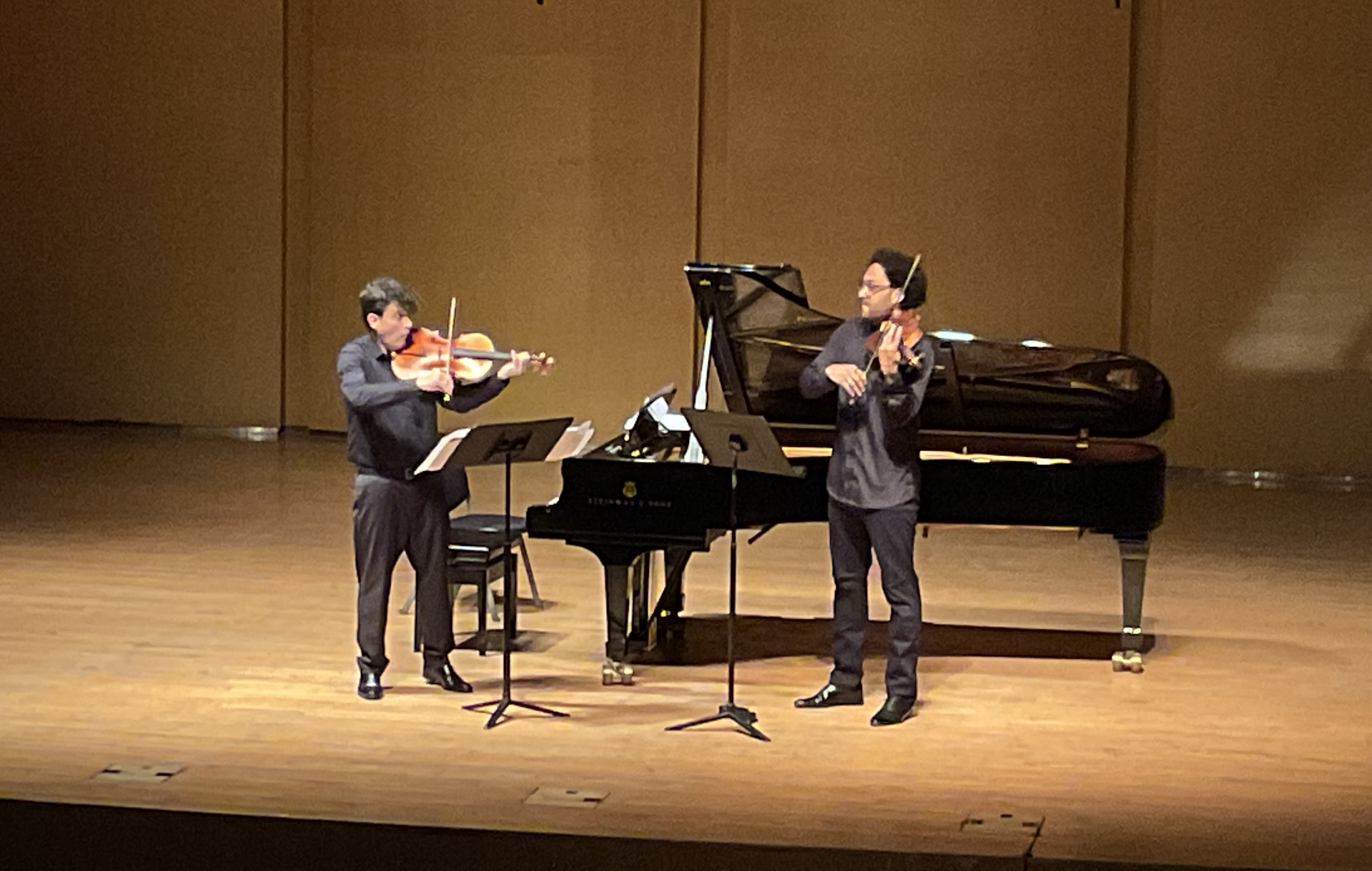
Last but certainly not least, Tanaphan Polrob had been commissioned to write a Sonata for viola and Guzheng (a kind of Chinese cither that is used also in Thai traditional music). The sonata carries the title “Perpetuum mobile“, however I couldn’t quite match this title with the music – but the Guzheng player assured me that the requisite looping patterns were present, I guess I need some training to digest this quite complex and interesting new soundscape. What in particular appealed to me was the direct musicianship in the interplay and sound confluence of the viola and this guzheng. All in all, Supabpanich and his team of composers and co-performers (pictured below) deserve many kudos for launching this gutsy program of Thai contemporary music onto the world stage.

Although the next recital artist was already waiting in the wings, at this point I had to leave the MACM auditorium for a number of reasons:
1) realizing it was 14.00h and the College canteen closes around this time;
2) avoiding “cold fusing” my lower back to the auditorium seat
3) knowing there was no other possible break in sight until after the evening concert

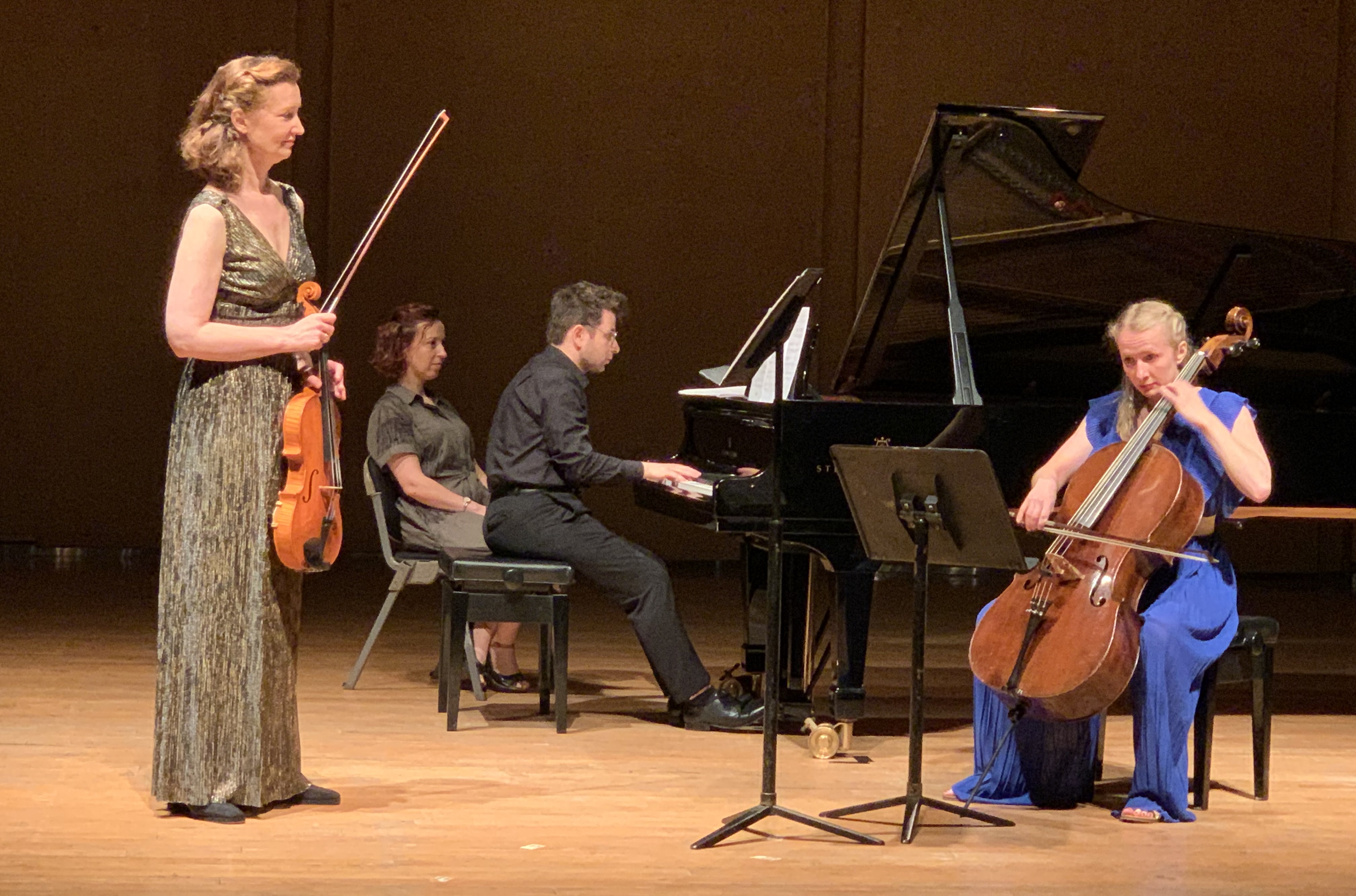
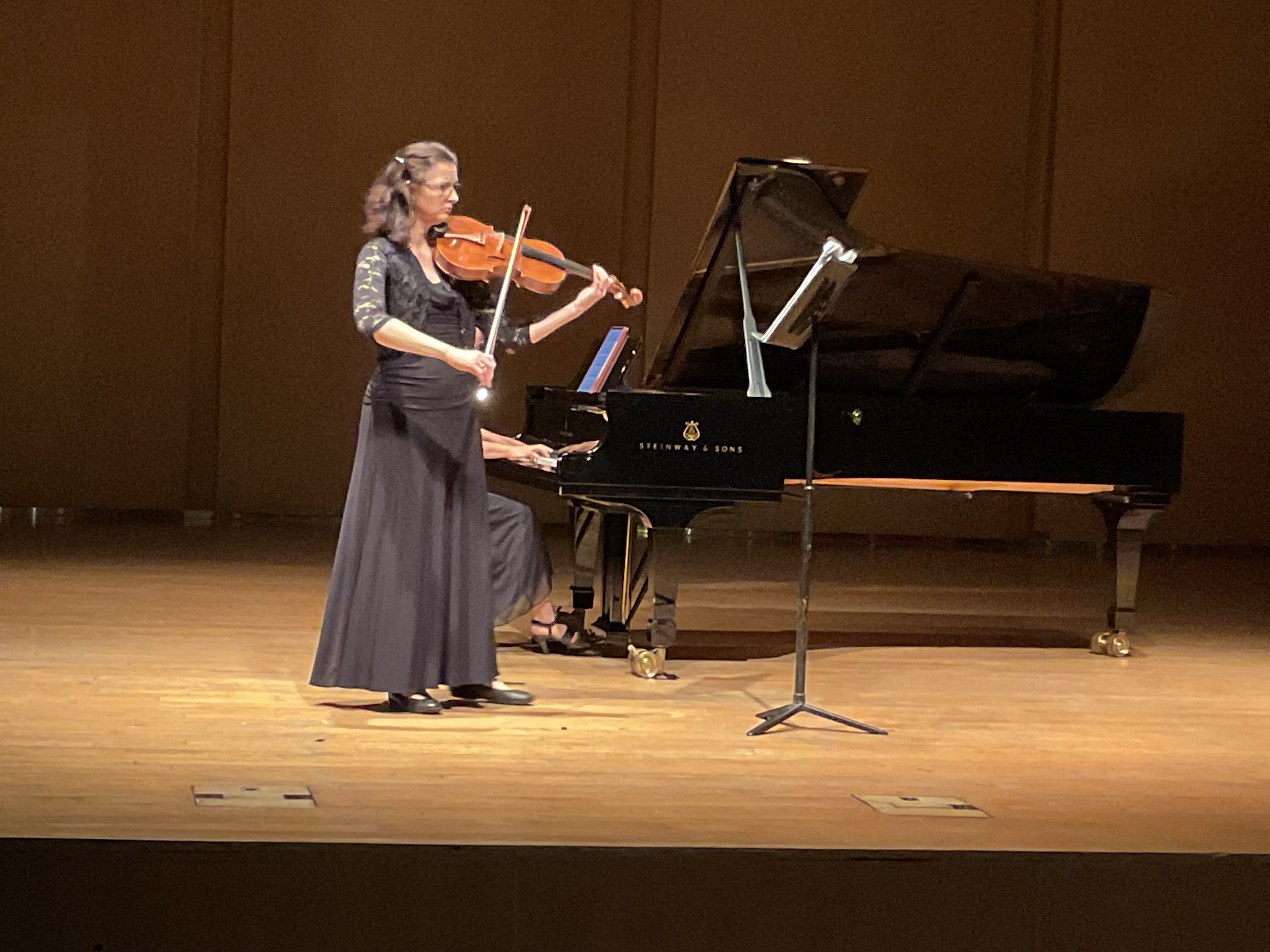
When I returned from lunch, it was to hear Vinciane Béranger and her teammates Tiphaine Lucas (cello) and Joachim Besse (piano) in a charming programme inspired by Rebecca Clarke’s “Irish Melody” (new arr. for viola/cello). We might have known that the tune “Danny boy” (with an appreciative wave to our Congress Host) would turn up here, sooner or later, and it did :-). However, the actual programme was modified significantly compared to the printed one (where the pieces with piano were not even mentioned), I had planned to ask what was actually played (it was certainly not Bartók and Lutoslawski) – anyhow it was very enjoyable.

Time for this year’s congress contribution of the young Norwegian Viola Society, brought to us by mr. Povilas Syrrist-Gelgota. This charismatic Lithuanian-born violist has abandoned the financial security of his Oslo Philharmonic seat to enjoy the freedom of off-road viola playing. And he knows how to use this freedom, mixing folk songs, his own improvisations and compositions, and his quite steady vocal chords to create a very intriguing set.

A memorable part was the composition “Song of the Mountain People” by Vidar Kristensen, while Norwegian music, it is inspired by Taiwanese folk songs and brought to you by a Lithuanian violist at this congress in Thailand. “Music without borders” (this year’s congress theme), indeed! More singing in “Ingen vinner frem” and two own compositions by Povilas called “Dream” and “Best Wishes”. The congress audience was very appreciative of this performance.

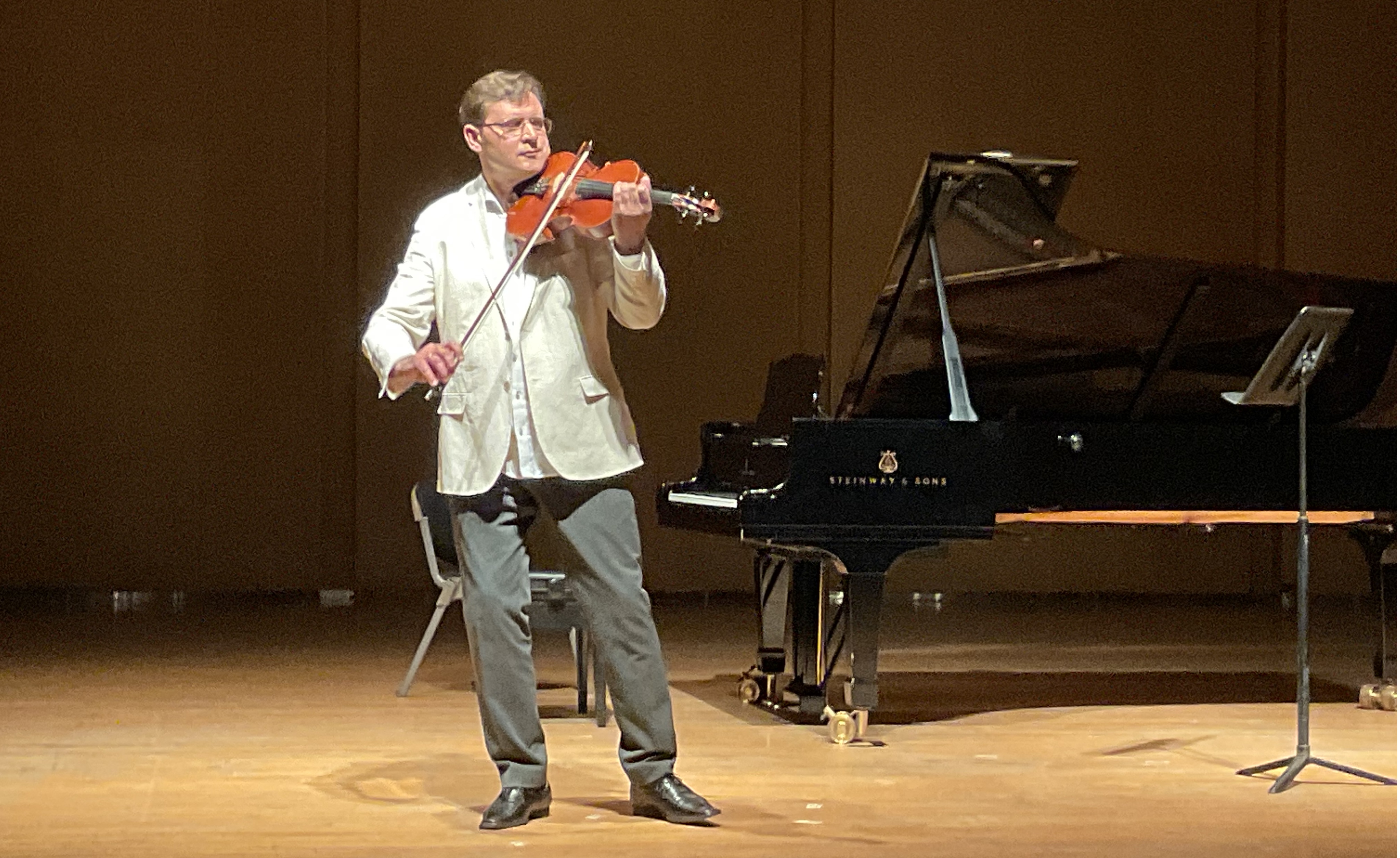
Enter Jerzy Kosmala. This respected US-based Polish violist and teacher has passed the age where you just don’t ask anymore, but is still on his feet and performing. We vividly recall his performing Wranitzky’s double concerto with his own grandson at the congress in Poznan (2019). This time he brought us a hearty menu consisting of Bruch’s Kol Nidrei, Bloch’s Suite Hebraïque and the entire César Franck Sonata.

Did I mention it was a rather busy congress program this afternoon/evening? Since 11am this morning there have been 7 straight recitals so far, it is now 5 pm, and we still have 4 performances to go.

The next one was truly a whopper: All of Hindemith’s (four) solo sonatas in one go, performed by the American violist Amadi Azikiwe.  He had chosen the following playing order (by opus number): 25/1, 31/4, “1937” and 11/5.

The sonatas were all well played, but are not particularly suited for such a marathon (or should we say “Hindemithon”), in my view. The well known opening sonata 25/1 sounded as if one was saving energy for all the other sonatas to come. But each of these pieces deserve undivided and unreserved polishing devotion in order for the Hindemith spirit to pop out of the lamp. Also in the technically gruelling opening movement of 31/4, Saint Hindemith’s bald head did not emerge from behind the clouds. Peace and balance finally came in the 2nd movement.

But Azikiwe was only just getting warmed up, and halfway through the programme, he seemed to have found the groove. His convincing rendition of the “1937” sonata, infamous for its technical demands, drew spontaneous cheers from the audience. Really well done! (afterward, at the dinner table in Ristorante Rustico, he told me this is also his favourite of the four sonatas … we could tell.).

Now for the final 11/5 sonata however, I had a problem, which was all on my side. I love Hindemith just as much as the next violist (maybe even more!), but my ears and brain need a break. My grandpa used to say, “I can never get too much beer, but my arms grow tired”. So the bottom line is still that I prefer Hindemith’s solo sonatas in moderate digestible amounts.

A big tip of the hat to Azikiwe nonetheless for braving this monster challenge. And certainly he had a most appreciative and knowledgeable Viola audience, unlike any you’d find in the average recital hall.

Some lighter material awaited us in the programme “Musical Hors d’Oeuvres for viola and violin from around the world“, performed by IVS President Jutta Puchhammer-Sédillot and Viola Congress regular “house violinist” Annette-Barbara Vogel. Departing from Jutta’s native Austria (Vienna), a Robert Fuchs op. 60 duo gave the upbeat to a “world tour” of duos taking us through France (Charles Koechlin), Russia (Arthur Lourié and Reinhold Glière – composers for which today surely Belarus and Ukraine, respectively, would claim credit), Canada (both Jutta’s and Annette-Barbara’s current residence) and finally England (Gordon Jacob).

A few notes – the Glière duos are of course originally for violin and cello. It was not clear whether Jutta was reading the bass clef or whether someone had touched up her part with a viola clef. Would be nice to know! Secondly, the duo “Three for Pi” by Canadian composer Paul Frehner was in fact commissioned for this congress. If there was a voiced effort to explain this title, I must have missed it (I admit I was a bit tired at this point), I am speculating now on mathematical / symbolic meanings or possible word plays. I’ll add the explanation here if/when I find it!

The next recital by Juliet White-Smith (titled “Origins: Pre-21st Century Viola Works from the African Diaspora“) brought a couple of surprises. There were two pleasant shorter violin/piano transcriptions, Night and Elfentanz by Florence Price (1887-1953). But the core elements of White-Smith’s recital were two original viola works by the Afro-American composer Ulysses Kay (1917-1995) :A single-movement Sonatina, followed by a four-part Sonata, the latter written under audible mentorship of Paul Hindemith himself. Thank you to mrs. White-Smith for her research that has resurfaced this music, which certainly should be able to hold its own in our repertoire.

This evening’s special “Featured Artist” concert was given by the TAIORO ensemble from New Zealand, featuring viola great and former IVC Congress Host Donald Maurice, together with “spoken work poet” Sharn Maree and pianist Sherry Grant.  We heard poems interleaved and sometimes supported by viola/piano works by Alfred Hill, Douglas Lilburn and Sharn Maree herself. The poetry springs from the indigenous Māori culture and reflects on sometimes painful confrontations with social inequality and change.

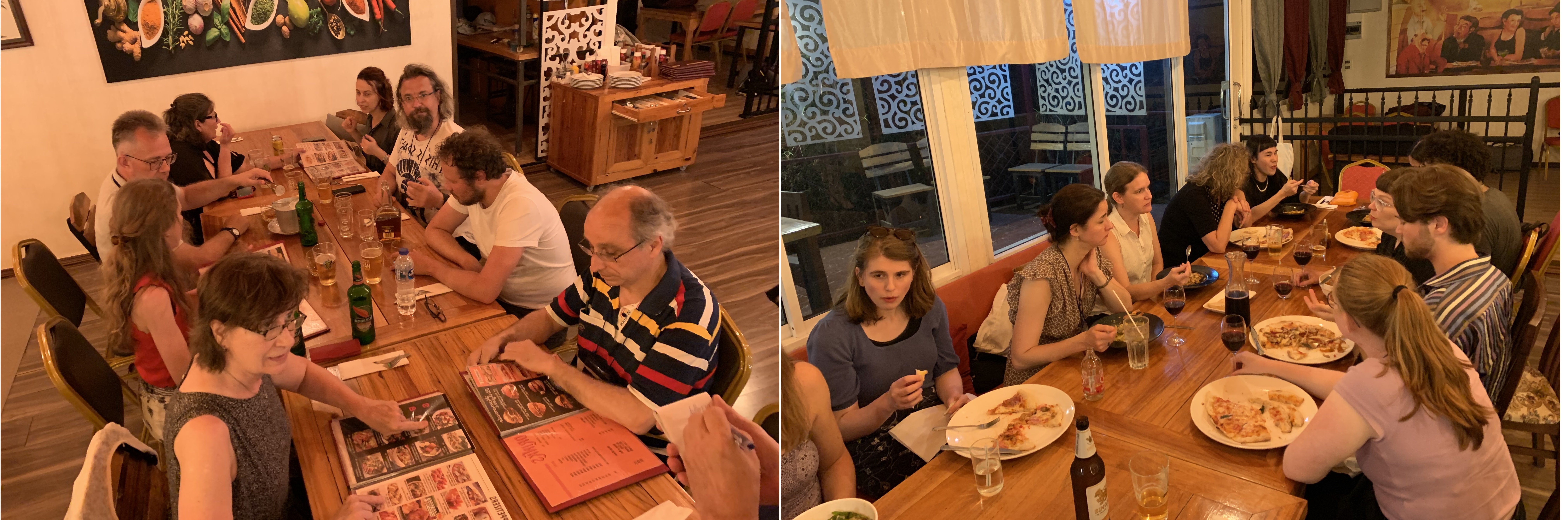
This evening’s “afterparty” in Ristorante Rustico drew a lot of hungry and thirsty people after a very intensive congress day! At some point, “someone” from the Polish delegation started pouring drinks that definitely were not apple juice. A Good Time ™ was had by all.

On to Day 4!

Kristofer

<previous day> <next day>


IVC Salaya Blog – Day 2

The 48th International Viola Congress took place in Salaya, Thailand from June 6th – 10th, 2023. With a bit longer delay than usual, daily blog reports are delivered to you by Karin Dolman [kd] and Kristofer Skaug  [ks].

Day 2: Wednesday, June 7th, 2023
<previous day> <next day>

[kd] At 9.30 about 25 violists gathered in the A building for my Workshop Create your own Cadenza. In October last year we did this workshop at Codarts University of the Arts Rotterdam, so I could reuse the materials, such as the custom designed sketchbook. In half an hour I outlined some historical points of the cadenza, and together we brainstormed some possible features and purposes of a cadenza. Next we split not four smaller groups and started actually working on cadenzas. It was very nice to see that the groups worked on totally different options to start a cadenza. We will see how we will proceed in the next session (Saturday morning!).

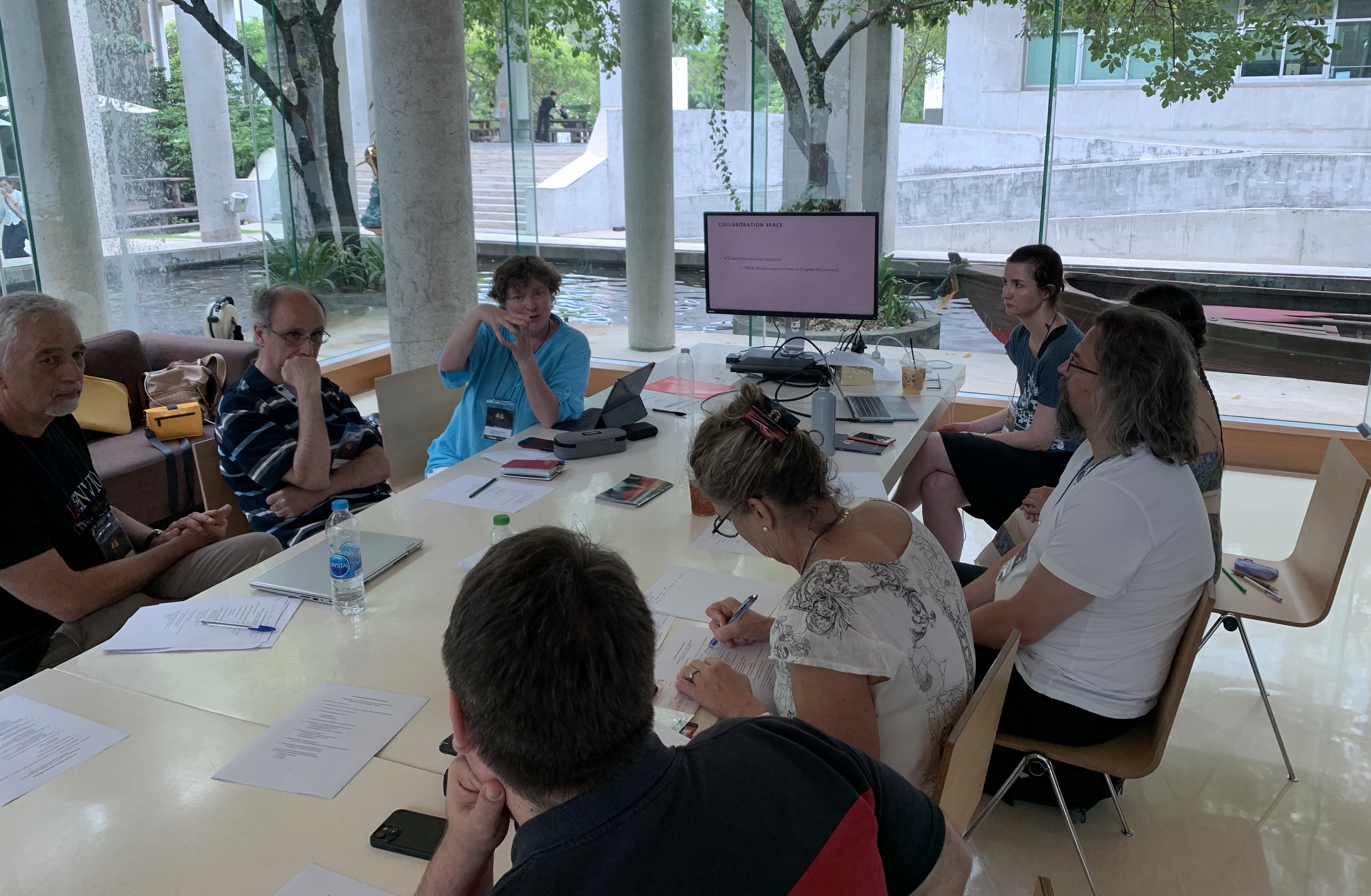
[ks] At noon we both attended the IVS Annual Delegates’ meeting, with the IVS board and representatives of the boards of the national societies (member sections). The IVS board had prepared well, with working meetings and “teambuilding” activities for several days ahead of the Congress. A PowerPoint presentation was provided to keep structure in the meeting. The meeting covers broadly speaking two main topics: Matters concerning the IVS board itself, activities, financial reports and future plans; and secondly the achievements, plans and concerns of the member sections.

The IVS would like to improve the scope and functionality of their website so that it can fulfil a more central hub / portal role in the online Viola world. Another area where the IVS needs help is in the production of the well known webcasts. it was generally agreed that activities like this need to be supported by working groups manned by volunteers from member sections.

From the member section side it is seen as positive that, for the first time this year, the Delegates’ meeting included an official delegate from France, China, and Norway. On the other hand, many sections have problems recruiting and retaining members, and the situation is even worse when it comes to volunteering for tasks. It is pointed out that an IVS forum / workgroup might be helpful for sections to exchange more detailed experiences with recruiting on a semi-annual basis.

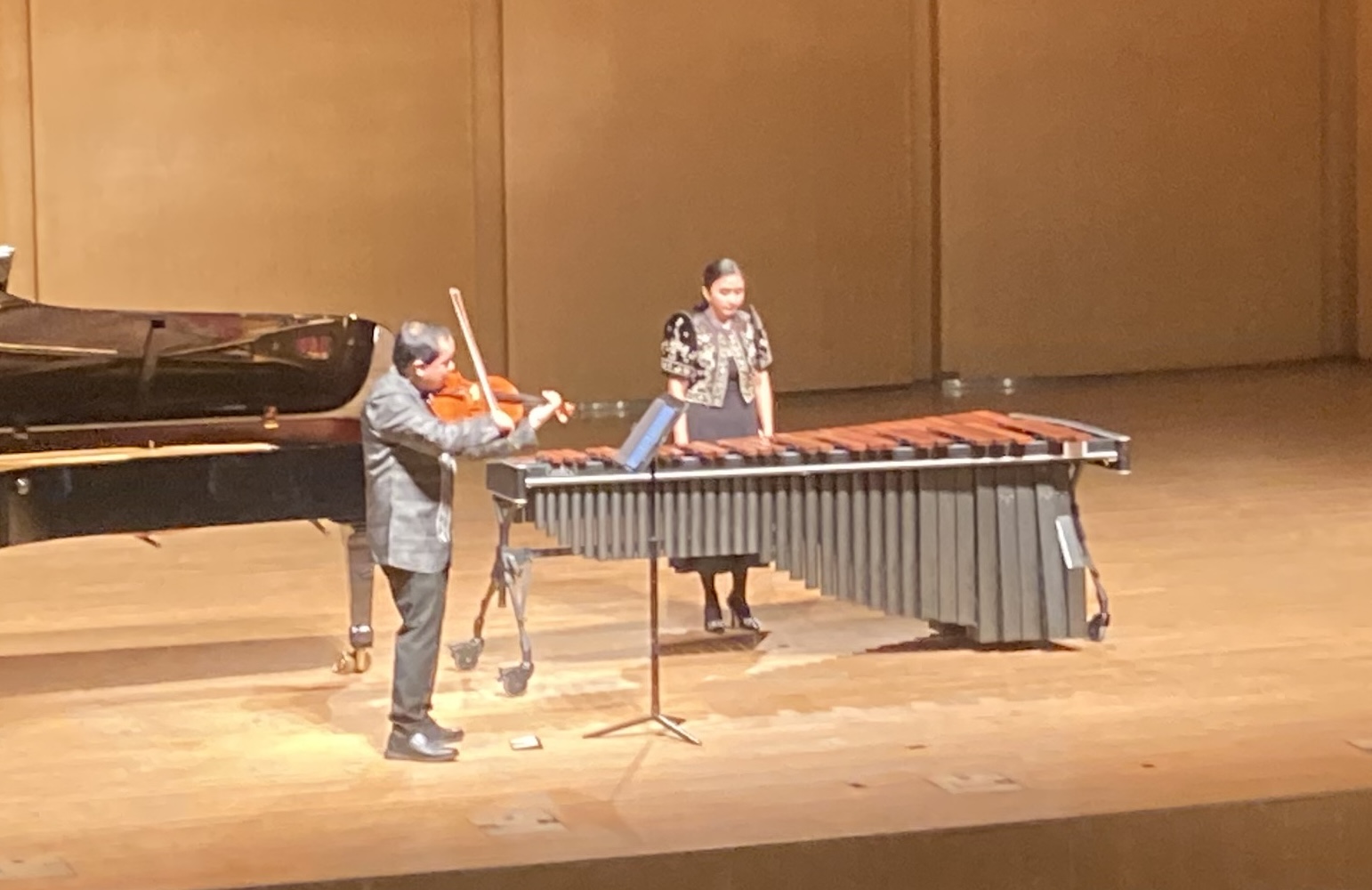
Of course, this interesting but long meeting session meant having to miss a lot of stage action at the congress. Based on reliable and very enthusiastic second-hand accounts, I will nevertheless mention the De La Cruz Viola and marimba duo, consisting of a married couple from the Philippines. Both their music and performance was received very well.

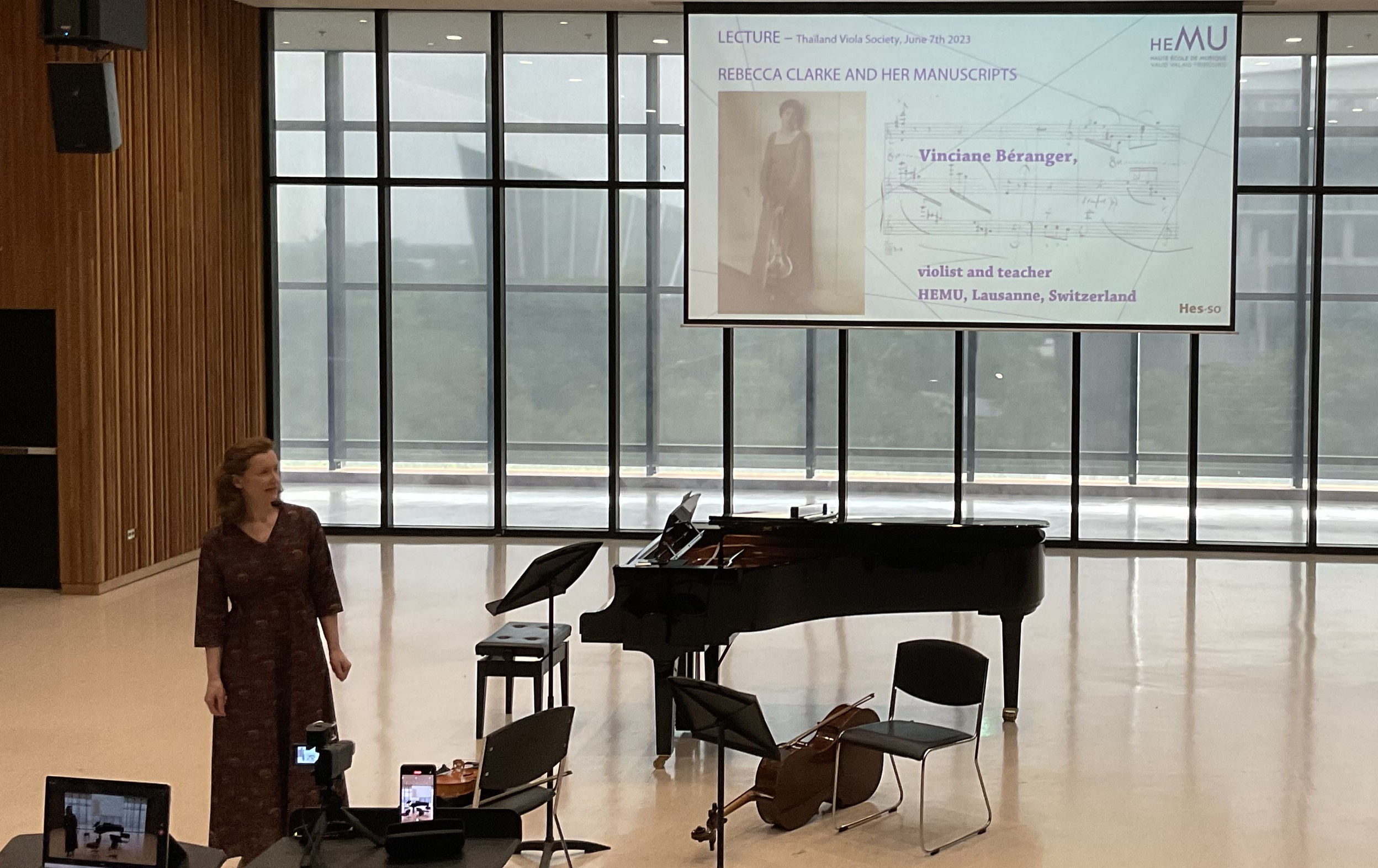
[kd] In the afternoon, Vinciane Béranger gave a lecture about the manuscripts of Rebecca Clarke. Recently, a lot of information about Clarke has been made accessible for  the community to explore, including the manuscripts and personal notes that Clarke made in her playing scores. It is so interesting to be able to time travel a bit and have the atmosphere of 100 years ago. Extra appreciated from our Dutch vantage point is that Vinciane performed the score fragments using the Erasmus viola (built, as some of you may recall, during IVC2018 in Rotterdam), traveling to Salaya with one of the students of Codarts to this congress to be played. The Erasmus foundation gave financial support for this project.

The next recital program by Daphne Gerling had the title: Encircling – Repertoire from women composers contemporary with Rebecca Clarke. Since I had to walk back to the Main Auditorium, I missed the first piece, the Passacaglia on a Theme by Tallis, by Rebecca Clarke herself. The rest however offered surprising pieces which should be played more often. The sonata by Dorothy Fox was a beautiful dialog between the viola and piano. It was built on thirds and seemed well thought through, and probably well playable for both instruments. The Fantaisie by Helene Fleury-Roy was a one-movement pièce de concours containing all elements that such a piece should have: lines, scales, arpeggios, to show the jury the technical prowess of the player. Daphne delivered it all with a strong advocacy.

After an intermission, the recital continued with a sonata from 1925 by Marcelle Soulage. What a great sonata, with such a joyful 2nd movement. The 3rd movemtn starting off with a cadenza of the viola and then the capricious 4th movement with all French fin de ciecle elements, again a lot Asian-influenced moments. The viola part speaks to you, and Daphne Gerling is a very good ambassador for this program. so a big thank you to Daphne and her pianist Tomoko Tashiwagi for bringing such beautiful programs to the congress! Judging by the applause, clearly I was not the only one who greatly enjoyed this program.

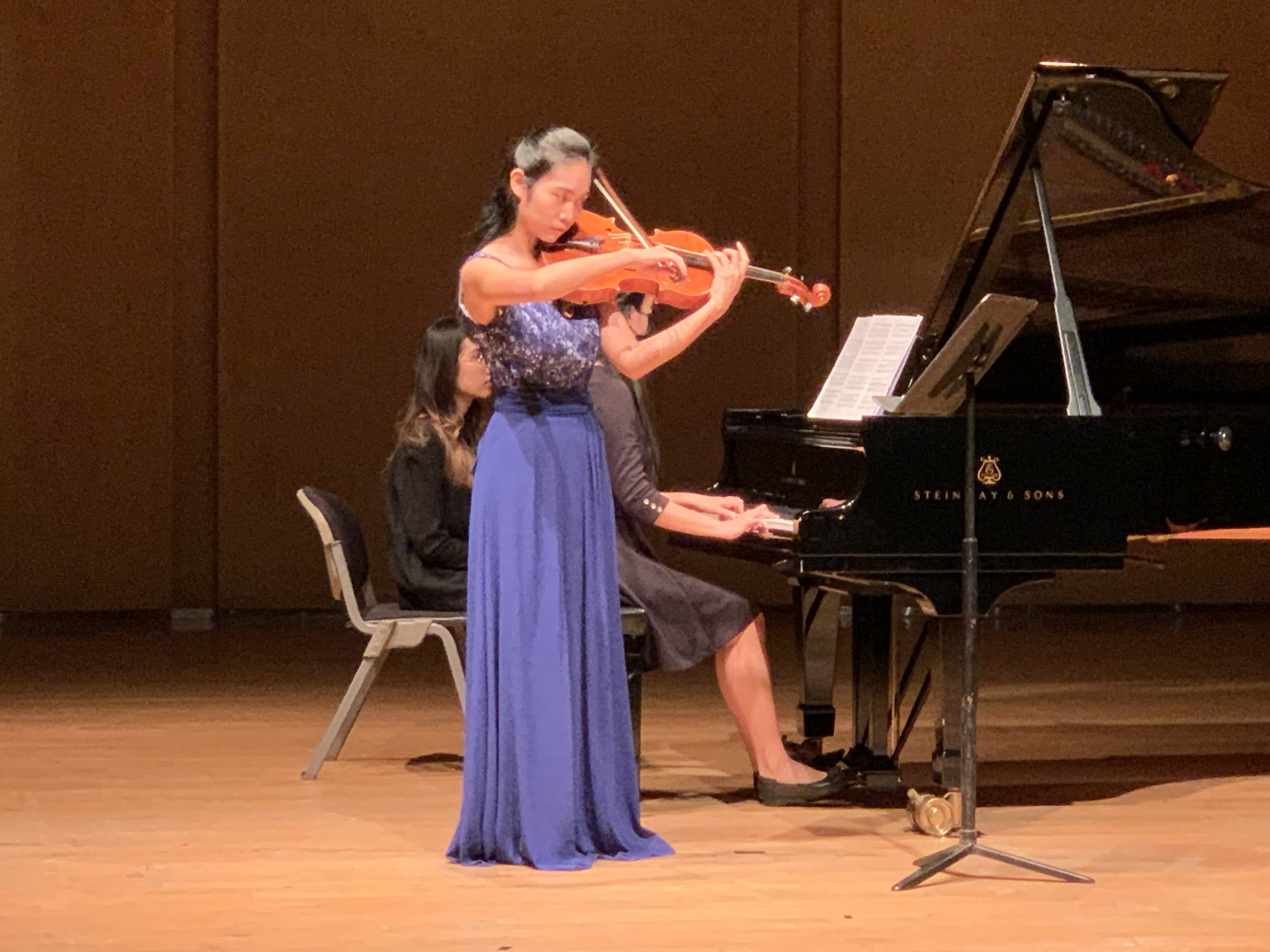
[ks] As a quite logical and satisfying conclusion to this afternoon’s Rebecca Clarke theme, Bangkok native Patcharaphan Khumprakob gave an integral rendition of the sonata. She has a Master’s degree from Salzburg to her name, and has gained professional experience in Vietnam and Singapore. On Friday (Day 4 of the Congress), she will perform the Bartók Viola concerto for us with the Mahidol Symphony Orchestra. No wonder, therefore, that she showed up again on stage only an hour or so later in Ettore Causa’s masterclass to get some feedback from him on Bartók.

Meanwhile, over in the other recital hall, Ames Asbell continued her exploration of the ensemble format viola, tenor voice and piano,.with Richard Novak and Joey Martin in the latter two roles. Under the new name Purgatory Creek Trio, this group previously also performed at the IVC in Poznan in 2019. Encapsulated in a Lecture-recital format, the new commissioned work Stations of Mychal (2020) by Kenny Salfen was premiered to significant acclaim of those present, unfortunately I missed it.

[kd] Violist and musicologist Andrew Filmer is (in our European eyes) practically one of the locals, based in Malaysia. As one of the Featured Artists for the Congress, he has the lead role in the “prime time” evening concert today. He introduces himself as someone who likes to talk, and he even throws in some quite witty viola jokes.

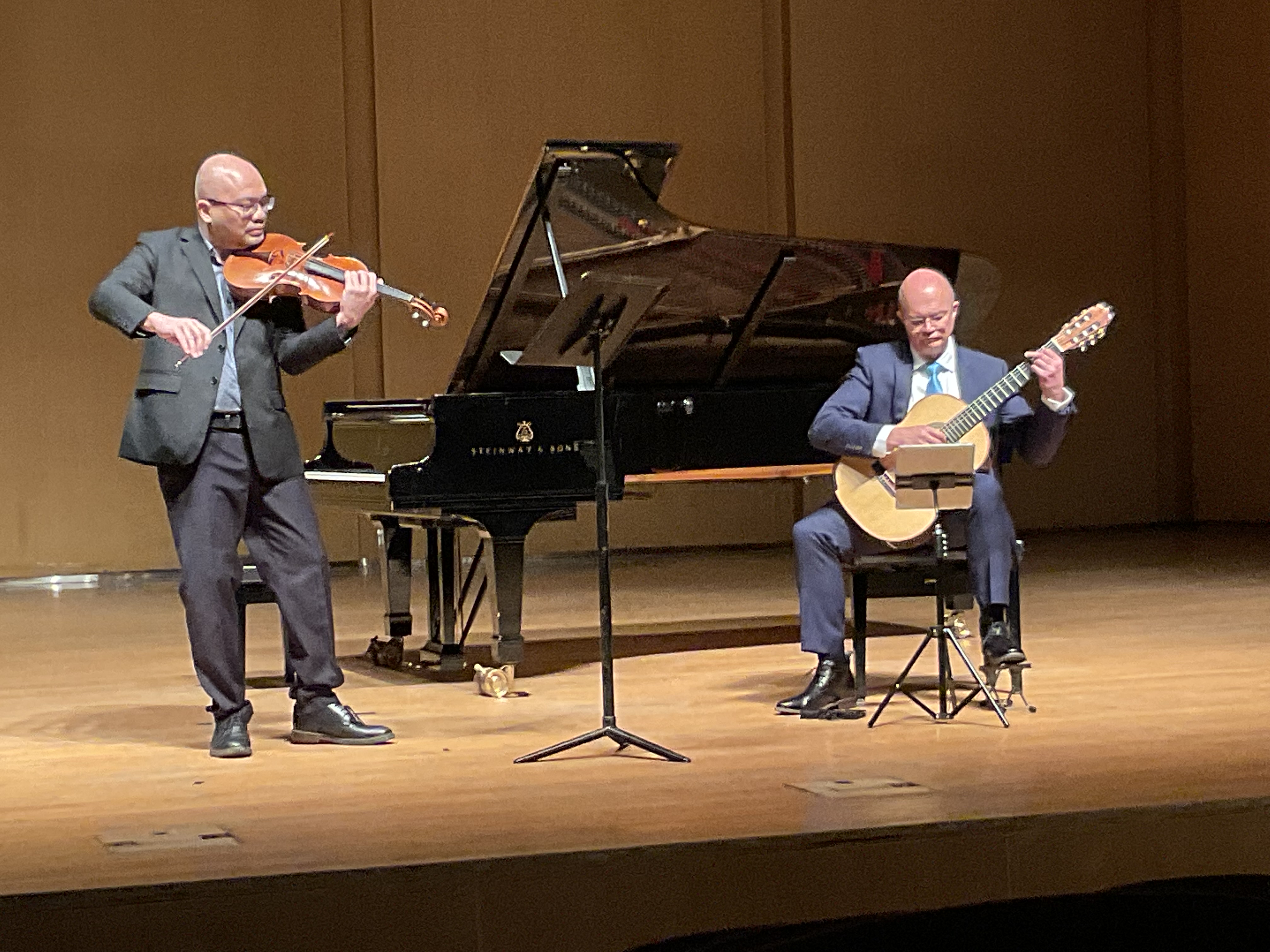
Together with guitar player Matthew Marshall, he plays pieces by Anthony Ritchie, and a world premiere of “Breaking Free” by Sulwyn Lok. In this latter piece, the viola has scordatura like a viola d”amore minor. Which makes him an accompanist as well. So you can have three players with only two people. It really works very well.

[ks] The next piece by Joel Hoffman is played by the composer’s violinist son Benjamin Hoffman and daughter in-law, Irene Kim, on the piano. So actually a slightly unsettling no-Viola moment here, were it not for the brilliant musicianship of this recently-wed duo, which goes by the very cool ensemble name Brightfeather.

It plays out as a very congenial chamber music evening with different combinations of viola, violin, guitar and piano. The finale from Ignaz Lachner’s Trio no.1 (op.37) for viola, violin and piano put a jubilant and rousing ending to this programme and as well to the 2nd day of this congress.

We’re only just getting warmed up, three days to go!

Karin & Kristofer

<previous day> <next day>

IVC Salaya Blog – Day 1

The 48th International Viola Congress takes place in Salaya, Thailand from June 6th – 10th, 2023. Daily blog reports are delivered to you by Karin Dolman [kd] and Kristofer Skaug [ks].

Day 1: Tuesday, June 6th, 2023
<next day>

[ks] It’s time for another International Viola Congress (IVC), but the setting for this year’s edition is certainly unlike those of past congresses: for the first time ever, an IVC is hosted in Asia, and not even in a string instruments “powerhouse” nation such as South Korea, Japan or China, but Thailand! In the Bangkok suburb of Salaya, the Mahidol University School of Music is kindly opening its doors this week to violists from all over the world, under the banner “Music without Borders”.  Your intrepid DVS bloggers are of course on the scene to bring you the hottest Viola news in near real time.

Just getting to Salaya wasn’t exactly easy, 11 hours of back-wrenching, restless-leg-bruising 2nd-class KLM seats followed by a 1-hour sweaty and jet-lagged taxi ride with an unusually talkative yet totally incomprehensible driver, in spite of having invested in the best cab-calling and Thai translation support that apps can buy. Thai streets are definitely not built for pedestrians, and they’re also evidently confusing for taxi drivers with a modern GPS system, so it’s unclear what exactly these roads are optimised for.

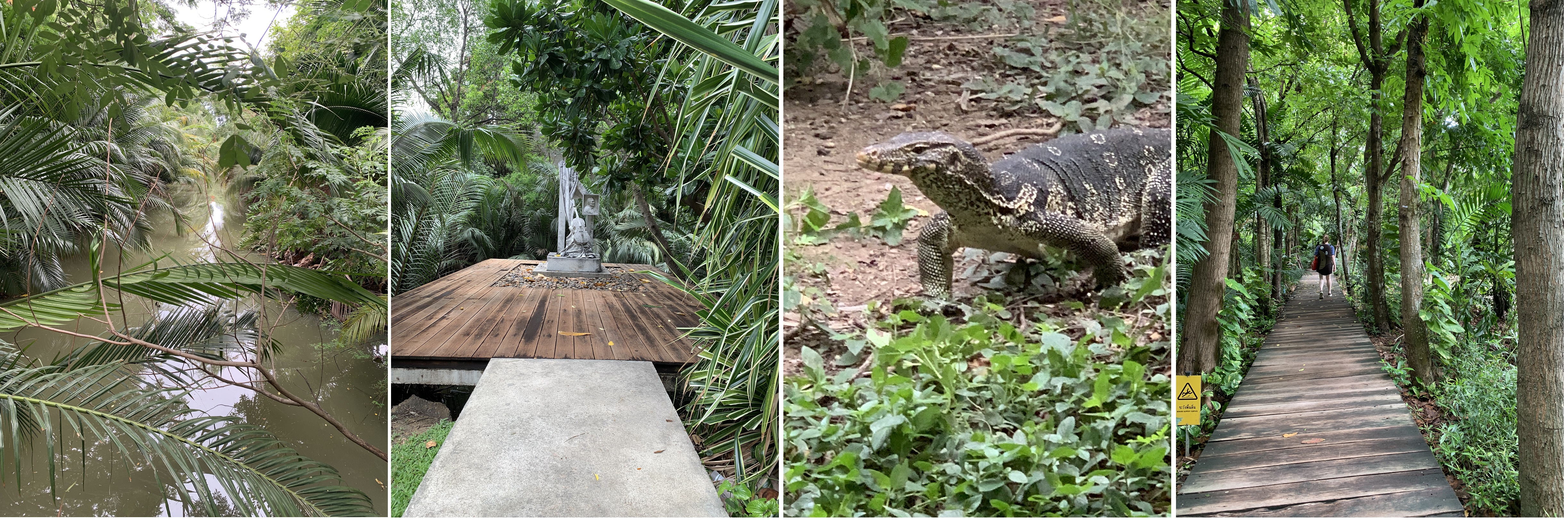
In the end, we gambled on casting aside our confused driver and our equally clearly heat-struck “smart” phones to navigate the last 200 meters by a combination of old-fashioned compass, astronomical knowledge, sensory inputs and a totally misplaced overconfidence in intuition. The result was an agitated 15-minute zigzag trek through a dreamy landscape of tropical forest, ponds, idyllic but dead-ending labyrinthic boardwalks, weird statues, intimidatingly big monitor lizards lurking in the shrubs, exotic bird chirps and remote elephant wails (or wait, were those trombones from the School of Music?). In short, it’s a campus like none you’ve ever seen!

But in the end we did stumble out of the jungle and onto the Congress venue, and I was positively surprised at the number of familiar faces. Honestly I had not expected so many Viola friends to make this long journey, but clearly violists can be quite adventurous! In fact, as many as 8 members of the DVS have invested their personal savings to form a solid Dutch delegation here at the Congress.

In the relentless tropical heat of this place – meteorologically known as the world’s hottest urban region (on average) – we were welcomed by host Danny Keasler and his team with ice cold tropical juices and gratifyingly fresh indoor climates. The Main Auditorium of the College of Music (MACM for short) furthermore offers a no-nonsense interior design, great acoustics and comfortable seats well fit for a full week’s worth of Congress presentations. Many a Dutch conservatory would be overjoyed with such a hall!

[kd] Ettore Causa is one of the IVC2023 Featured Artists. During the wonderful opening concert, he first played four Brahms songs transcribed for viola and piano, which fit the viola very well. I would like to look into the score. Such songs tend to let the piano play more along with the main voice, but here we heard a really beautiful interplay.In the next piece, Causa was joined by the Canadian Juan-Miguel Hernandez. It is the duet Moonlight Journey written by Paul Coletti, a viola player who loves to compose in a very romantic style. Also really jazzy! The two men on stage are communicating through their beautiful playing. So remember the name Paul Coletti. It is challenging and so much fun to play his music (Hernandez is by the way one of his former students).

In another arrangement created by Causa, the Melancholie by Cesar Franck fits the viola like a tailor-made suit. Originally for violin and piano, this piece is written at the height of the composers creative powers, at about the same time as his famous violin sonata,.

The last piece of the opening concert is the Chopin cello sonata, again transcribed by Causa. Beautifully played! It is a piece to drift off to peace of mind.

[ks] The 1st edition of the IVS-sponsored Choochart Pitaksakorn International Viola Competition took place this afternoon, open for students of age 12-28 years. This wide field made the jury’s task a bit tricky, given that pre-college contestants from Thailand simply cannot be fairly compared to elite music programme students from e.g. South Korea. In the end, a contestant from the latter category, 17-year old Hyunbin Kang, was the undisputed winner after a technically very good rendition of the Schwanendreher (two full movements, by heart). Glaris Tan Ying from Singapore was awarded the 2nd prize for a well curated performance of Bloch’s Suite Hebraïque, and our very own Sunniva Skaug (Conservatory of Amsterdam) captured a share of the 3rd prize together with Calla Lana Morris (Singapore).

[kd] Because there were still so many old friends to greet, I was unfortunately late for the lecture by Katrin Meidell about “the” César Franck sonata transcription. I heard a bit of the end, but I think she made a good research on the transcription, forming her own opinion, before playing the piece. Our host from the last congress, in Columbus (Georgia, USA), is a very passionate violist, evidenced by how she played the sonata for us!

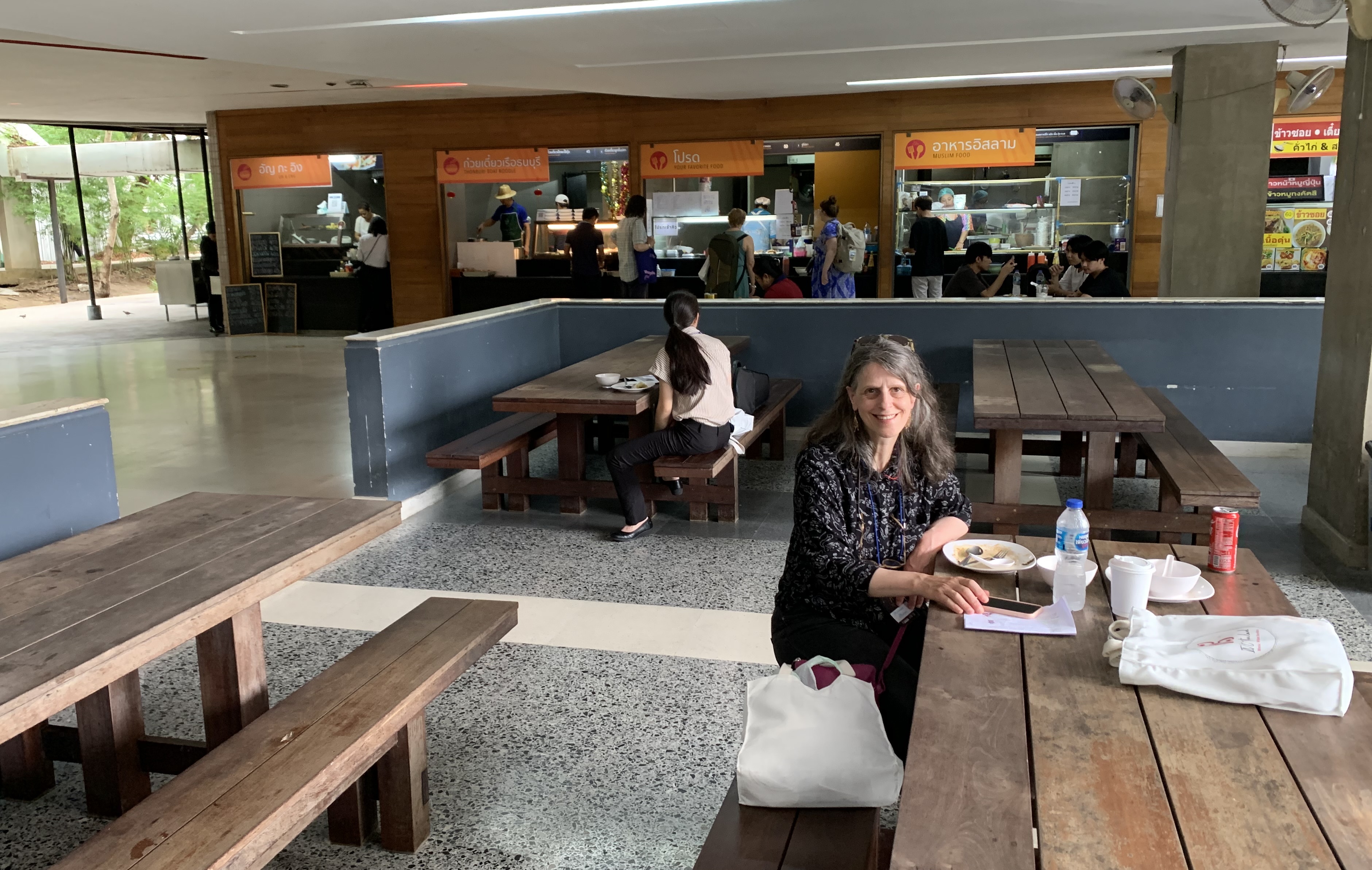
The next lecture was cancelled or postponed, so those of us who weren’t following the Competition had a bit of time to grab something to eat. The Canteen in the basement of the School of Music turns out to be really excellent, in spite of its rather humble appearances, serving a great variety of delicious Thai dishes from eight different mini-kitchens with their own specialties.

Ames Asbell’s lecture-recital “Vieuxtemps and his Circle” opened with La Nuitfrom Félicien David’s “Le Désert”, and went on to showcase various other composers who where somehow connected to Henri Vieuxtemps. To our big surprise, IVS board member Daphne Gerling revealed a beautiful singing voice, contributing to the presentation with Ames on the viola and Michelle Schumann (speaking of connections?) on the piano. Vieuxtemps was a child prodigy, and Ames told us about his life and about the composers who influenced (and were inspired by) him such as Liszt, exemplified by his Romance Oubliée. This very interesting lecture was concluded with La Maggiolata by Jenö Hubay, Vieuxtemps’ protegé (next to Ysaÿe) in Brussels.

Alicia Marie Valoti‘s self-composed solo sonata was originally meant to be premiered at the IVC in Columbus last year. Unfortunately this plan was thwarted by COVID, but now finally we got to hear it! And it definitely deserves the big stage, with a clear (as-advertized) Hindemith style! The piece has a great opening with beautiful quiet moments, nearly Gregorian passages. And again a virtuosic ending of the first movement. The second movement starts with a beautiful melody, repeating with accompaniment of the solo player herself. Also left hand pizzicato melody and making a real nice building in melody, phrases and harmony. The last movement is a tarantella, exposing Alicia’s Italian roots. Also some jazzy and  blue grass moments in it. Going to kind of passacaglia chord playing. It must be fun practicing and playing this piece. Extended techniques are well used. The theme of the tarantella returns. The end is introduced with breathtaking harmonics leading to a climax with fire.

Marcin Murawski has brought a program of 6 female Polish composers in ‘12 shades of viola’. Each of the six composers wrote two pieces, in total one for each month of the year. It was a collaboration between the professor, his Viola students and the composers. They made video clips of these pieces as well, which can be found on the YouTube channel of the International Viola Society  Prof. Murawski is a great ambassador for the adventurous way of composing in Poland, the country who gave us a lot of great composers. And his stage performance is perfect, funny, serious, and technically great!

Next we were treated to a Masterclass by the guest artist Juan-Miguel Hernandez. He gave a particularly memorable class on the Stamitz concerto, transforming the talented 14-year-old student’s rough technical patches into more melodious and sonorous material. Although public masterclasses can never be quite “normal”, for the student nor for the teacher, Hernandez comes across as a very engaged and well-reflected teacher.

The first Congress day was concluded with the evening concert by Featured Artist Miti Wisuthumporn, a key figure in the Thai Viola community, and principal viola of the Royal Bangkok Symphony Orchestra. His program was titled “Rainbow Connection”, speculating what can be found at the end of the rainbow. Is it an illusion? A dream? A pot of gold? A nice and fruitful idea.

He started off with the Album leaves by Hans Sitt, for sure he is steering toward the ’’Dream” answer, but in my perception the “leafing for an answer” takes rather long.
The next piece on the program is the world premiere of “Unbounded” by Thai composer Trisdee na Patalung. At first it feels a bit like a viola joke. The first 5 minutes the viola only plays the open C string and the piano is working like hell. But then it feels nearly magic when finally the viola part finally abandons the C string, ending on a high note where again the piano takes over. The viola goes down again to the C with a cadenza.

The next piece on the program is the sonatina by Akkra Yeunyonghattaporn. It has a great atmosphere. You hear the more Asian sounds and harmonies in the composition, which is overall beautiful and peaceful, but not without astonishing  moments. The composer is in the audience, and gets a warm applause.
[ks] Due to residual jet lag, I missed some last-minute announced program changes, so when Christopher Janwong McKiggan’s Unsilent Knight started playing, I thought we were hearing a new self-composed intro to Piazzolla’s Le Grand Tango. And in a way I was right, as I convinced myself that I heard a slow version of the famous tango theme in the piano part at least once. But the piece ended instead with a reference to Silent Night, so this is where my misunderstanding became apparent,

[kd] Finally then, the real Grand Tango by Astor Piazzolla, originally written for Rostropovich who had a good relation with the tango specialist. After that it is played by so many instrumentalists. What the idea is with the Piazzolla (and Silent Night, for that matter) in the rainbow program, I have to ask.

[ks] A great start to a highly anticipated Congress. And so it is time to go – pardon me, “Grab” a taxi – to the pub. Those of us who thought they could walk that short mile, dearly regretted it (see earlier comments about Thai roads). Anyway, the local Italian restaurant Rustico accepted the challenge of feeding some twenty-odd Congress participants. The friendly owner from Genova looked a bit bewildered at first, but seemed gratified by the massive beer consumption of the Polish, Dutch and Norwegian guests in particular. The pasta was really good too, by the way…

Stay tuned for the next Daily blog… as soon as we can get it ready|

Karin and Kristofer

<next day>

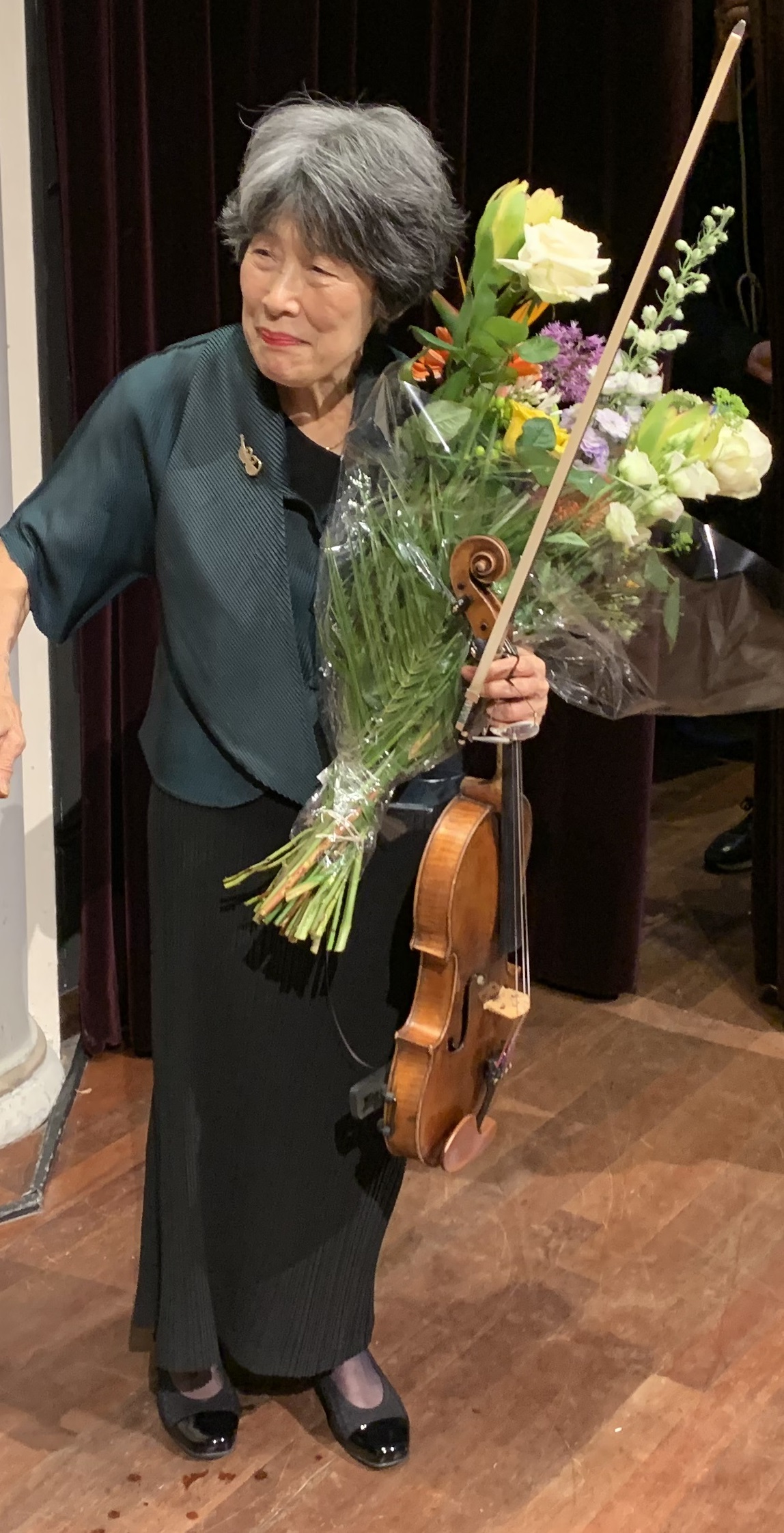
Nobuko Imai Awarded the IVS Golden Alto Clef

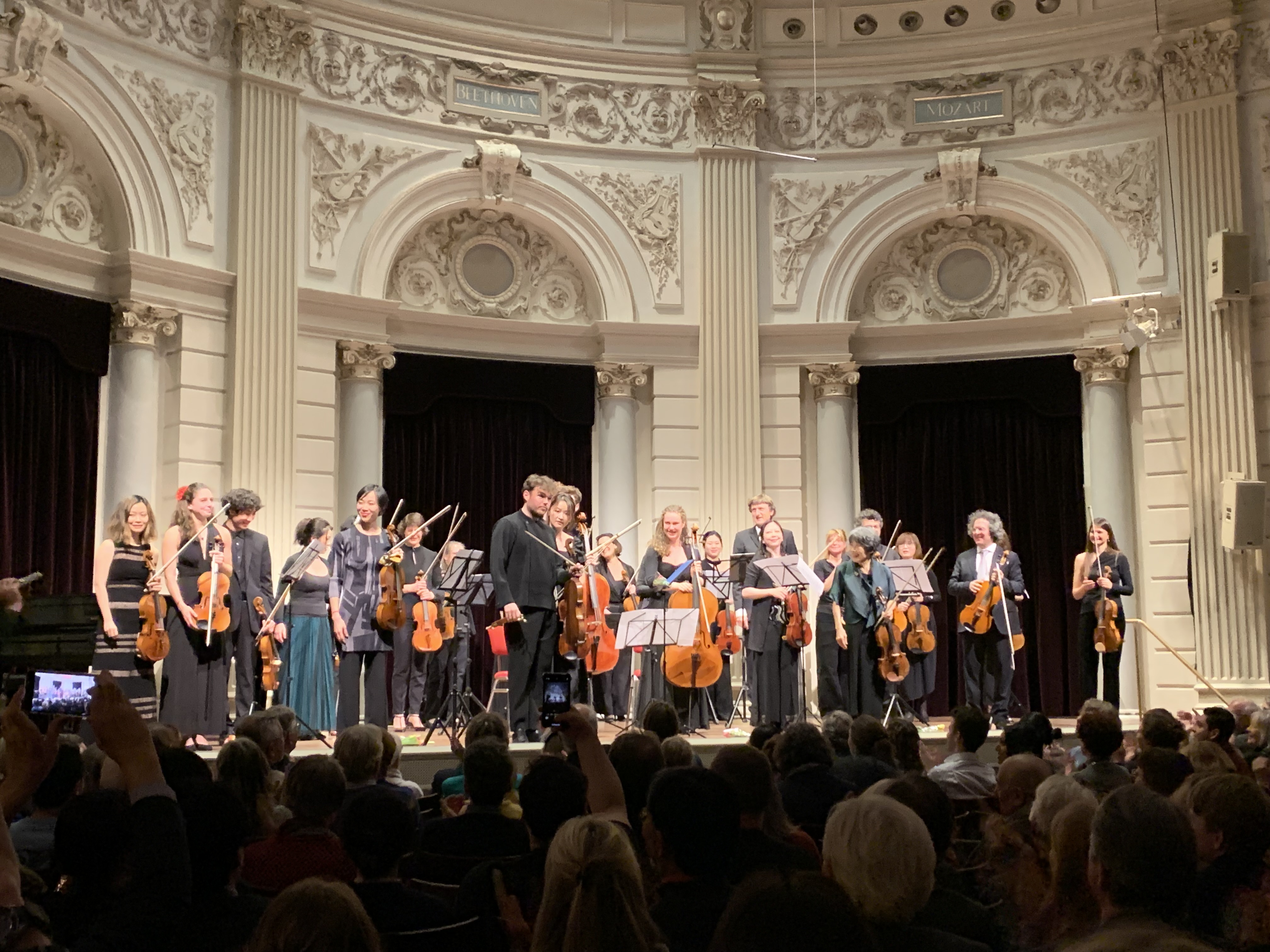
Last Sunday (March 19th), viola legend and DVS honorary member Nobuko Imai celebrated her 80th birthday with a festive concert in the recital hall of Concertgebouw Amsterdam. Friends, colleagues, students and admirers (in many combinations) travelled from all over the world to be there. The recital hall had been sold out months in advance, and one literally had to search continent-wide for the very few second-hand tickets from people who ended up not being able to come.

When Nobuko first was invited to appear on stage by the well-spoken concert announcer Sven Arne Tepl, she was greeted with a loud cheer from the audience that would befit a rock star! In response, she gave an epic rendition of Schumann’s Märchenbilder, accompanied by Martijn Willers. No concessions to uninvited constraints of age or time, neither in the sweet slow movements nor in the furiously racing 3rd movement.

Next to a birthday celebration, the key concept of this concert was to bring about a reunion of Nobuko’s many students from all around the world. They were teamed up in ensembles of viola duos, trios and quartets representing Nobuko’s viola classes in Detmold, Geneva, Kronberg, Madrid and Amsterdam. Highly appreciated solistic performances were given as well by her students Veit Hertenstein, Takehiro Konoe and of course Tim Ridout.

A specially delightful “surprise”  reunion came with her former colleagues of the Michelangelo string quartet, Mihaela Martin and Frans Helmersson joining her in a Schubert trio.

After a flowery word of gratitude from the DVS chairman on behalf of the entire Dutch viola community, Nobuko was awarded the Golden Alto Clef, the highest distinction of the International Viola Society (IVS). The President of the IVS Jutta Puchhammer (flown in from Montreal) read a carefully researched summary of Nobuko’s many achievements for the viola in the most global perspective. This took a long time to summarize! Finally, IVS Vice President Karin Dolman proceeded to decorate Nobuko with this unique golden clef, which has only been awarded twice before in the 55-year history of the IVS (prof. Franz Zeyringer in 1988 and dr. David Dalton in 2013).

The celebration was capped off with a joyous rendition of Bach’s 3rd Brandenburg concerto, with a full viola orchestra on stage.

The DVS once again wishes to thank Nobuko Imai for all that she has done for the Dutch viola community throughout almost half a century of teaching and playing here, and we congratulate her with the well deserved IVS Golden Alto Clef award!

Media Coverage:

The IVS published a video impression of this whole event on their YouTube channel:
A plethora of Interviews has also appeared in the press and online media on the occasion of Nobuko’s 80th birthday. Here is a selection:

17/03/2023: Dutch Viola Society (Kristofer G. Skaug)
17/03/2023: The Violin Channel (Heather Kurzbauer)
15/03/2023: Trouw (Stella Vrijmoed)
10/03/2023: NRC (Rahul Gandolahage)
… and finally this one, a very interesting in-depth interview from almost 40 years ago:
27/12/1984: Musicalifeiten (Jan de Kruijff)

Verslag Britten Altvioolconcours 2023

door Kristofer G. Skaug, DVS redactie

Redactionele opmerking: Uitspraken van subjectieve aard worden op persoonlijke titel gepubliceerd, en vertegenwoordigen derhalve geen officiëel standpunt van de DVS.

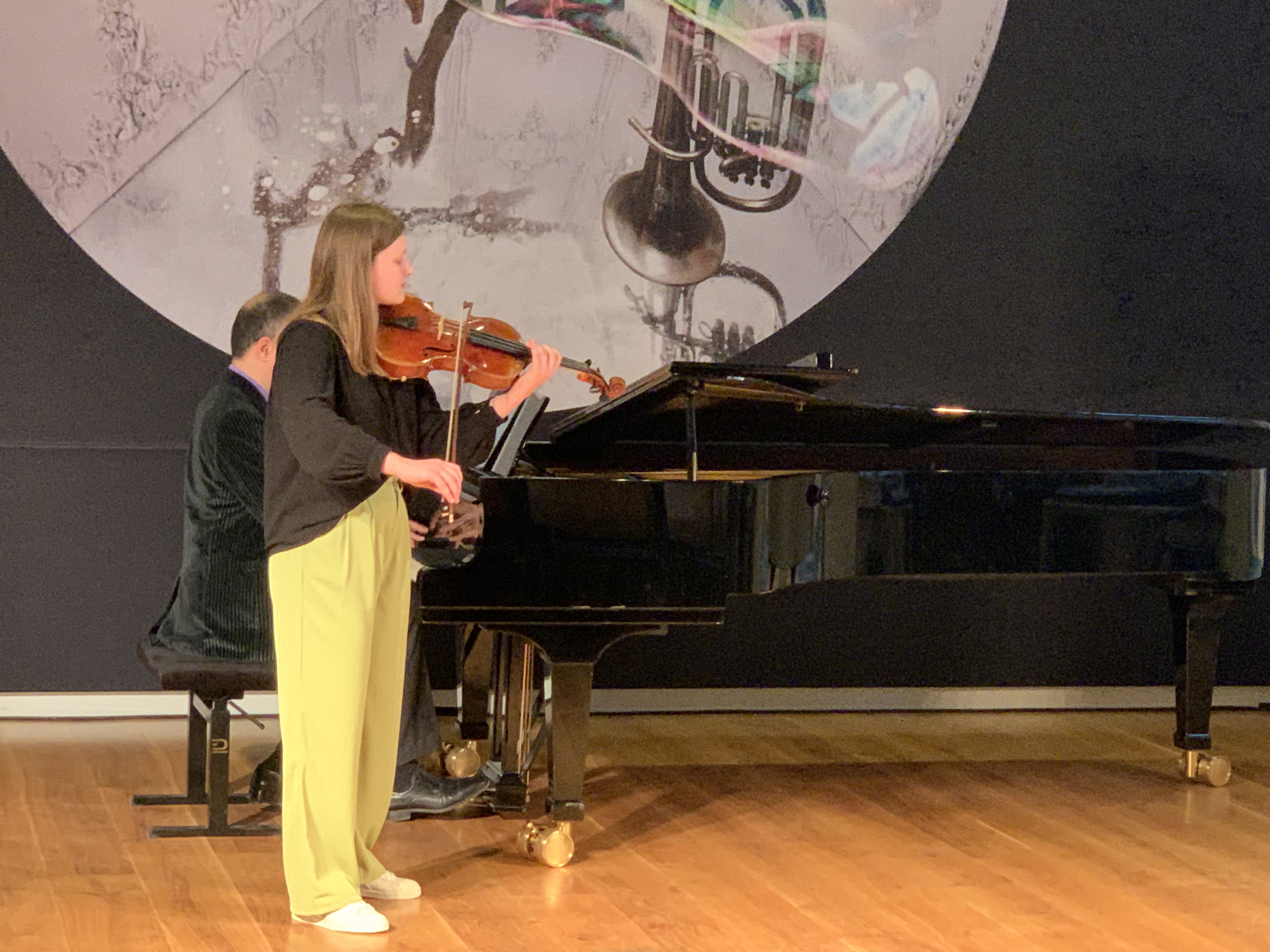
Het Britten Altvioolconcours viert dit jaar zijn tienjarig bestaan, met alweer de zesde editie. Het is weer zo’n mooie vroege en zachte lentezondag in Zwolle, waar we na een tussenjaar (2019, door Coronamaatregelen) terug zijn op de vertrouwde locatie in het ArtEZ Conservatorium.

In totaal 13 deelnemers hebben zich dit jaar aangemeld. Met aanhang komen ze één voor één binnen, vaak begeleid door zenuwachtige ouders. Sommigen hebben al vaker meegedaan, anderen komen voor het eerst. De organisatie van het Brittenconcours is er zoals gewoonlijk met een vriendelijk onthaal, een ontspannend praatje, koffie, thee en snoepjes. En uiteraard heeft de DVS daar ook een stand met flyers en verkoop van altviool-merchandise en CD’s.

We zullen dit keer niet in detail ingaan op alles wat er gespeeld werd, maar enkele indrukken moeten toch vermeld worden.

De 1e Prijswinnaressen

In de (zoals helaas gebruikelijk) spaarzaam bezette Categorie I (10-14 jaar) – dit jaar slechts 3 kandidaten – werd uiteindelijk geen 1e prijs uitgereikt. Floortje Zandvliet (leerling van Julia Dinerstein) kreeg de 2e prijs. Bij het (verplichte) langzame deel van het altvioolconcert van Casadesus kwam er een mooie cadenza uit, en haar vertolking van de sonatine van Bertold Hummel was ook keurig. De aanmoedigingsprijs in de jongste categorie ging naar Sibylla Harbach, die als keuzestuk ook het pittige 3e deel uit het Casadesus-concert speelde, het geheel uit het hoofd en met groot doorzettingsvermogen.

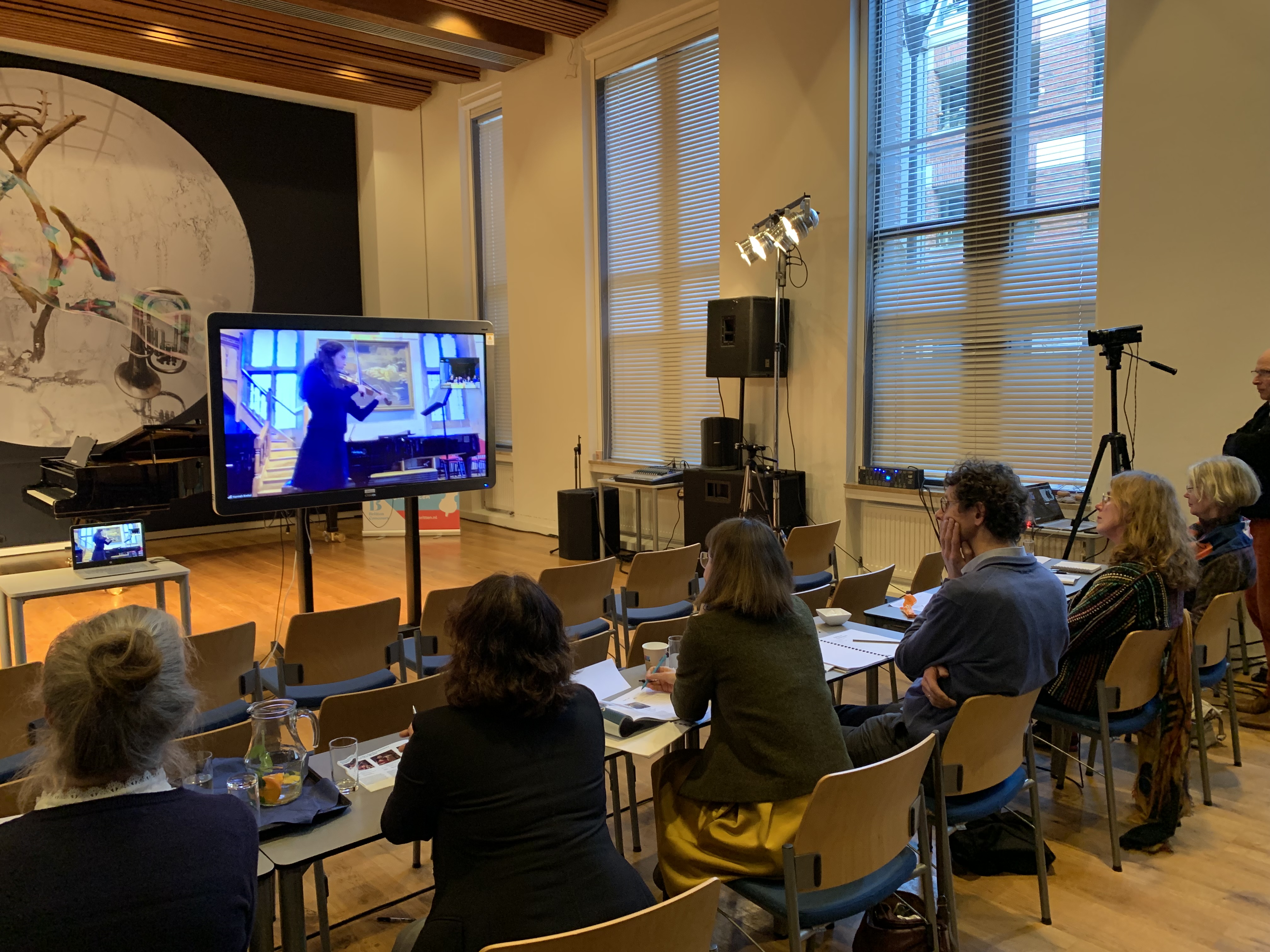
Verder was er een primeur in het geval van Hannah Krekel, die mocht voorspelen door een live Zoom-verbinding vanuit Wales. De matige geluidskwaliteit van dit medium was echter vermoedelijk geen aanwinst voor haar uitvoering van het langzame deel uit Brahms’ sonate in f kl.t. (op. 120 no.1).

Het verplichte stuk in Categorie II (15-18 jaar) was dit keer het 2e deel uit het altvioolconcert van Leo Smit. Het stuk heeft met zijn dikke harmonieën ondertonen van free jazz, en biedt grote mogelijkheden om zich te onderscheiden. Je kon soms al binnen enkele maten van dit stuk horen of de kandidaat iets extra’s te bieden had. Het stuk is zowel technisch (met name lastige intervallen) en muzikaal een hartige uitdaging, je moet flink aan de slag met je fantasie om streken, timing, toonkleuren, en dynamiek in te zetten om de interessante muziek eruit te lokken.

Jutta Demuynck

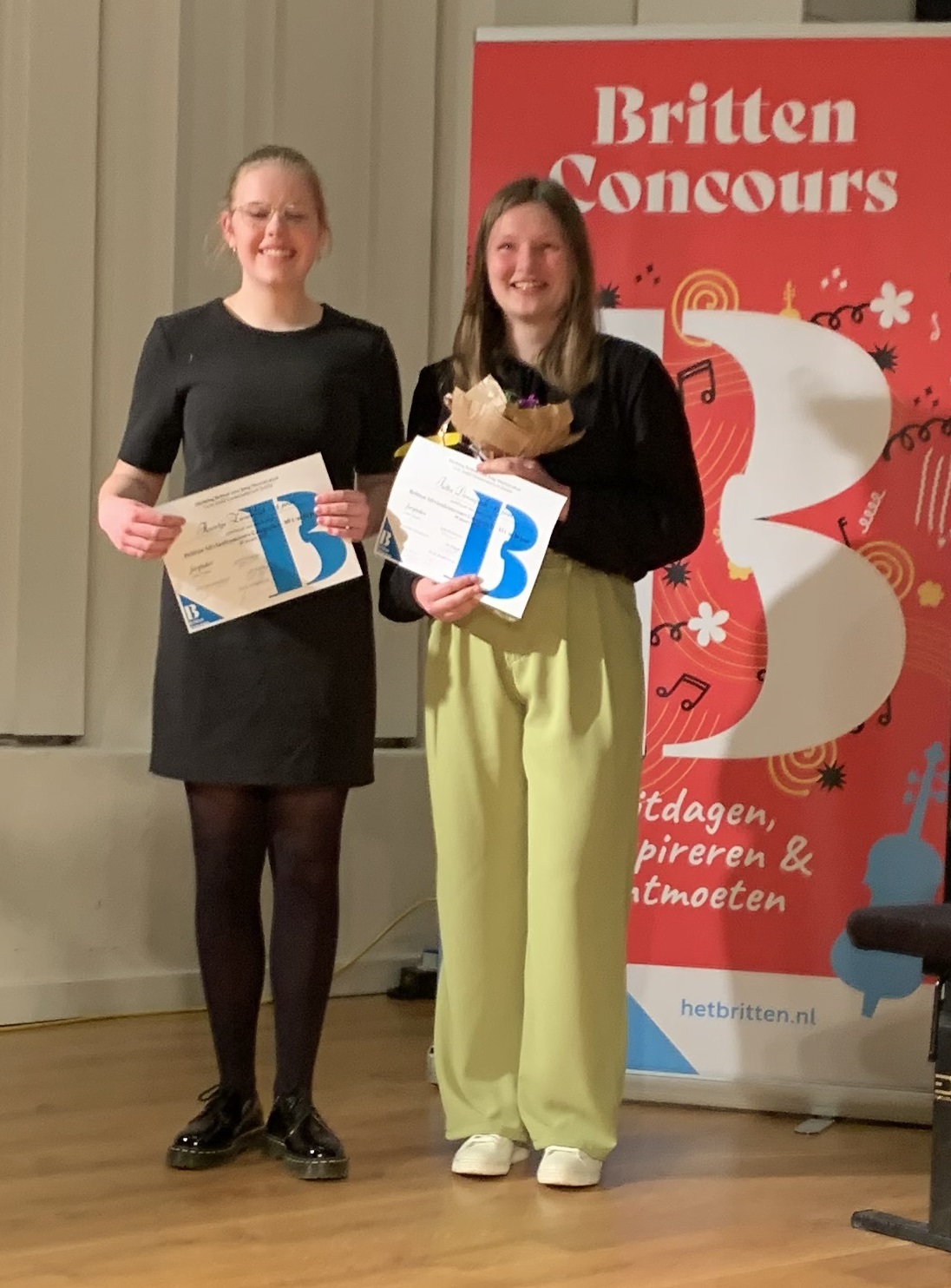
De uiteindelijk terechte winnares in deze categorie was Jutta Demuynck (studente van Julia Dinerstein). Haar Leo Smit vertolking was innig, met souplesse gespeeld, en het durf om haar muzikaliteit in te zetten om de jazzy timing zowel ultra soepel en laid-back te laten zweven, en dan weer heftig aandringend. Daarnaast speelde ze de “Scène de Ballet” van Charles de Bériot, eigenlijk zo’n irritant vioolstuk dat nogal lang duurt teneinde zoveel mogelijk technische hoogstandjes te laten horen. Jutta slaagde er desondanks in om ons hiermee te boeien, en dat vond ik razend knap!

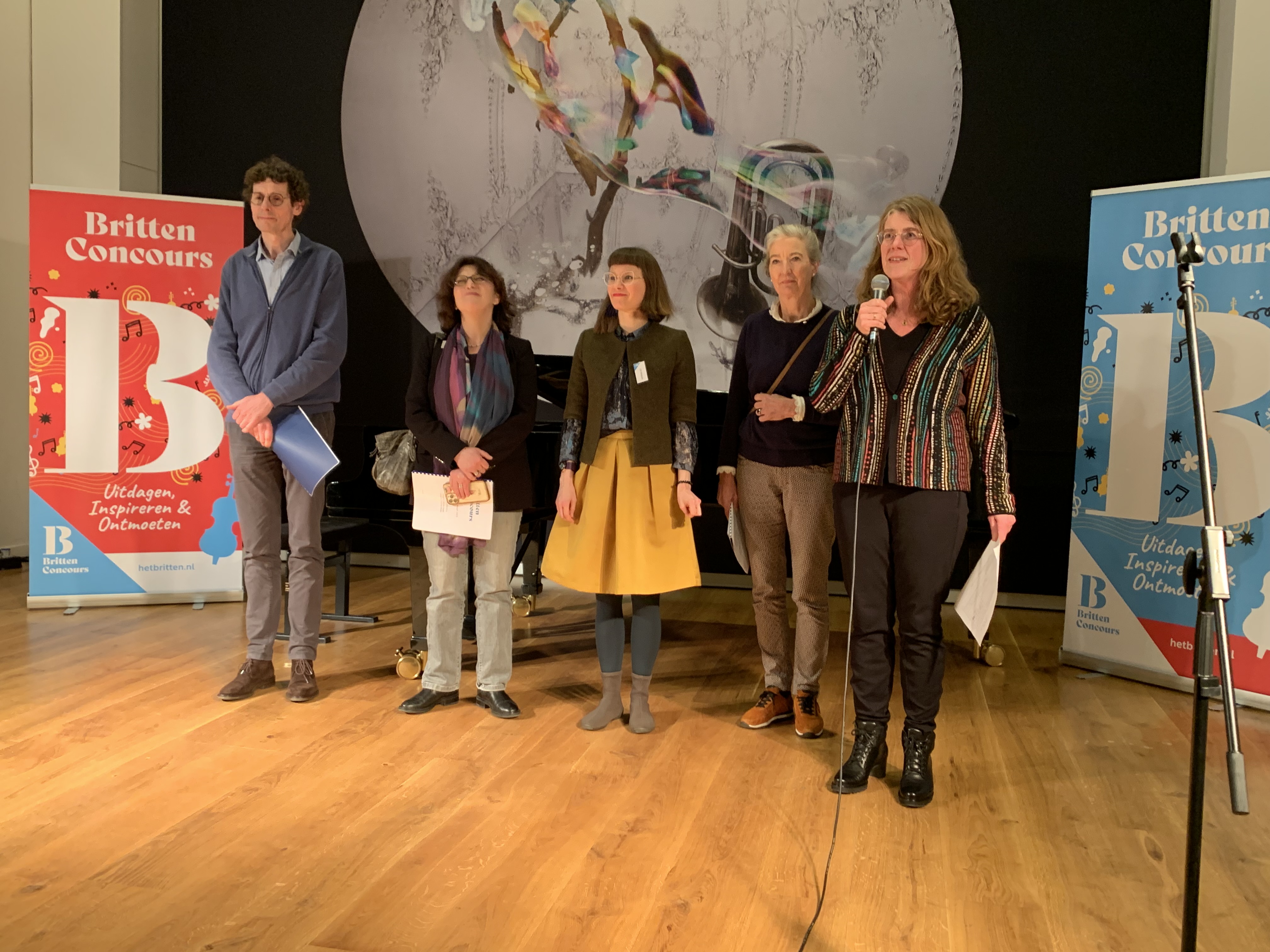
De jury van het Britten Altvioolconcours 2023

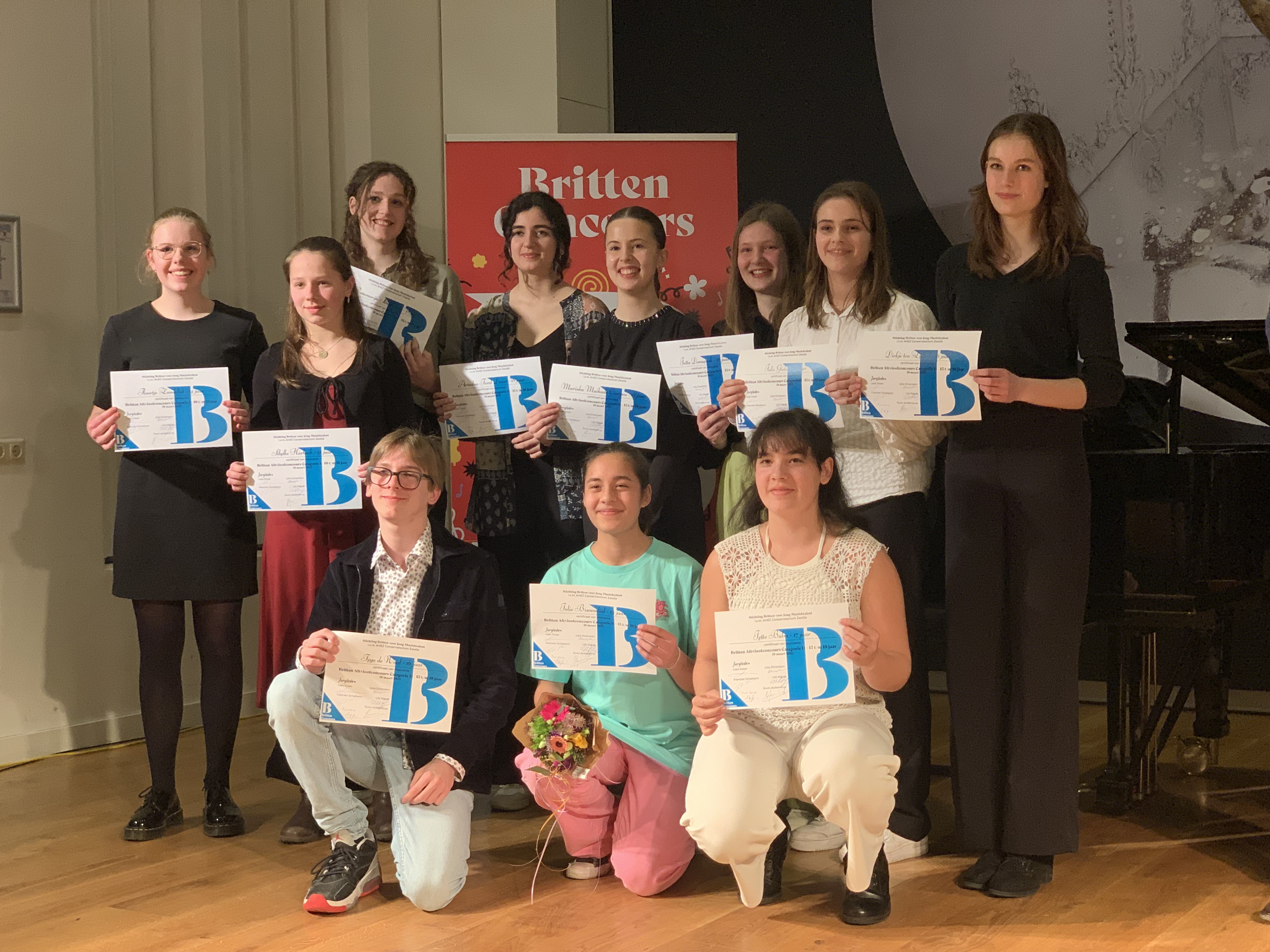
De jury (vlnr boven: Guus Jeukendrup, Julia Dinerstein, Lilli Maijala, Sylvia van der Grinten en voorzitter Francien Schatborn) had echter geen gemakkelijke klus in deze categorie, en zag zich uiteindelijk genoodzaakt om zes (van de 10) kandidaten te belonen. Naast de 1e prijs (hierboven genoemd) werden er twee 2e prijzen uitgereikt aan Marinha Campos Machado en Jolie Bisoendial, nogmaals twee 3e prijzen waren voor Ariadna Terol Donat en Jytta Balm, en de Aanmoedigingsprijs ging dik verdiend naar Julie Gielen.

De speciale DVS Bladmuziekprijzen gingen dit jaar naar Floortje Zandvliet en Julie Gielen.

De volledige uitslag (met alle toegekende speciale prijzen) wordt tzt. op de website van het concours gepubliceerd. Hieronder is een groepsfoto van alle deelnemers, met hun certificaten van deelname met daarop het nieuwe “B”-logo van het concours. En nee, er zijn hiermee absoluut géén politieke bijbedoelingen! 🙂

Verder is het natuurlijk zeer aan te bevelen om de 1e prijswinnaars (Floortje en Jutta) straks te horen en zien soleren met het Britten Jeugd Strijkorkest bij het galaconcert op 16 april in Theater de Spiegel (Zwolle). Daar zullen bovendien Maria Milstein en Dana Zemtsov de Sinfonia Concertante van Mozart spelen.

Hartelijk dank aan de Concoursorganisatie van Het Britten Jeugd Strijkorkest, en op naar de volgende editie van het Britten Altvioolconcours in 2025!

De live stream van het hele altvioolconcours kunt u hier terugkijken en luisteren:

Report from Timothy Ridout Masterclass

by Sofie Booy
Wednesday 15th of February, 2023

Timothy Ridout gave a masterclass last week in the conservatory of Amsterdam. Four students were selected to play for him. The afternoon was filled with beautiful viola music. The hall was filled with people listening to the masterclass.

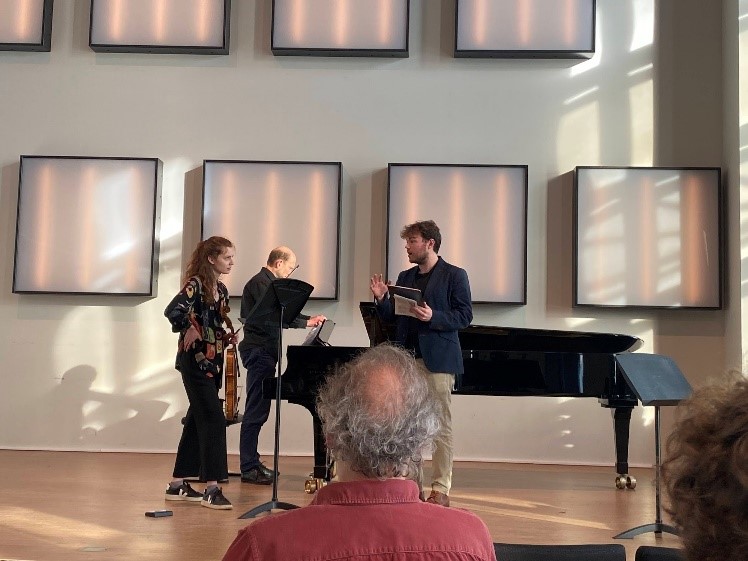
The afternoon started with the Hindemith op. 11 No. 4 played by Connie Pharoah accompanied by Daniël Kramer. They played very beautifully. Timothy started working with her on the phrasing in the music. He gave some tips on how to keep the tension in the music while not giving it away too much. He played how he wanted it to be played and the student could try it out after that.

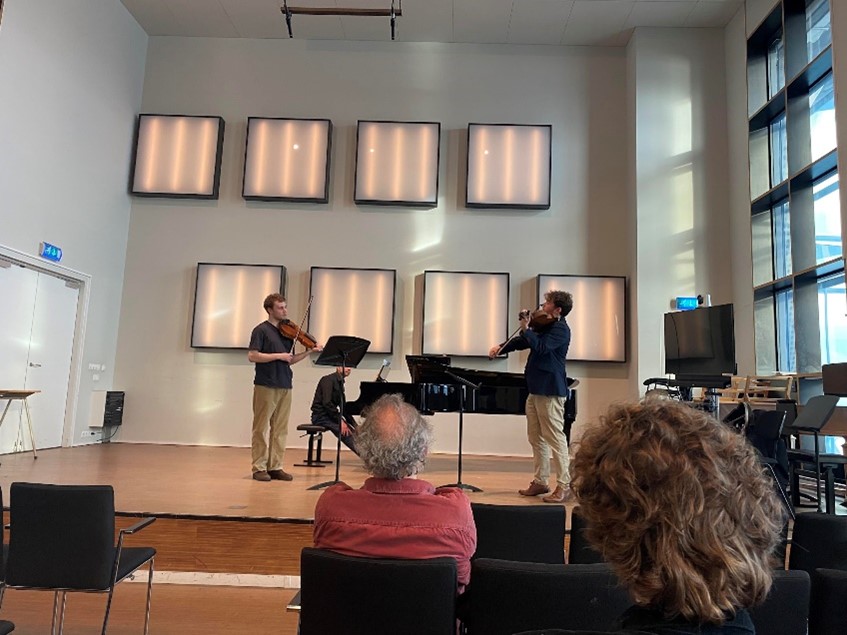
After the Hindemith we had the next student, Fiachra de hOra, playing Schumann’s Märchenbilder with Daniël Kramer. Timothy gave him tips to play more freely, and took the time for the student to understand and to be able to play how he explained something. Sometimes the student needed to play a passage slowly a few times before continuing with the pianist.

After  a short coffee break we continued with Anuschka Pedano, who played the César Franck sonata with Martijn Willers. Timothy worked with her on a difficult position shift in the climax of a build-up phrase. He had a lot of musical ideas for this piece, and he stayed very calm and nice.

The last masterclass student was Simon Rosier, who played Vieuxtemps with Martijn Willers. They started with the slow part of the sonata, focusing on making more sound. In the fast part they focused on intonation in combination with sound production.

Timothy was very excited to work with all the students. When each student’s time was up, he always wanted to finish the piece and give as much overall tips that he still had in his mind.

The afternoon ended with a Q&A. There was a question about what do you do to warm up? He said he started always with some exercises to get his shoulders and neck relaxed. Then he said it depends on how much time he has, differing from 5 minutes to warm up until an hour. He likes to play scales (also chromatic scales) and arpeggios. And he uses the Kreutzer etudes to get his hands and fingers working. He also plays slow scales with vibrato to make sure everything is fluent, and funny exercises like standing on one leg. He also mentioned the Dounis’ Daily Dozen, which is originally for violin. He mentioned that its good to do proper warmups when you have the time, but avoid the feeling that you have to do the same thing every day. He also talked about slow practicing and about how to maintain a piece.

He was very kind to everybody and very approachable. He gave a lot of good tips to the students that also any other musician in the public could use.

IVC Columbus Blog – Day 4

The 47th International Viola Congress takes place in Columbus, Georgia (USA) from June 1st – 5th, 2022. This daily blog / report is delivered to you by DVS board member Emlyn Stam.

Day 4: Satuday, June 4th, 2022
<previous day> <next day>

The final full day of the viola congress included an enormous array of activities. The morning session featured our own DVS board member Karin Dolman’s performance of her own composition Pierrot Suite in full costume. Dolman’s performance was very well received in a packed theatre. Her piece tells the story of Pierrot, Harlequin and Colombine with a few references to Schönberg, Richard Strauss and others. Her performance was preceded by a warm rendition of Bach’s Violin Sonata number 2 by David Rose from the Cleveland Institute.

Karin Dolman’s performance “Pierrot”, in full costume (source: Karin Dolman’s vlog)

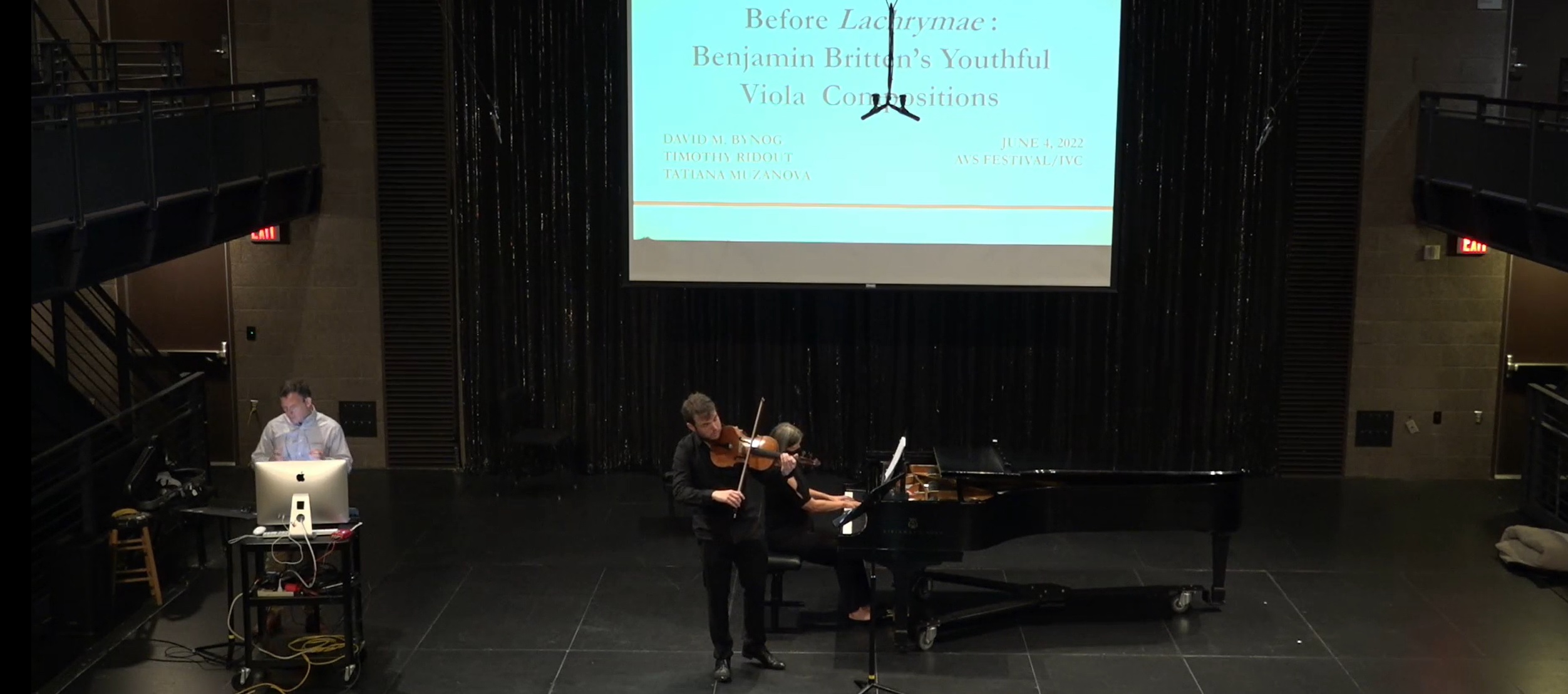
Scholar David Bynog from Rice University gave a lecture on Britten’s unpublished youth works and sketches for viola, complemented by marvelous performances by Timothy Ridout. Britten’s youthful Sonatina is a wonderful work that reveals the extent of the young composer’s talent at the young age of 14. We can only hope that the Britten-Pears Foundation will agree to publish these works so they can be disseminated amongst violists and music lovers alike. Bynog’s lectures touched on Britten’s relationship with the viola as a youngster as well as his relationship with violists over the course of his career, including William Primrose and Cecil Aronowitz.

David Bynog and Tim Ridout present unpublished Britten works for the viola (source: IVC livestream frame capture)

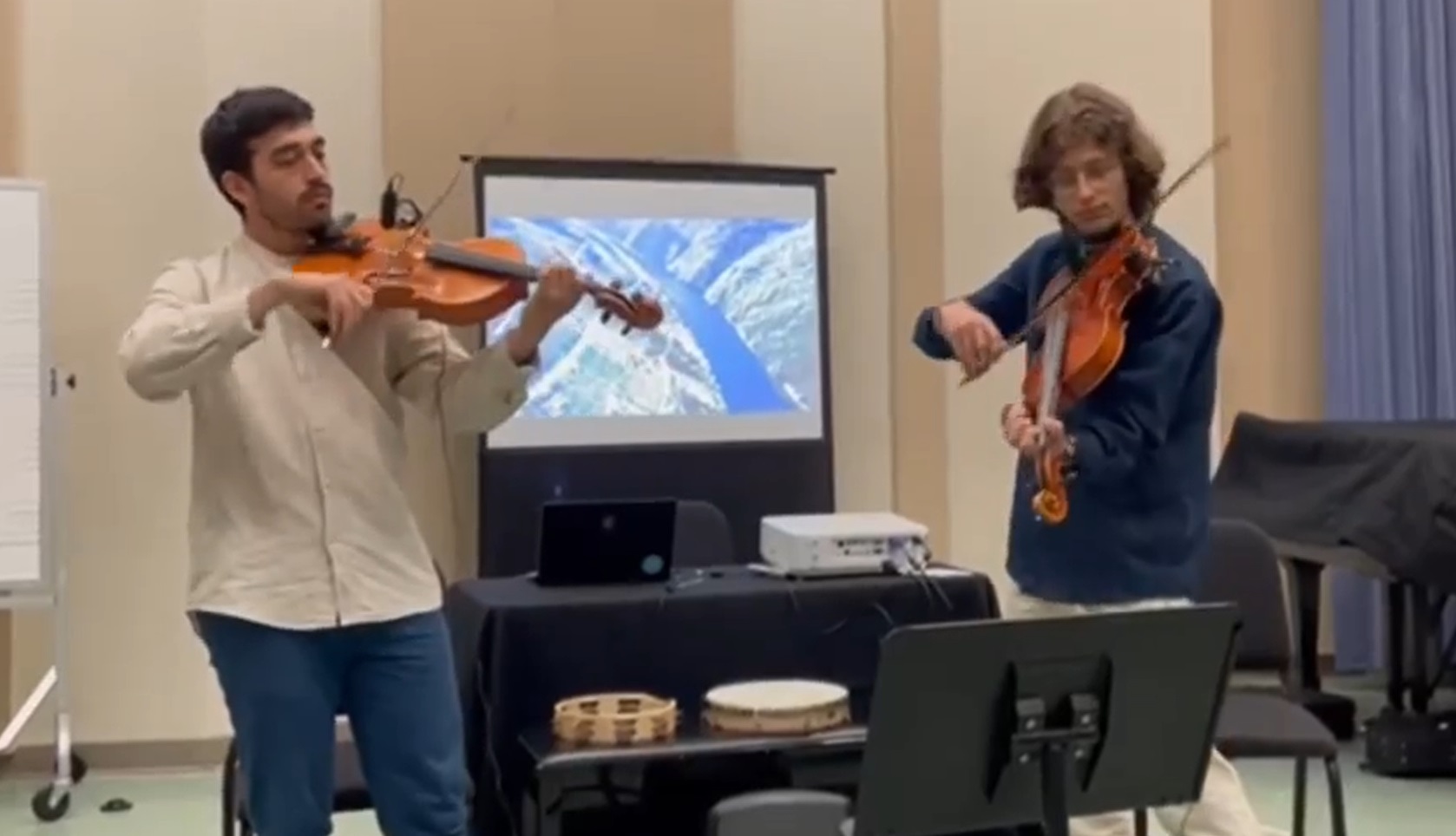
In the afternoon Santiago Velo Quintairos and Fernando Fresno Zarza (members of our DVS delegation and students at Codarts Rotterdam) presented a lecture on performing traditional Muiñeira’s from the Galicia in Spain on two violas. Their work used looping and pickup microphones to create a sound texture including percussion sounds, voice and viola. Their presentation was warmly received and their performances were both lively and convincing.

Recital by DVS/Codarts delegates Fernando (l) and Santiago (r) (source: Karin Dolman’s vlog)

This was followed by a presentation by veteran violist Thomas Tatton on the Joy of Practice. He gave a number of important guidelines on practicing to the assembled crowd and went through real live examples with the group having them practice these under his guidance. Polish violist Marcin Murawski gave a lecture on Georgian composer Giya Kancheli’s 18 miniatures, a set of pieces of which he made the world premiere recording with pianist Nino Jvania. This turned out to be Kancheli’s last work and is full of warm melodic materials and jazz elements.

The evening concert featured a recital by Kim Kashkashian with pianist Renana Gutman. The program included Lera Auerbach’s dark, brooding viola sonata Arcanum and Kashkashian’s own transcriptions of songs from South America, Schumann’s Fünf Stücke im Volkston (originally for cello) and Stravinsky’s Suite Italienne (originally for violin). These transcriptions, especially the Stravinsky, proved to be less than successful as viola-piano works.

Kim Kashkashian’s evening recital (source: IVC livestream frame capture)

The traditional congress banquet featured an array of awards and in memoria, given that the congresses have not been held in the past (3) years due to the pandemic. The International Viola Society’s silver cleft for contributions to the viola was awarded to violist Robert Diaz and received by his parents and sister. The honorary membership was awarded to New Zealand violist Donald Maurice, whose achievements are too numerous and important to summarize here.

<previous day> <next day>

Editor’s notes:
1) You can also follow Karin Dolman’s Columbus IVC VLOG (yes, video!) on facebook, starting here, and continuing here, here, here, here, and here.
2) Even if you missed the live event, you can still register (as a “Virtual attendee”) to explore all the recorded contents (lectures, recitals, masterclasses) of this congress for another 3 months! See the Congress Website for full information.


IVC Columbus Blog – Day 3

The 47th International Viola Congress takes place in Columbus, Georgia (USA) from June 1st – 5th, 2022. This daily blog / report is delivered to you by DVS board member Emlyn Stam.

Day 3: Friday, June 3rd, 2022
<previous day> <next day>

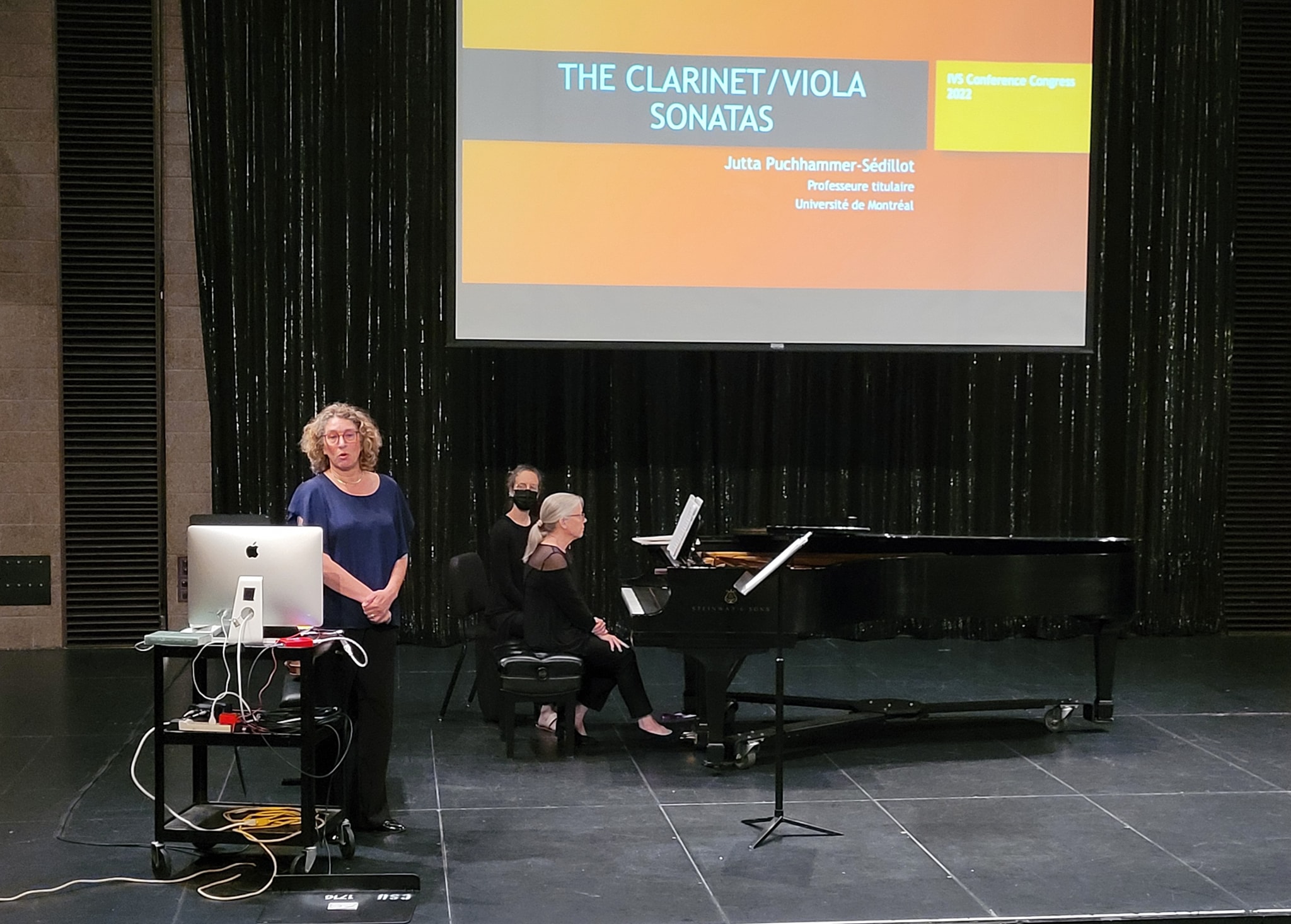
The third day of the International Viola Congress featured some important contributions from the Dutch Viola Society. Violist Elisabeth Smalt and singer Alfrin Schmidt performed their original adaptations of Harry Partch’s songs. I gave my lecture on early-recorded performance practices, and violist Jutta Puchhammer-Sedillot (Université de Montréal) opened her lecture-recital with a performance of Dutch composer Theodor Verhey’s (1848-1929) charming Characteristic Pieces. Puchhammer’s lecture-recital focused on the numerous little-known works from the 19th and early-20th centuries for clarinet and piano that were also published in versions for viola and piano. The lecture, entitled ‘It does not always have to be Brahms’, revealed a broad list of works by some better and lesser-known composers from Max Reger and Charles Villiers Stanford through Egon Kornauth and Albert Wustrow. Puchhammer and pianist Elise Desjardins performed a selection of movements from the works discovered with admirable intensity and dedication.

Jutta Puchhammer lecturing on clarinet/viola repertoire (source: Marcin Murawski)

A lecture-recital by violist Rose Wollman (University of Notre Dame) focused on her original recital project centered on Ligeti’s Viola Sonata. Wollmann chose 17th and 18th-century works and commissioned contemporary works to play between the sonata’s various movements. She performed the world premiere of some of these newly commissioned works by violist-composers such as Garth Knox and Atar Arad. The recital will no doubt be impressive when presented in its full form in the future.

Featured Artist Kim Kashkashian giving a Masterclass (source: Marcin Murawski)

Viola guru Kim Kashkashian is a featured artist at this year’s congress. She gave a masterclass in front of a large crowd of adoring violists. Our own Santiago Velo from Codarts University played a movement of the Ligeti for this class at a high level.

The evening showcase featured a unique standup comedy viola performance by Isabel Hagen. Hagen is a professional standup comedian who also studied the viola at Juilliard. Her performance featured comic songs performed with her own plucked viola accompaniment, as well as some humorous interchanges between short performance of serious viola music and hard-hitting jokes. Hagen touched on many of the standard tropes popular with today’s young generation of comedians. Seeing a violist thrive as a standup comedian on such a high level is a testament to both the versatility of the instrument and its players today.

Isabel Hagen, violist and standup comedian (photo source: livestream screenshot)

<previous day> <next day>

Editor’s notes:
1) You can also follow Karin Dolman’s Columbus IVC VLOG (yes, video!) on facebook, starting here, and continuing here, here, here, here, and here.
2) Even if you missed the live event, you can still register (as a “Virtual attendee”) to explore all the recorded contents (lectures, recitals, masterclasses) of this congress for another 3 months! See the Congress Website for full information.


IVC Columbus Blog – Day 2

The 47th International Viola Congress takes place in Columbus, Georgia (USA) from June 1st – 5th, 2022. This daily blog / report is delivered to you by DVS board member Emlyn Stam.

Day 2: Thursday, June 2nd, 2022
<previous day> <next day>

The second day of the IVC 2022 featured a packed schedule. The first recital with students from Université de Montréal started at 08:00 with Piéces de Concours. The hour was so early that none of our DVS delegates were able to attend. We were told that the unfortunate students had no opportunity to warm up because the building was closed beforehand.

The first lecture of the day was given by Sachin Shukla (a student at the New England Conservatory) on the Walton Viola Concerto. He explored the concerto’s cryptic dedication to Walton’s love interest Christabel in the context of Walton’s working class origins and Christabel’s status as a member of the nobility. His theoretical analysis of the concerto was highly original and an article in the American Viola Society’s Journal is forthcoming this fall.

Leanne Darling (State University of New York) gave an inspiring lecture recital on looping, the use of live, electronically recorded loops in solo viola repertoire. She explained the technological tools involved and gave practical advice on practicing with and using loops for improvisation. The presentation concluded with a performance of 5 fascinating contemporary works for solo viola involving looping. One of the highlights was the work Flight by New York composer Trevor New full of stilted textures, unusual in this genre of music.

Leanne Darling performing with loop station (source: Karin Dolman)

A short walk to the Columbus State University’s Space Science Center followed for a recital in the omnisphere cinema. Meditative 3D animations with scientific and space-related themes accompanied the performances. This multidisciplinary experience connecting science and viola music was an interesting addition to the conference program.

This was followed by a recital featuring the previously unknown concerto for violin and viola by Ferdinand Thierot, a salon-like composition which was admirably performed by violist Jutta Puchhammer, violinist Annette-Barbara Vogel and pianist Elise Desjardins.

Vogel, Desjardins and Puchhammer (photo credit: Marcin Murawski)

Daphne Gerling and Katherine Lewis gave a fine performance of Polish composer David Pajdzik’s concerto for two violas entitled Old Time Suite from 2019. The piece, a rather severe neo-classical work reminds one of Henryk Górecki’s late works.

The socially engaged, multidisciplinary performance piece Taioro ki te Ao from New Zealand was one of the highlights of the congress. The performance features the Māori spoken word performer Sharn Maree Cassady whose texts reflect on the challenges her people face as a result of colonization. The work centers indigenous narratives conveyed through Cassady’s powerful and gripping stage presence and superb sense of rhythm and intonation. The music composed by Anthony Ritchie provides a strong emotional counterpoint to the text and was performed with seriousness and verve by violist Donald Maurice and pianist Sherry Grant.

From the performance of Taioro ki te Ao (photo credit: Marcin Murawski)

Timothy Ridout was the guest of honour for an evening concert featuring no fewer than 3 concerti accompanied by conductor Paul Hostetter and a professional orchestra pulled together for the occasion. His strong musical presence was palpable from the first note of Alessandro Rolla’s Viola Concerto in E flat major. Ridout plays with grace, incredible skill and a constant communicative sense of character. His proficiency extends to a complete knowledge of the orchestral score, a sense of engaged music making with the orchestra and an enormous pallet of sound colours which keep the listener engaged throughout. The second work on the program by Bulgarian composer Dobrinka Tabakova, called Suite in the Old Style, opened with Ridout playing a drum at the back of the orchestra. The work features uncanny orchestration with a prominent role given to the harpsichord. Tabakova draws on a myriad of influences in this attractive, colourful work including Stravinsky, Shostakovich and Bulgarian and Celtic folk musics. Compositional forms and tropes from the 18th century are used with a sense of fun and irony. The work represents a valuable contribution to the repertoire for viola and chamber orchestra. Ridout performed the piece with great zeal and a keen sense of timing. The final work of the evening was Johann Nepomuk Hummel’s Potpourri op.94. This work was previously known in a severely truncated form as the Fantasia for viola and orchestral owing to 20th century editions of the piece that cut out its middle sections. The full Potpourri contains myriad riches including variations on themes by Mozart, Rossini and others. Ridout played the work with ease and grace emphasizing its humorous character and tossing off technical fireworks with bravado. Ridout has clearly fulfilled his promise to become one of the leading violists of our time.

Featured Artist Tim Ridout stalked by DVS vloggers backstage (source: Karin Dolman)

<previous day> <next day>

Editor’s notes:
1) You can also follow Karin Dolman’s Columbus IVC VLOG (yes, video!) on facebook, starting here, and continuing here, here, here, here, and here.
2) Even if you missed the live event, you can still register (as a “Virtual attendee”) to explore all the recorded contents (lectures, recitals, masterclasses) of this congress for another 3 months! See the Congress Website for full information.